

I Told My Team Not to Play Vader. Then I Played Vader.
A tournament report from the Meta-Games Unlimited LAW Planetary Qualifier — Springfield, MO
There’s a particular kind of hubris that only competitive card players can manage: convincing yourself that the deck you talked your teammates out of playing is, in fact, the correct call. I am, of course, that guy. And this is that story.
The Pre-Tournament Brain Trust (And How I Immediately Ignored It)
When A Lawless Time dropped, I was pretty excited about Vader. The rotation shook up the format in meaningful ways, and that aggressive TIE swarm shell felt like it had a real angle. I very much talked about it in the team Discord server. But then the Luke Skywalker pilots started flooding into the field, and that matchup is… not great, to put it charitably. So I filed Vader away and started thinking more carefully about what we, the SWU-Tang Clan, should be bringing to the PQ at our home store, Meta-Games Unlimited.
In the end, my recommendation to the team was something like: stack a healthy number of people on Lando (the deck is just good, full stop), get a couple of pilots on Dedra or Aurra Sing as metagame answers to the Lando mirrors, and let one person be a little adventurous with something off-center. I even had a deck in mind for that last slot.
The reasoning was grounded in what the week 7 APR data from my ongoing series here at The SWU Report was telling us about the current meta structure. The LAW season has settled into something that looks pretty clearly like a hub-and-spoke model: Lando/Lake Country is the hub, posting the best Field-to-Top-8 APR of any tracked archetype at +87.9%, and almost everything else is defined by how it relates to that center. Dedra and Aurra are the primary spokes pointed at Lando (Aurra edges Lando at 55.6% and Dedra sits near even) while Boba just keeps grinding out results on raw consistency regardless of the matchup landscape. The rest of the field is in various states of trying to navigate around this.
Now, there’s a version of team strategy where you just stack everyone on the single best-performing archetype and let variance sort it out. That makes sense when you have something truly dominant. It also makes sense if your team has a genuinely new deck to debut; something the field hasn’t seen and hasn’t prepared for. Lando/Lake Country itself was that deck at Atlanta, and it showed in the results. Without that kind of surprise in our pocket, though, stacking eight people on Lando just meant we’d be eating each other’s percentage points and mirroring all day. Spreading across Lando, the anti-Lando spokes, and one true oddball felt like the better way to maximize our collective chances of having at least a few people deep in the bracket.
The week 7 APR data supported at least part of that logic. Vader’s cumulative numbers looked modest on paper (entry APR slightly negative, closing APR slightly positive) but the matchup matrix told a more interesting story. Vader ran a 68.4% win rate against Obi-Wan, the largest archetype in the field by a healthy margin. That’s not a coincidence; Vader was, and is, primarily anti-OB tech by virtue of lane dodging (Vader in space, Obi-Wan on ground). The honest caveat is that the matrix also showed a 29.7% win rate against Lando, which is genuinely rough, and Aurra Sing was beating Vader at 77.8%, two of the archetypes I’d just told my teammates to register and frankly, others were likely to play Lando as well. In the abstract, that’s a reason to hesitate. In practice, I was betting on dodging enough of those pairings in Swiss to get to a point where Vader’s OB matchup mattered. And a Vader pilot had just won the 482-player London Sector Qualifier that same week, so the ceiling was clearly there. But I wanted to try to find some anti-Lando tech options for Vader.
You can probably see where this is going.
I volunteered to be the oddball, sleeved up Vader, and drove to Meta-Games Unlimited on a Saturday morning feeling some combination of confident and slightly unhinged. The team didn’t quite land on the exact breakdown I’d suggested, but that’s testing groups for you. Everyone ends up playing their own convictions in the end.
My conviction, apparently, was a deck full of TIE fighters and one very angry Sith Lord.
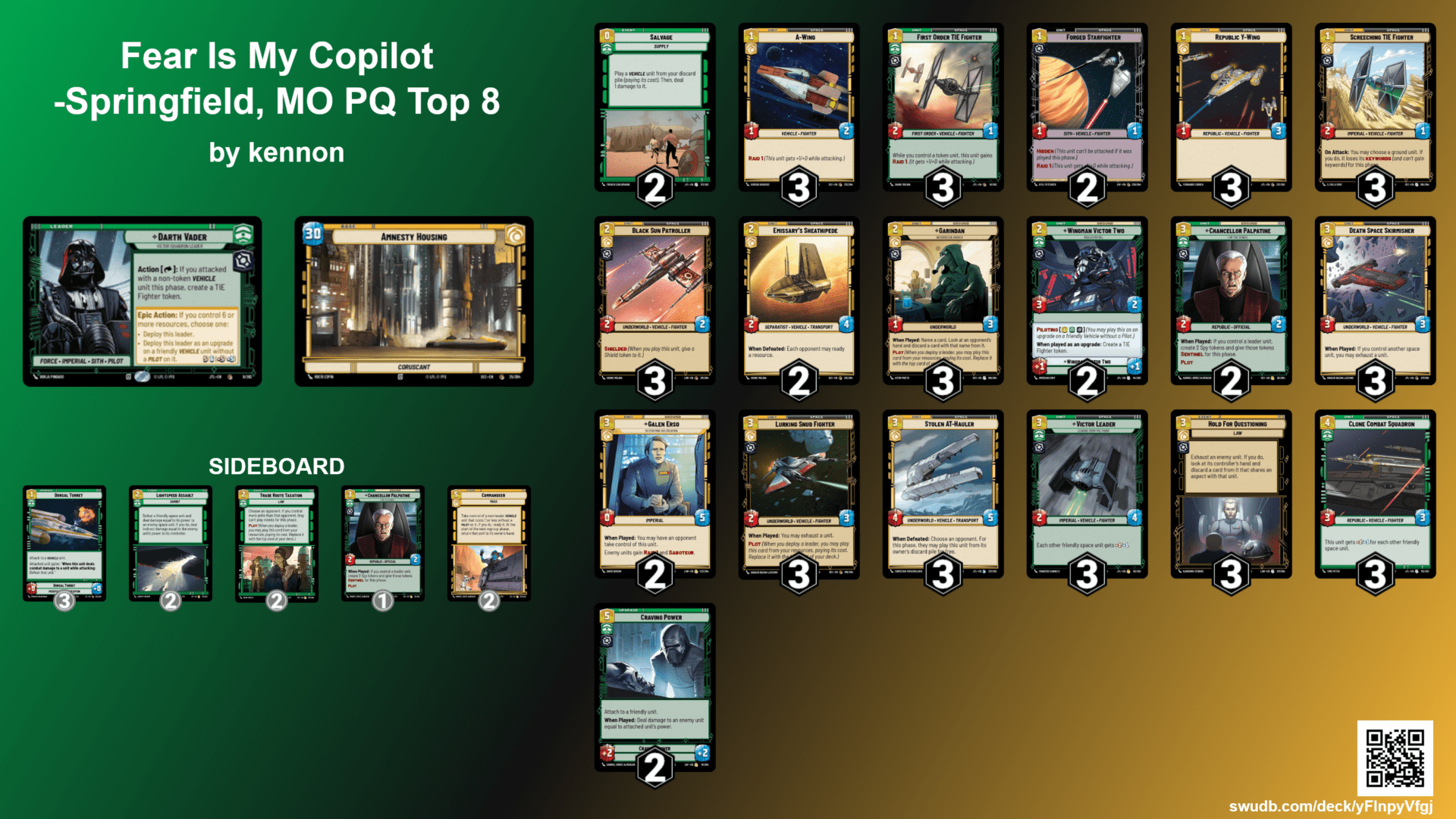
The Deck (Drop By And See it On SWUDB):
Before I talk about what the deck actually does, I should probably confess what I almost played instead.
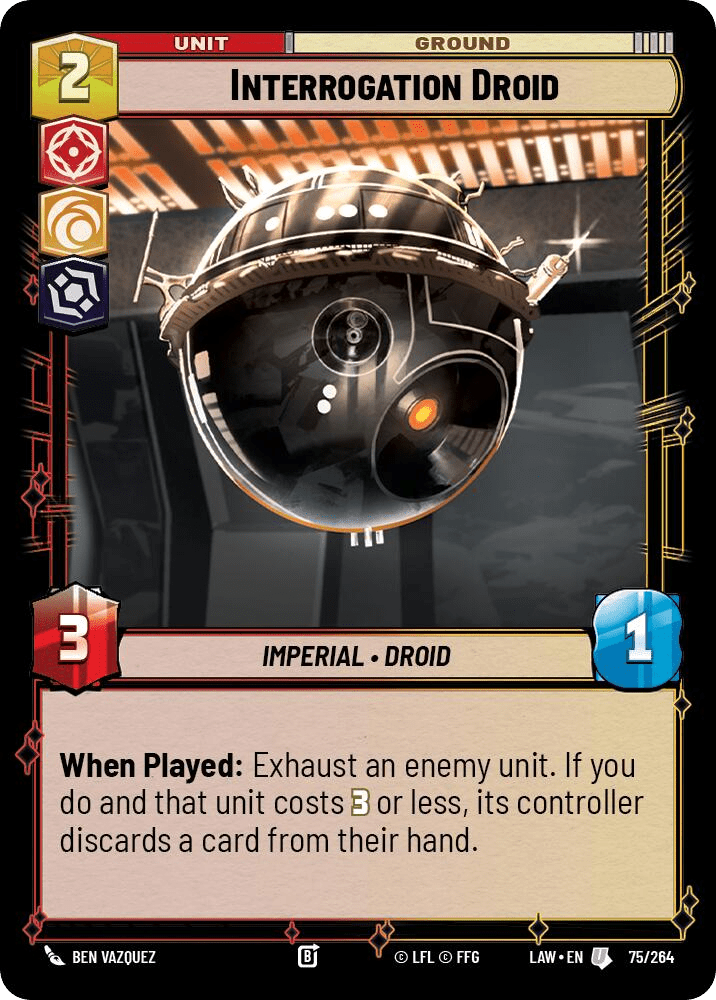
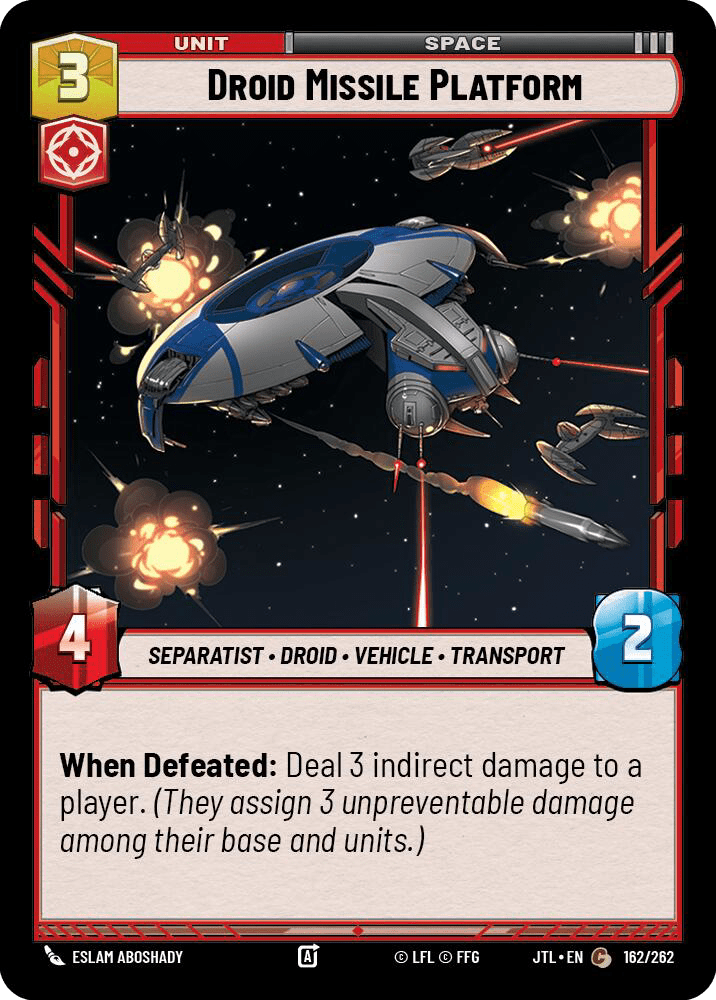
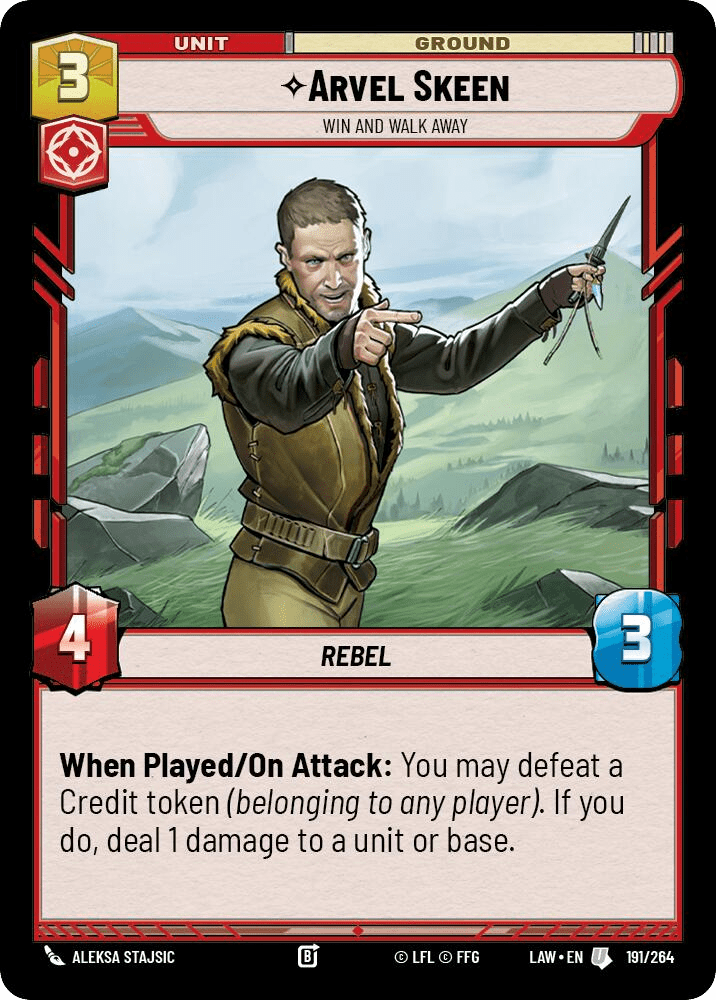
In the days leading up to the event, I got a little excited about a Cunning splash on a hybrid Vader base. The pitch had real appeal: Interrogation Droids and Droid Missile Platform felt like strong main-deck includes, and Arvel Skeen in the sideboard gave me what I thought would be crucial Credit destruction against the Lando matchups I expected to be common. Killing Credits while Lando tries to accrue resources and threaten Liberty seemed like a real angle. I was pretty pleased with myself about this.
Then I actually tested it the night before the tournament.
The problem was that they still got to Liberty. Every time my opponent landed it and stuck a sentinel body in front of me, I was dead in the water, even with the tech. In this case, the sentinel was doing exactly what Liberty is designed to do, sitting there being huge while I watched my my fleet of space ships unable to push through the final 3ish damage needed. My more sensible teammates talked me off the splash and back to a standard 30-health base, which was, of course, the correct call.
So that was my Friday night. Very good. Very fun.
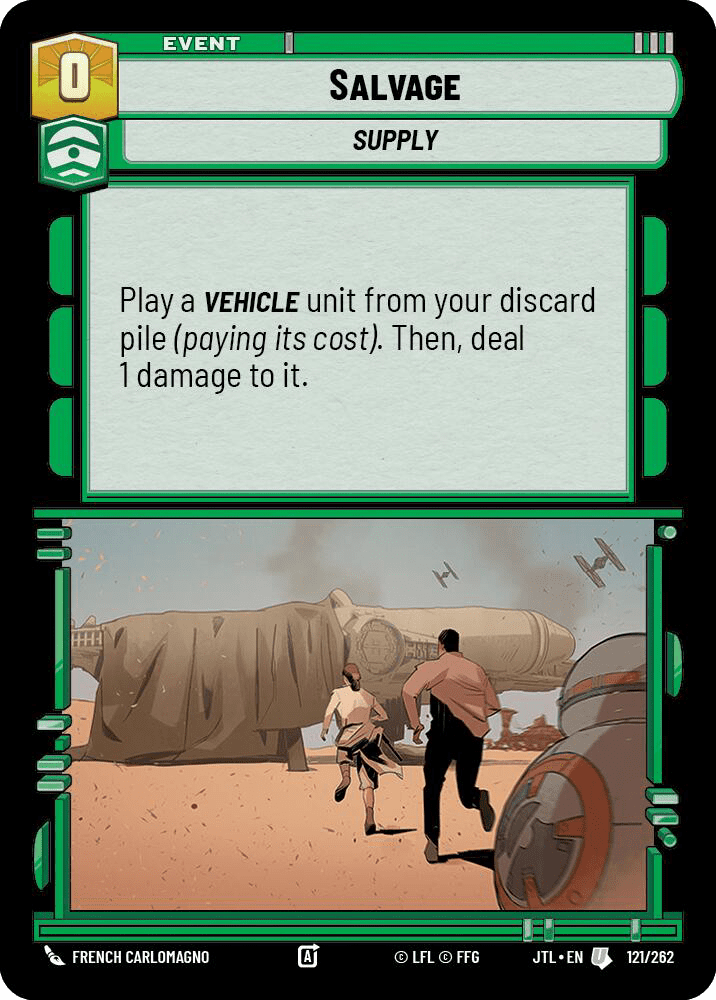
Having abandoned my spiciest idea, I still wanted something a little off-menu in the deck. The main deck ended up with two copies of Salvage, which I’ll admit might be a surprise. What it actually does is serve as pseudo copies four and five of Victor Leader and Clone Combat Squadron. When your key engine piece or your primary win condition gets answered, Salvage lets you pull it right back from the discard pile and replay it. Immediately Salvaging a freshly killed Victor Leader was one of the best plays I made all day. There’s also a subtler use case worth noting: Stolen AT-Hauler has that nasty text where your opponent takes control of it when it’s defeated. Salvage lets you scoop it back from the discard pile as your very next action, before your opponent can act to replay it. A little bit of rules awareness goes a long way there.
Let me run through some of the other notable cards while I’m at it.
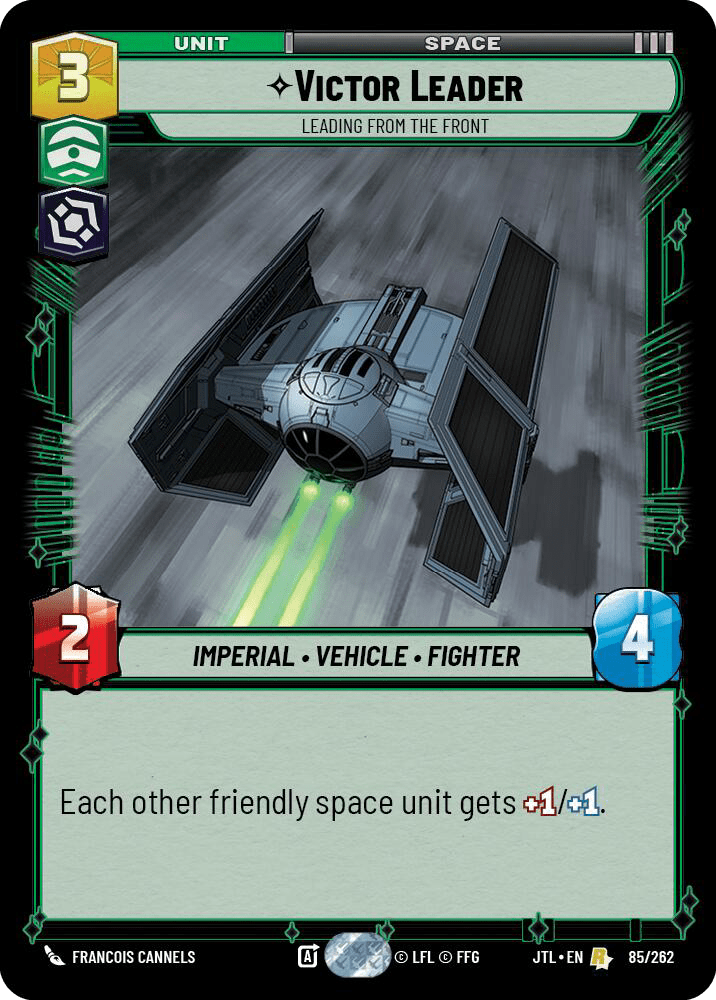
Victor Leader / Leading from the Front: One of the two lynchpins of the deck, and most people familiar with the archetype already know why. The +1/+1 to all your space units turns what would otherwise be a board full of small, disposable ships into a pretty genuine threat. The difference between a fleet of 1/1s and a fleet of 2/2s is enormous when you’re trying to race. In this case, the math is pretty simple: Victor Leader on turn two means every subsequent TIE you make is already ahead of rate.
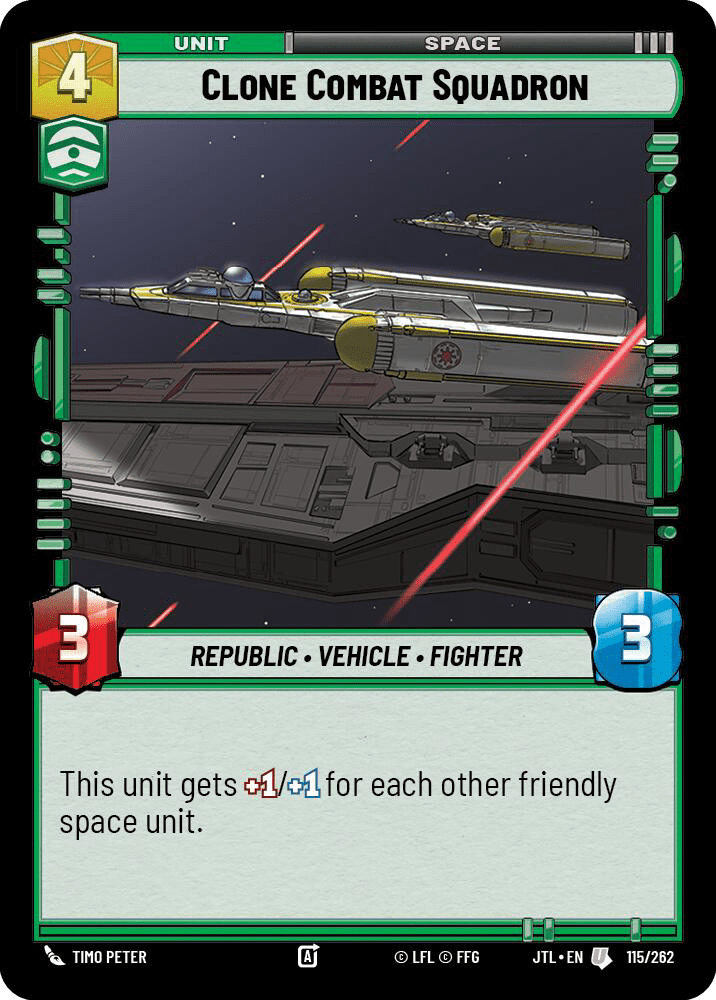
Clone Combat Squadron: The other lynchpin. It gets its own +1/+1 for each of your other friendly space units, which means in a deck that floods the board the way this one does, it becomes a beefy, must-answer threat in a hurry. The whole closing sequence of the deck runs through it: get Clone Combat Squadron to a threatening size, line up a Vader flip onto it, and suddenly your opponent has to deal with a monster sized leader unit while also managing everything else you’ve put on the table.
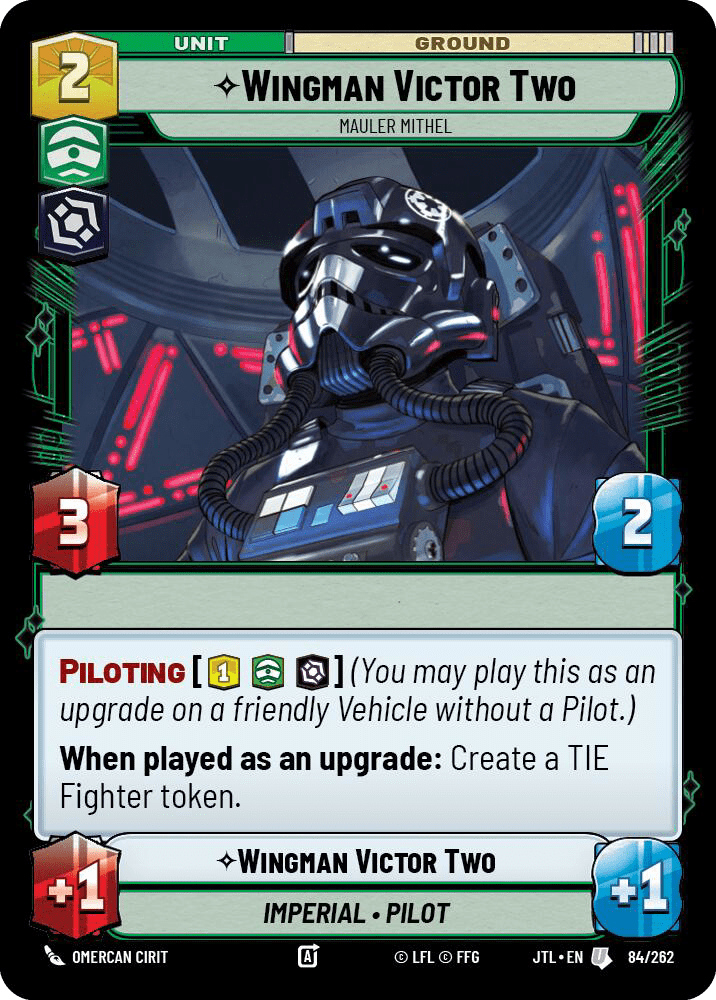
Wingman Victor Two / Mauler Mithel: Admittedly an uncommon choice these days, but I think it deserves more respect than it gets. Pumping a ship off an easy one-health kill is remarkably useful in a deck that’s constantly generating small units for exactly that purpose, and making another TIE in the process helps spread your threats even wider. He’s no Vader flip, obviously. But if you really squint, he’s maybe an annoying little brother trying to do an impression of one.
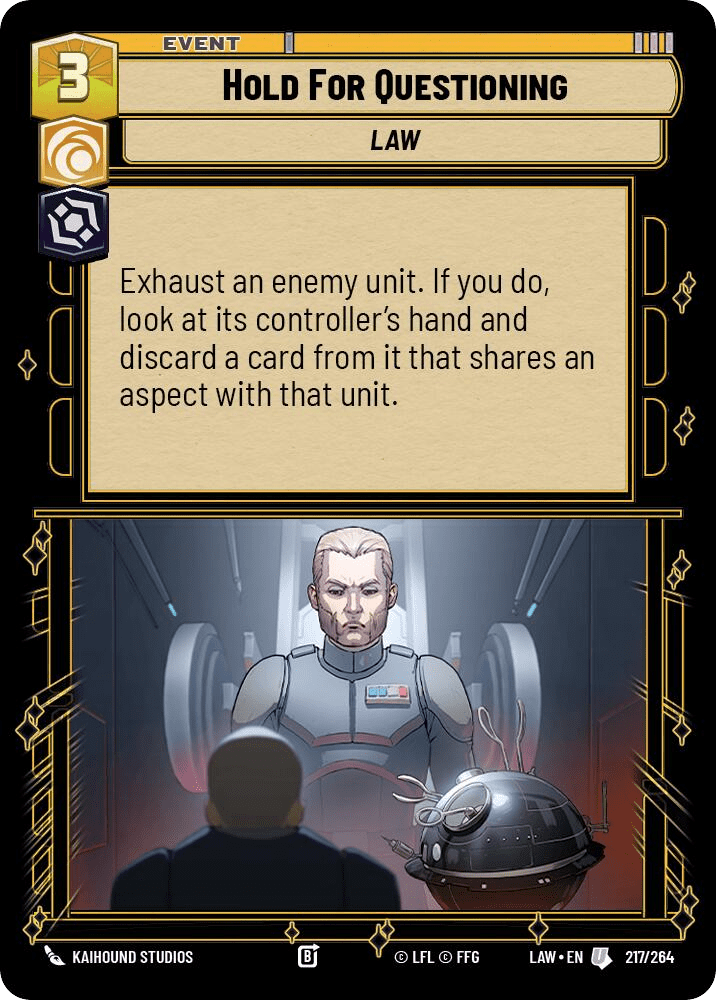
Hold For Questioning: Three copies in the main was a deliberate choice. What’s better than playing a Garindan? Playing a Garindan when you already know what’s in your opponent’s hand. The tempo on board isn’t quite as good as a bounce like Beguile, but the targeting is more flexible, and I really wanted maximum chances to look at my opponent’s hand before playing a Garindan so I actually knew what to call for the discard rather than guessing. The fact that Hold For Questioning causes its own discard is also pretty handy in the midgame for pulling opposing Moral Authorities and similar problem cards before they can be deployed.
On the subject of plot cards: the ideal Vader flip scenario is Lurking Snub Fighter and Chancellor Palpatine, as long as you’re not playing into blue or Vigilance. Those two together lock up most boards cleanly and let you quickly shift or close out a race. The exception is if you’re against a Vigilance deck that has Hyperspace Disaster available on round seven, in that case, Garindan is the correct call, because Hyperspace Disaster eating your whole board is a very bad time and you’d rather strip it from their hand first. Otherwise, Snub and Palpatine just get the job done.
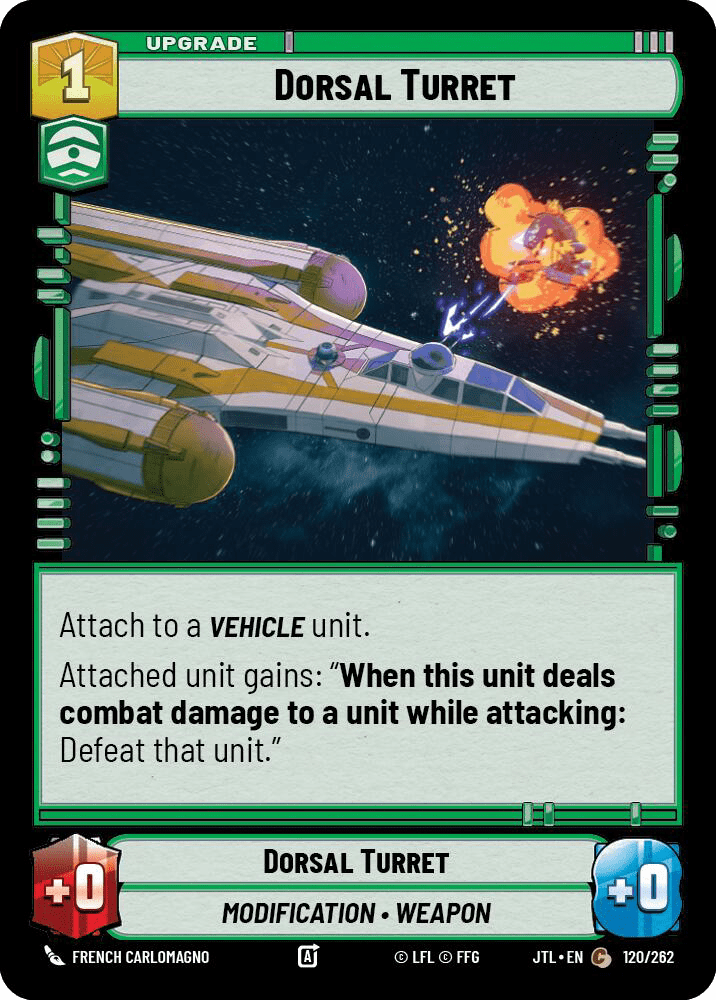
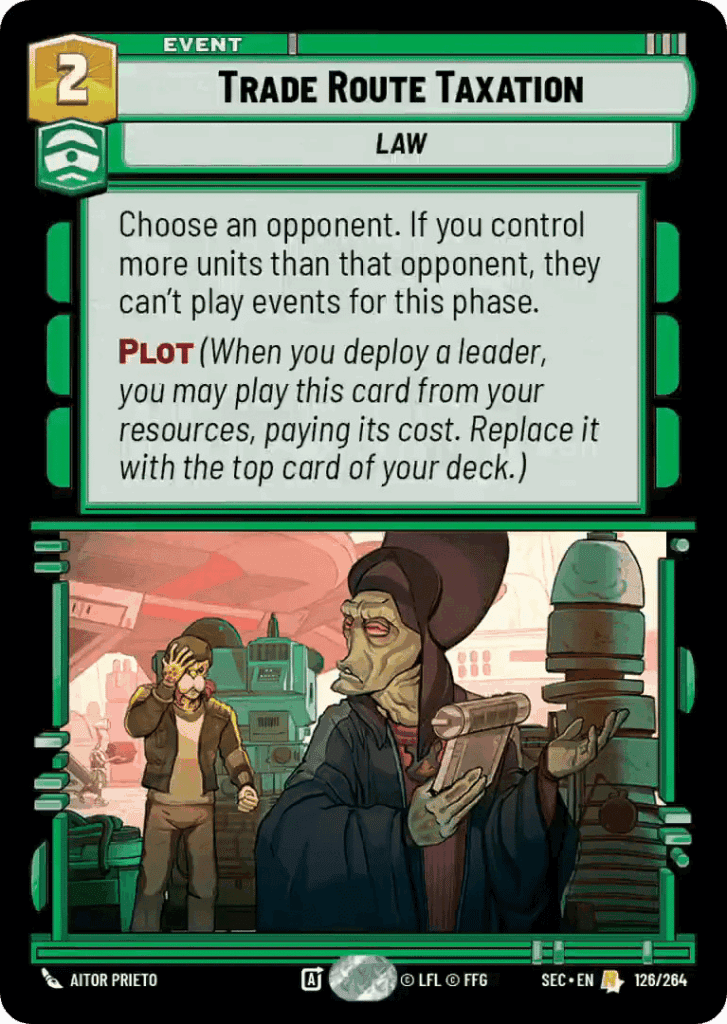
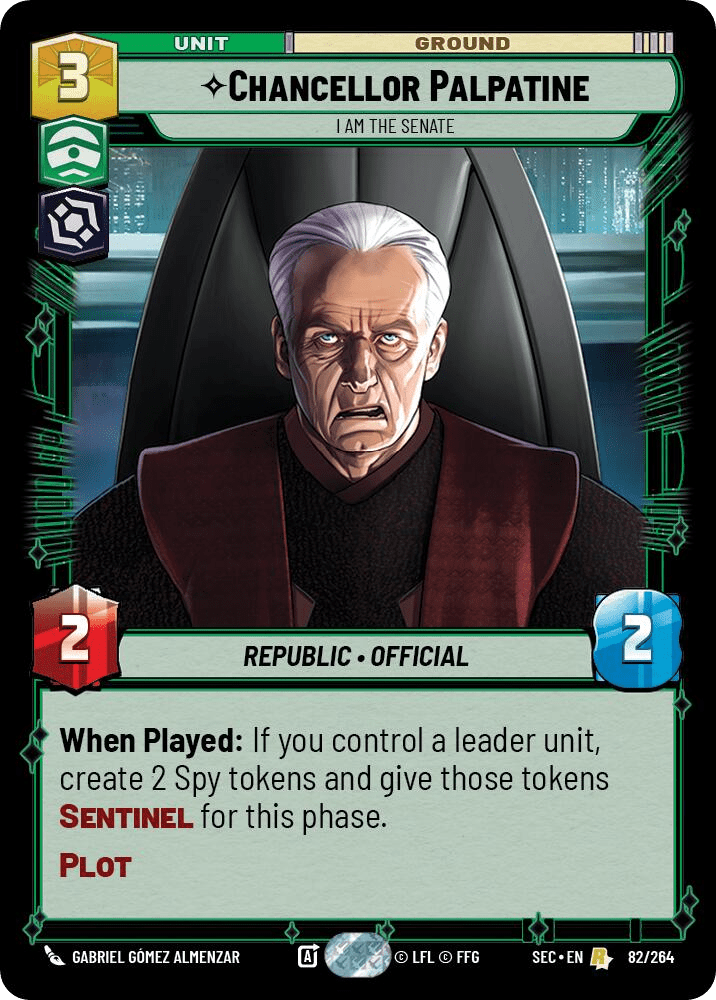
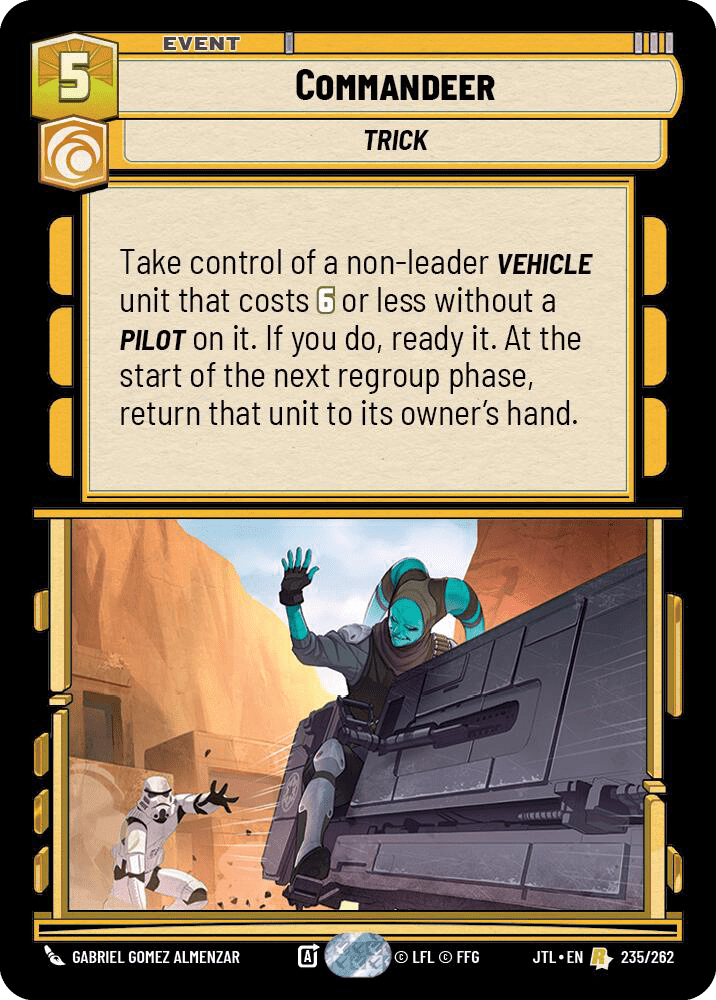
For the sideboard, the logic broke down roughly like this: Dorsal Turrets punch through space sentinels, which of course means they’re primarily there for Liberty. Commandeer is just good everywhere right now and earns a slot in almost any matchup where your opponent is running a ship you’d rather own. The third Palpatine comes in against Force-heavy decks where the ground arena is going to be contested. Trade Route Taxation is there for matchups into Dedra or other control decks where I fear something like Hyperspace Disaster – being able to say no to their events for a whole turn seems like a lot of time for Vader to close.
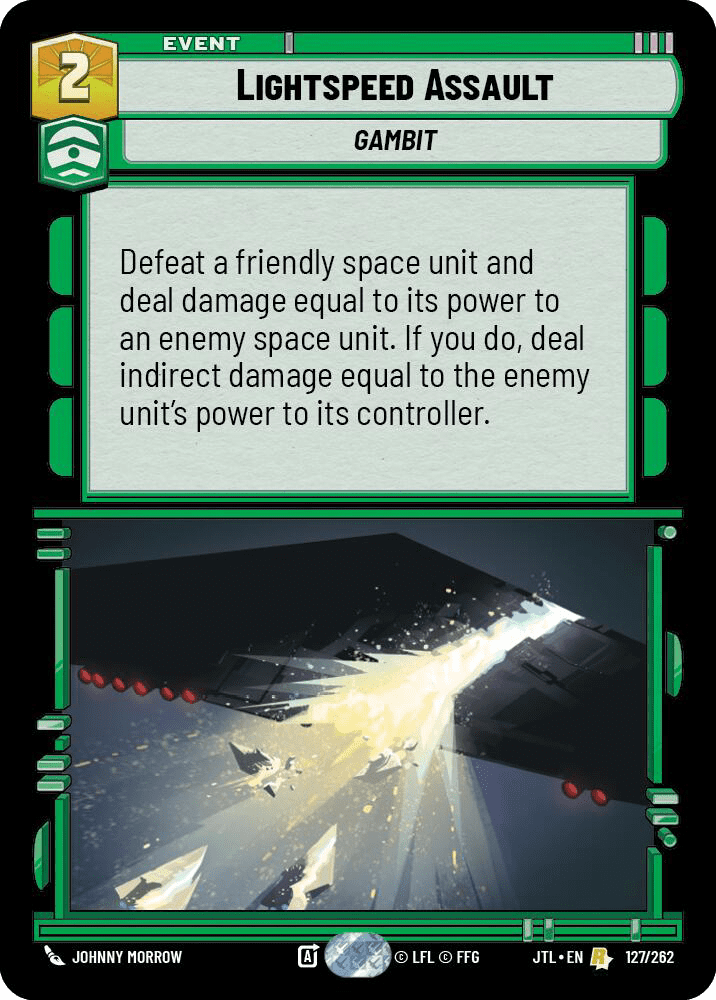
And then there’s Lightspeed Assault, which I added the morning of the tournament after realizing, somewhat embarrassingly, that I had fundamentally misread how the card works. You don’t actually need to kill the unit you hit with it to deal the indirect damage. Let’s be honest, that’s a pretty significant misread to sit on until the morning of an event. Once that clicked, it immediately looked like another angle to chip through Liberty or a similar space sentinel if I was lucky, and it occurred to me it might be outright solid in the Vader mirror as a way to threaten a Clone Combat Squadron or Vader piloted unit that’s getting out of hand. It’s a pretty spicy last-minute addition, and one that slots neatly into the sideboard as well. I didn’t end up drawing it in the relevant spots, but I stand by the logic.
The overall game plan is simple enough: flood the space arena with cheap, replaceable ships, leverage Vader’s ability to snowball your board, and present enough simultaneous threats that your opponent can never quite answer everything at once. The ground game leans on Chancellor Palpatine to lock things up and buy your space win the time it needs. Lurking Snub Fighter and Death Space Skirmisher handle exhaust duty on whatever big unit your opponent is pointing at you..
The Swiss:
Round 1 vs. Boba Fett / Lake Country
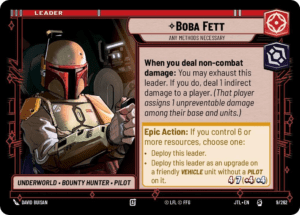
The first round is always a little nerve-wracking, home store or not. Boba into Lake Country is a solid deck, and I knew he’d have several ships available to handle my air traffic.
Game one came together cleanly. Victor Leader landed on turn two, I started building my board, and he more or less spent the game pointing indirect damage at my base while I pointed everything at his. He did drop in a Droid Missile Platform immediately after my Victor Leader which made short work of it next turn, but by then I had enough in play to close it out.
Game two I brought in Commandeer, drew one, and held it as insurance. Didn’t end up needing it. Victor Leader hit the table on turn two again, and then he once again used Missile Platform to answer it. The Salvage to immediately replay Victor Leader next action was pretty huge, and my swarm got to keep attacking that turn with the key engine piece in place. He flipped Boba and followed with Topple, but he missed lethal on my Clone Combat Squadron by exactly one damage. That Clone Combat Squadron then became the chassis for my Vader flip, and we ran from there.
2-0.
Round 2 vs. Lando / Data Vault (Todd, SWU-Tang Clan)
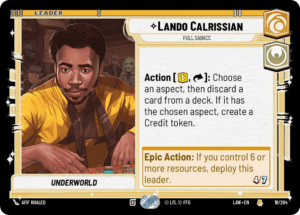
And there it was. Round two, and I’m sitting across from a teammate.
I want to be clear: I do not enjoy being paired into teammates early (or ever really).You usually know each other’s tendencies and there’s a weird energy to it overall, plus Todd is a good player! Ideally you want those matches to happen in the elimination rounds where they mean something different. Alas.
Game one I had to mulligan into a rough hand and had to open a Black Sun Patroller instead of a pair of one-drops. It turned into a race, which is, of course, exactly what Vader gets up to, but Lando was pushing pretty hard. Palpatine was huge here, protecting my ground presence and keeping me from just eating attacks all day. The race came down to one damage, and the extra point from Victor Leader boosting my Vader ship was the difference. Just barely.
Game two I boarded in Commandeer and two Dorsal Turrets. He never found the Liberty (which, in a Lando deck, is kind of like showing up to a heist without the getaway car), but he got some good hits in with Blue Squadron Leader and Fireball. I hit two Clone Combat Squadrons across the game and then, on round six when I brought out Vader, Commandeered his Blue Squadron Leader. The damage I could threaten that single turn was just too much to answer.
Sorry, Todd.
2-0.
Round 3 vs. Obi-Wan Kenobi / Force
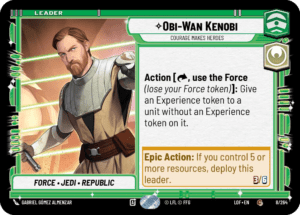
This was the matchup where Hold For Questioning really earned its keep.
Game one he was trying to race, which surprised me a little. I had to play carefully, using my Lurking Snub Fighter to exhaust his Obi-Wan sentinel and slow his press for damage just to keep myself from dying before I could land. Then I used Hold For Questioning to exhaust his Obi-Wan leader unit the next turn and bought enough turns to close.
Game two I boarded in the third Palpatine. He opened Yaddle, which generated a solid chunk of restore, and compounded that with a second Yoda’s Lightsaber after I’d discarded the first off a Hold For Questioning. For a second I thought the lifegain might be too much. But Screeching TIE was keeping his restore numbers down just enough, and I absolutely flooded the board. When you can present that much damage at once, even a healthy base total isn’t enough.
2-0.
Round 4 vs. Mother Talzin / Yellow
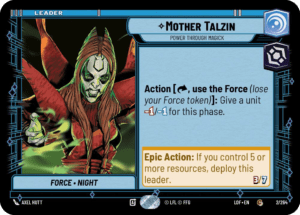
Talzin is one of those decks that can directly counter Vader’s leader ability with it’s own leader ability. Usually, that’s an issue.
Game one I opened two Screeching TIEs, which is about as good a start as you can ask for in this deck, but it worried me that they both only had 1 health. He hit Karis early and started attacking on the ground. He gotTreya in play and was able to trigger Talzin a couple of times in one round to remove multiple chuds of mine, which is always uncomfortable. Once he brought her out, though, I had Lurking Snub Fighter to exhaust the ground threat and Palpatine to lock it up, which gave me enough runway to flip Vader onto my Clone Combat Squadron and race home.
Game two was harder. I couldn’t hit my double one-drops and had to open with a Black Sun Patroller, which he killed immediately. He did a great job targeting my ship cards specifically to keep my Vader triggers down, which is the correct line against this deck and I can’t even be mad about it. I had to double Victor Two in the same turn at one point just to generate more TIEs. Eventually a Forged Starfighter landed and stuck around long enough to matter. I put Vader on it, flipped Snub and Palp out of the resource plot, and then followed up the next turn with a second Palp and Snub out of hand. He couldn’t answer that much.
2-0.
Round 5 vs. Vader / Yellow (Mirror)
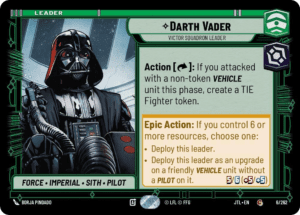
The mirror. This was not one I had tested at all, and frankly, I was worried. Would Lightspeed Assault be enough?
Game one, I got the double one-drop open and he did not. In a mirror, that kind of opener is just quietly devastating. It doesn’t end the game immediately, but it puts you in the driver’s seat on board presence for the next several turns. He missed a Vader trigger once and I realized if we traded TIEs back and forth, I would also keep just ahead of that race. He got me to 20 damage and had a realistic line to kill me with his Clone Combat Squadron the following turn, but I had just enough ships (including a shielded Vader) to take out his Clone Combat Squadron before it connected. After that, I was so far ahead on units that he conceded the position.
Game two I again opened with double ones. He started answering threats and bounced my Black Sun Patroller twice, which was… a choice I respected but didn’t love having made against me. I thought it was going badly for a minute and slow-rolled until he brought out his Vader without any plot cards available. I deployed mine with Palpatine in tow, used the Lurking Snub Fighter to exhaust his Vader, and we traded attacks. I took initiative so I could open the next turn by Craving Power onto my Vader and kill his. He saw the math, saw that I had the initiative advantage to use it, and conceded there.
2-0.
Rounds 6 and 7: IDs
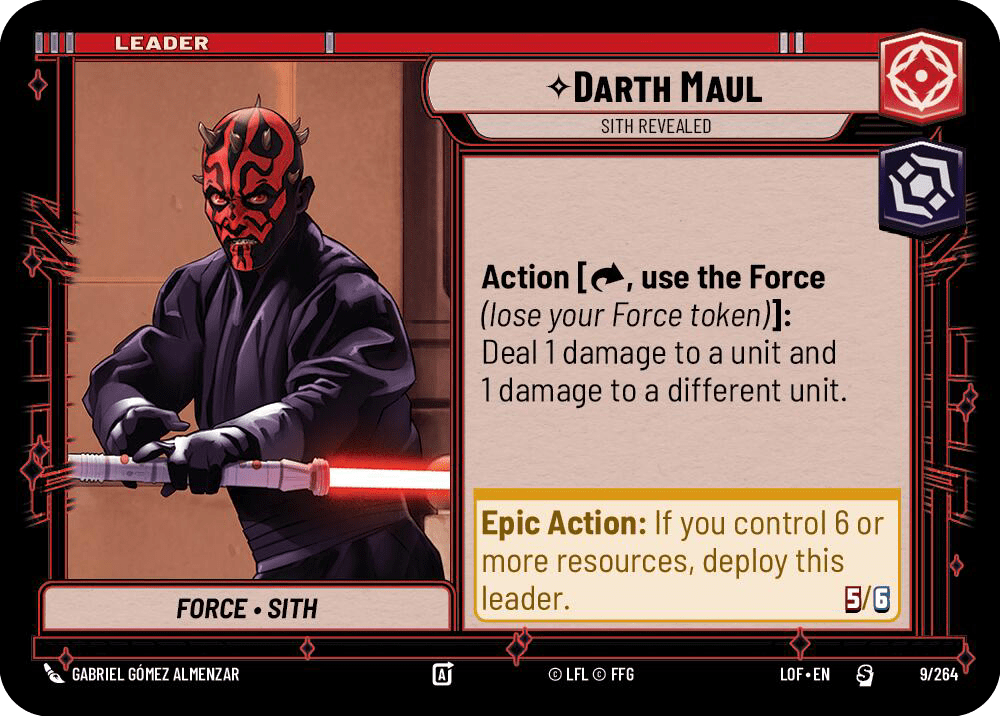
At 5-0, I was the top seed going into round six and was paired into the only other 5-0, who was the single Darth Maul player of the day. We agreed to an intentional draw without playing, which is just sensible tournament management. No point gambling meaningful percentage points against someone you respect at the top of the standings.
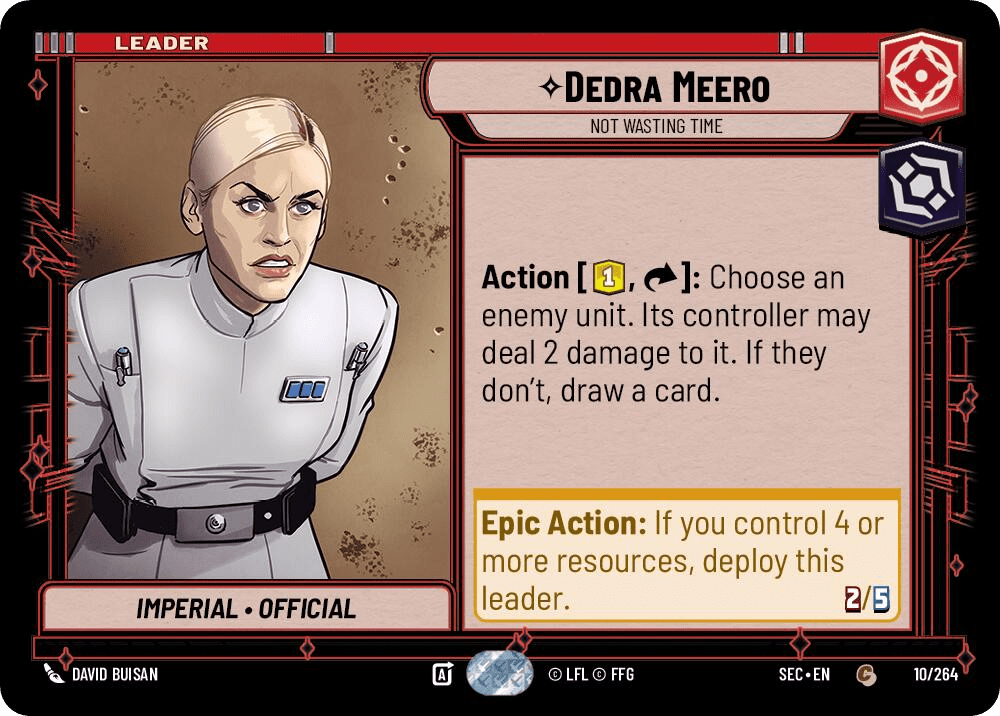
Round seven I was still top seed and drew against a Dedra player. Same logic applied.
Into the Top 8 at 5-0-2, second seed. To that end, I’d like to briefly note that I suggested someone on the team play Dedra and then someone (not a teammate) made Top 8 with it. I choose to interpret this as confirmation that my team advice was good actually. Or maybe it means that Zeiler and Tommy were right in our testing all along.
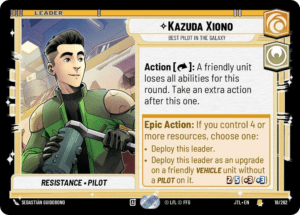
Top 8: Quarterfinals vs. Kazuda Xiono / Data Vault
And here is where I stop being clever.
Game one, Kaz came out strong. He got Kazuda onto the Falcon early, had Canyon Frontrunner applying ground pressure, and a Chewbacca pilot on the Frontrunner making it a real threat. I thought I was still in striking distance heading into what should have been a game flipping Vader flip turn. At the end of the r5 turn, I already had a Palpatine in resources to plot and protect the ground, and then I drew a Lurking Snub Fighter I could resource and then plot out on that Vader deploy to exhaust the Falcon with Kaz piloting it.
Only, I resourced the wrong card.
I’m not going to make excuses for it. I was playing quickly, I was confident, and I misclicked, metaphorically speaking. I went to reveal my plot cards, set the Palpatine aside, and then kept looking for the Snub and didn’t find it. It was still in my hand. He played Aggressive Negotiations (off aspect) to attack with the Falcon and killed me.
As it turns out, Aggressive Negotiations is pretty good at closing games. Who could have guessed?
I have thought about this approximately a thousand times since it happened.
Game two I just wasn’t in it. I put together a reasonably wide board and thought I had a decent line to Salvage a Victor Leader back, but Blue Ace made short work of that. Kaz on the Falcon with Han on an AT Hauler was just too much to manage. I had nothing to stop it. We shook hands, he moved on, and I went to go quietly process having gone 5-0-2 in Swiss without having dropped a single game all day only to fall in the quarterfinals on a misplay. Fifth place. There you have it.
Final Thoughts
Vader is real. I know that might sound obvious from the result, but coming into this event I genuinely thought I was the oddball on the team, the one person willing to play the janky pet deck while everyone else made sensible choices. And maybe that’s still true! Maybe I just ran hot. The APR numbers, after all, would tell you this is a deck with modest entry and modest closing performance — not exactly a neon sign pointing you toward registration. But what those numbers don’t fully capture by themselves is how punishing this deck is to Obi-Wan, and Obi-Wan was the largest archetype in the field all season. I only happened to face it in round three, but that’s still a reasonable gamble.
The Victor Leader is the engine and protecting it is priority one. Palpatine is the glue that keeps the ground from collapsing while you win in space. The Clone Combat Squadron / Vader flip is the closing mechanism, and it’s more resilient than it looks because of all the small chip damage the TIE flood generates before it happens.
The quarterfinal loss stings, obviously. That kind of unforced error in a match you could have won is the sort of thing that sticks with you. But I also know what the deck is capable of now, and I’m not walking away from it.
The SWU-Tang Clan Report Card
Eight of us made the trip to Meta-Games Unlimited for this one, and the results were a mixed bag, which is just how team events go.
Thorington put up a legitimately solid day on Boba/Blue, going 5-2-0, and then got the cruelest possible reward for it: 10th place, just outside the cut. Bubbling out at 5-2 is the kind of result that deserves better, and I hope he gets his flowers for it.
Cabbo came back from an 0-2 start to finish 5-2, which is the kind of comeback that makes you look at your own 5-0 start a little differently. He was on a Poe/Yellow build, which is a deck that actually has a story worth telling. Cabbo cooked it up as a potential team deck, and we spent a fair amount of time testing it collectively as a possible surprise to bring to the field. There’s something real about the idea of dropping a new deck on a tournament that hasn’t seen it, and this one had real teeth: Poe bouncing around the space arena and generating consistent tempo, Razor Crest triggers firing off all over the place with all the pilots feeding into it, the Master Codebreaker / Gambit package for insane values, and some genuinely impressive damage numbers when it got going. It was cool. It could have been cool in the way that actually matters.
But in the end, we just couldn’t coalesce on a way to smooth out the rough edges. The ceiling was there; the floor was a problem. Cabbo, of course, went ahead and sleeved it up anyway, went 0-2, and then rattled off five straight wins. That’s extremely him. A 0-2 resurrection on a homebrew is no small thing, and I have a feeling we haven’t heard the last of that deck.
Chronotrigger — that’s Todd, my round two opponent — made a reasonable call with Lando/Data Vault and finished 4-3. I’d like to take this opportunity to formally apologize for my contribution to that record. Sorry, Todd. I really was hoping not to draw into a teammate that early.
Tommy and Zeiler, our resident control specialists, have both been high on Dedra for what feels like months. They came in excited to make some noise with it, which made it a little awkward when a Dedra pilot made the Top 8 at the London Sector Qualifier the week before and somewhat stole the thunder they’d been building toward. They’re allowed to be at least a little annoyed about that. Draws caught up with both of them in a big way, and they finished 3-2-2 — a record that, in a different bracket distribution, could have looked a lot more like 5-2.
Nathan brought Lando/Lake Country, which is of course the correct meta call by most available metrics. It just wasn’t his day, and that happens.
Dave brought Boba/Lake Country and had a rough go of it. Boba/LC is one of the most consistent decks in the format all season {101 Top 8 appearances across 84 tracked events doesn’t lie) so sometimes the results just don’t cooperate.
All in all, it was a good day to be SWU-Tang. Great dudes, solid players, and some of the best hype men in the SWUscene. I’m proud to be playing with this group.
What the Field Tells Us
Now that we have the full 66-player standings (sort of, there are a handful of us without decks listed in Melee) in hand, it’s worth spending a moment on what the Springfield field actually looked like and how it compares to what the week 7 APR data was telling us about the broader meta.
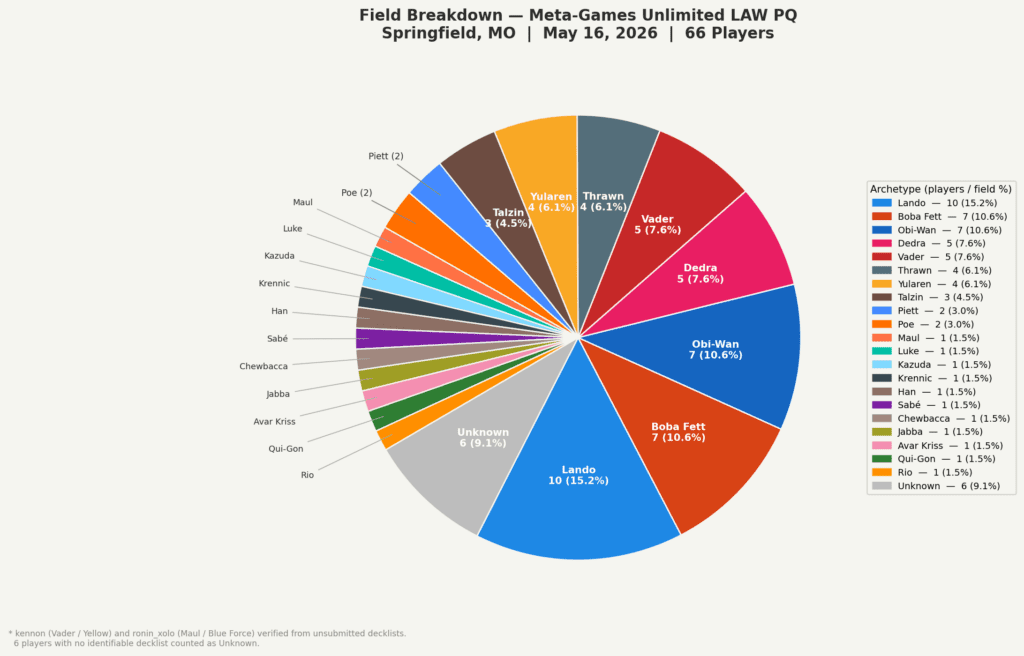
The first thing that jumps out is that Lando was the largest single leader in the room at ten players, that’s 16.7% of the known field, which notably flips from Obi-wan having been the most represented deck at large recently. It’s almost certainly driven by his +87.9% Field-to-Top-8 APR. The week 7 data paints Lando as a dominant hub with everything else orbiting around him. Springfield was a little more democratic than that. Which is relevant context for the team registration decision: if you’re building a spread to attack the Lando-heavy global meta, a local field with less Lando in it means your anti-Lando spokes are slightly misaimed before the event even starts.
Speaking of which: five Dedra players in a 66-player field is a higher local representation than her global field share would predict, and I’d be lying if I said the SWU-Tang Clan’s months of Dedra enthusiasm had nothing to do with that. Concentrated testing group investment shows up in local field data, and it showed up here. The results for Dedra were solid but not a win (a 6th place finish from JoeP7 was the high-water mark) which fits her broader APR profile of solid entry numbers paired with a closing problem. She made it to elimination rounds globally all season and then struggled to close. Springfield was no different.
The field itself was strikingly diverse. Across 60 players with submitted decklists, there were 27 distinct leader/base pairings. The week 7 article framed the LAW meta as a hub-and-spoke structure with Lando at the center and everything else defined by its relationship to that hub. That framing holds up at the global level, but locally it felt more like a wheel with a very small hub and a whole lot of spokes. Whether that reflects Springfield’s brewing culture, a local bias toward experimentation, or just variance at a 66-player sample size, I couldn’t say with any real confidence. Probably some combination.
And then there’s the elephant in the room — or, more accurately, the Sith Lord. Darth Maul / Blue Force won the entire event as the only pilot of that archetype in the field. Globally, Maul has modest T8 representation and an APR profile that doesn’t scream “register this.” One win at one 66-player event doesn’t move the needle on that cumulative picture in any huge way, which is, of course, exactly the point of building a multi-week dataset rather than reacting to individual results. But locally it’s a result that deserves acknowledgment. Ronin_xolo played well, navigated a diverse field, and won the whole thing on a deck nobody else in the room was on. That’s a good day at the card table by any measure.
What it probably doesn’t mean is that Maul is secretly the best deck in the format. What it might mean is that in a wide, diverse local field where nobody is specifically prepared for your archetype, a skilled pilot on almost anything can win a single tournament. The APR methodology exists precisely to filter that kind of signal from the noise.
Final Thoughts
Next time, I’ll resource the right card.
(Probably.)
