


A Lawless Time is behind us now or very nearly so, for me at least. Tuesday night I played in what is almost certainly my final LAW limited event of the season, a draft at Meta-Games Unlimited, and it gave me a good excuse to sit down and take proper stock of the format in the rear view mirror.
I opened Aurra Sing among my leaders, and look, I know myself. Leaning into a controlling Vigilance/Villainy shell with Aurra is exactly the kind of thing I would do. It’s practically my default setting. So I made the executive decision to ignore her entirely and see what else the universe had to offer. My opening leaders also handed me a LAW Han Solo, and I figured the heroic yellow route was worth a look. Then I opened a prestige Luke Skywalker in pack one and, well, that was pretty much that. Heroic yellow/red it was.
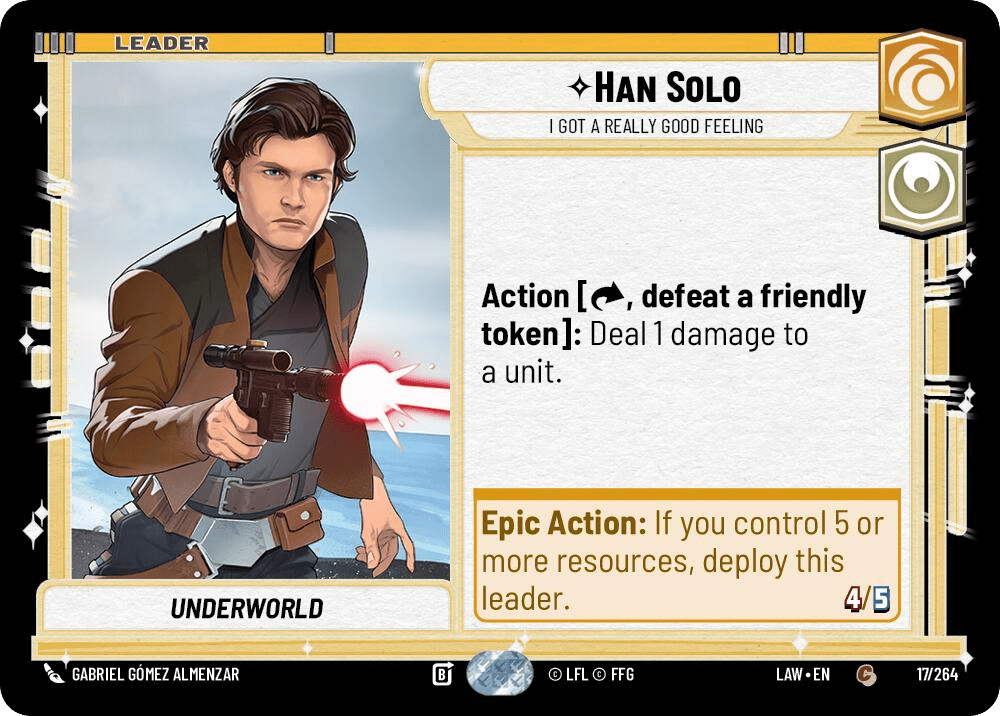
A disturbing number of villainous blue and red cards floated by over the course of the draft that nearly made me second-guess that call — and I won’t pretend they weren’t tempting — but heroic yellow was genuinely open in my pod and I ended up with a pretty respectable pile. Luke and Krrsantan at the top end, a couple of Broken Horns in space, some reasonable cheap plays, and a credit package to actually power Han’s ability, including three copies of Backed by the Hutts. I went undefeated in matches on the night, dropping just one game to a Hera blue deck that landed a Shielded Hauler in space I couldn’t find an answer to. One game in a draft. I’ll take it.
For those of you who caught my prerelease guide back in early March, you know I went in fired up about what this set was doing for the limited experience. Now that the season has wrapped and we’ve got the Prague Regional Championship data in hand, I want to revisit some of those preseason reads, acknowledge where things landed, and give you my honest assessment of what this format actually was.
The short version: it was pretty great. The longer version is a bit more nuanced, of course.
The Verdict Against the Field
LAW lands at the top of the limited tier list for me. The best of the four sets currently in Premiere, and it’s not particularly close. LAW felt like a format where your decisions actually mattered across a longer arc, and where the draft rewarded careful thinking about what you were building rather than just snapping the most obviously powerful rare you saw.
That said, LAW comes with an important asterisk: rares and uncommons decided quite a lot of games. The commons pool is solid and drafting it well matters — but if one player opened a genuine midrange bomb and the other didn’t, the gap was often insurmountable. When you’re sitting across from someone who opened Maul or Luke or Jabba’s Rancor and you’ve got a pile of competent commons, it is what it is.
The Removal Problem
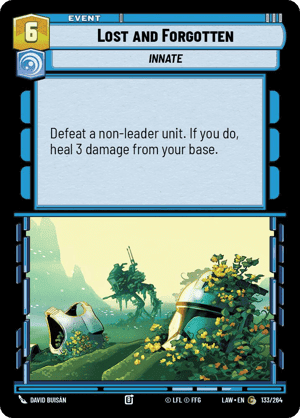
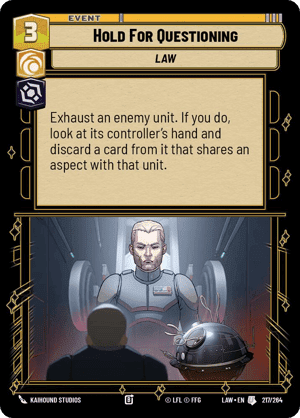
Removal in LAW limited is more constrained than what we’ve seen in prior sets. There simply isn’t as much of it, and what’s there tends to either cost a lot or come with significant conditions. Nothing Left to Fear asks you to already have a threat on board to pull the trigger. Lost and Forgotten is the format’s best removal and I called it that going in — the Heal 3 rider at least justifies the six-cost ask. Hold For Questioning is the most interesting removal-adjacent tool in the set, exhausting an enemy unit and stripping a card from their hand, but it doesn’t answer the threat permanently.
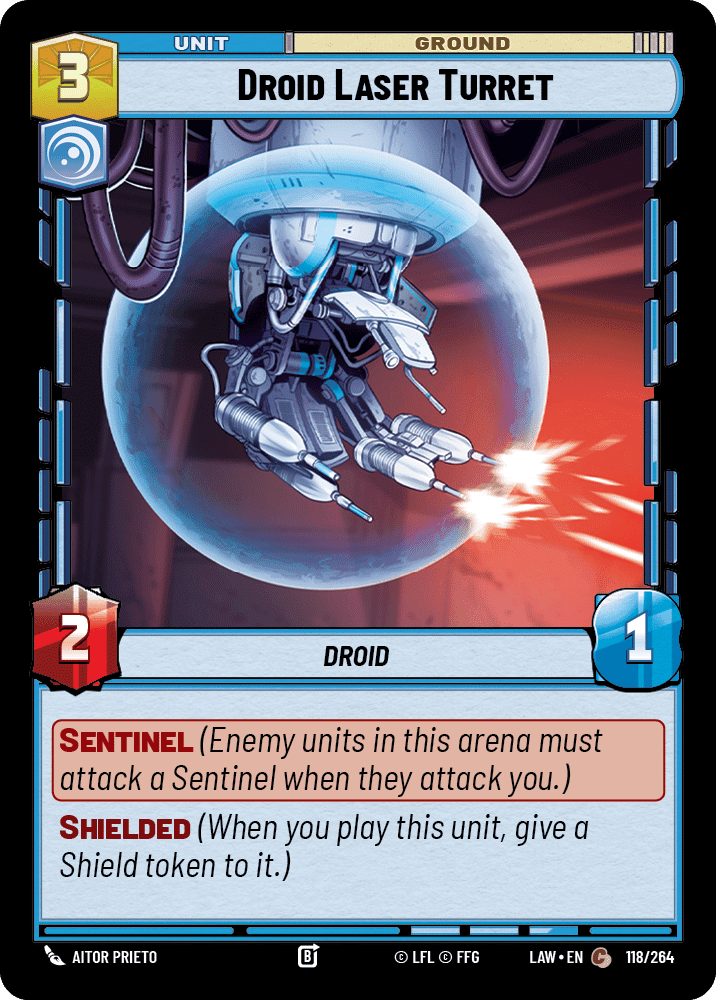
The Sentinel situation made things worse. On paper, LAW has roughly as many Sentinels as SEC did; in practice they’re considerably weaker, most sitting at three health or less. Compare that to SEC, where you had genuine walls in the four-to-seven health range that actually made attackers think. Part of why LAW’s Sentinels can’t hold the same ground is the Saboteur count which gives your opponent quite a lot of tools to route around whatever roadblocks you put up. The most reliable common Sentinel in the format is probably the Droid Laser Turret, a 2/1 shielded for three — which stops two attacks if you’re lucky, and dies to a sideways look if you’re not.
The practical result was that LAW limited had a real “ships passing in the night” quality at times. Without reliable removal or sticky Sentinels, games frequently devolved into pure damage races where both players were doing base math and mostly ignoring the board. Last night’s undefeated run was built almost entirely on going under people rather than through them, which tells you something about the format’s texture.
Vel Sartha: The Quiet Best
Going into the prerelease, I wrote that Vel Sartha might be “the quiet best leader in LAW sealed, and I suspect a lot of people are sleeping on her.” As it turns out, the Prague Regional Championship Limited — 560 players, the largest LAW limited event on record, with a Day 2 booster draft, validated that read pretty thoroughly. Vel Sartha won the whole thing, with Cuendae taking it down paired with a Red (Aggression) multiaspect base.
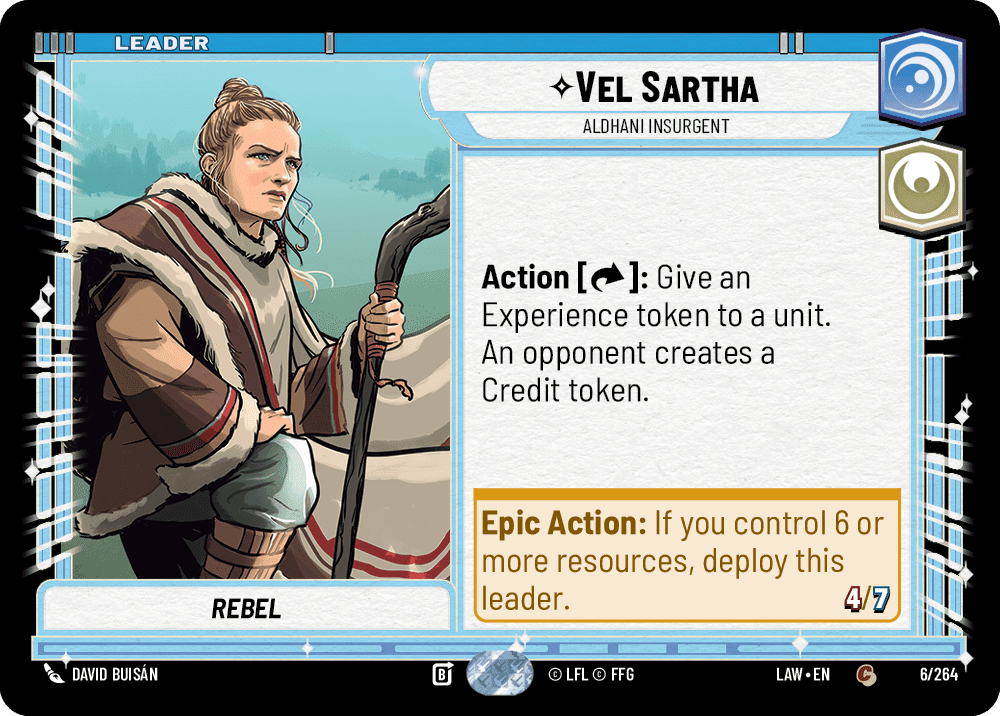
It’s not hard to see why. Her ability does something very strong to find in a format with constrained removal: she makes your average cards better. In limited, most of your deck is commons you’re scraping for every edge, trying to squeeze value out of cards designed to be role players. If you can play a unit to the off arena and load it up just a couple of times, you’ll almost certainly run away with things while your opponent can’t turn up removal or trade profitably — extra income from credits be damned. The credit giveaway also turned out to be less punishing in practice than it looked on paper. Vel was handing her opponents a modest resource bump, not a second mortgage.
The Vigilance/Heroism pairing gives you access to what I still believe are the two best sealed aspects in the set, and the 4/7 deploy statline is solid enough that the 7 HP is genuinely tough to push through. It’s worth noting we’d already seen this playbook: Leia Organa’s Experience-stacking gameplan dominated SEC limited, and Vel is a version of that same core idea. In virtually any situation, a snowballing Experience unit in a format this light on answers is a problem your opponent simply cannot solve cleanly.
Aurra Sing: Great in All Three Formats
The other Vigilance leader I want to highlight is Aurra Sing and even as I type that, I’m aware of how on-brand it is given that I opened her last night and deliberately went elsewhere just to avoid being predictable. In a format with limited removal and several juicy x/1 targets running around, her ability to defeat a non-leader unit with 1 or less remaining HP is doing real work without requiring you to dedicate an extra card to it. She’s also sometimes very useful to pick off something with a shield rather than dealing damage to it — strong value no matter how you slice it.
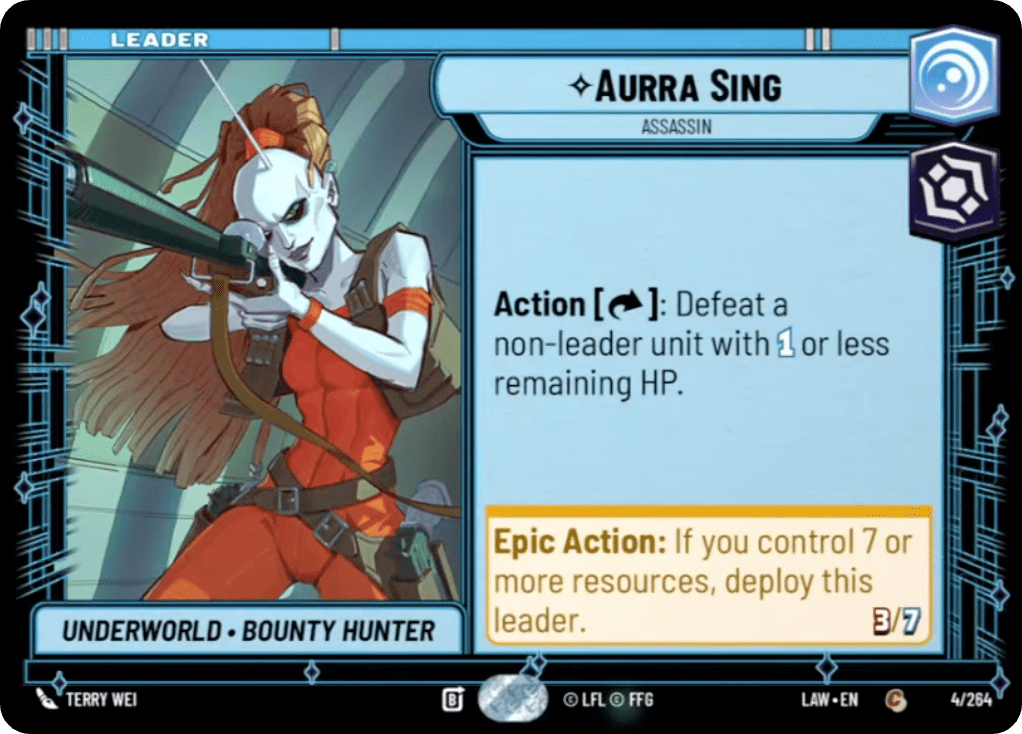
What I came to appreciate about Aurra is how much she warps combat math even sitting on the undeployed side. Opponents can’t take the trades they’d normally take. A profitable attack that leaves their unit at one HP suddenly isn’t profitable at all. It’s a tool your opponent has to respect every single turn, whether you use it or not. When deployed, her stats are… fine. Not great. But coming with point-and-click removal on demand that can hit relevant bodies in a format this light on answers — turns out that’s some good. She cracked the Top 8 in Prague at 7th place, which I think reflects her ceiling pretty accurately: not quite Vel’s level as a format-defining threat, but consistently doing valuable work.
It’s not lost on me that my picks for the two best leaders in LAW limited are both Vigilance. That aspect was always where you wanted to be. I said so going in, and the format bore it out.
The Penalty Reducers: Better in Sealed
Agent Kallus and Hera Syndulla both feel, intuitively, like they should be excellent in limited — the promise of ignoring aspect penalties is obviously appealing. In practice, both come with weaknesses that drag them down in draft specifically. Kallus creates a real taxation-style drag on your curve even after deploying: one resource every time you play an off-aspect card means you’re effectively always a turn behind, and that compounds in a format where the damage race starts early. Hera’s ability requires two or more units in play, which means a patient opponent who keeps trading into your board can shut her off almost at will. Keep the board clear and her splashes simply don’t matter.
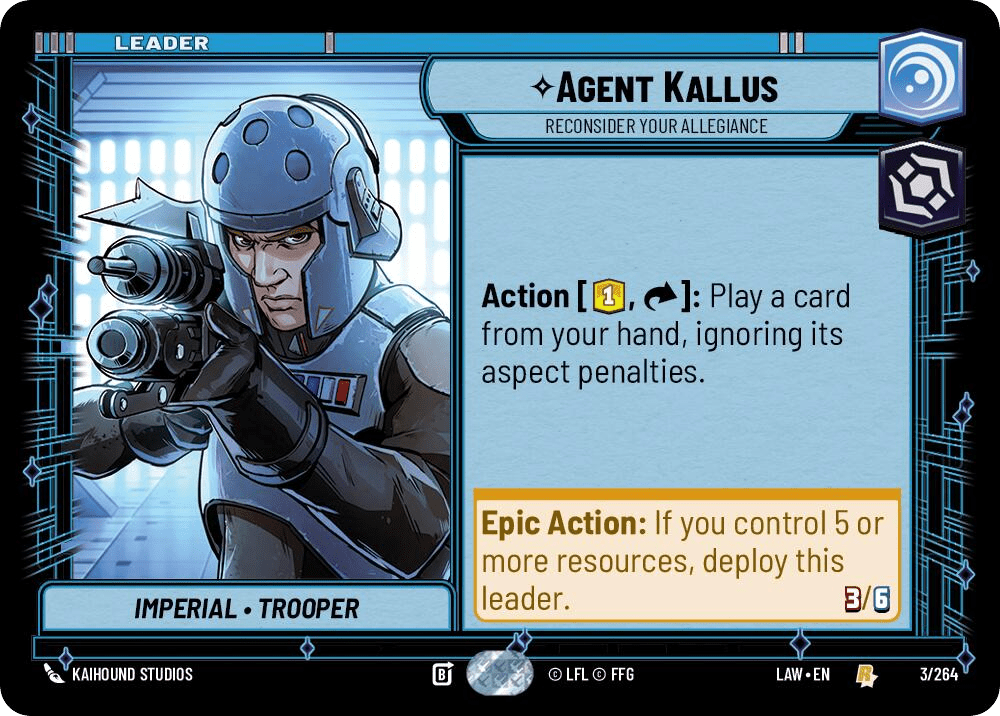
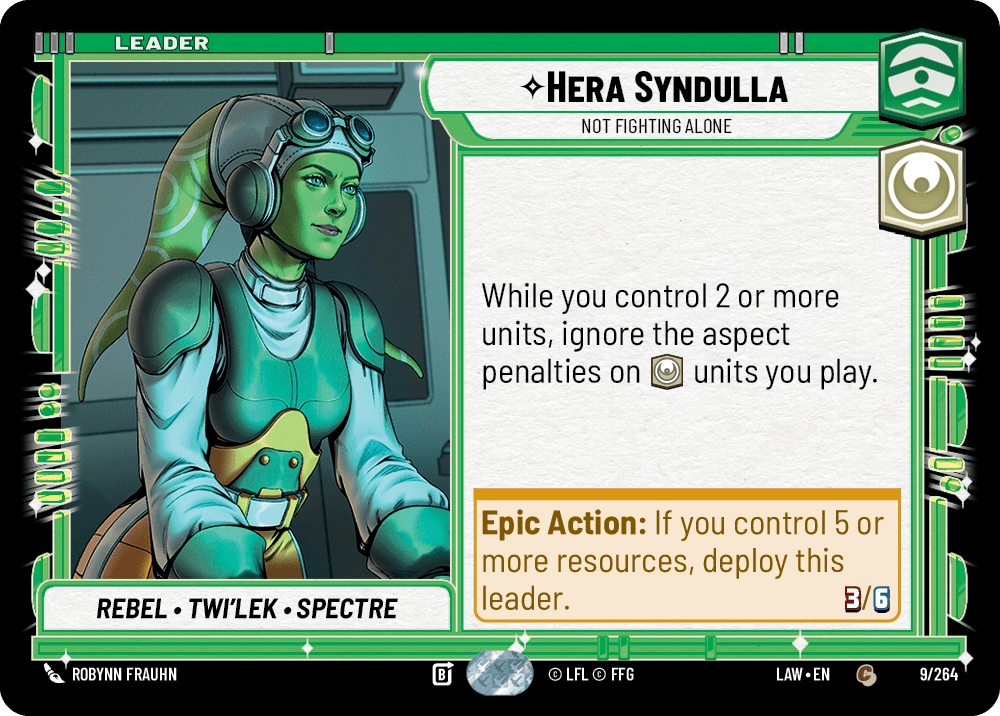
Both fair noticeably better in sealed, where curves get wonkier and outstanding bombs can be leveraged harder against a thinner cardpool. In draft, you generally have better options than needing to cheat aspect penalties. Two to three off-aspect cards is about the right number regardless of which limited format you’re playing. Any more and you’re courting clunky draws in games where you never see the Epic Action at the right moment.
The Splash Bases: A Quiet Win for the Format
The decision to include splash-capable bases at common is one of the things I appreciate most about LAW’s limited design. The Epic Action is simple (play a card ignoring one of its non-Heroism/Villainy aspect penalties) but the table impact is real.
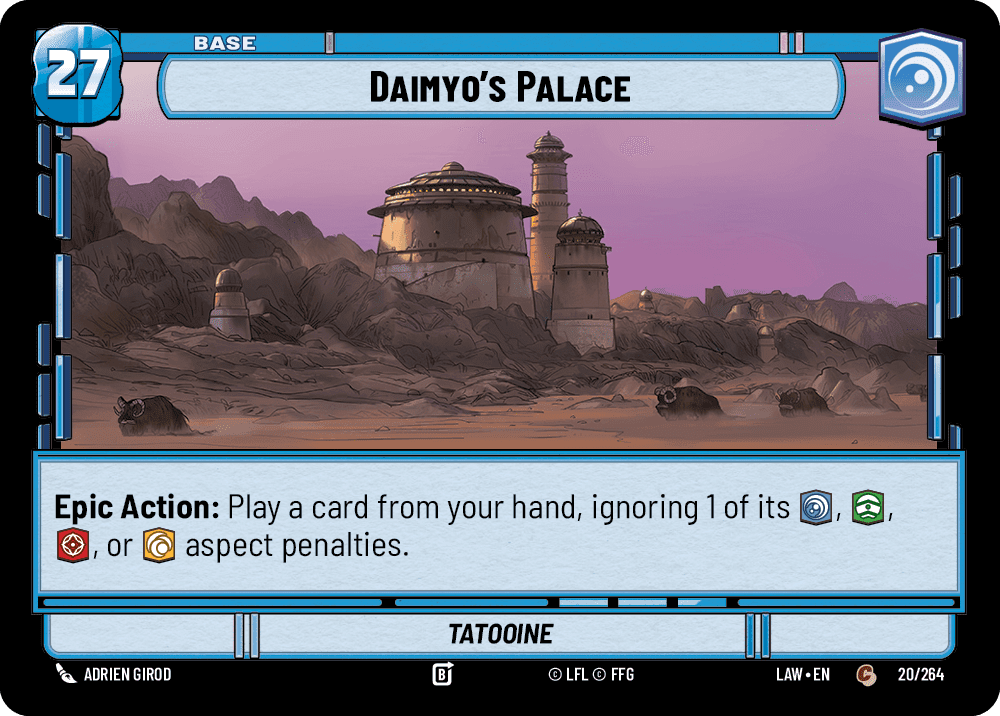
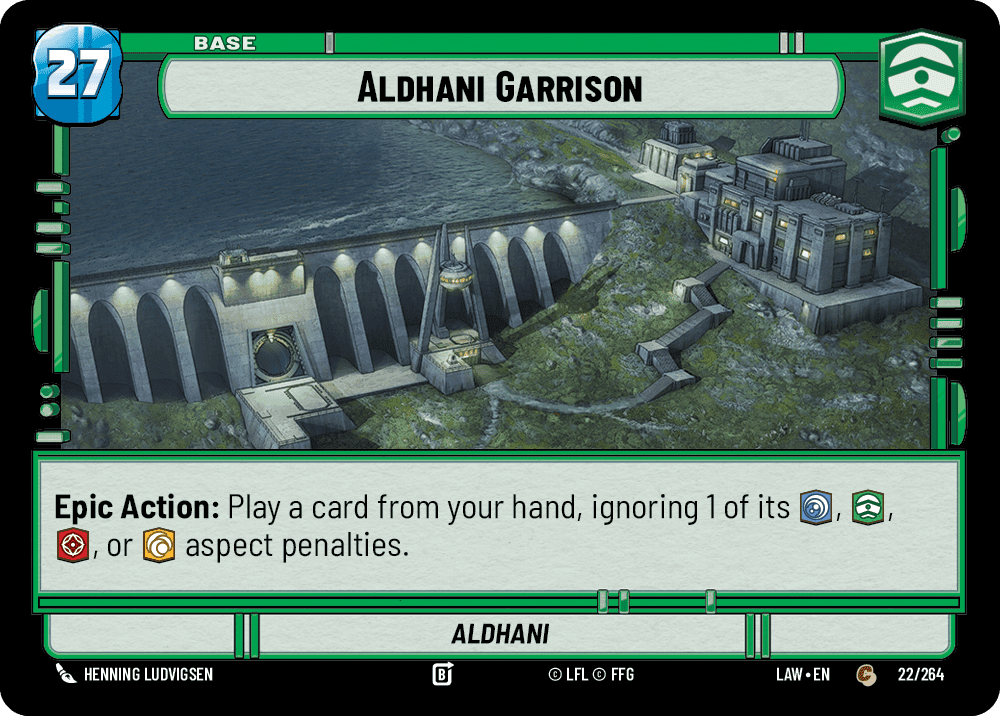
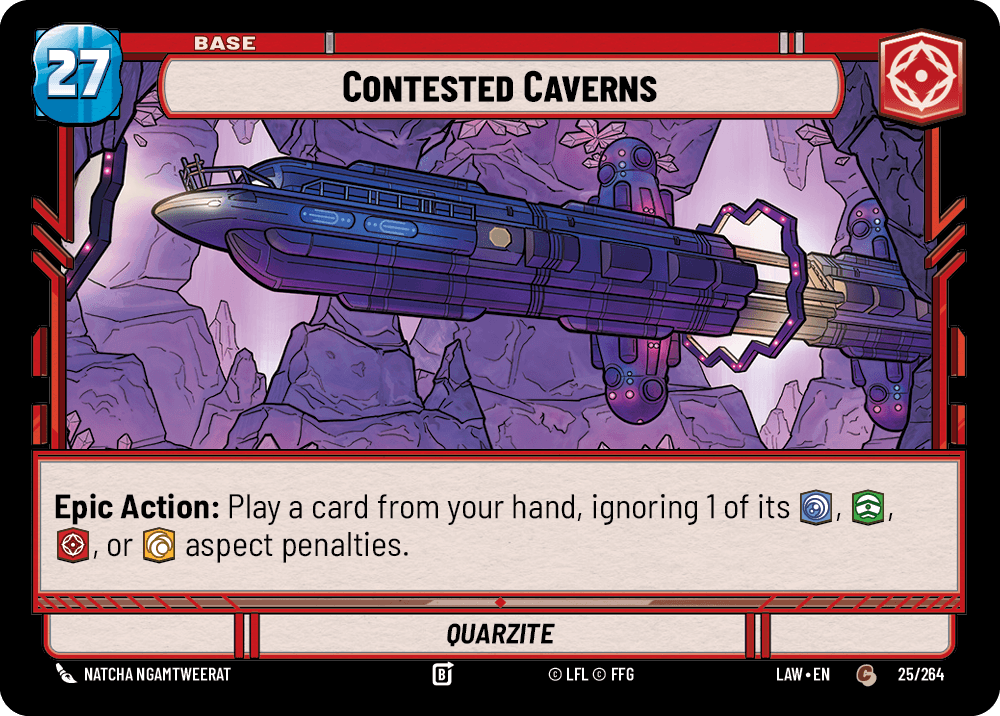
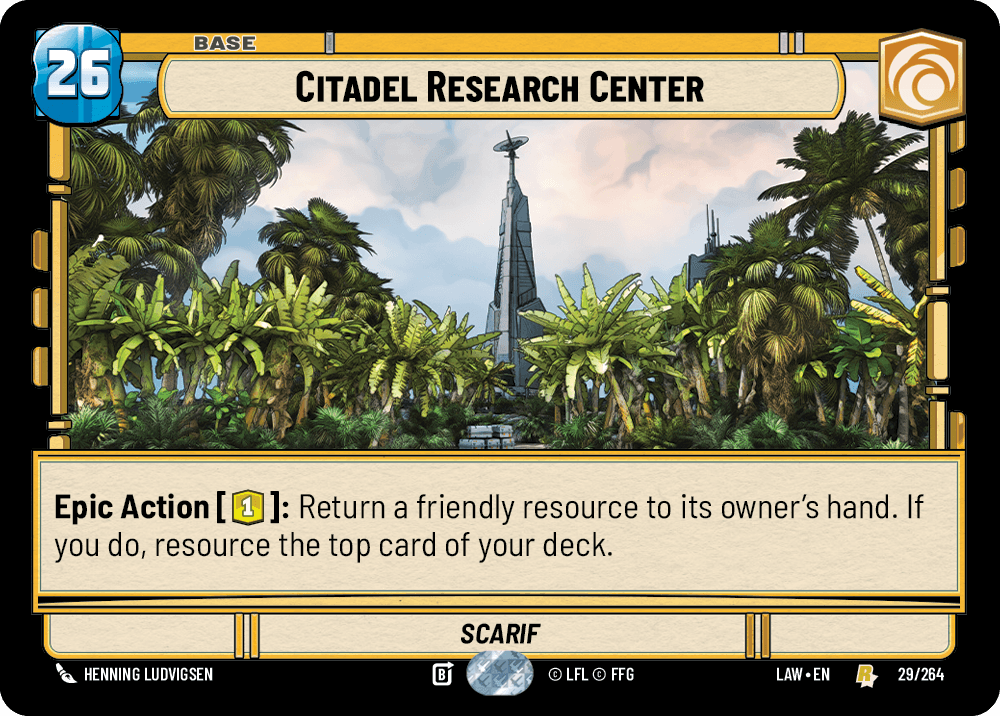
These bases give every drafter a meaningful safety valve: snag that key piece of removal or the bomb you’d otherwise never play, without fully committing to a second aspect. They also enable one of the most enjoyable plays in limited — a hate draft you can actually run. There’s something deeply satisfying about keeping a card specifically to deny someone else and then being able to play it yourself. And critically, they don’t push things far enough to make color identity or careful deckbuilding irrelevant. The Epic Action fires once per game. You’re adding flexibility, not collapsing the format’s structure.
The Commons That Did the Work
Your deck is built on commons (54 of them across six packs) and the ones that held up best over the season are worth noting. The dual-aspect common cycle was as important as I expected; any time you opened two or three copies of the same dual-aspect common with multiple keywords, your pool was telling you something worth listening to. Bith Brute and the Vigilance/Aggression commons were consistent performers throughout, which tracks with those aspects being where you wanted to be.
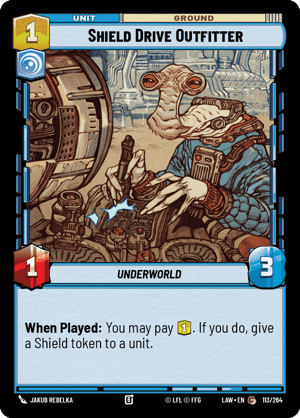
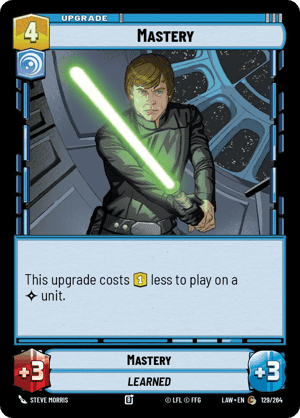
Lost and Forgotten remains the clear best common removal card in the set: a defeat effect with base healing attached is exactly the two-for-one that any limited deck wants to close out games. Among the units, Lepi Lookout brought a shielded body that trades well multiple times, Droid Laser Turret was the best Sentinel available, and Shield Drive Outfitter offered surprisingly flexible protection. On the upgrade front, Mastery was a common that could take over games and put on a lot of pressure in a low removal format.
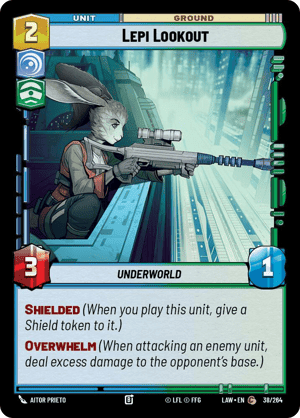
Look, I know you’ll see a pattern here with all of these sharing Vigilance as an aspect and I don’t want to seem like there’s nothing worthwhile in other colors (even just a couple Massassi Group Marines could do a lot of work) but it really does seem like a set where a lot of the smartest things you want to do are all in blue.
The Bottom Line
LAW was a genuinely enjoyable limited environment: better than SEC, better than LOF, better than JTL, and thoughtful enough in its design — the splash bases especially — that it rewarded players who engaged with it on its own terms. The removal constraints are real which can lead to a midrange and bombs-matter dynamic where some games were decided before the first pack opened. And the damage race quality of the format did make you wonder now and then whether the Sentinels were really earning their slots. These are the caveats worth naming, but I don’t think they overwhelm the positives that dual aspect cards and splashes brought to the table. There are a lot of smart but flexible decisions to be made in this format.
On balance, though, this is the most interesting set SWU has given us to draft. It was a Vigilance format, as it turns out. The preseason read was right. And if Prague was any indication, the player who figured that out had a pretty good weekend.
Here’s hoping Ashes of the Empire raises the bar further.
There you have it.
