

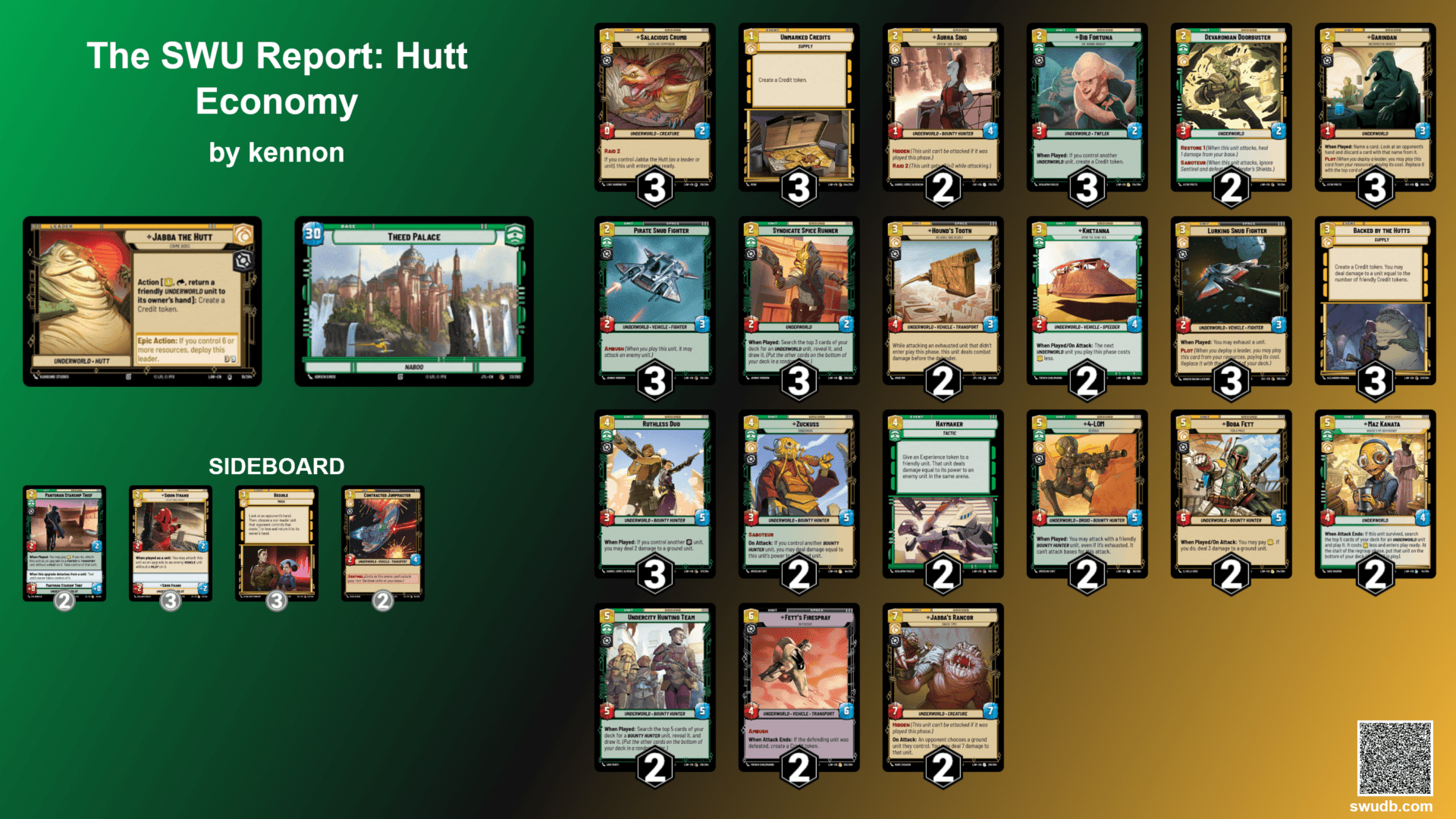
The Hutt Economy: A Jabba the Hutt Deck Tech
By Kennon | The SWU Report
Welcome back to The SWU Report. After rotation, we’re still in that wonderful window where the metagame hasn’t completely solidified yet and the deckbuilding space is wide open. And if you’ve followed me for any length of time, you know that this is my favorite part of any card game’s lifecycle. The wild west period. The “What if?” period. The period where you can show up with something that looks questionable on paper and nobody has the data to tell you you’re wrong.
Last time around, I scratched the Poe archetype itch with a Luthen Rael build that started from a couple of exciting cards I pulled at pre-release. This time, I’m starting from a different place entirely; not a specific card, but a vibe. I wanted to build a Jabba deck that actually felt like running a Hutt criminal empire. Underworld operatives. Bounty Hunters on retainer. Credits flowing like water through a palace full of scum and villainy.
If you read my piece on player archetypes, you know that I’m a Poe at heart — I love building around interesting interactions and interlocking engines. But this particular build taps into something more Luke than Poe, if I’m being honest. The Luke archetype is about choosing your path because it feels right, about leaning into the thematic fantasy of Star Wars even when more “optimal” choices might exist. And that’s what happened here. I didn’t start by asking “What’s the best Cunning/Villainy leader?” I started by asking “What would it feel like to sit on Jabba’s throne and send bounty hunters out to do my bidding while credits pile up around me?”
Turns out, the answer is: it feels pretty good. And somewhere along the way, the thematic choices started lining up with mechanically interesting ones. The Underworld trait isn’t just flavor text in this deck, it’s the literal engine fuel. Credits aren’t just tokens, they’re the currency that unlocks Jabba’s deployed ability. The Bounty Hunter package isn’t just a sub-theme, it’s a removal suite wearing a jetpack. When the theme and the mechanics point in the same direction like that, you know you’re onto something worth exploring.
Let me show you what I’m working with.
CHECK OUT THE DECK ON SWUDB.
The Engine: How Hutts Do Business
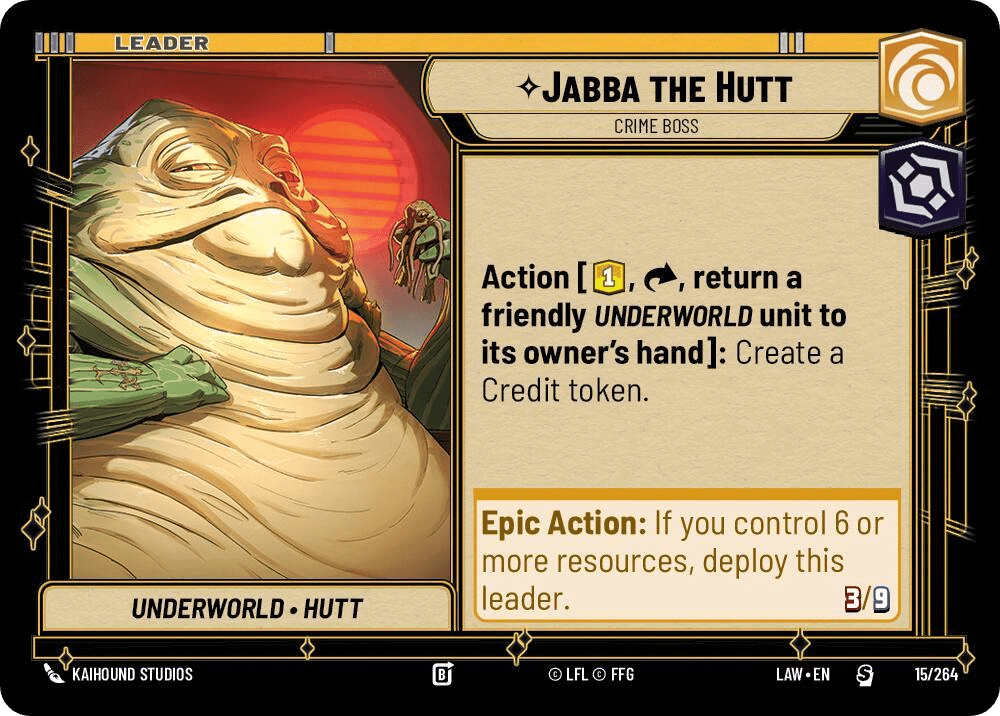
Jabba the Hutt, Crime Boss is a leader whose abilities don’t do anything impressive in isolation. It’s only when you build the right infrastructure around him that the engine starts purring.
So let’s talk about what Jabba actually does.
His leader side has an Action ability: pay 1, exhaust him, and return a friendly Underworld unit to your hand. If you do, create a Credit token. On the surface, that’s… bouncing your own stuff for a token? That sounds like you’re going backward. You spent resources to play a unit, and now you’re picking it back up? Isn’t that just wasting the resources you already spent to get it into play to start with?
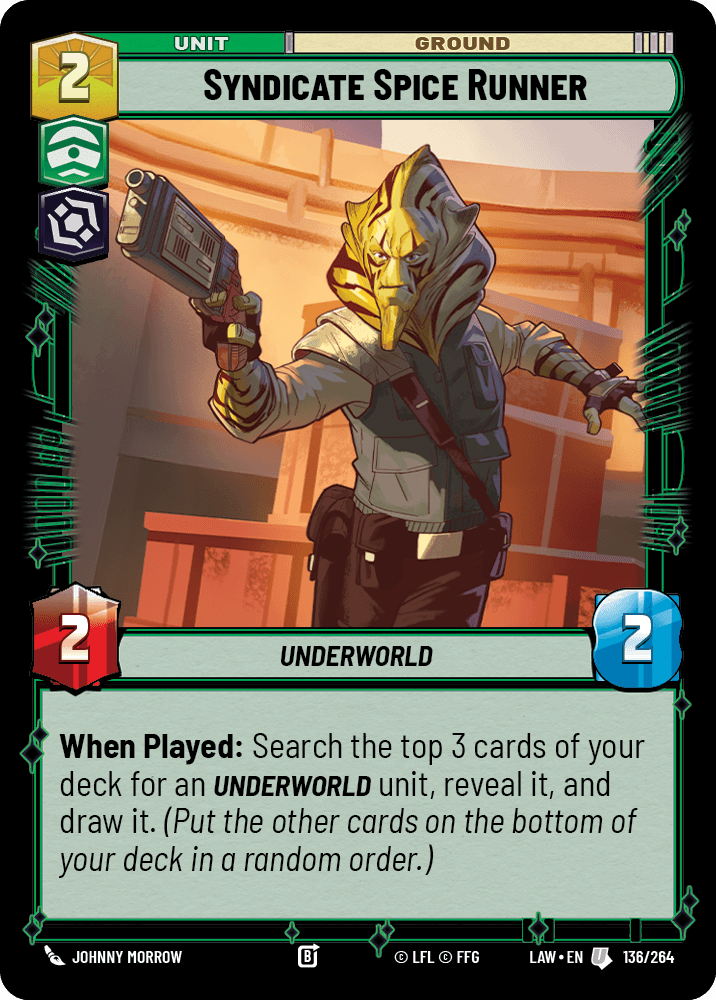
But there are several layers of value hiding in that ability. First, the obvious: you’re picking up a When Played trigger. Every Underworld unit in this deck with a When Played ability becomes a repeatable tool — something you can fire, return, and fire again. Syndicate Spice Runner isn’t a 2/2 for 2 in this deck. It’s a 2/2 for 2 that searches your top 3 for an Underworld unit, and does it every time it hits the table, and it hits the table as many times as Jabba can bounce her.
Second, the resource math. Jabba’s ability costs 1 resource and creates 1 Credit token. That’s roughly resource-neutral on the surface: you’re spending 1 to get 1. But the key difference is that the Credit doesn’t have to be spent immediately. You’re converting a resource that must be spent now into a Credit that can be banked for later. Over several turns of bouncing, those banked Credits accumulate, and when you’re ready for a big turn deploying Jabba, replaying multiple units, fueling Boba Fett’s ability, etc. They’re all sitting there waiting. The bounce isn’t generating free resources. It’s giving you flexibility and timing.
Third, and this might be easy to miss the implications of at first, bouncing resets damage. If your unit just traded attacks and is sitting at 1 remaining HP, Jabba can pull it back to hand and you replay it at full health. If your opponent spreads indirect damage across your board to soften things up, you can negate that damage entirely by bouncing the wounded unit. If a unit is about to die to a ping effect or a follow up attack, you bounce it and save it. This turns Jabba’s ability into a pseudo-heal that also generates a Credit and reloads a When Played trigger. That’s a lot of utility for a single action.
Then comes the deployed side, and this is where things get really interesting. Jabba deploys at 6 resources as a 3/9 (that health pool is not a typo), and he gains a new Action ability: play an Underworld unit from your hand, and if you defeated a Credit token while paying its cost, that unit gains Ambush for this phase. This is where your banked Credits pay off. They’re not just generic resources anymore, they’re Ambush enablers. Bounce a unit, get a Credit, replay the unit using that Credit, it enters with Ambush and immediately attacks. Every cycle generates a fresh ETB trigger, a fresh attack, and the unit comes back with full health.
Is it as flashy as some of the other engines in the format? Probably not. But it’s reliable and an interesting theme. And in my experience, that’s exactly what primarily Luke motivated players enjoy.
The Card Choices
The Economy
Credit tokens are the fuel that makes this whole machine run. Without them, Jabba’s deployed side is just a normal play action. With them, it’s a repeatable Ambush generator.
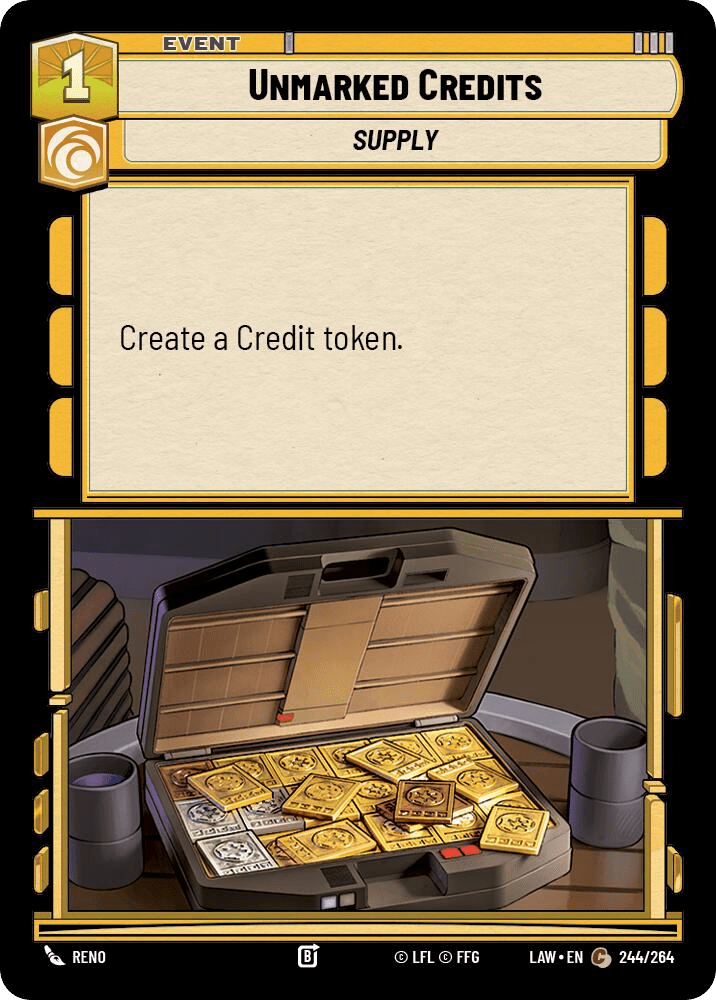
Unmarked Credits: The simplest possible version of this. 1 resource, create a Credit. You play this on turn 1 alongside resourcing a card, and you’ve already got fuel in the tank for later. Three copies because you always want to see one early.
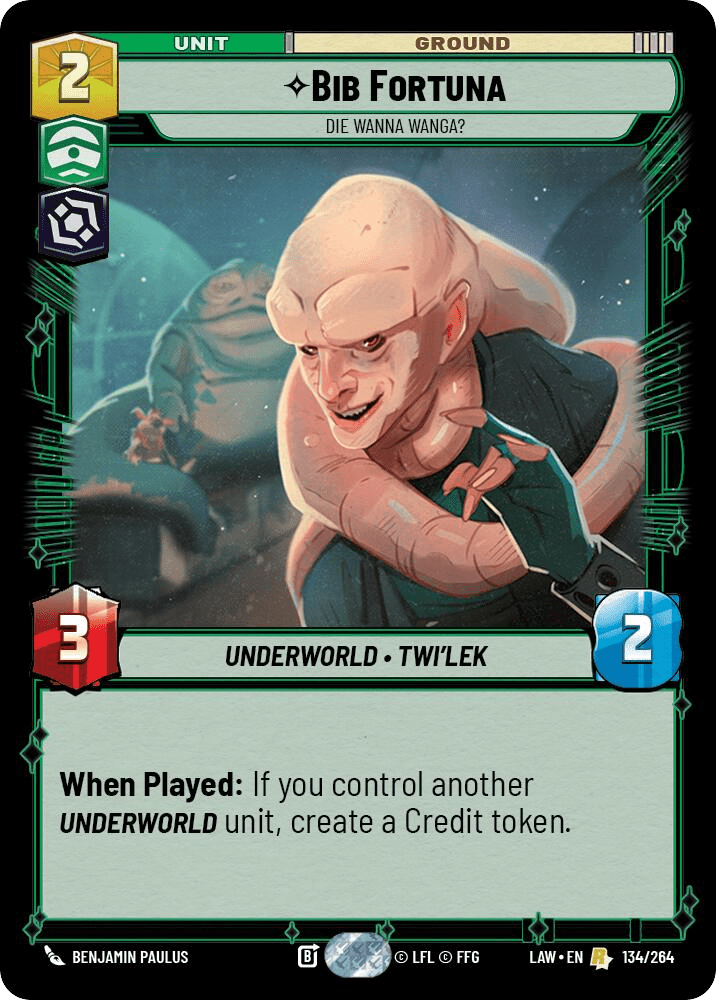
Bib Fortuna: Here is where the economy starts to feel like an actual engine. A 3/2 Underworld unit for 2 that creates a Credit when he enters play if you control another Underworld unit. In the early game, that condition is easy to meet with a Salacious Crumb already on board. But the real magic is mid-game: bounce Bib with Jabba (pay 1, get a Credit), then replay Bib for 2 (or 1 plus a Credit through deployed Jabba for Ambush), and trigger his When Played for another Credit. You’re spending resources to generate Credits, which sounds like a wash — but remember, those Credits are bankable. You’re converting immediate resources into stored fuel that you can cash in for Ambush entries and Boba Fett activations later.
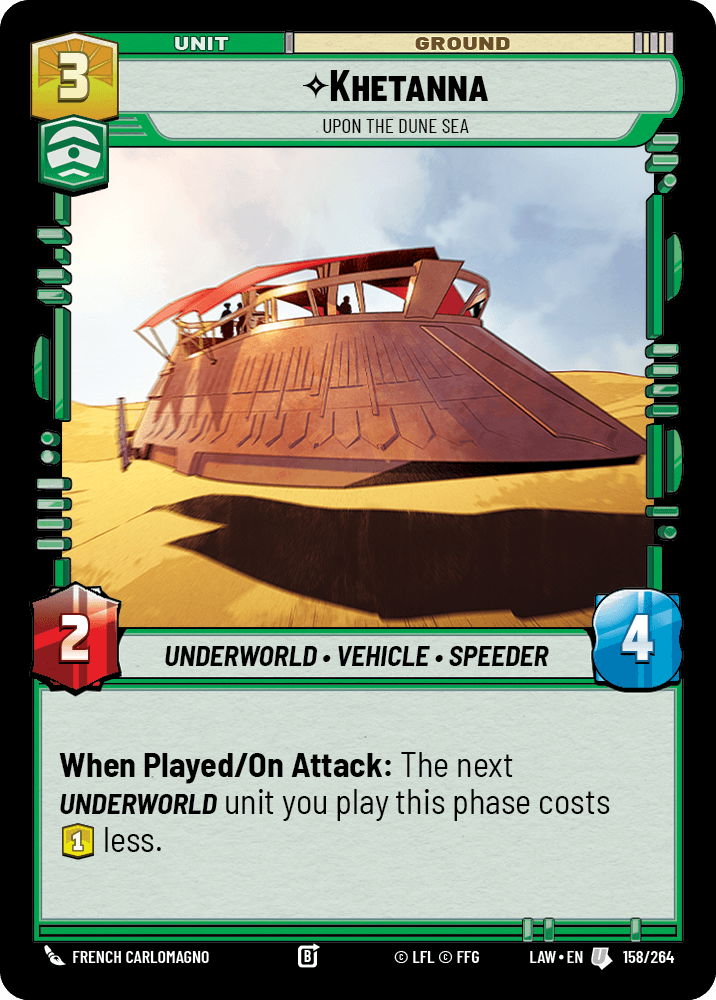
Khetanna, Upon the Dune Sea: This vehicle does something subtly powerful: on play and on attack, the next Underworld unit you play this phase costs 1 less. In a deck that’s constantly replaying units through Jabba’s deployed ability, that discount adds up fast. It doesn’t directly generate a credit, but it does mean your bounce-replay loops cost less, which means more econ efficiency long term.
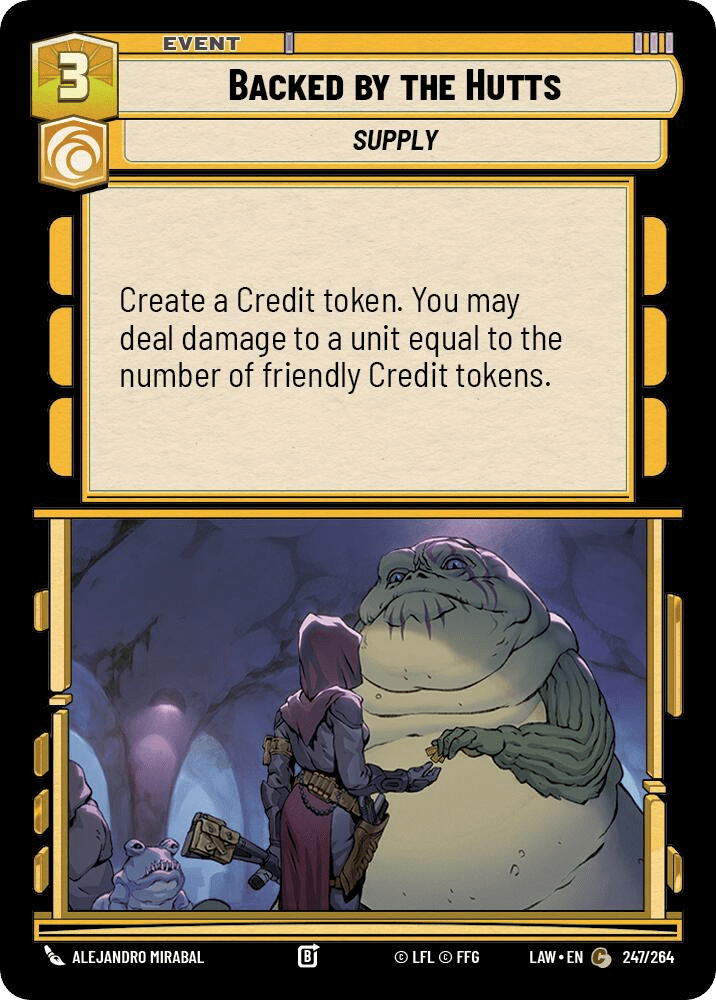
Backed by the Hutts: Serves double duty here. It creates a Credit token and lets you deal damage to a unit equal to your total Credit count. Early game, that’s a Credit plus a ping. Late game, after you’ve been accumulating Credits through Jabba’s bounces and various generators, it can function as legitimate removal.
The Bounce Targets
Not every Underworld unit is created equal when it comes to bouncing. The best ones have When Played abilities that you genuinely want to trigger multiple times.
Syndicate Spice Runner: One of the best bounce targets in the deck, full stop. When Played, it searches the top 3 cards of your deck for an Underworld unit, reveals it, and draws it. In a deck that’s roughly 80% Underworld, that’s a very consistent draw. Bounce it, replay it, dig deeper. It’s the card that ensures you don’t run out of gas, and she’s the reason I’m comfortable running three copies of a non-unique. You want to see it early, and you want to see it often.
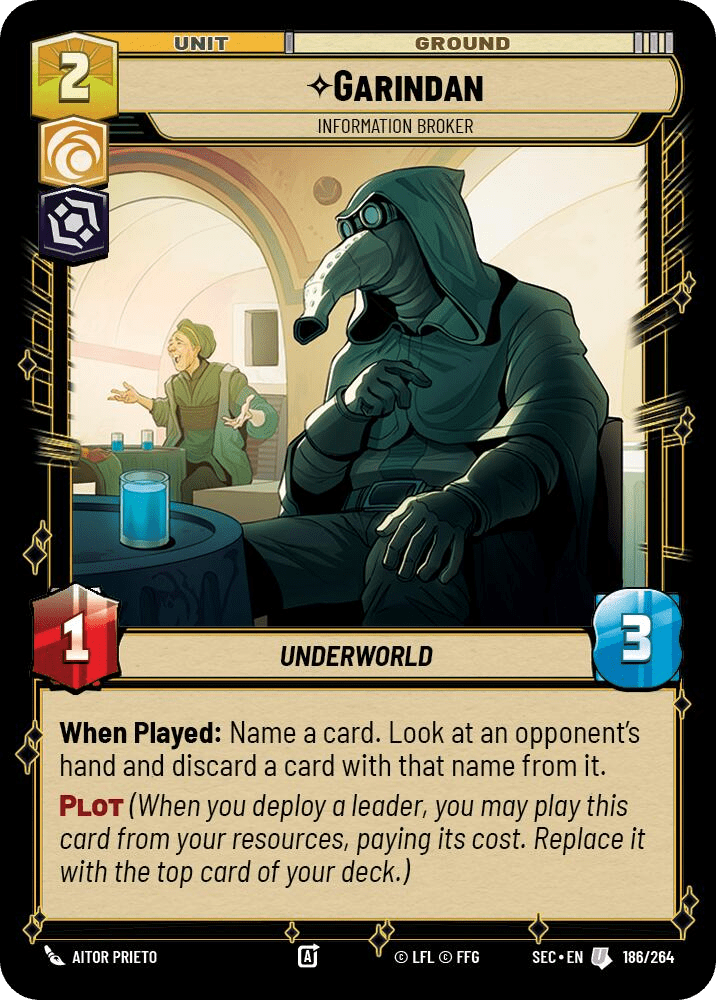
Garindan, Information Broker: Hand disruption on a stick. When Played, you name a card and look at your opponent’s hand and if they have a copy, you discard it. The power here is precision. You can name the specific card that’s going to ruin your day: a Chewbacca pilot before it lands on a vehicle, an Aggressive Negotiations before it turns a modest unit into a lethal threat, whatever removal event you suspect they’re holding. Bouncing and replaying Garindan means you get to keep cherry-picking problematic cards right out of their hand, which is the kind of repeatable surgical disruption that makes opponents deeply uncomfortable. And he has Plot, which means you can tuck him into your resources early and fire him off when you deploy Jabba.
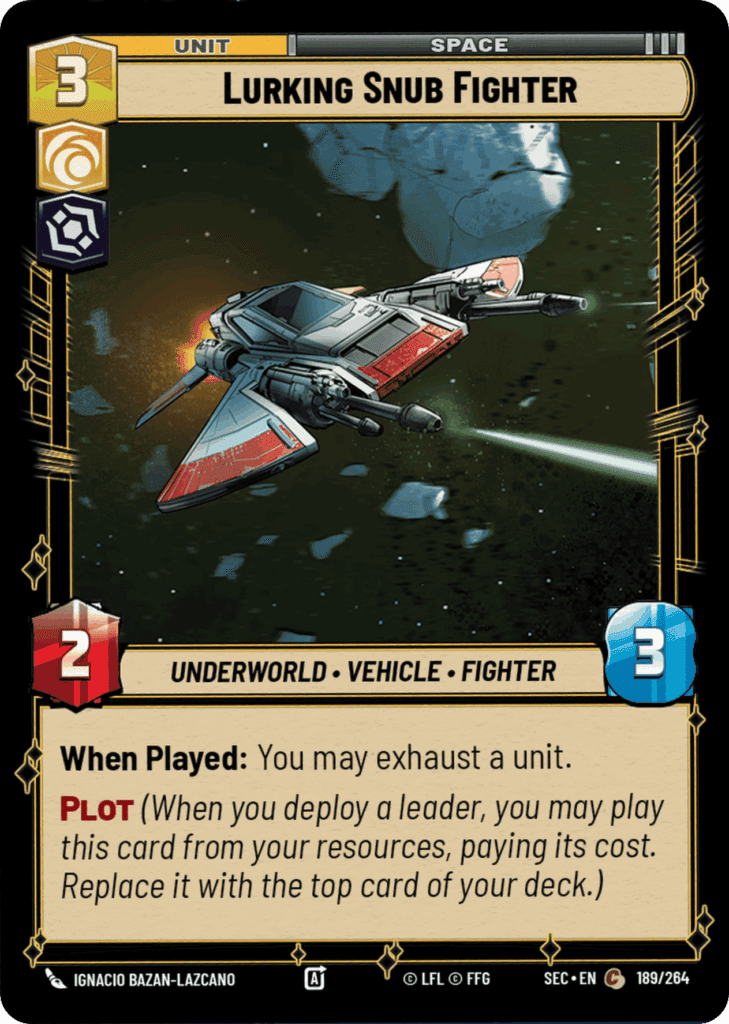
Lurking Snub Fighter: A 2/3 in space for 3 that exhausts a unit when played. Exhaust as a disruption tool is having a bit of a moment right now, and for good reason it’s one of the most flexible forms of interaction in the game. Against the slightly Voltron-style piloted vehicle decks that have been gaining popularity, bouncing and replaying Lurking Snub Fighter to repeatedly exhaust their big invested unit can really help keep you in the fight. They spent multiple cards building a loaded vehicle with pilots and upgrades, and you’re keeping it tapped down for 3 resources a cycle. Like Garindan, it also has Plot, giving you the option to tuck it into resources early and deploy it at the right moment. Three copies because repeatable exhaustion from the bounce loop is one of your primary ways to control the board.
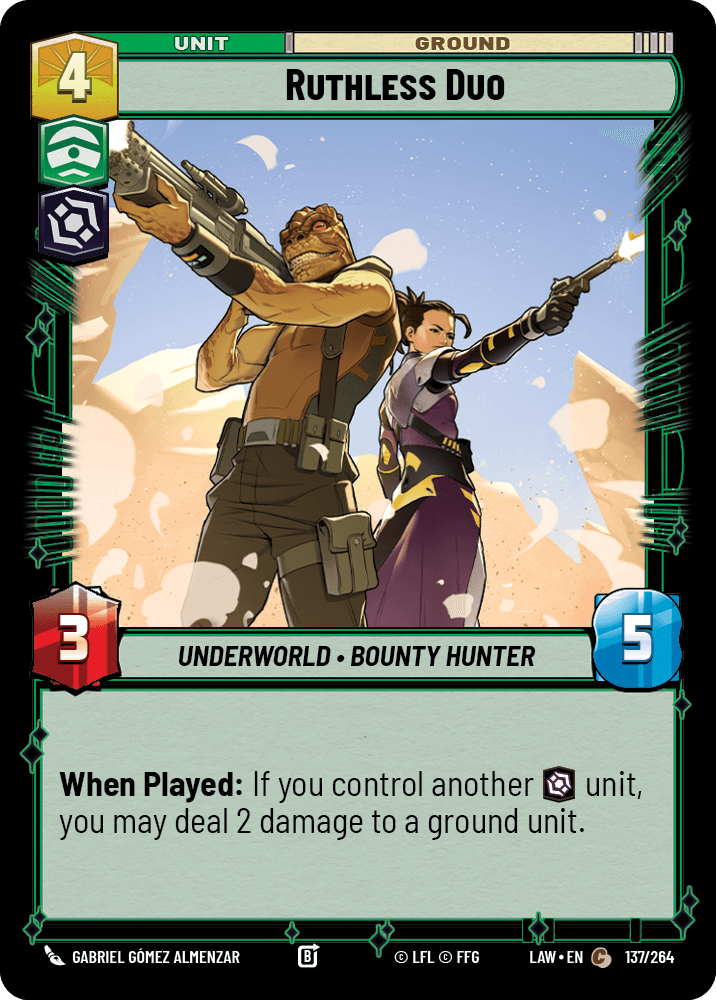
Ruthless Duo: Your 4-cost ground control bounce payoff. A 3/5 Underworld Bounty Hunter that deals 2 damage to a ground unit on play if you control another Villainy unit. Bounce and replay means repeatable removal, and the 3/5 statline means it actually sticks around if your opponent can’t prioritize it.
The Supporting Cast
Beyond the economy and bounce targets, this deck packs some decent utility in this Cunning/Villainy/Command shell. These units don’t necessarily have When Played abilities worth bouncing, but they pull their weight through raw efficiency on the board or at least being flavor wins. And remember, even units without When Played abilities benefit from being bounced if they’ve taken damage. A wounded Aurra Sing is one Jabba activation away from being a full-health unit again.
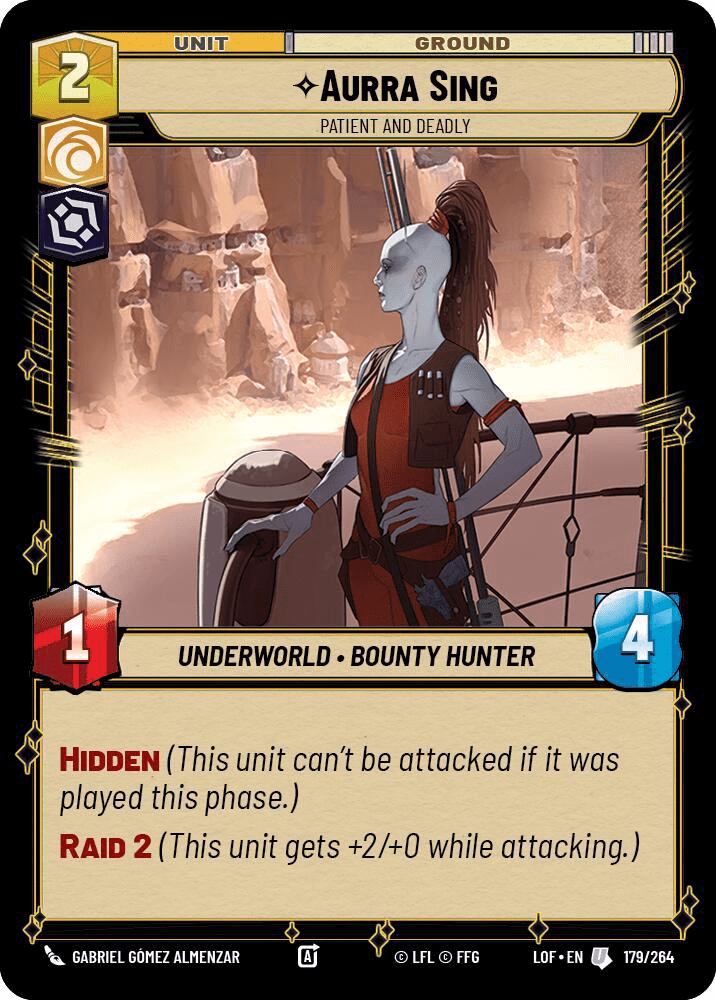
Aurra Sing, Patient and Deadly: Hidden plus Raid 2 on a 1/4 frame for 2. She can’t be attacked the turn she lands, and she swings for 3. In a deck that cares about getting attacks in, Hidden is premium and it virtually guarantees the swing happens. And as an Underworld Bounty Hunter, she feeds both Zuckuss and 4-LOM’s Bounty Hunter synergies.
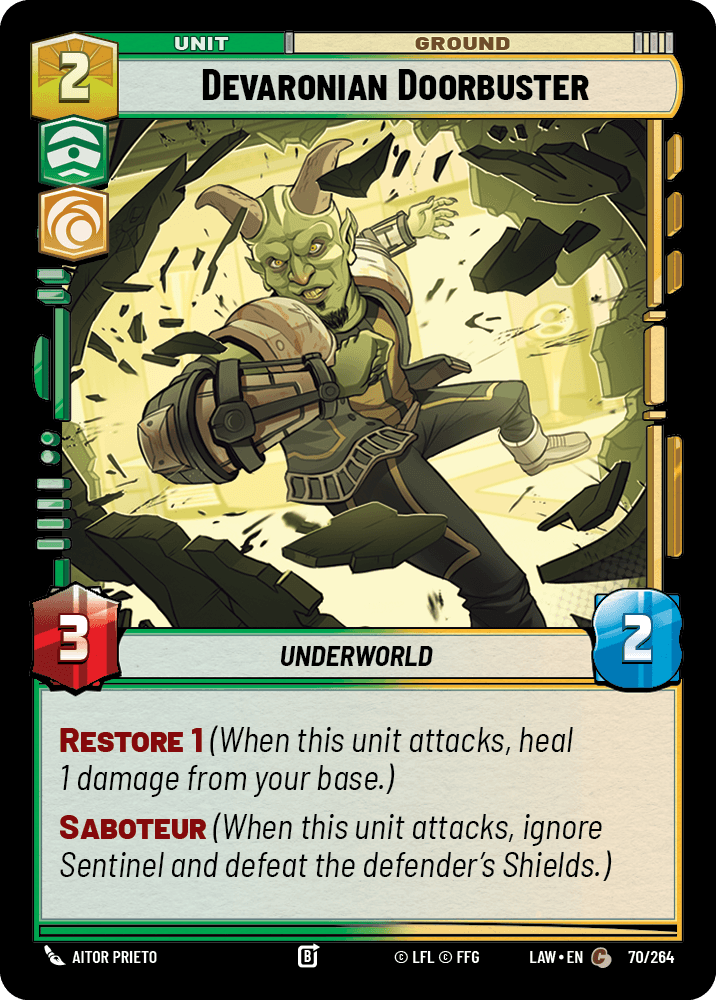
Devaronian Doorbuster: Restore 1 and Saboteur on a 3/2 Underworld body for 2. Saboteur punches through Sentinels and pops Shields, which matters when youneed to close out games. Restore 1 offsets a little bit of the base damage you’ll take in the early turns while setting up.
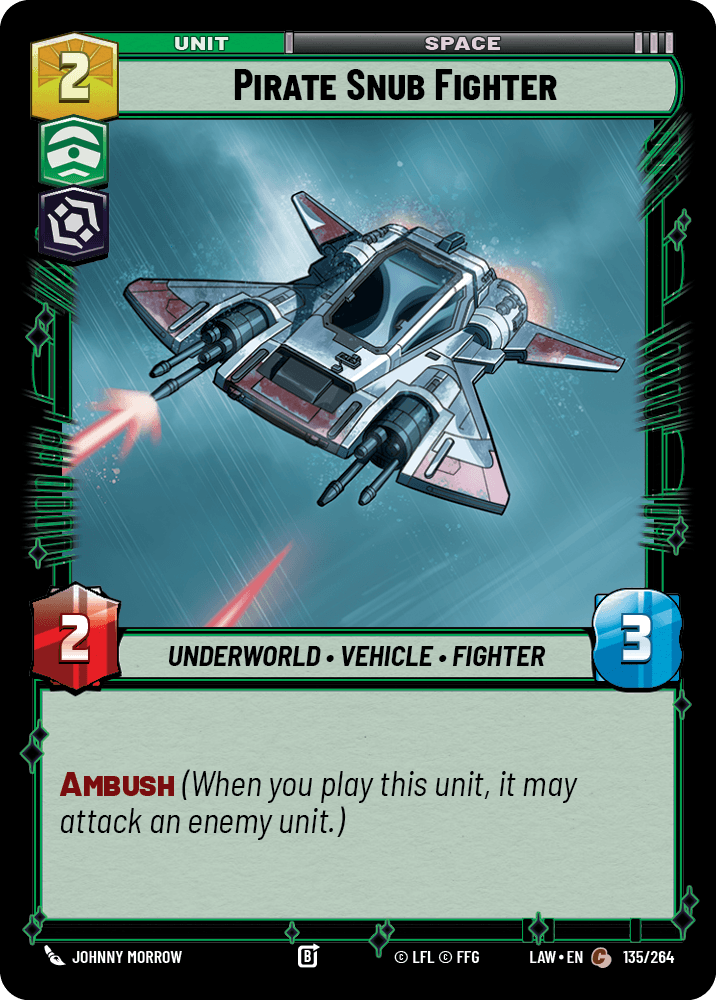
Pirate Snub Fighter: Let’s be honest, a 2/3 Ambush in space isn’t going to win any card-of-the-year awards. But it’s one of our best options in-aspect for trying to keep aggressive space starts under control, and right now, that matters. Some of the fastest decks in the format are pressuring hard through the space arena, and if you can’t contest early, you’re eating free base damage while your ground engine is still warming up. Pirate Snub Fighter enters and immediately trades for smaller ships, which buys time. And being Underworld gives it a bit of extra flexibility with Jabba. In a pinch, you can bounce it back to hand for a Credit and redeploy it lateror spend that credit on something else. Not glamorous, but functional.
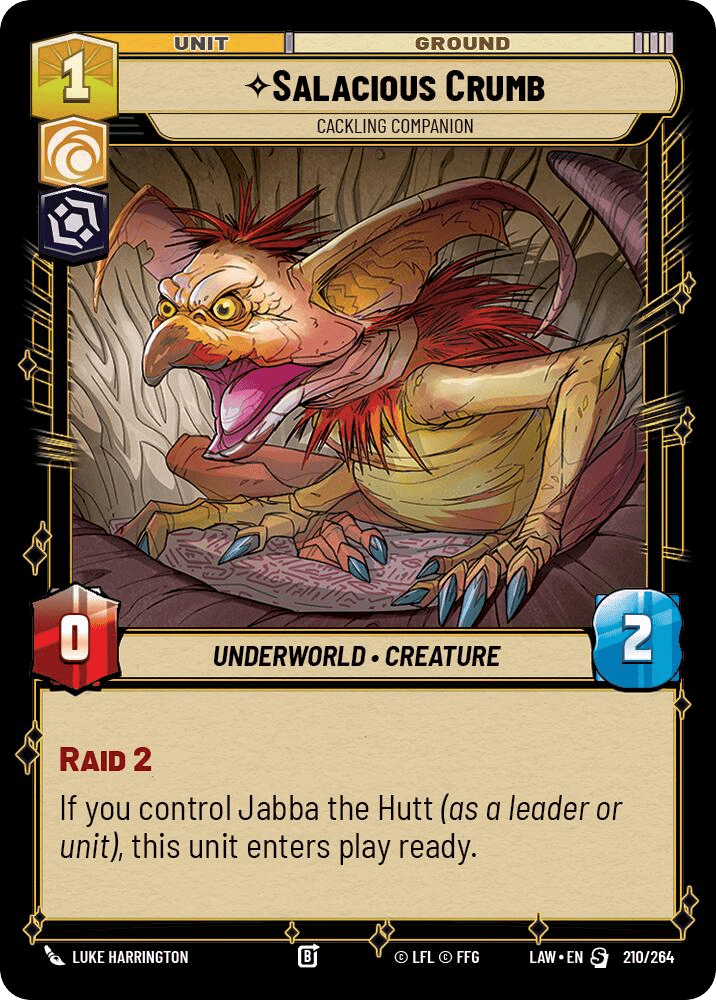
Salacious Crumb, Cackling Companion: A 0/2 for 1 doesn’t look like much, but Raid 2 means he attacks for 2, and when you control Jabba (as a leader or unit), he enters play ready. That last clause is the key: after you deploy Jabba, every time you bounce and replay Crumb, he enters ready and immediately swings for 2. That’s a 1-cost unit generating repeatable chip damage through the bounce loop. And look, from a pure optimization standpoint, a 0/2 body is fragile, but this is one of those Luke archetype moments where the theme and the mechanics align perfectly: Salacious Crumb literally sits at Jabba’s feet, and in this deck, he works best when Jabba is on the table. How can you not include him?
The Bounty Hunter Package
This is where the Luke in me really takes over. There’s a Bounty Hunter sub-theme running through the deck that I want to highlight, and yes, part of the reason it’s here is because the idea of Jabba dispatching bounty hunters to do his dirty work is just chef’s kiss thematically. But the beautiful thing is that it’s not just flavor, the mechanical synergies between these cards are genuinely strong and conveniently, they’re also Underworld traited so Jabba can do his thing with them as well! This is what I mean when I say the theme and the mechanics are pointing in the same direction.
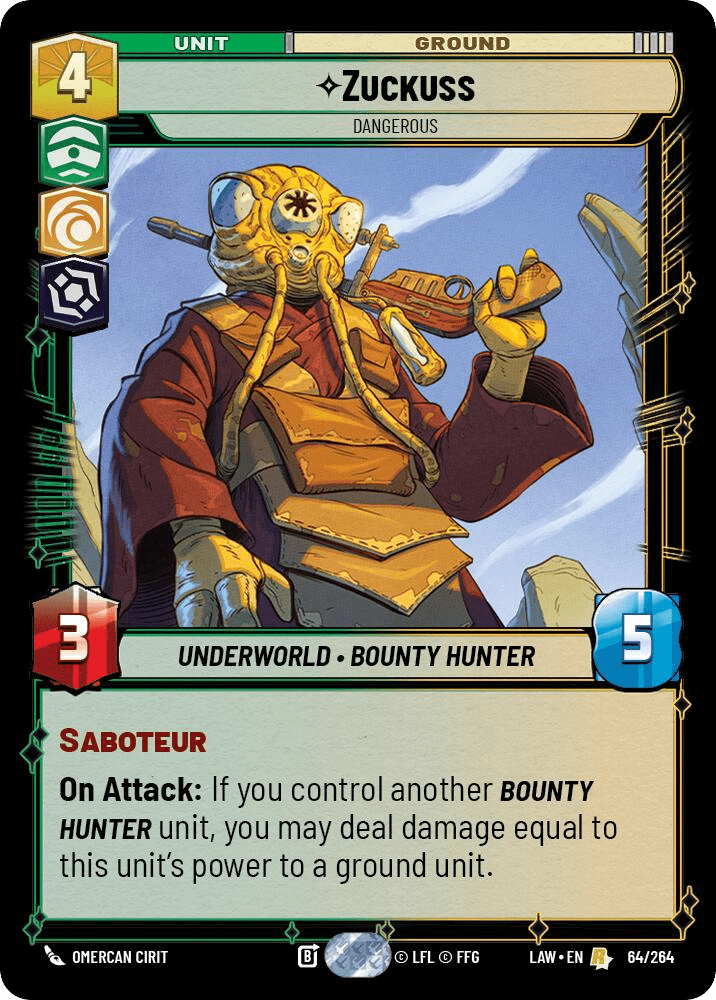
Zuckuss, Dangerous: A 3/5 Saboteur for 4 with a nasty On Attack ability: if you control another Bounty Hunter unit, he deals damage equal to his power to a ground unit. That’s a 3-damage ping just for attacking and if you’ve buffed him with an Experience token from Haymaker, so much the better. In a deck with Aurra Sing, Ruthless Duo, Boba Fett, 4-LOM, Undercity Hunting Team, and Hound’s Tooth all carrying the Bounty Hunter trait, the condition is usually met. And you can pair him with th Ruthless Duo damage to take out larger threats.
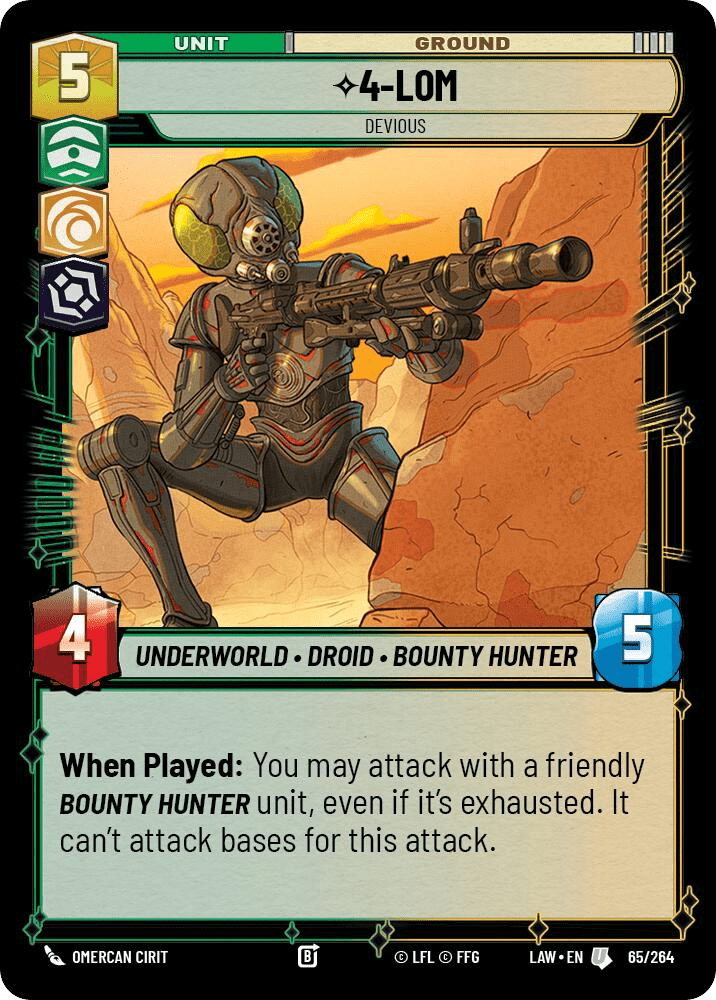
4-LOM, Devious: Ties the bounty hunter package to the bounce engine. When Played, you may attack with a friendly Bounty Hunter unit, even if it’s exhausted. It can’t attack bases for this attack, but that’s fine, you’re using it as removal. Bounce 4-LOM with Jabba, replay him, trigger his When Played again, and suddenly a Bounty Hunter that already attacked this turn gets to attack again. That’s the kind of unexpected second swing that completely disrupts your opponent’s board calculations.
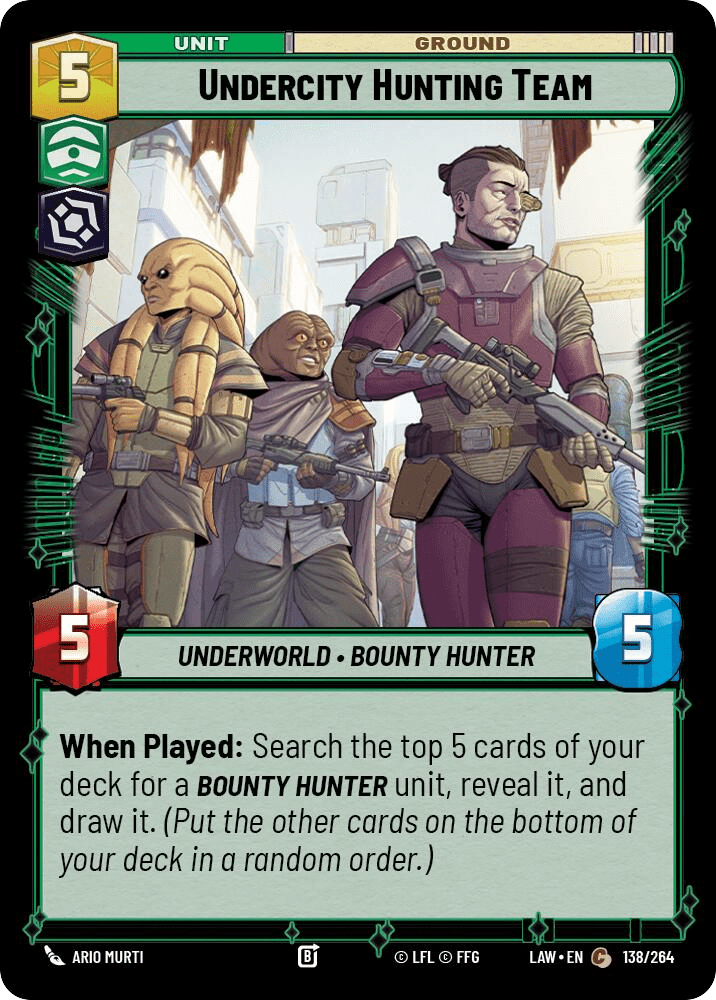
Undercity Hunting Team: Rounds out the package as a 5/5 for 5 that searches the top 5 of your deck for a Bounty Hunter unit on play. Bouncing and replaying this means repeatable search, ensuring you find the specific Bounty Hunter you need for the situation. Need Zuckuss for removal? Need Boba for direct damage? Undercity finds them.
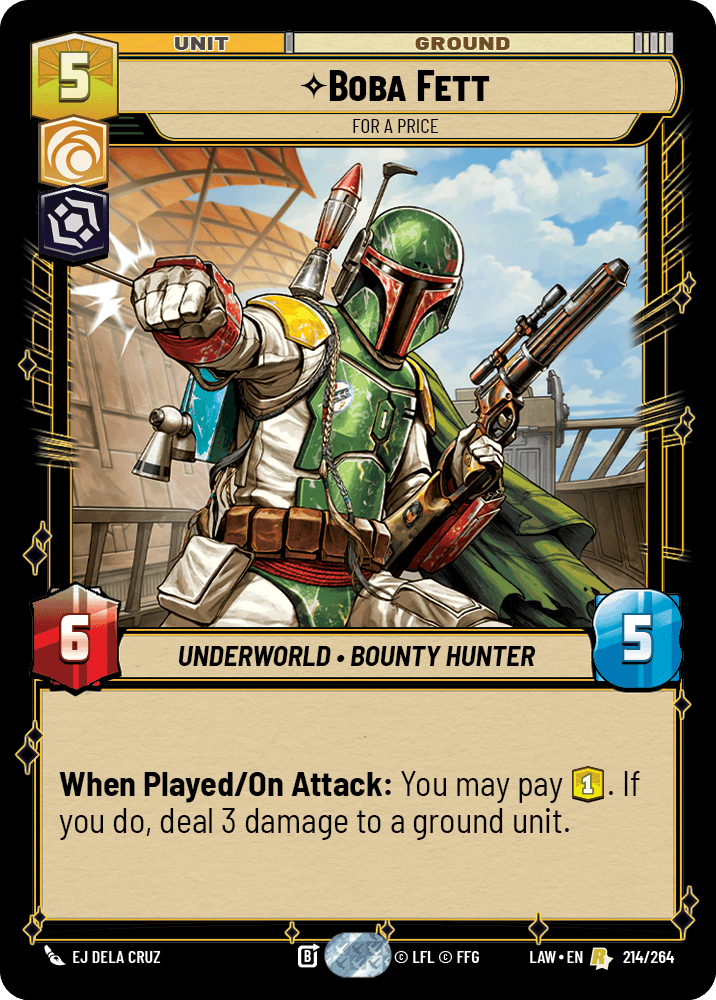
Boba Fett, For a Price: This is your premium Bounty Hunter. And come on, what self-respecting Luke player doesn’t run Boba Fett in a Jabba deck!? A 6/5 for 5 that deals 3 damage to a ground unit on play and on attack if you pay 1. Bouncing and replaying Boba through Jabba means repeatable 3-damage pings on top of his already impressive impressive pings when he attacks. If he’s taken some damage, just Jabba bounce him back to hand to replay and you can still keep dealing damage on the When Played.
The Closers
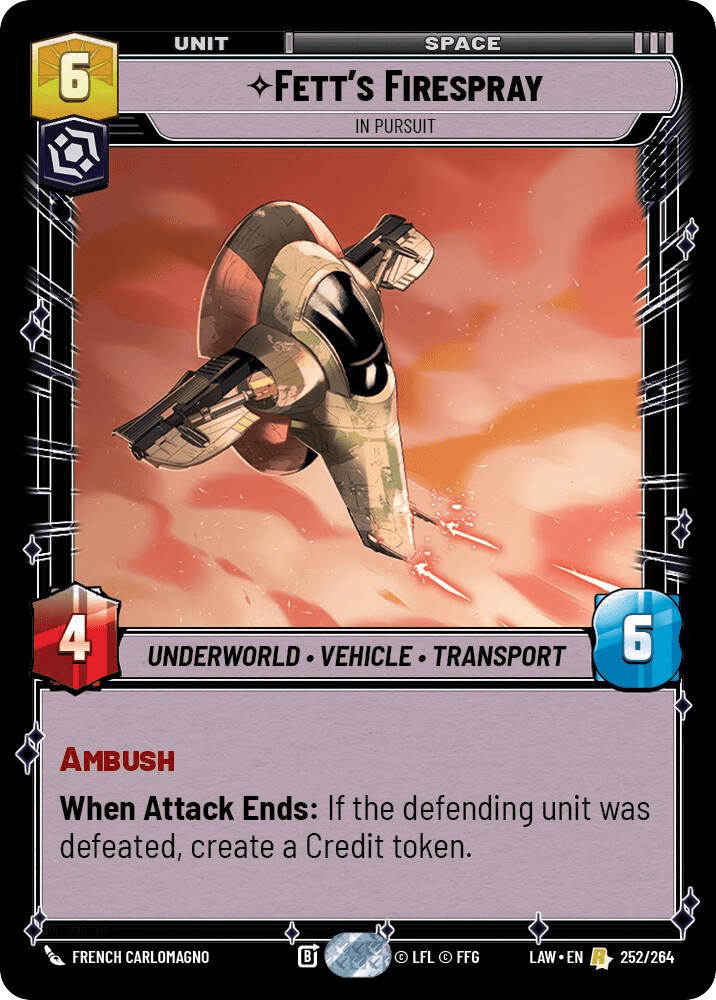
Fett’s Firespray, In Pursuit: Ambush on a 4/6 in space for 6, and when its attack ends, if the defending unit was defeated, you create a Credit. Boba’s ship earning Credits for successful kills is the kind of flavor-meets-function that the Luke in me can’t resist. Ambush means it enters and immediately fights, and if it wins that fight, it pays you back with fuel for the economy engine. It’s also your best space threat by a comfortable margin. Maybe not the punchiest ship ever, but it checks all the boxes we’re looking for.
Jabba’s Rancor, Snack Time!: This closes games. A 7/7 Hidden for 7 that can’t be attacked the turn it lands, and on attack, your opponent must choose one of their own ground units and then you may deal 7 damage to it. That’s massive removal stapled to a massive body. And here’s the part that makes it sing with Jabba specifically: the Rancor is Underworld, which means you can bounce it with Jabba’s leader ability, get a Credit, and replay it at full health. Took 5 damage in combat? Bounce it, reset, replay it as a fresh 7/7 Hidden that forces your opponent to start sacrificing units to it all over again. That’s a closing package that demands an immediate answer, and if your opponent doesn’t have one, the game ends fast.
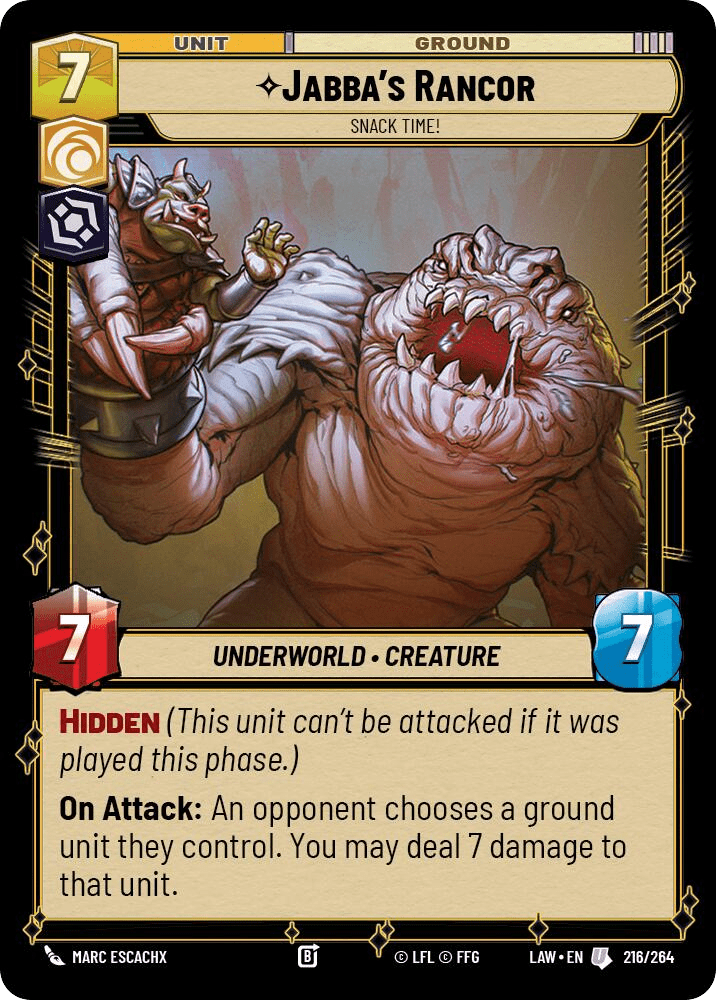
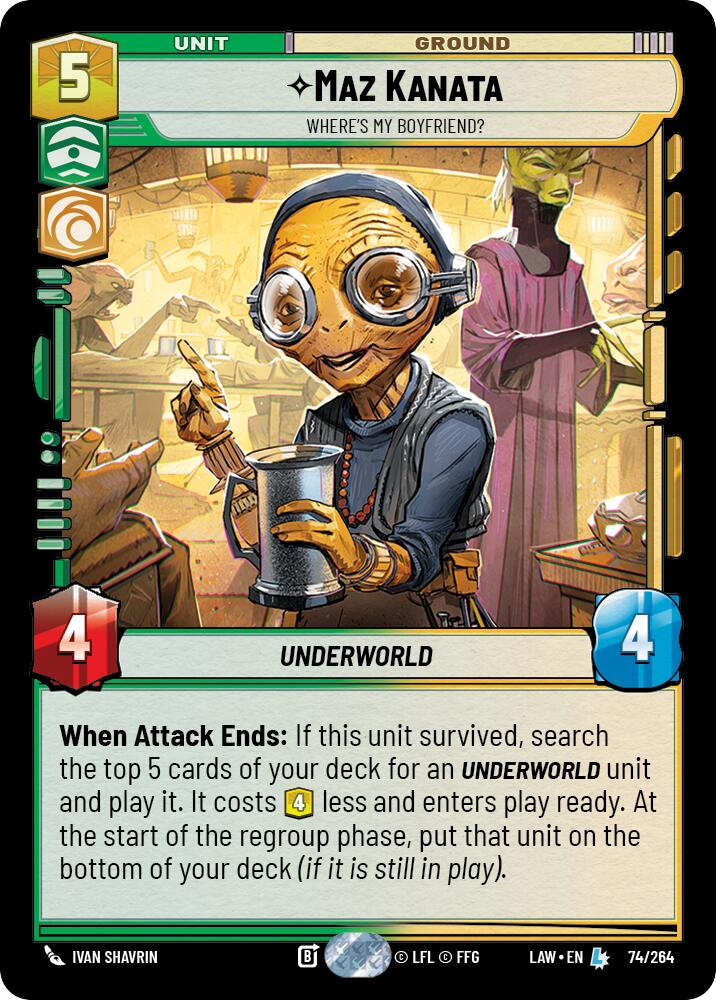
Maz Kanata, Where’s My Boyfriend?: Deserves a mention here because her effect can functionally close games by generating overwhelming board presence. After her attack ends, if she survives it anway, she searches the top 5 cards of your deck for an Underworld unit and plays it for up to 4 less, entering play ready. That’s a 2 cost Boba Fett, a 3-cost Rancor, or a 1-cost Ruthless Duo appearing out of nowhere, ready to attack immediately. The unit goes back to the bottom of your deck at regroup, but by then, it’s already swung and if it had a When Played ability, it’s already triggered. Even one Maz use can generate massive value, but multiples? It truly mutiplies.
The Space Presence
I want to be transparent about the space lane here: this deck doesn’t try to win it. You’ve got Pirate Snub Fighters, Lurking Snub Fighters, Hound’s Tooth, and Fett’s Firespray — that’s 10 space units across four cards. Enough to contest, enough to make your opponent think twice about ignoring it, but not enough to dominate.
The Hound’s Tooth is particularly interesting at 3 cost. While attacking an exhausted unit that didn’t enter play this phase, it deals combat damage before the defender. That first-strike effect is situational, but when it’s online, a 4/3 that shoots first punches well above its weight class and hopefully lets you take out a couple space units before it dies.
The key insight is that your ground game is where the engine lives. Space is there to prevent your opponent from getting free base damage while you’re building the machine on the ground. As long as you can force your opponent to commit resources to dealing with your space presence, you’re buying time for the ground engine to take over.
The Events
Only eight events in the whole deck, which is lean even by my standards. But the logic is sound: this deck wants to be playing units, bouncing units, and replaying units. Events don’t participate in the bounce loop.
Unmarked Credits fuels the economy at minimal cost. Backed by the Hutts generates Credits and doubles as removal. Haymaker is the one event that really demands some discussion.
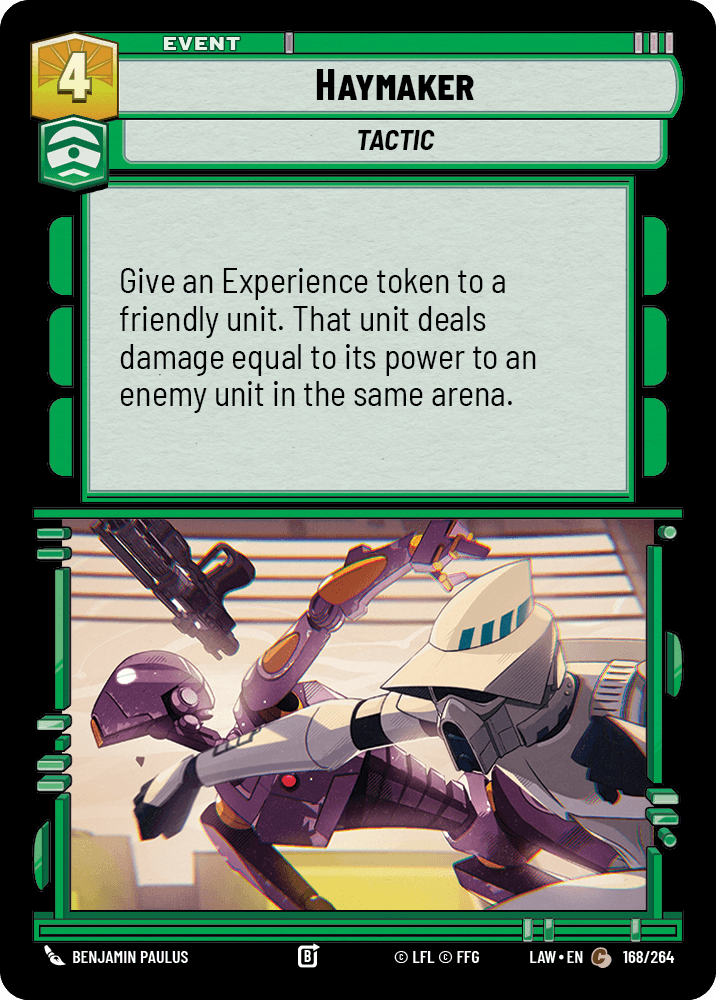
Haymaker: At 4 cost, it gives an Experience token to a friendly unit, and then that unit deals damage equal to its power to an enemy unit in the same arena. That’s a combat trick that functions as unconditional removal — your 6-power Boba Fett just became a 7-power Boba Fett and simultaneously dealt 7 damage to an enemy ground unit. It’s expensive, but it’s the kind of swing play that breaks board stalls, but keep in mind that it can only deal damage to units in the same arena, which makes keeping something alive in space so that you can take out real threats there rather important.
The Sideboard
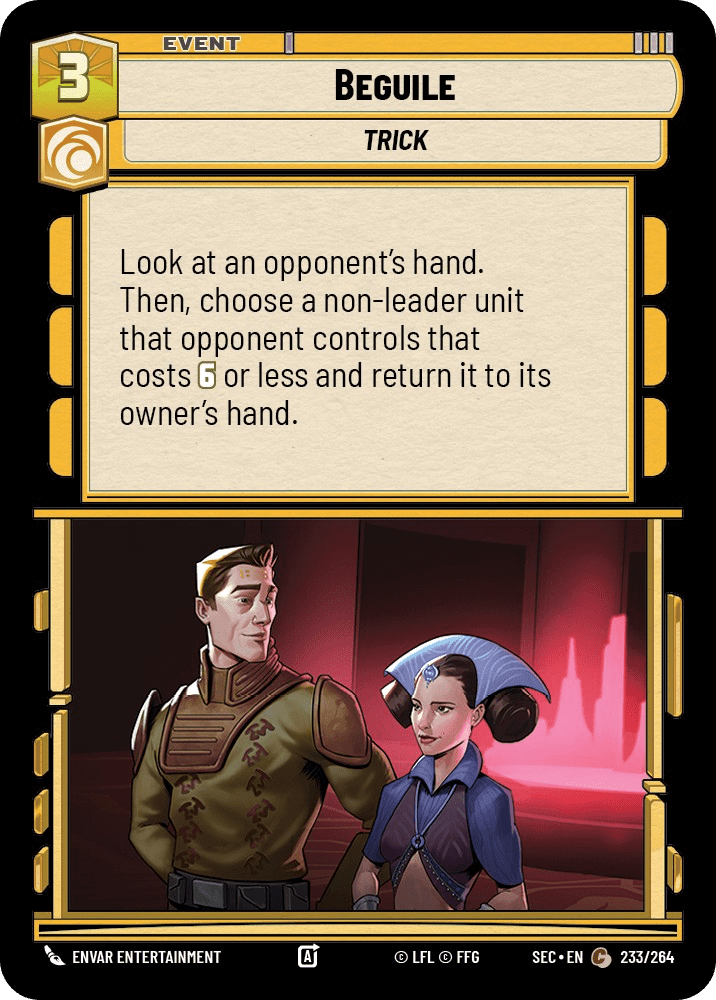
Beguile: Your answer to expensive problems. Look at an opponent’s hand, then bounce a non-leader unit costing 6 or less back to hand. Comes in against decks dropping expensive bombs you can’t trade into efficiently.
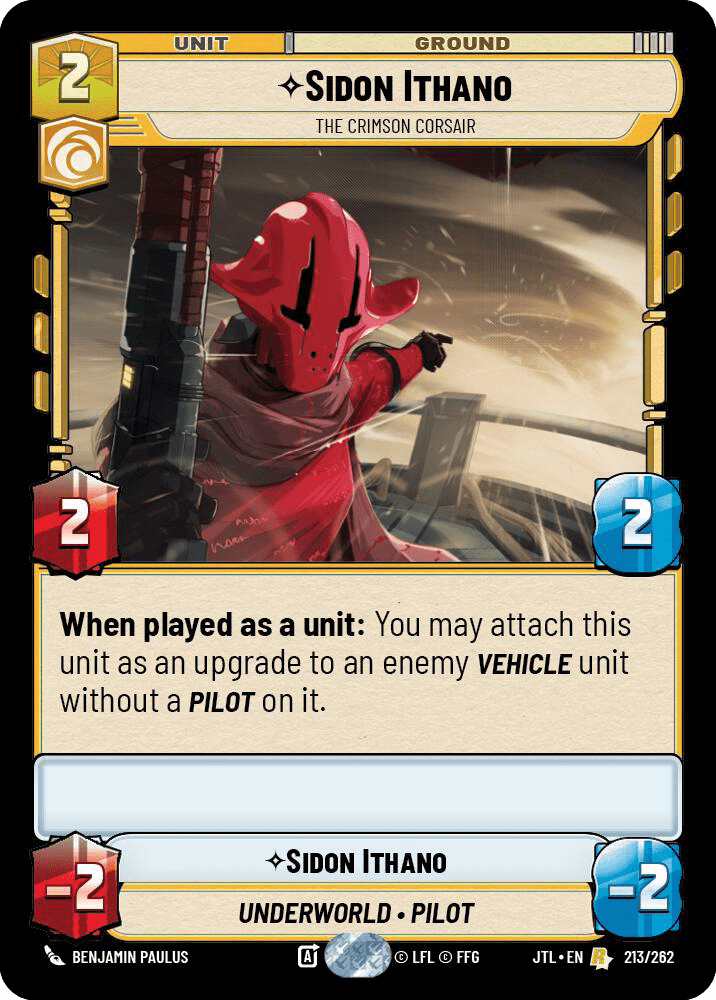
Sidon Ithano, The Crimson Corsair: Tech for vehicle-heavy matchups. When played as a unit, you may attach him as an upgrade to an enemy Vehicle unit without a Pilot. That’s effectively stealing their ride, or at minimum, gumming up their vehicle game plan. Maybe even removing the unit entirely with that -2/-2.
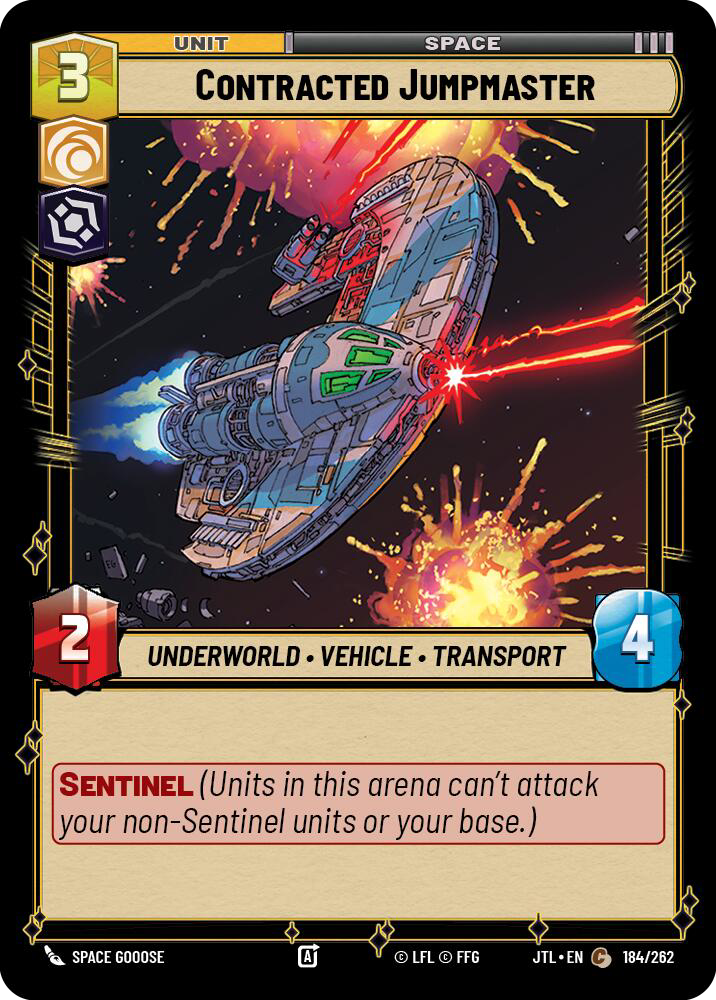
Contracted Jumpmaster: A 2/4 Sentinel in space for 3. Comes in when you need more space defense against aggressive space builds. The Sentinel keyword forces opponents to go through it before touching your base.
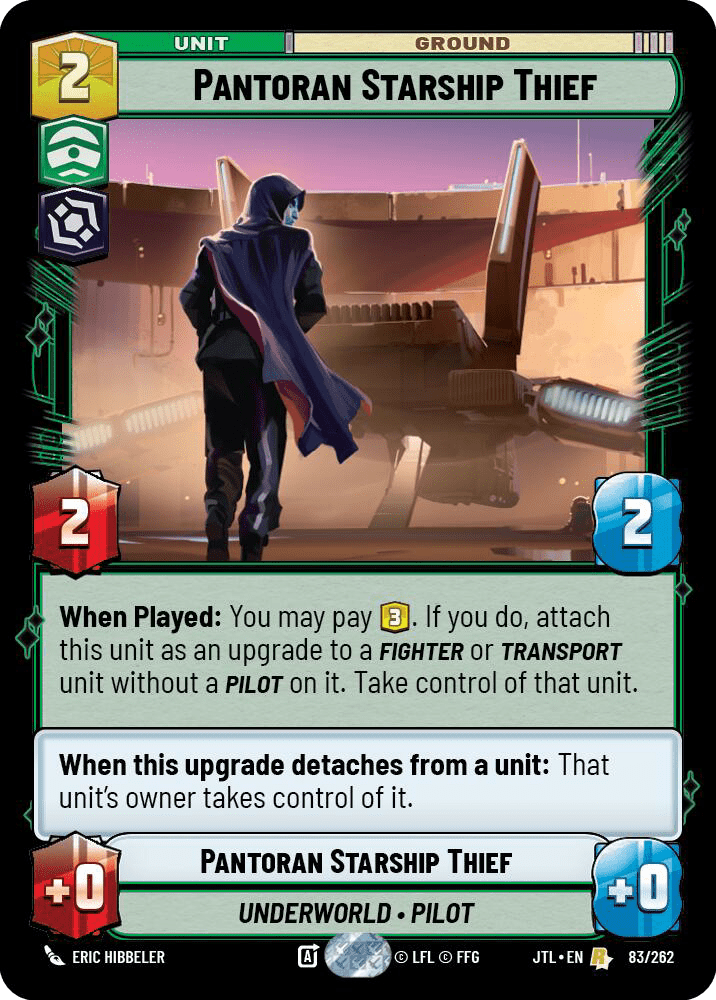
Pantoran Starship Thief: Another vehicle tech option. When Played, you can pay 3 to attach it as an upgrade to a Fighter or Transport without a Pilot, taking control of that unit. More expensive than Sidon’s version, but broader in scope.
Closing Thoughts
I want to be upfront: this is a first draft for a deck is not leaning in a purely competitive direction. There are cards in here that might not survive testing. Maybe eight events is too lean and I need more interaction. Maybe the Bounty Hunter sub-theme is pulling the deck in too many directions. Maybe 7-cost closers are too slow in this speedy format. These are all open questions, and I’m looking forward to finding the answers through testing.
One card that the Thrawn in me keeps whispering about is Aggressive Negotiations. Yes, it’s Aggression — completely out of aspect, which means it’s costing you 5 instead of 3. That’s steep. But hear me out: in a deck where Jabba’s bounce ability is constantly returning units to your hand, and Syndicate Spice Runner and Undercity Hunting Team are both stuffing cards into your grip, your hand size is often larger than a typical midrange deck’s. Aggressive Negotiations gives an attacking unit +1/+0 for each card in your hand. If you’re sitting on 5-6 cards after a bounce cycle and a Spice Runner search (which isn’t unrealistic) that’s a +5/+0 or +6/+0 combat trick that could close out a game or take down a unit you’d never be able to trade into otherwise. If I were really trying to push this list toward competitive Thrawn territory, finding room for a couple copies would be high on my list. The aspect penalty hurts, but the ceiling might be worth the cost of admission. And maybe swapping to one of the new bases to let you play a single card without that penalty might be the right direction despite the hit to base health.
But here’s the thing I keep coming back to, and it’s the thing that makes me want to keep working on this list instead of moving on to something more conventionally powerful: this deck tells a story. When you play it, you feel like a Hutt crime lord. You’re hiring bounty hunters, generating Credits, bouncing your operatives back to base and sending them out again on new jobs. The Underworld trait isn’t just a deckbuilding constraint; it’s the connective tissue that ties every piece together mechanically and narratively. And when Jabba deploys and your units start entering with Ambush, paid for by the Credits you’ve been stockpiling? That’s the moment where the Poe in me says “the engine is humming” and the Luke in me says “this is exactly what it should feel like to play Jabba the Hutt.”
I’ve been playing card games for over two decades, and the decks I come back to, the ones I remember fondly years later, aren’t always the ones with the best win rates. They’re the ones where the mechanical engine and the thematic fantasy were the same thing. Where you weren’t just executing a strategy, you were living inside a story that the cards were telling. I don’t know yet if this Jabba build will win tournaments. But I know that every time I bounce Bib Fortuna back to hand, collect my Credit, and send him right back out to work, I’m grinning. And that’s worth something.
Now if you’ll excuse me, I need to go figure out whether Maz Kanata pulling a Jabba’s Rancor out of the top 5 at cost 3 is as backbreaking in practice as it is in theory. The Hutt economy never sleeps.
May the Force be with you (and may your draws be better than mine),
