

Ok, so Homeworlds is live, and the Ashes of the Empire season is officially in the books. Actually, this one is a bit of a quirk in that it’s been weeks since HMW dropped, but we had a lag time before PQ or bigger organized play for the season hit. And to complicate it more, Icons hits before long, but the competitive season is still labeled for Homeworlds on the FFG site, soooo…. I guess we’ll probably handle that similar to a mid season suspension update. But anyway, on to our first week of data!
First the usual quick methodology note before diving into Utrecht: this week’s numbers reset the field-share, APR, and Bounty Rating baselines from scratch, like they do for every set transition. As we all know, a new set means a new population. Avg Matchup WR and FWME are point-in-time snapshots, so those carry forward without a reset. You will notice a Week 0 on the meta dashboard this time around, however. I felt it made sense to start listing the stats from the last week of the prior season so that we can get a better sense of what’s changing here in the early weeks. Check the FAQ page for the longer version.
What Happened at Utrecht
The season opened with a Regional Championship in Utrecht, Netherlands, 789 players strong, and a brand-new leader took the whole thing down in its first weekend of legal play.

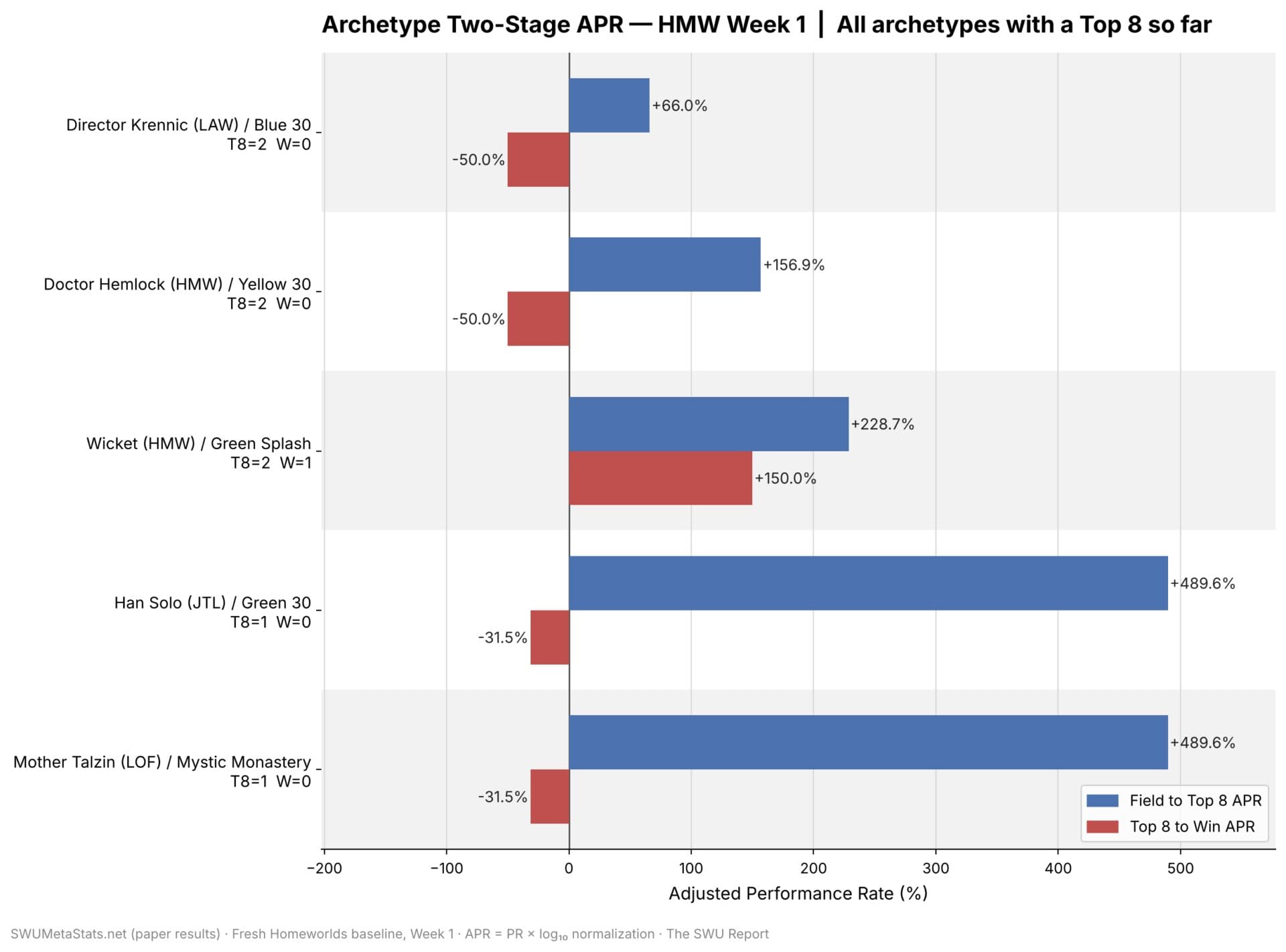
BEO_Zahaphael won it on Wicket / Green Splash, a 37-entry archetype that converted two into Top 8 trips and one into the trophy. The rest of the bracket include Mother Talzin / Mystic Monastery in second, Doctor Hemlock / Yellow 30 taking both third and fourth, Director Krennic / Blue 30 claiming fifth and seventh, and Han Solo / Green 30 rounding out sixth. Out of five archetypes, four of them are brand new to Premier play this set.
That’s a healthy spread for a Regional, and as it turns out, it’s the first data point on how fast this format is going to reshuffle.
The One Deck That Made the Jump
Director Krennic / Blue 30 is the only holdover from the ASH top tier, and he grew into the transition instead of just surviving it. His field share climbed from 9.7% to 12.8% at Utrecht, the largest archetype in the room. Top 8 share jumped from 14.0% to 25.0%, tied for the most of anyone this week.
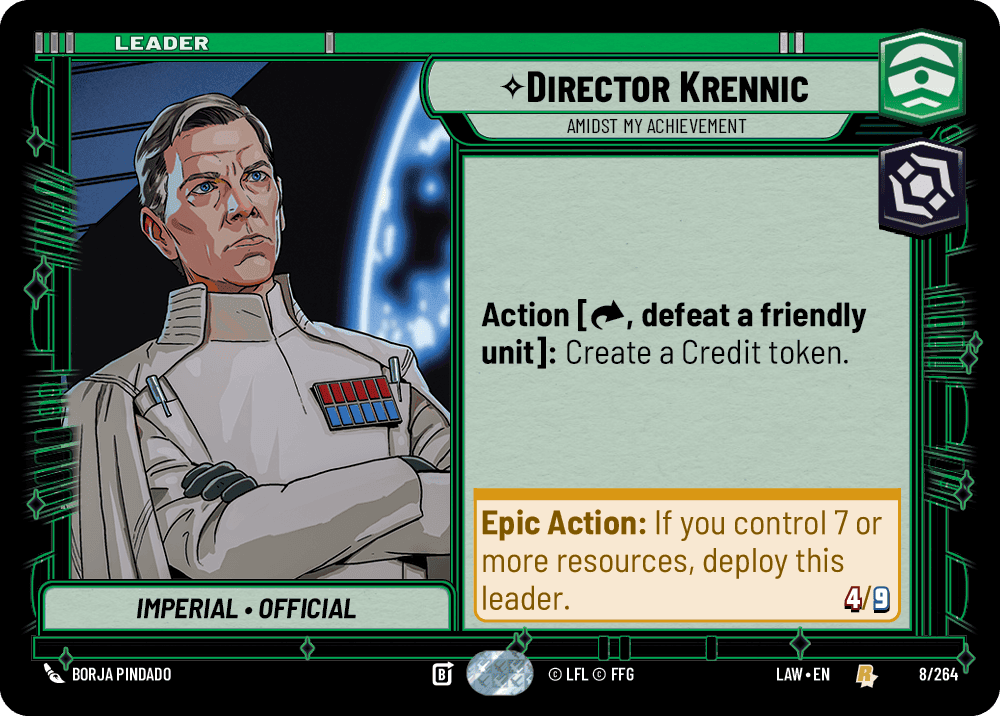
The APR picture backs that up mostly. S1-APR (the Field-to-Top-8 stage) sat at +31.7% across the ASH season and improved to +66.0% this week, meaning Krennic pilots are cracking the bracket at a rate well above what field share alone would predict. That part clearly ported over clean.
S2-APR is the one soft spot, sitting at -50.0% this week after a +13.2% mark in ASH. That’s two Top 8 runs and zero wins, not a structural weakness out of nowhere. A deck can go 0-for-2 in an elimination bracket on a perfectly good build. And most importantly, it’s worth noting that we’ve only had the one event, so there’s only been one winner’s slot up for grabs – something had to lose out. It’s worth watching next week, but not worth panicking over yet.
Everyone Else Got Left Behind
Every other former ASH heavyweight went the other direction, and some of them went hard.

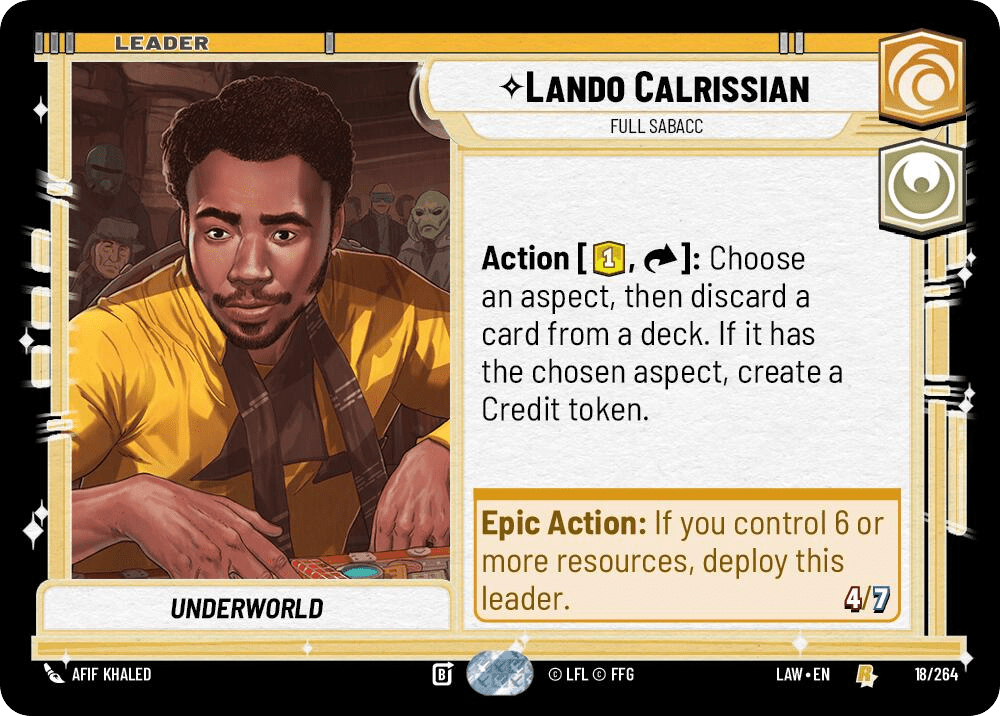
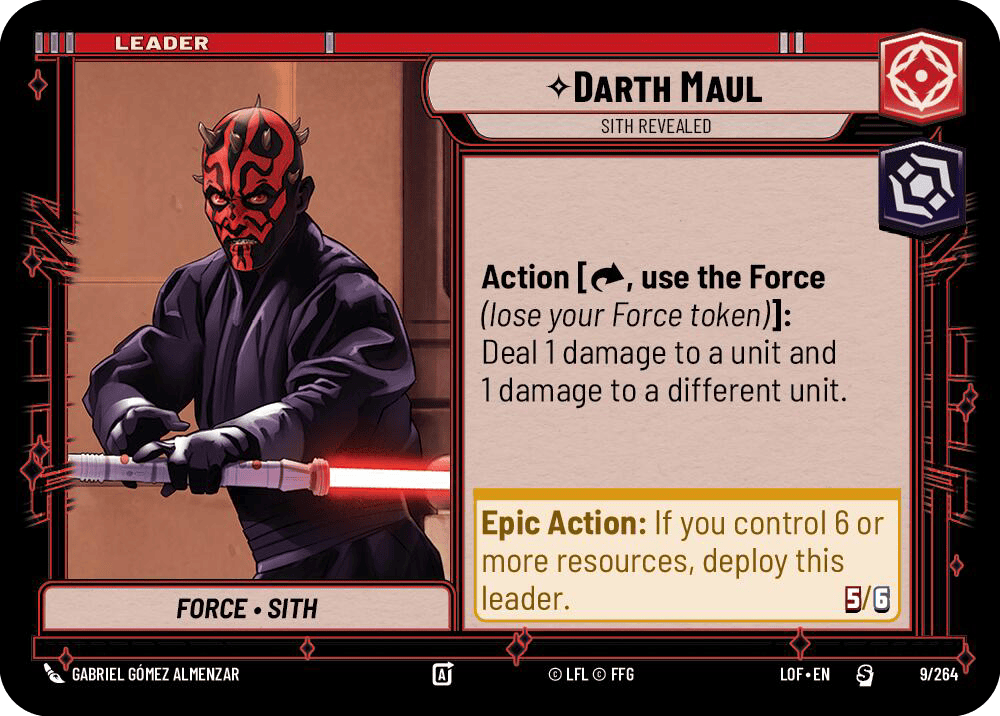
Ahsoka Tano / Blue 30 is the sharpest collapse in the room. 7.8% share down to 1.6%, a 6.3-point drop to start the transition into the Homeworlds season, with an S1-APR of -38.6% on top, meaning the deck isn’t cracking Top 8 at the rate its shrunken field share would predict. Lando Calrissian / Blue 30 tells a less pronounced version of the same story. His field share barely moved (3.7% to 3.8%) but zero Top 8 appearances off that turnout is the third worst Field-to-Top-8 showing of any archetype this week. Darth Maul / Blue Force slid over half as well, 6.0% down to 2.7%, with an S1-APR that flipped from +6.5% in ASH to -46.5% this week. The Mandalorian / Colossus, a 93-entry fixture by the end of ASH, posted exactly one deck at Utrecht.
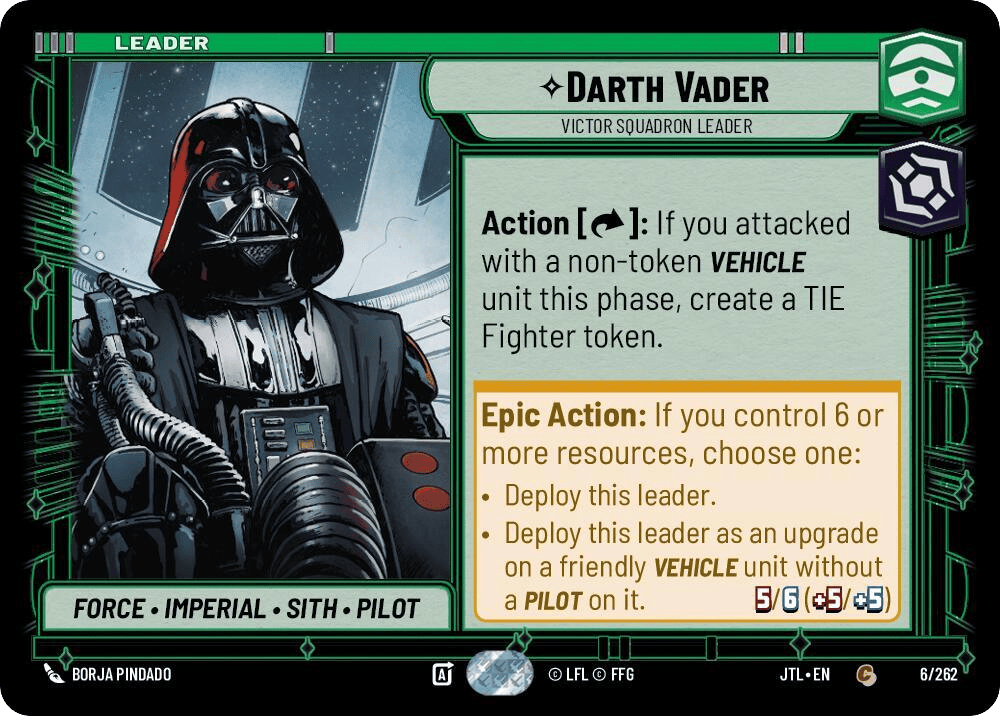


The pilot decks took it just as hard. Darth Vader / Yellow 30, one of the format’s more popular single-leader builds at 6.0% share, fell to 3.3% and saw his S1-APR collapse from -4.1% to -49.0%. Luke Skywalker (JTL) / Data Vault and Boba Fett / Lake Country followed suit, both negative on S1-APR this week. Han Solo / Green 30 is worth calling out, because it’s built around that same single-pilot engine and still found a Top 8 seed, so whatever’s dragging the rest of that group down isn’t a universal problem with the space based strategy..
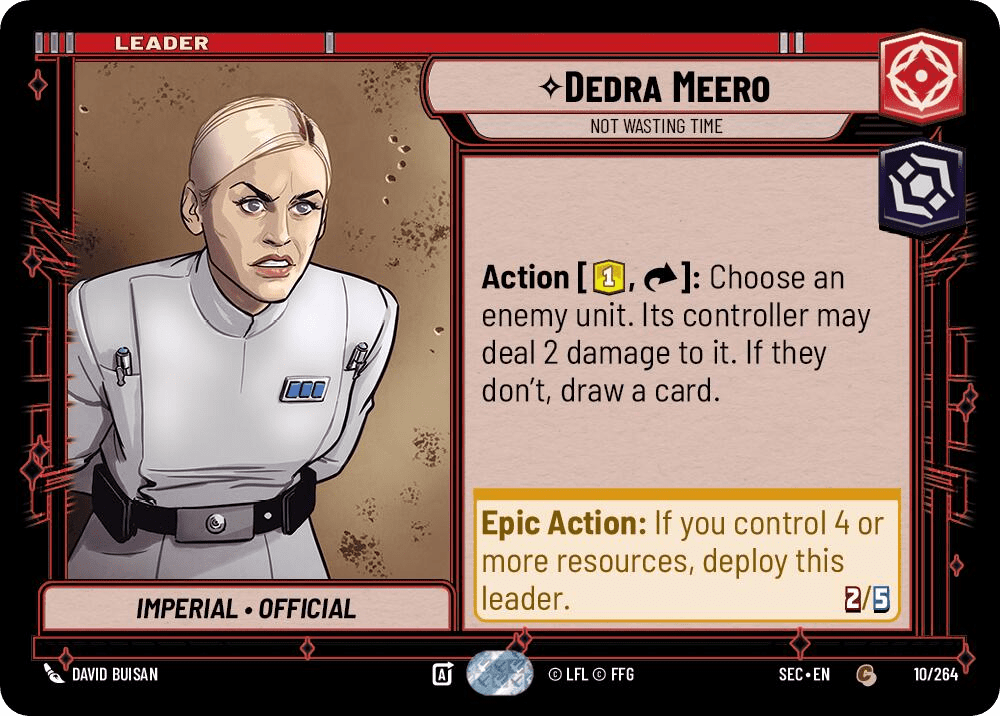
Dedra Meero / Colossus is the trickiest of the bunch to read. Her field share shrank and her S1-APR went negative right alongside everyone else’s, but a shrinking pool and a worsening build aren’t the same thing. A smaller, more committed group of Dedra pilots can be sharpening the list while the archetype’s footprint shrinks, and one week of numbers can’t tell those two stories apart.
That’s a lot of negative S1-APR sitting on decks that used to anchor the format. To that end, it’s worth being careful here. A card-pool shift the size of a new set changes deckbuilding math substantially, and a deck tuned around ASH’s card pool doesn’t always get worse, it gets untuned. Whether these builds come back once the format settles or just keep fading is a Week 2 and Week 3 question, not a Week 1 one.
New Homeworlds Arrives Fast
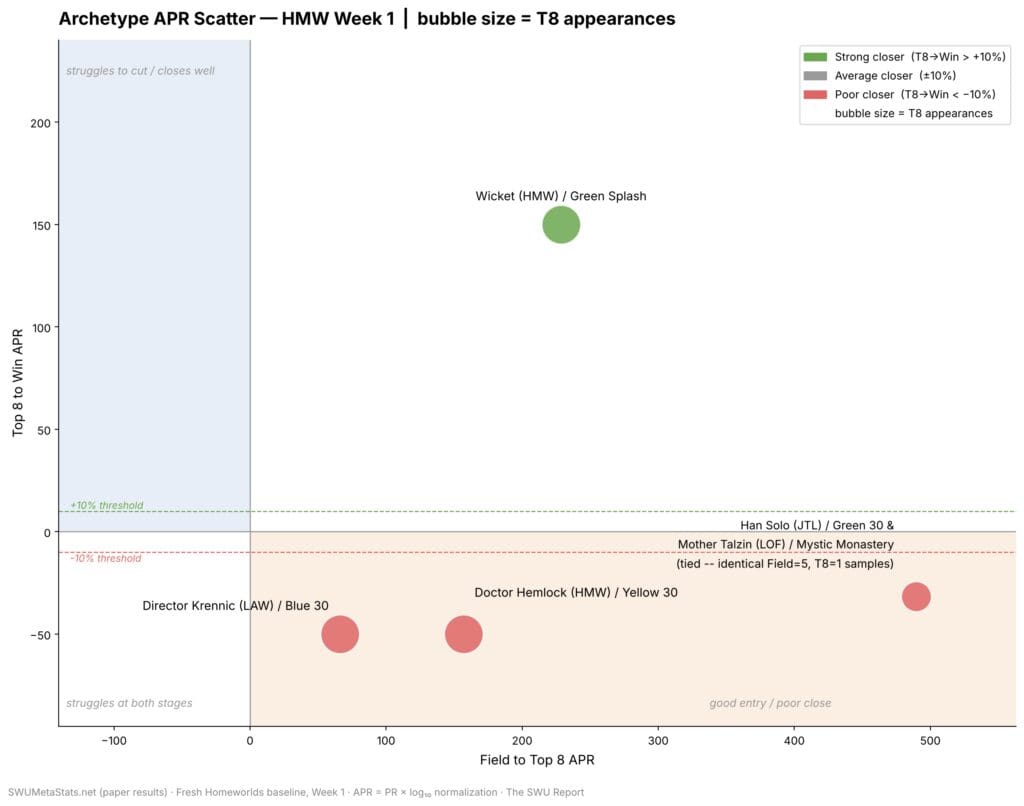
A quarter of the Utrecht field, 26.1% of it, was already piloting brand-new Homeworlds leaders. Doctor Hemlock / Yellow 30 led that group at 6.9% share and two Top 8 trips, with Wicket spread across two bases, Tarfful, the Homeworlds version of Maul, Poggle the Lesser, and Bossk rounding out the rest.
That’s a fast adoption curve for a brand new set, and it bears repeating that most of those builds are still figuring out their best shells, but it’s also worth noting that the slight lag in events starting means people have been testing with these for weeks. One good weekend from a 37-entry archetype is a real result. But it isn’t the final verdict.
Inside the Winning Lists
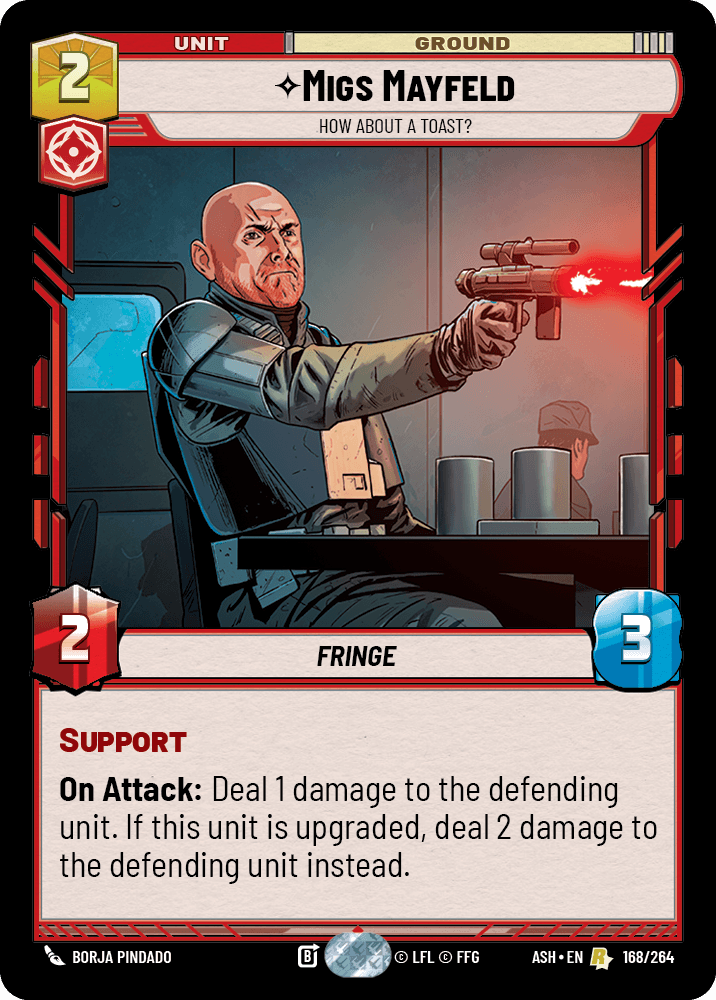
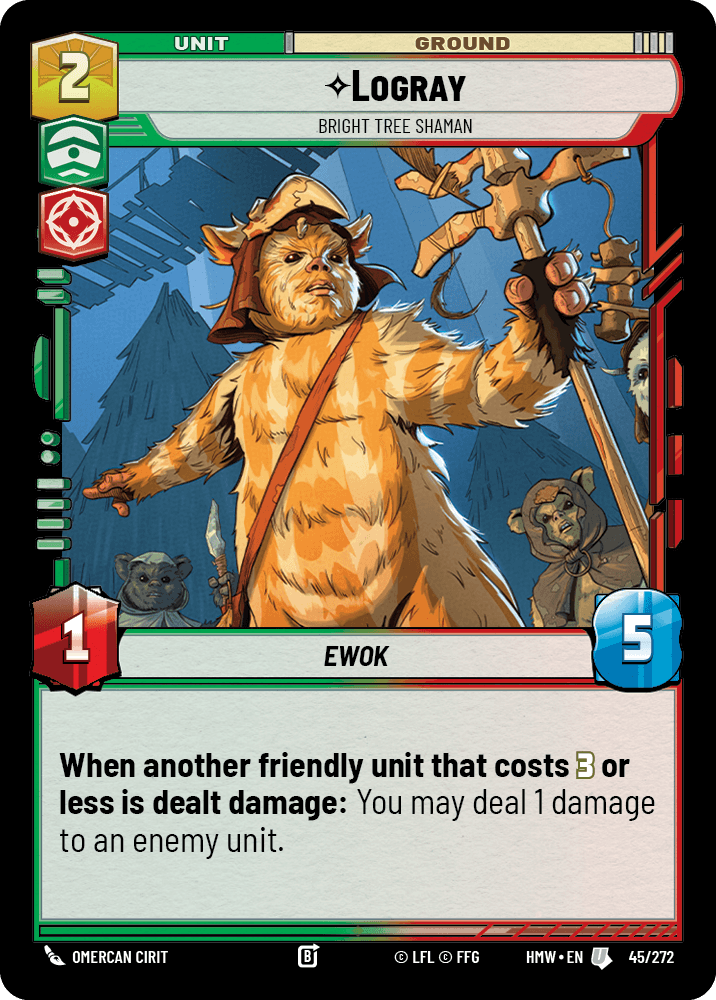
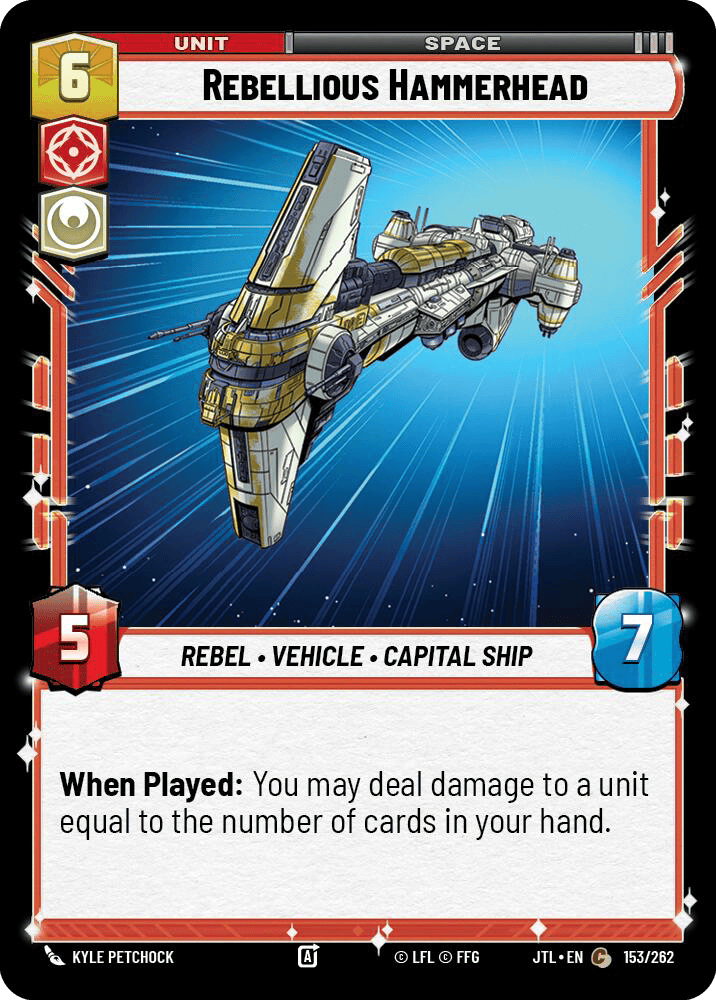
The numbers only tell half of it. The Wicket list that won Utrecht leaned on a short stack of pingers to grind the board down rather than race it. Migs Mayfeld does the early work, chipping in one-point damage via support and on attack, Logray finished off anything small that had taken damage, and Sabine Wren sat in as an answer to Condemn slowing aggressive decks. Rebellious Hammerhead features up as the late-game stat stick with removal stapled to it (that pairs nicely with Wicket’s draw) once the board turns grindy, and at least one build splashed Unity of Purpose and Queen Amidala, Championing Her People, as top-end payoffs. These can turn it into a deck built to grind out a longer fight, not the balls to the wall aggro Wicket shell that might have been expected out of the gate.
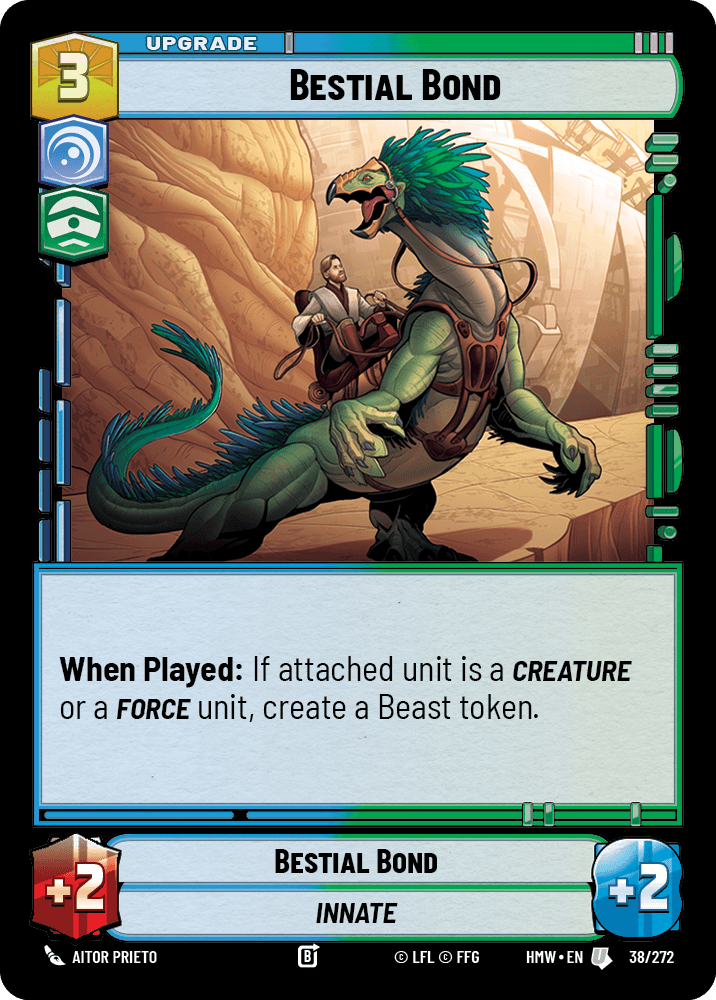
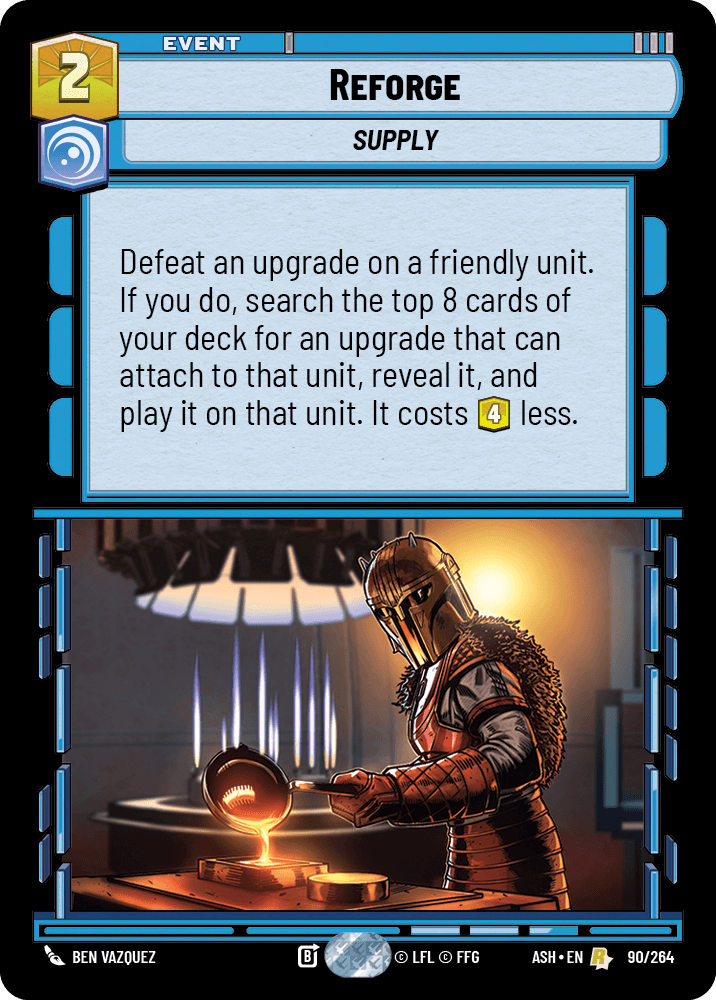
Mother Talzin / Mystic Monastery leaned on a similar aggressive grind-first plan, which is a different pace from the Talzin control decks of old. Bestial Bond does the go-wide, Voltron-adjacent work that keeps a board honest, and Reforge turns out to be doing more than a straight upgrade swap. It can defeat an upgrade sitting on your own unit, which means a Weakness token that Hemlock or another card stuck on your unit turns right back into something helping you. That’s a real answer to one of the format’s more annoying effects, not just a tempo play. Oh, and it can get rid of Condemn as well.
Two Things Worth Flagging Before You Read Too Much Into This
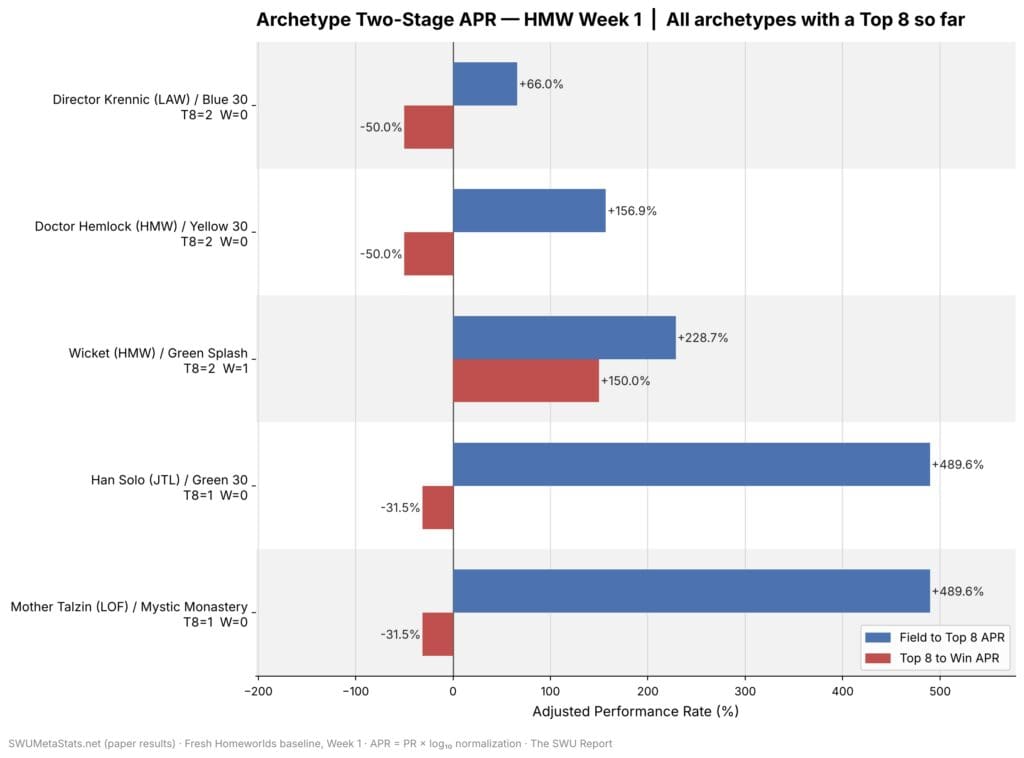
Granted, there’s a temptation after one event to start drawing lines on a chart. But I don’t think we’re really ready to do that yet.
First, nobody clears the Bounty Rating sample floor yet. That filter is Field of 50 or more and Top 8 appearances of 3 or more, and with only eight Top 8 slots split across five archetypes, nothing qualifies. Any ranking built off these numbers would be dressing up noise as signal, so Bounty Rating sits this one out until the sample catches up.
Second, the Top 8 HHI reads Concentrated at 21.9, which sounds alarming next to the Open 4.2 on the field-share side. It isn’t the same kind of signal. With only one event and eight slots, a three-way tie at two apiece is enough to trip that band. Field HHI being Open is the better read on where this format stands after one weekend, fragmented, the way a brand-new set should look. The T8 number will mean something again once there’s more than a single event’s worth of bracket data behind it.
Looking Ahead
This week we had one holdover, four new faces in the Top 8, and a quarter of the field already moved on to cards that didn’t exist a month ago. That’s a fast start for a new set, and Krennic’s the only name from the old guard that’s shown it can keep up with it. Week 2 is the one that’ll start telling us whether that’s signal or just the first data point doing what first data points do.
There you have it.
