


Hey everyone, welcome back to the SWU Report! Prerelease season is here again, and Homeworlds might be the most alien set we have gotten yet. Tuskens, Ewoks, Gungans, Wookiees, a purrgil drifting through the void, a surprising amount of space ships plus more Force units… There is a lot going on here. If you read my ASH or LAW sealed guides, you already know what’s up, so feel free to skip further down. For everyone else, welcome aboard! This article is going to walk you through everything you need to sit down at your Homeworlds prerelease, crack some packs, and build something that can win games. Or at least something that does not embarrass you in front of the dude next to you.
Let’s go!
What Even Is Sealed?
At a prerelease event you’ll receive a kit with six booster packs of Homeworlds, which works out to 96 cards counting bases, leaders, and tokens. From that pool you build a deck of at minimum 30 cards. You’ll choose one Leader and a deck built from whatever the booster gods have handed you. Opened four copies of the same common? Great, play all four. There’s no copy limit in sealed. It’s worth noting about Bases though – in Limited, any common base is fair game, whether you opened it in your packs or not. So keep in mind that you could bum one off a friend or the store. This is useful to get access to an aspect you may need but more importantly for this set, it might get you access to a trait on a base that you need for your draw deck cards.
Another important thing to remember is that your entire unused pool is your sideboard, with no restrictions. Between rounds you can freely swap cards, change your base, even change your leader entirely. If your first build isn’t working, pivot. There’s no shame in it. In fact, there’s tremendous strategic value in it.
One pre-release specific wrinkle worth knowing up front: the kit hands everyone the same two starting leaders, Chewbacca and Grand Moff Tarkin. That means every player in the room has both available, regardless of what they crack in their packs. It’s worth understanding how each one plays even if you end up running something else, so we’ll dig into both down in the leaders section.
What Makes Homeworlds Different
Every set has a personality. This one is built around invasion. Alien homeworlds under siege, and the mechanics back that flavor up with two new tokens and a keyword that changes what a base can do (with the appropriate upgrades).
Weakness Tokens
The headline new mechanic is the Weakness token, and it’s the exact opposite of an Experience token. It goes on a unit and makes it smaller (-1/-1) permanently. Here’s what that means at the table: Weakness is soft removal that scales. One token shrinks a blocker enough to change a trade. A pile of them on the same unit outright kills it. And it’s flexible in a way most removal isn’t, since you get to choose whether to stack them on one threat or spread them thin across several. Ravage is the cleanest example of this: it’s very flexible allowing you to pile the Weakness tokens on one unit for removal, or take out several units if they only have 1 HP left. Even in the worst case scenario, it makes units smaller to either keep your units alive when trading or buy you more time in the game by limiting incoming damage to your base. There you have it. Prioritize the repeatable generators.
Beast Tokens
The other new token is simpler. A Beast is a free 3/3 body with no text, and this set hands them out from all over the place, on leaders, on units, on events, and even on upgrades. Nothing flashy about a vanilla 3/3 on its own, but a free one attached to a card that was already doing something else is real value. Bestial Bond is a tidy little example: pretty high on the upgrade list giving instant stat boosts for a ready unit to attack and giving you a 3/3 beast. That’s 5/5 worth of total stats for only 3 cost. More than one leader in this set turns “make a Beast” into a repeatable engine, too. We’ll get to a few of those.
Fortify: Approach With Caution
Fortify is the set’s other big mechanic, letting you attach an upgrade directly to your base instead of a unit. It sounds exciting on paper, and, as it turns out, that’s mostly where the excitement stays. I have to be blunt about this one: Fortifications are almost certainly a trap in limited. Most of them are slow, their effects are either too small or too conditional to be worth a full non-unit slot, and unlike a unit upgrade they aren’t adding a body to your board while they sit there doing their thing. (And spoiler alert, I actually think they’re a trap in constructed as well.)
There are exceptions worth knowing. Heavy Ion Cannon draws you a card on the way in and turns into a discard-fueled removal engine on your base afterward, which makes it the standout of the bunch. Intelligence Agency is the other borderline playable fortification for limited. Due to the limited nature of card pools and deck construction there is every chance that the card you discard from your opponent’s hand will be notably higher card quality than whatever they draw to replace it. Plus, the upcoming knowledge of your deck in a limited environment could be valuable. Still, I’m not sure this is worth blowing a non unit deck slot on. Alliance Shield Generator is a similar story, a one-time damage save that at least cantrips into a card. Trap Field, on the other hand, is borderline playable since it’s removal, but it’s a slow, delayed removal that your opponent has a measure of control over, so I wouldn’t recommend it.
Don’t Forget the Space Arena
I say this every set and I’ll keep saying it: you need space units. Losing the space arena means your opponent is dealing uncontested damage to your base every single round, and that adds up fast. Homeworlds actually treats you a little better here than some past sets, with a genuinely deep run of common and uncommon space bodies, and I’m pretty chuffed about how deep it runs. That said, as I started drafting this article, I realized that there were actually more solid midrange space bodies spread among all aspects than I’m used to. This is a double edged sword so be careful – it’s easier to make sure you have a presence there and you’re going to be punished harder by an opponent who got there if you did not.
A Quick Note on Bases
Here’s one less thing to agonize over: every base in Homeworlds is a plain 30-health base with no game text, same as we’ve seen before. Your base slot is, of course, purely about aspect coverage.
Except…. That’s not quite the case in Homeworlds. Sure, there’s no rules text on the bases, but there are traits just as there have been in every other set, but Homeworlds is the first set where draw deck cards actually have text that cares about what the trait of your base is. So be on the lookout with your pool and remember that the allowance to use any common base still stands and you can use that to grab the specific trait you need in the aspect you need.
The Aspects That Win Sealed Games
Before we get to leaders, let’s zoom out. In sealed you’re committing to two aspects for the round, and some are just better positioned than others in this set.
Vigilance is once again where I’d start. It has sticky, defensive statlines and a deep run of the set’s best space bodies, and when I laid out my own pool notes for this set, an outsized share of the cards I kept coming back to happened to be blue. Aggression and Cunning are right behind it, with Aggression bringing some of the set’s biggest ground beaters and Cunning bringing the trickery, the token generation, and a strong leader pool in particular. Command has solid midrange bodies too, but it leans on a longer tail of unexciting filler to get there.
On the alignment side, Villainy has a slight edge over Heroism, mostly because its ceiling is a touch higher. That said, this is close enough that I wouldn’t force it. Let your pool tell you which way to lean.
Your Leaders Are the Foundation
In sealed, your leader is the single most important decision you’ll make. Rather than hand you a rigid tier list, let me walk through the leaders that feel strongest to me and why. The principles matter more than the rankings, and since everyone at the table has both variant leaders, Chewbacca and Grand Moff Tarkin, I’ve made sure to cover both.
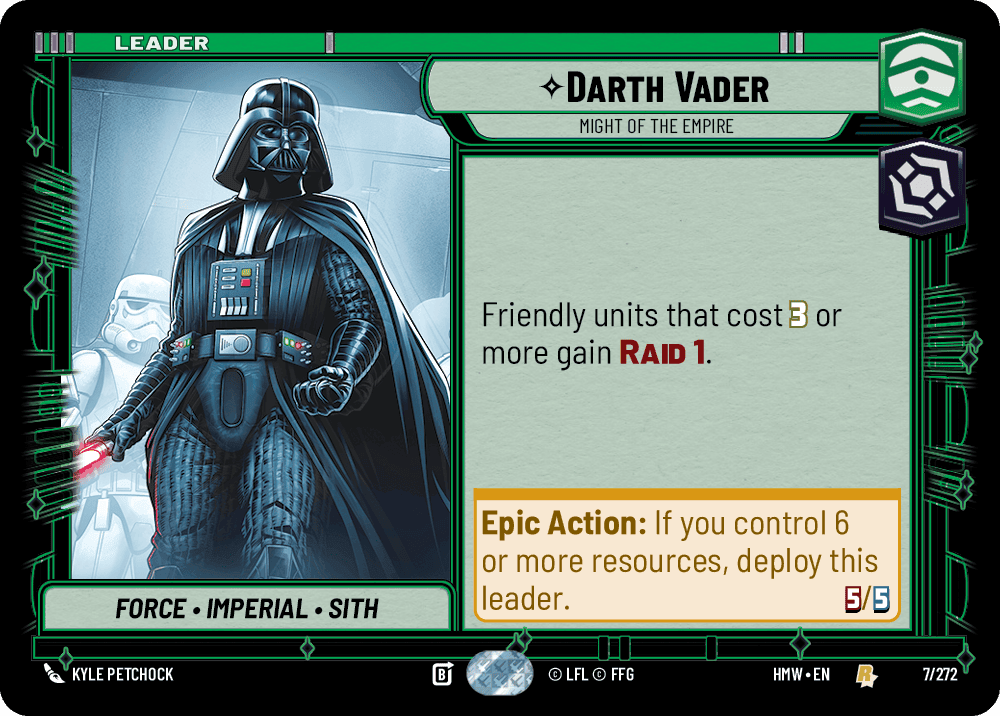
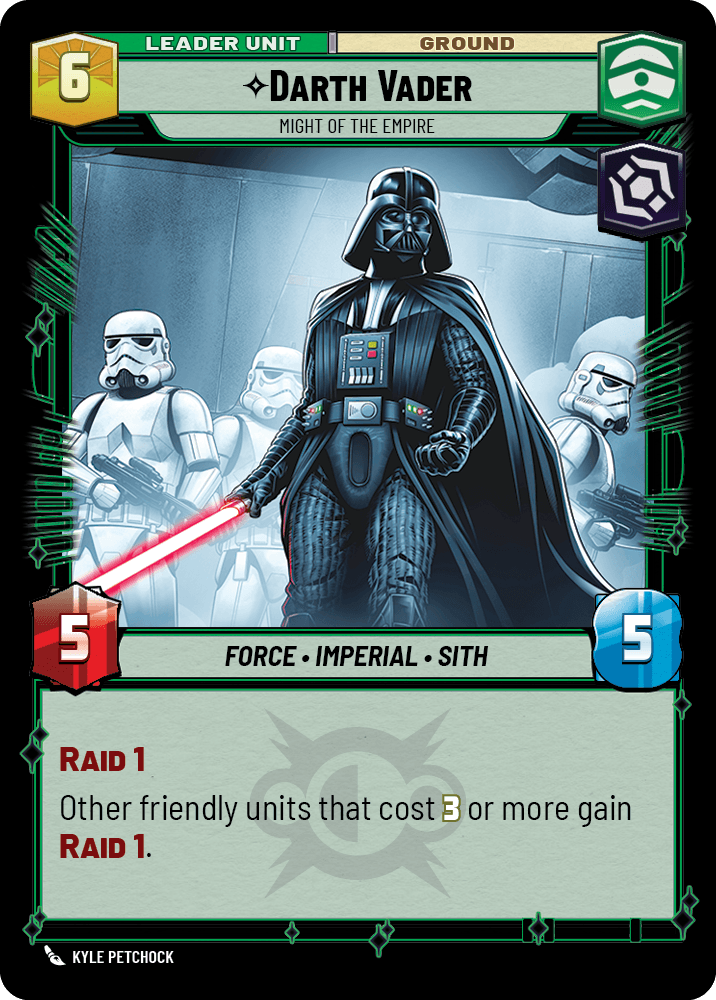
Darth Vader, Might of the Empire (Command/Villainy)
If I had to hand-pick one leader for this format, it’d be Vader. His ability doesn’t ask you to do anything special with your deck and he just makes everything better. Every friendly unit that costs 3 or more gains Raid 1, both undeployed and once he flips. That’s free stats spread across your whole board, no tribe or synergy package required. You just play your curve and watch your units come down swinging a little harder than the card says. That’s exactly the kind of self-sufficient, incremental value that wins sealed games, where most of your deck is commons scraping for every edge.
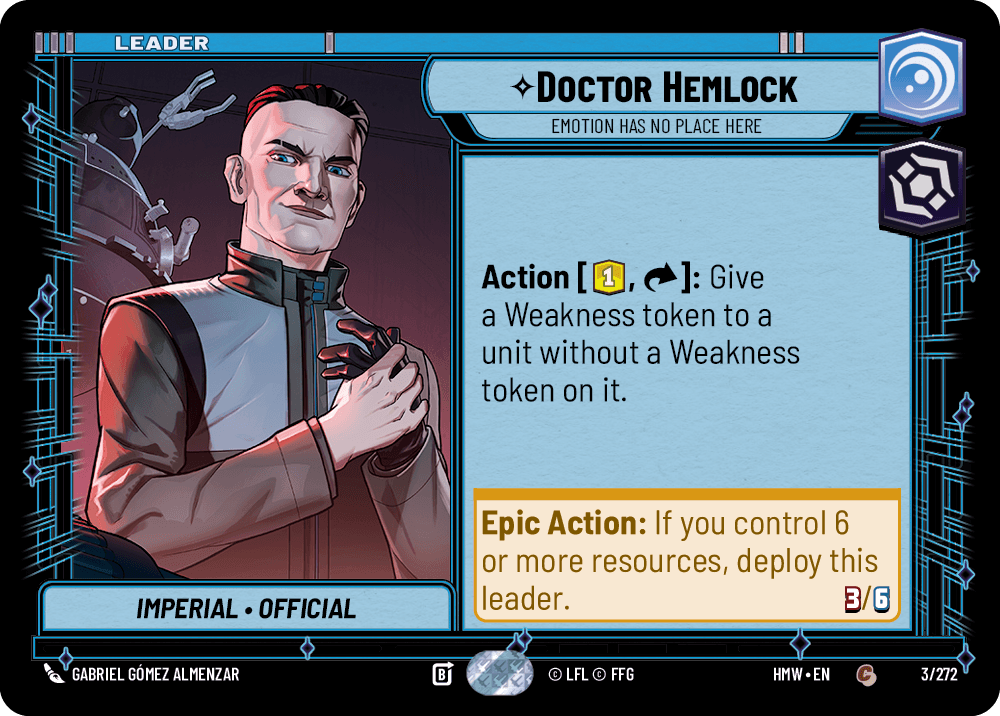
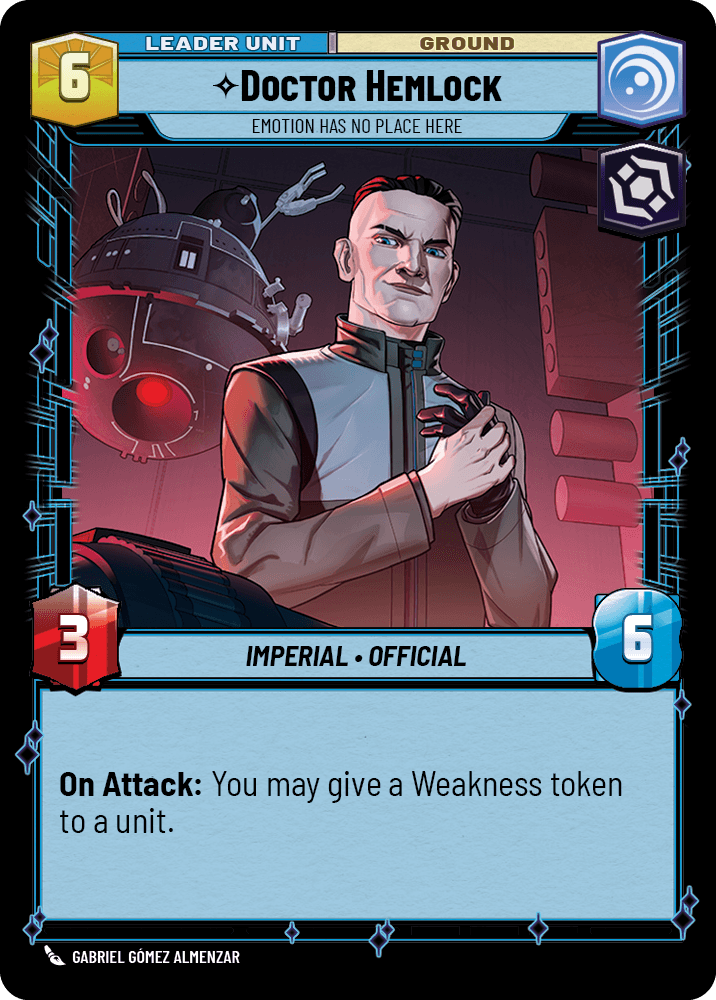
Doctor Hemlock, Emotion Has No Place Here (Vigilance/Villainy)
He can be removal but even just the aggregate stat reduction to make trades more favorable to you or slow damage hitting your base is pretty great. Deploying on 6 isn’t as great for a 3/6 leader, but it’s closer to the normal rate than some of the other leaders lately. Plus he’s in Vigilance/Villainy which helps by having a strong card pool to choose from.
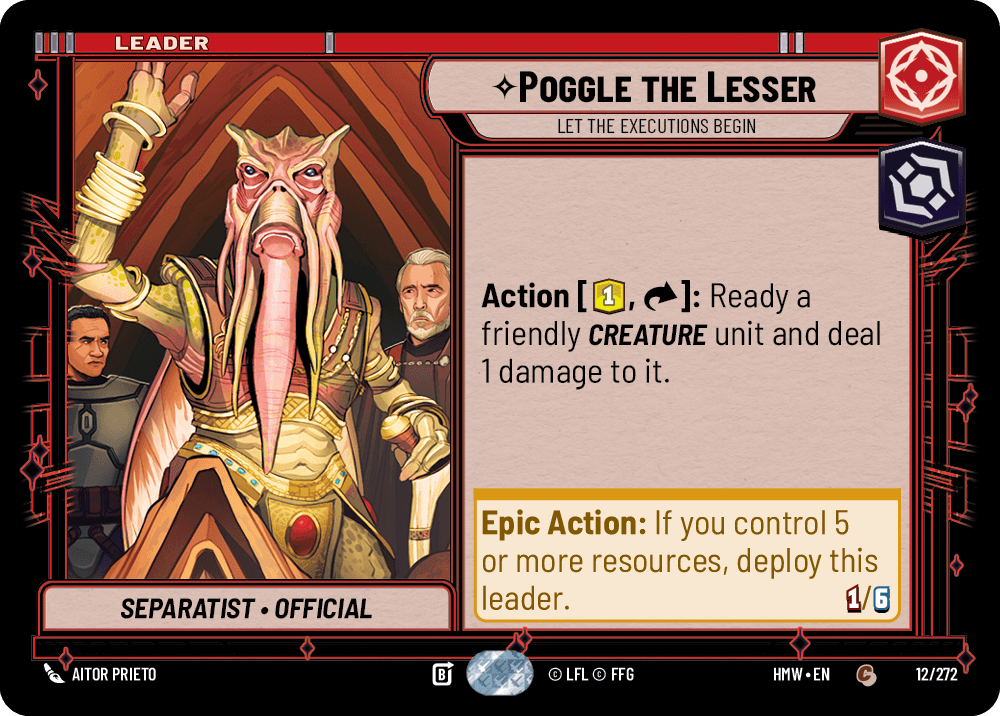
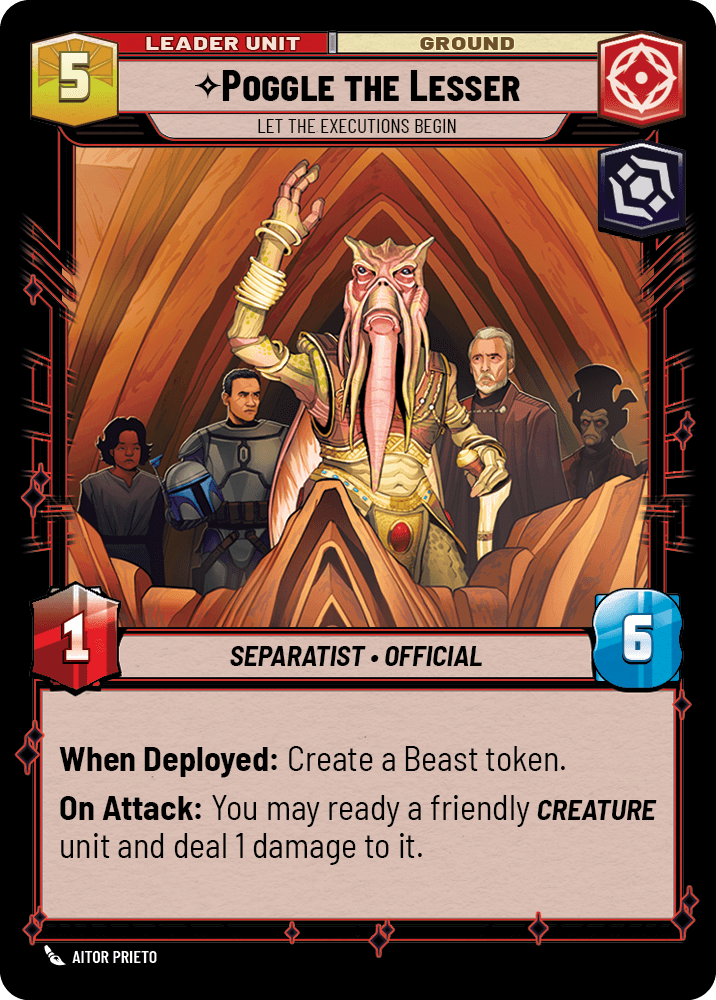
Poggle the Lesser, Let the Executions Begin (Aggression/Villainy)
There are a lot of creatures in this set and reading them for an extra attack consistently could very easily keep the pressure up in a way your opponent just cannot find a way to keep up with. He comes with a free Beast token the moment he flips, too, which covers for a body that’s otherwise on the weak side.
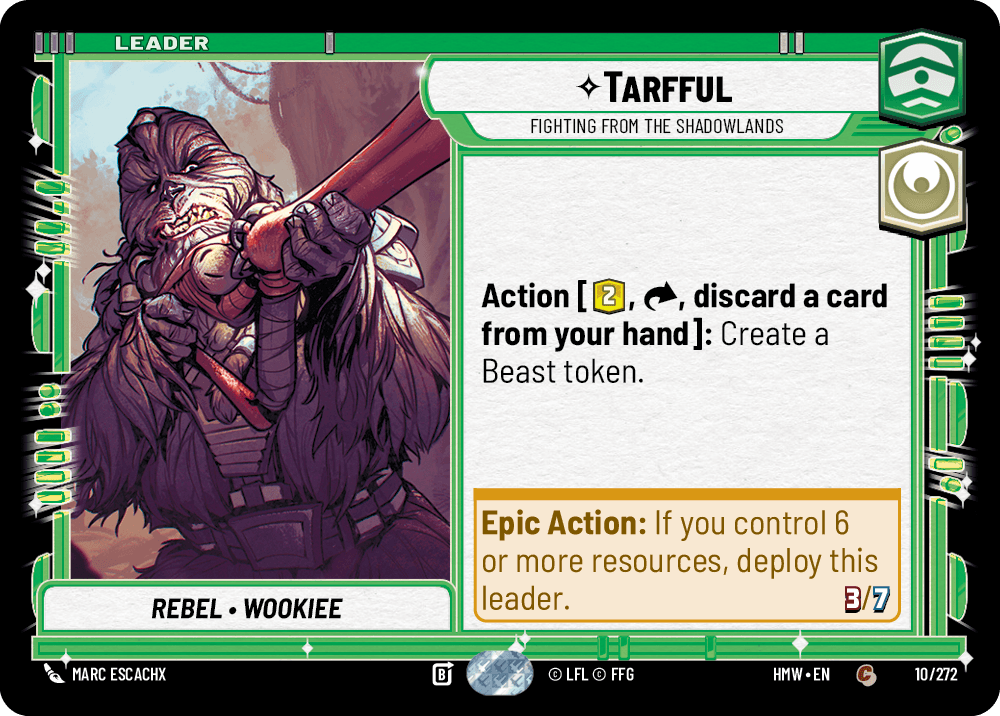
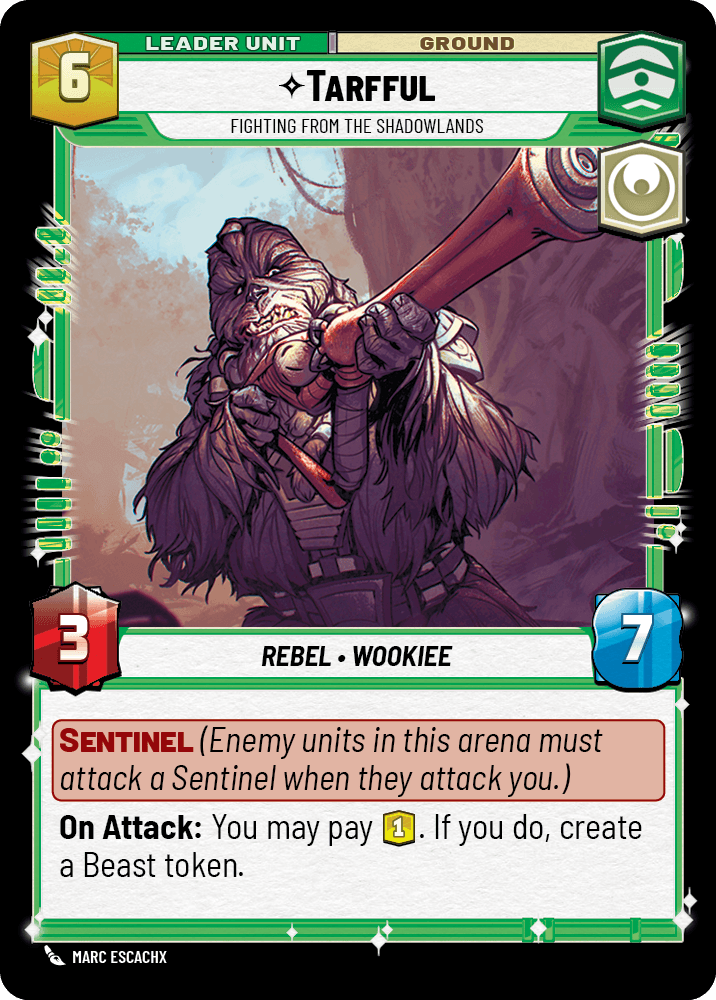
Tarfful, Fighting From the Shadowlands (Command/Heroism)
If nothing else, he makes sure you have an on curve 2 cost 3/3 unit to play on turn 1 through the Beast token generation, and I’ve gotta say that making sure you always start on curve in limited might be a sneaky good play. Sentinel and 7 HP on the flip side mean he sticks around to keep making them.
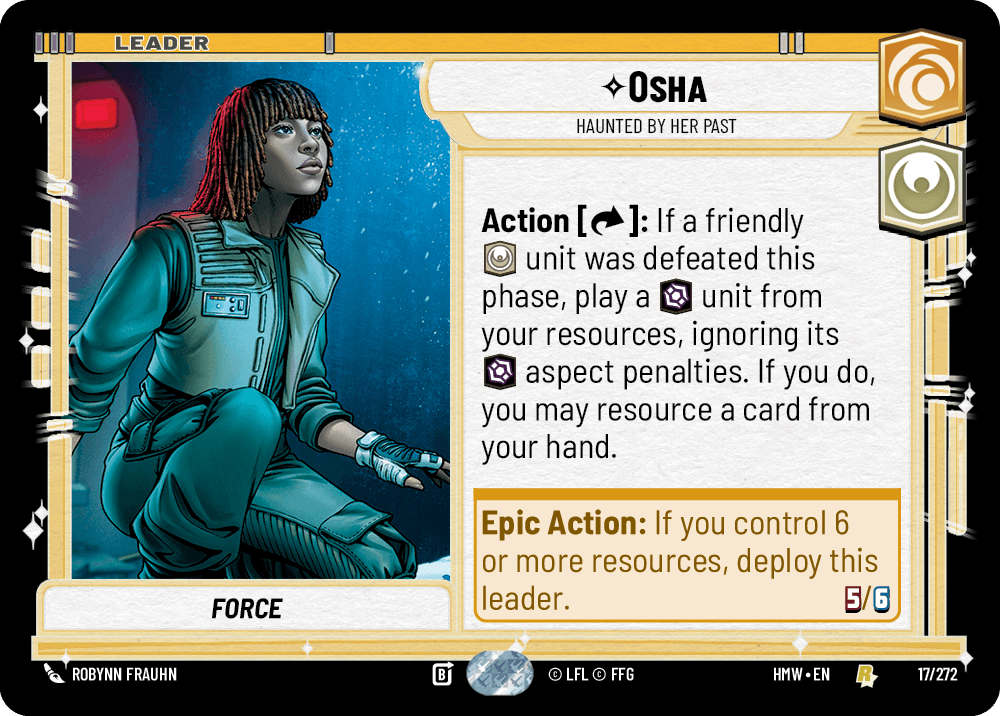
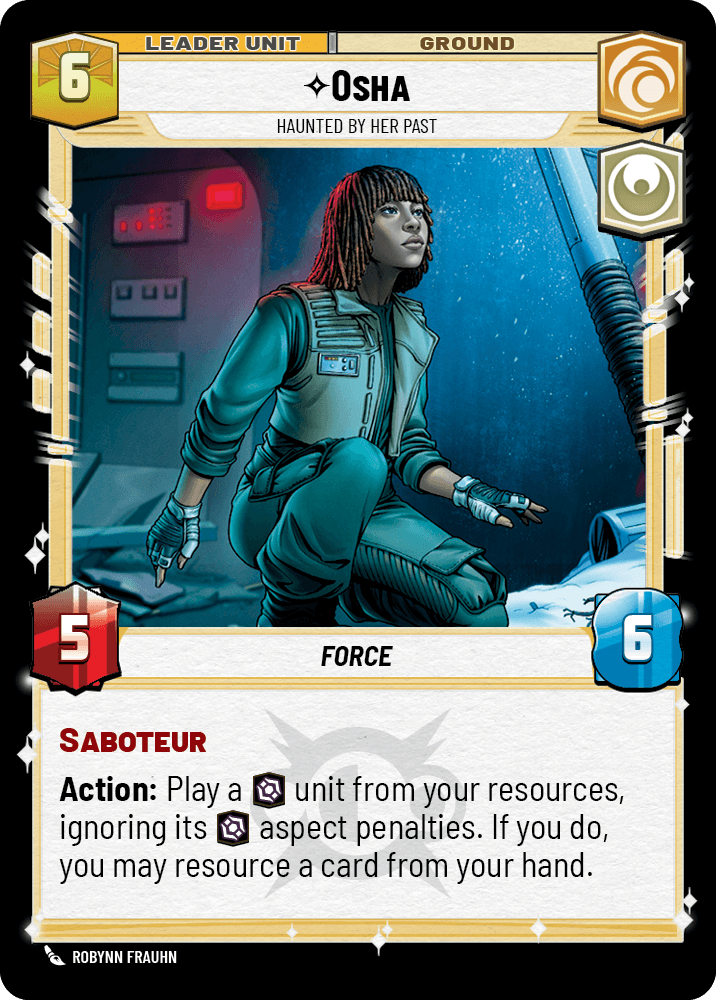
Osha, Haunted by Her Past (Cunning/Heroism)
It’s not an ability that helps with the game state in a specific sense, but if you hit a couple bombs in the villainy half of the spectrum, her flexibility to allow you to play those may just increase the overall efficiency of your deck enough to do the trick. Worth noting that her deployed side drops the condition entirely, once she flips you can cheat a Villainy card from your resources whenever you like, no setup required.
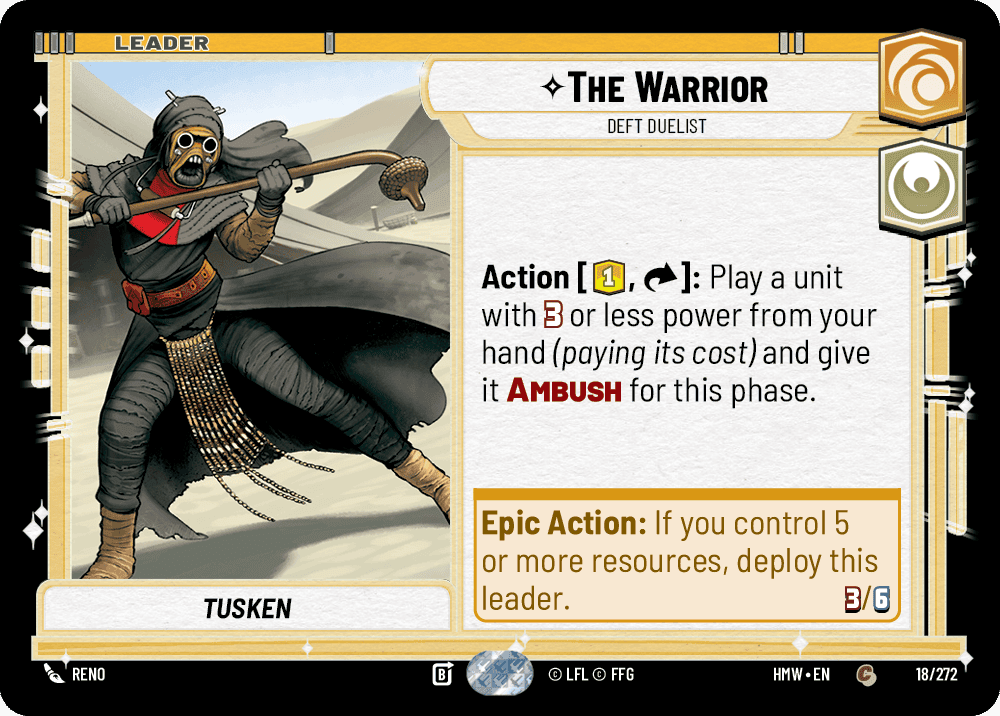
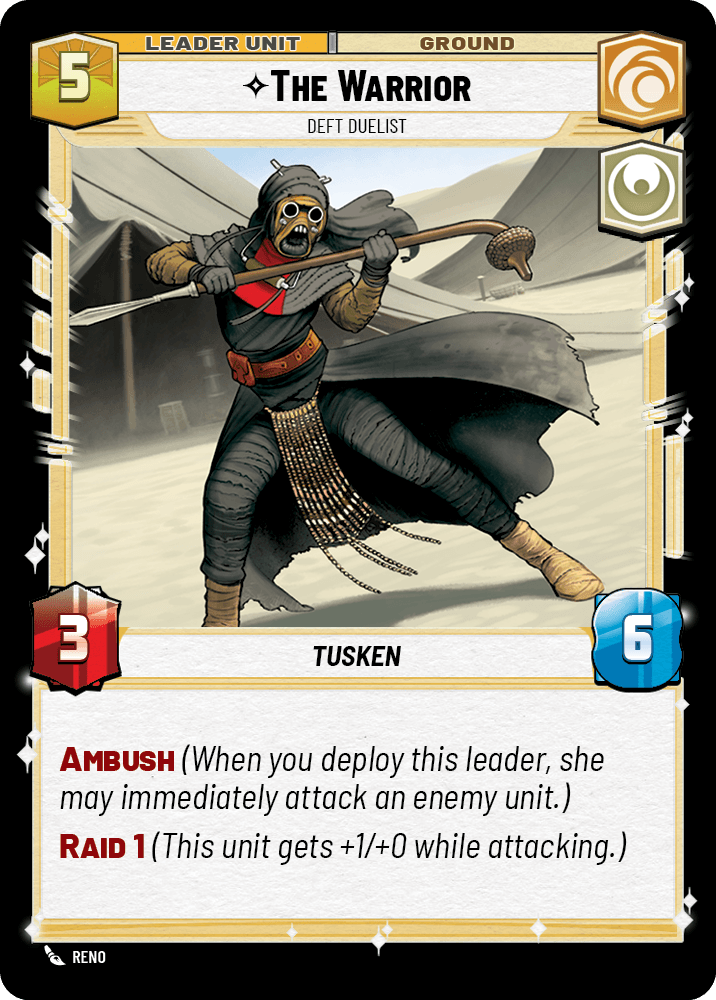
The Warrior, Deft Duelist (Cunning/Heroism)
It’s a reasonable ability to get some low cost units turned into pseudo-removal events, but it’s also got the most aggressive statline of leaders in the set, so that could be worth watching if the rest of your pool supports an aggressive strategy in this Cunning/Heroism.
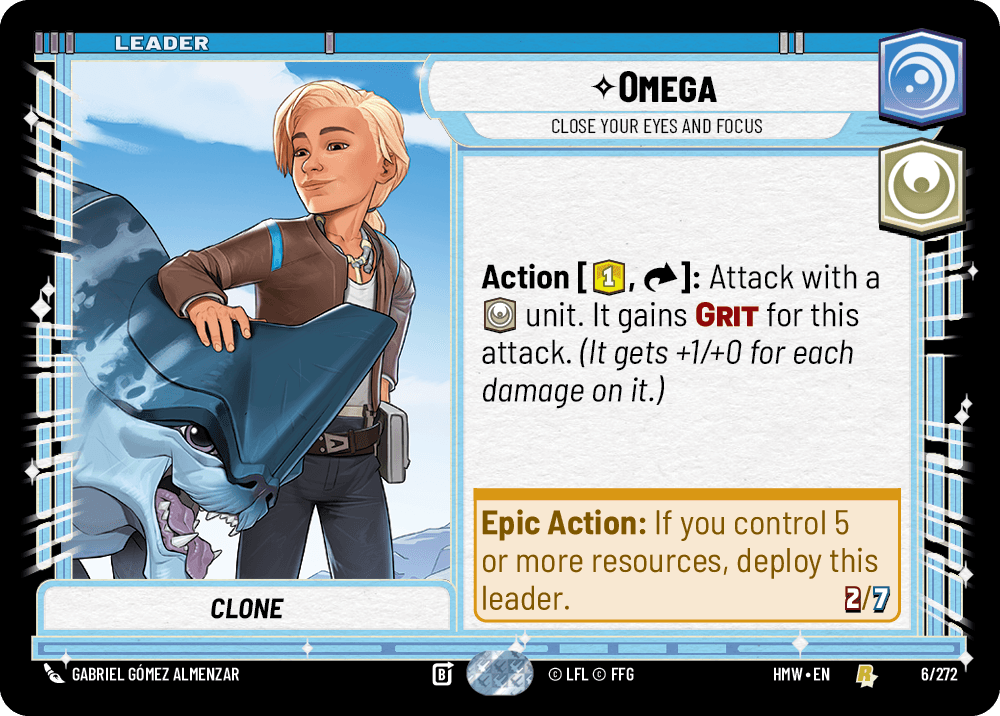
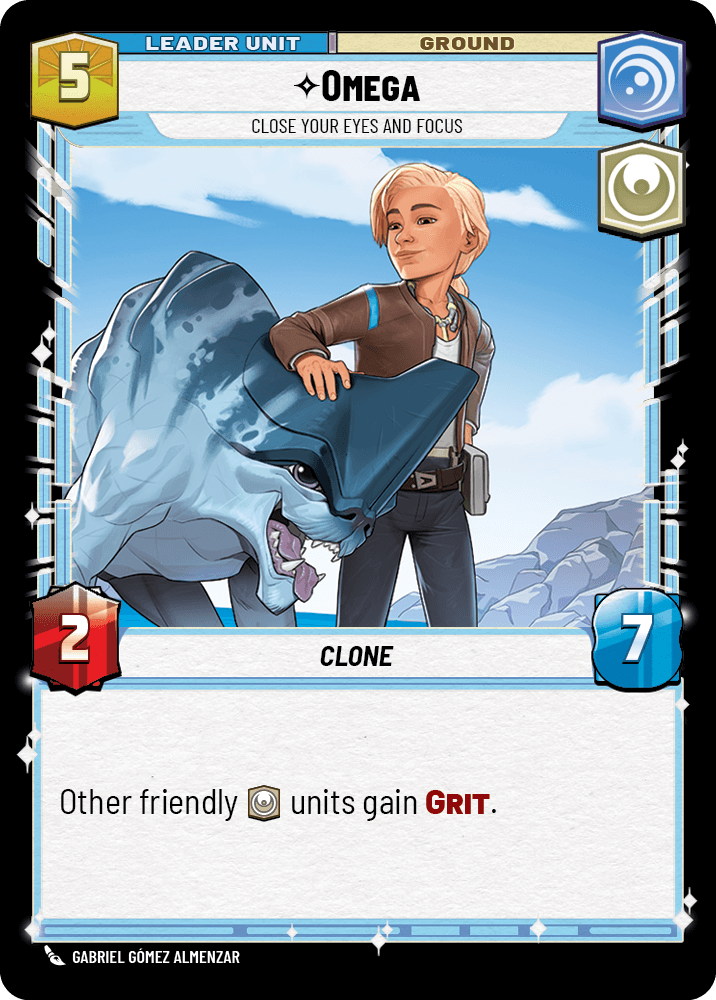
Omega, Close Your Eyes and Focus (Vigilance/Heroism)
Could generate some reasonable extra damage and opening Vigilance as an aspect option is pretty much always good. Her body backs that up too, a 5/7 at a 5-resource deploy is above the curve on its own.
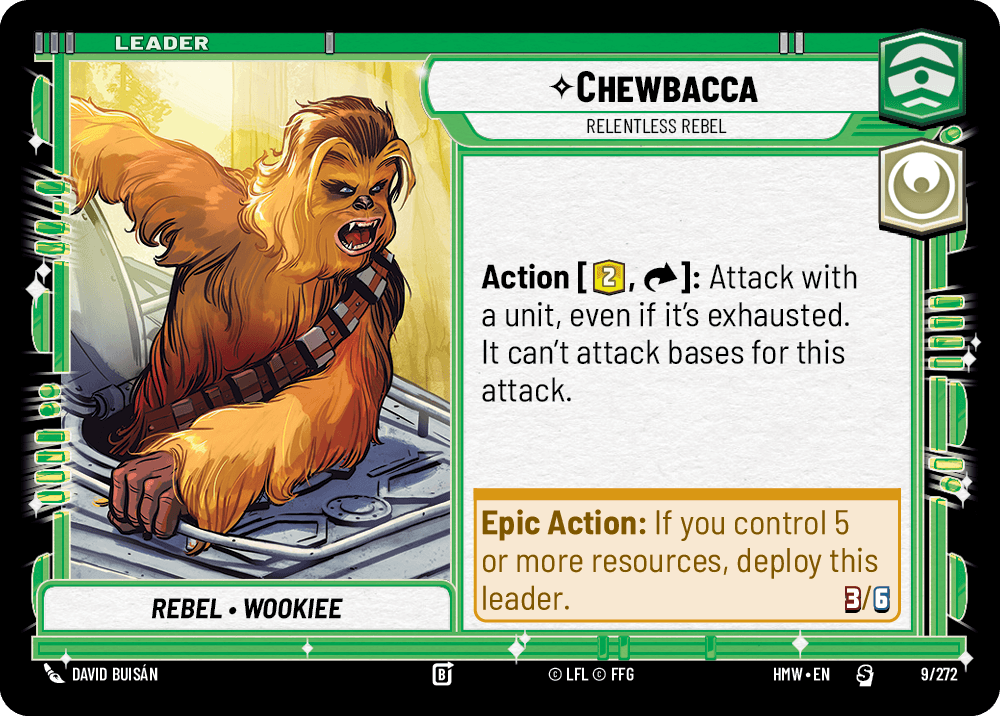
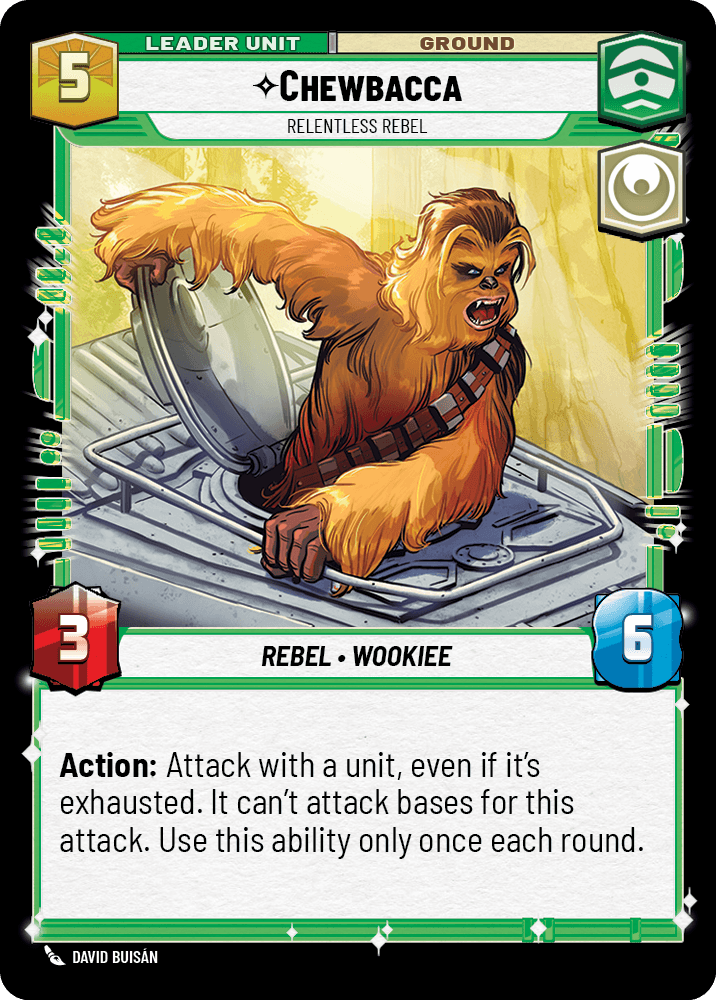
Chewbacca, Relentless Rebel (Command/Heroism)
One of your two guaranteed leaders, and a good one. An extra attack with any unit, no trait requirement, every round, is clean, repeatable tempo – as long as you can afford it. Being limited, there may very well be mid game turns when you have the resources to spare and an extra attack might become removal.
Jar Jar Binks, Bombad General (Vigilance/Heroism)
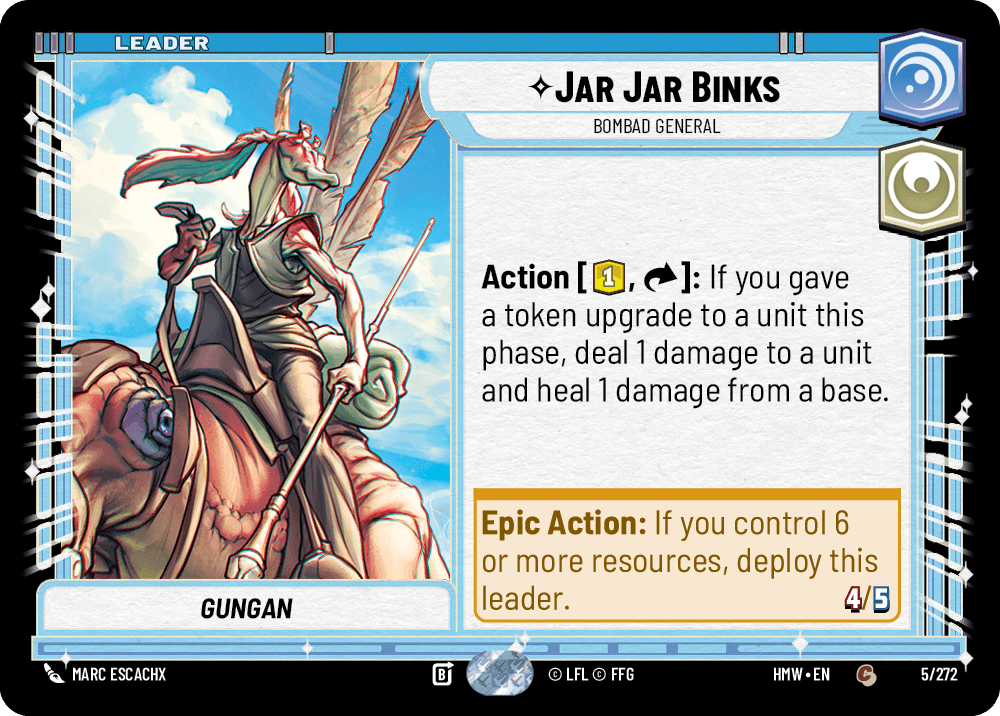
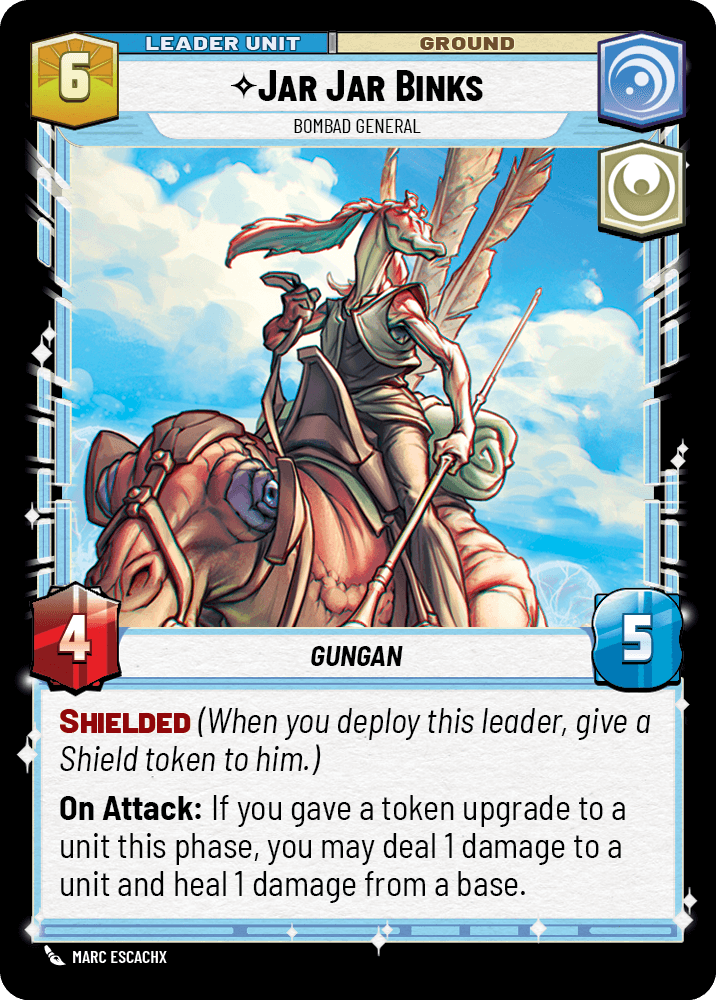
You have to have some reliable token generation for sure, but if you do, he does a lot of work dealing damage and healing (and triggers himself on deploy) for a reasonable resource amount and body size. Without that package in your pool, he’s a fairly vanilla body.
Grand Moff Tarkin (Vigilance / Villainy)
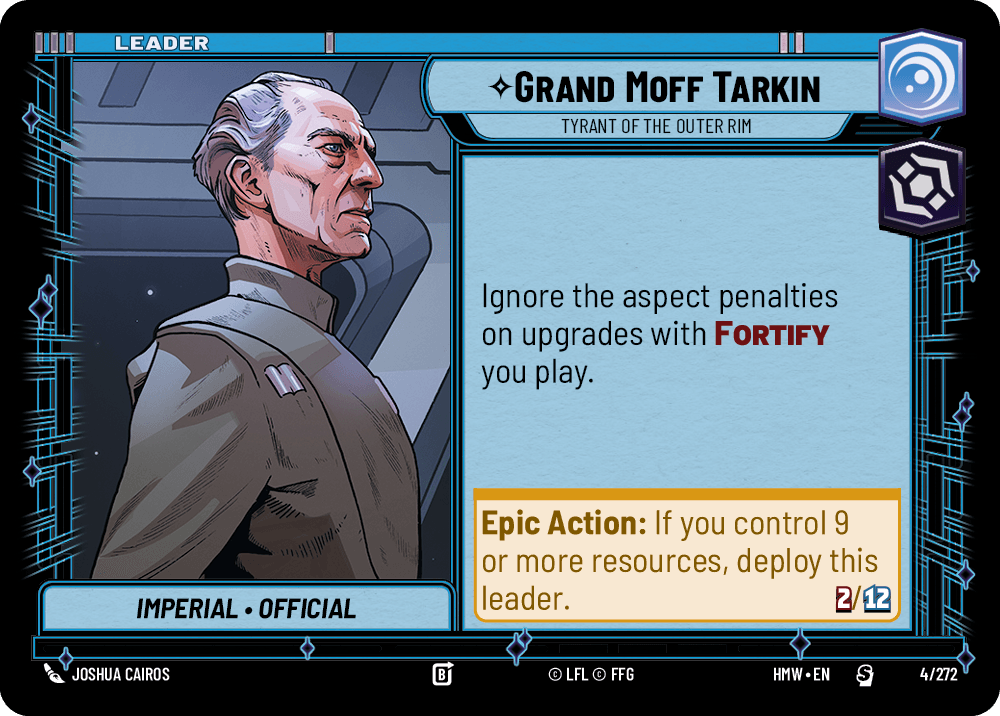
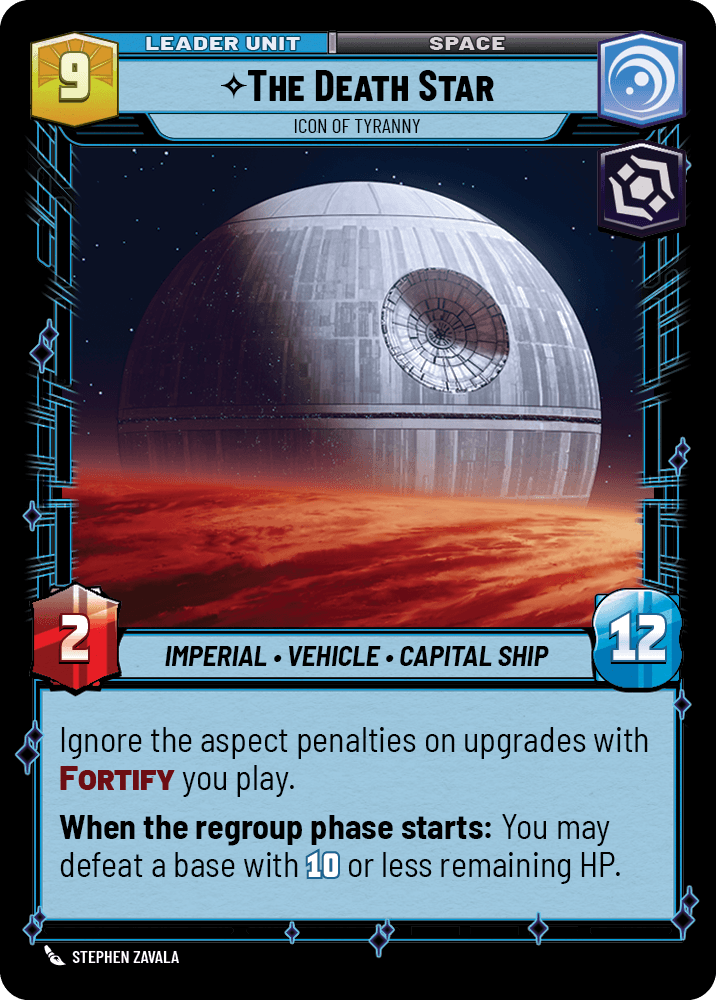
The leaders I’m least excited about are the ones asking for something your six packs probably can’t deliver. Grand Moff Tarkin, your other guaranteed leader, has a genuine finisher in his base-defeat trigger and a massive 12 HP body as the Death Star, but a 9-resource deploy threshold means you may simply never flip him before the game’s decided.
A Quick Word About Rares and Bombs
I know what some of you are thinking. Where’s the tier list of rares and legendaries? I get it, those are the exciting cards. But here’s the honest truth about sealed: you cannot plan around rares.
You’ll open a small handful across your packs out of a set with well over a hundred of them. The odds of opening any specific bomb are tiny, and the odds of it matching the aspects you already committed to are smaller still. If you open a powerful rare that fits your colors, slot it in and enjoy the ride. If it’s off-color, don’t automatically dismiss it, but don’t warp your deck around it either. Sealed games are won and lost on commons and uncommons far more often than on rares. Let your commons and uncommons tell you what your deck wants to be.
The Uncommons That Actually Win Games
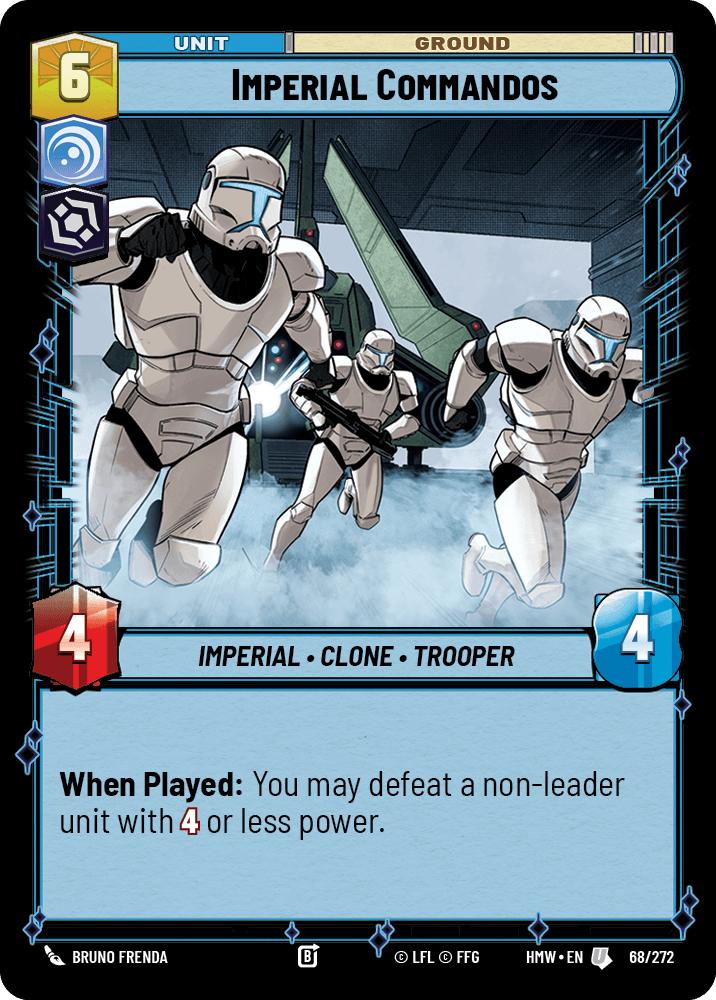
Imperial Commandos: A solid body with very good hard removal attached to it. Neither would be worth the cost on their own, but together, they’re very efficient for sealed. This is as close to a true bomb as the uncommon slot gets.
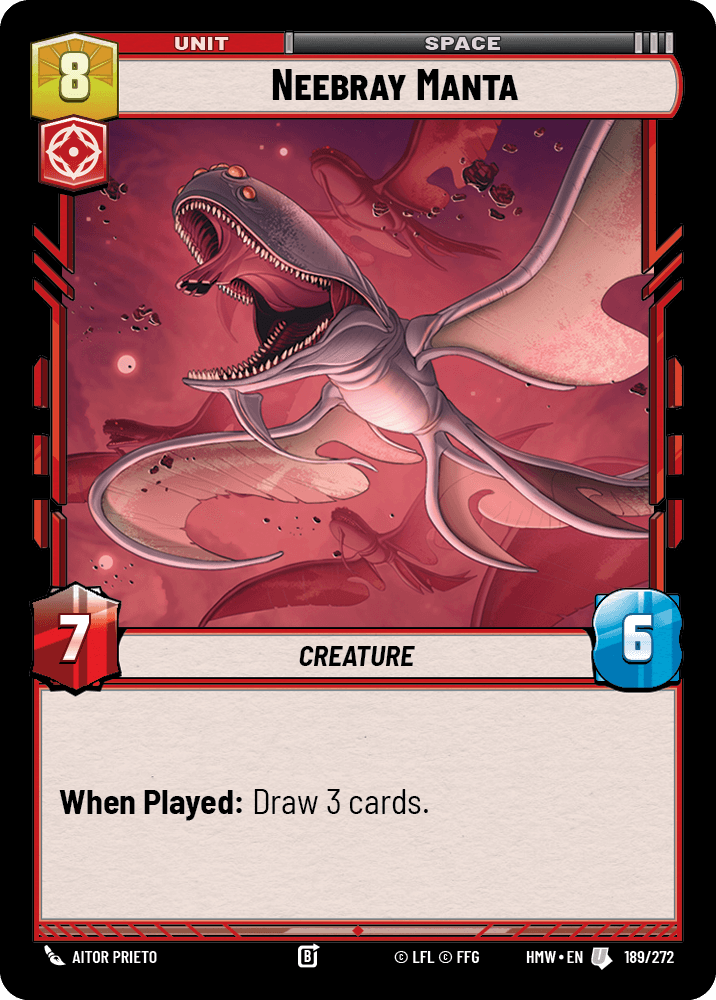
Neebray Manta: An 8-cost 7/6 in space that draws you three cards the moment it lands. Expensive, but if you get there it just wins the resource battle on the spot. The question is going to be whether the game was already over before then.
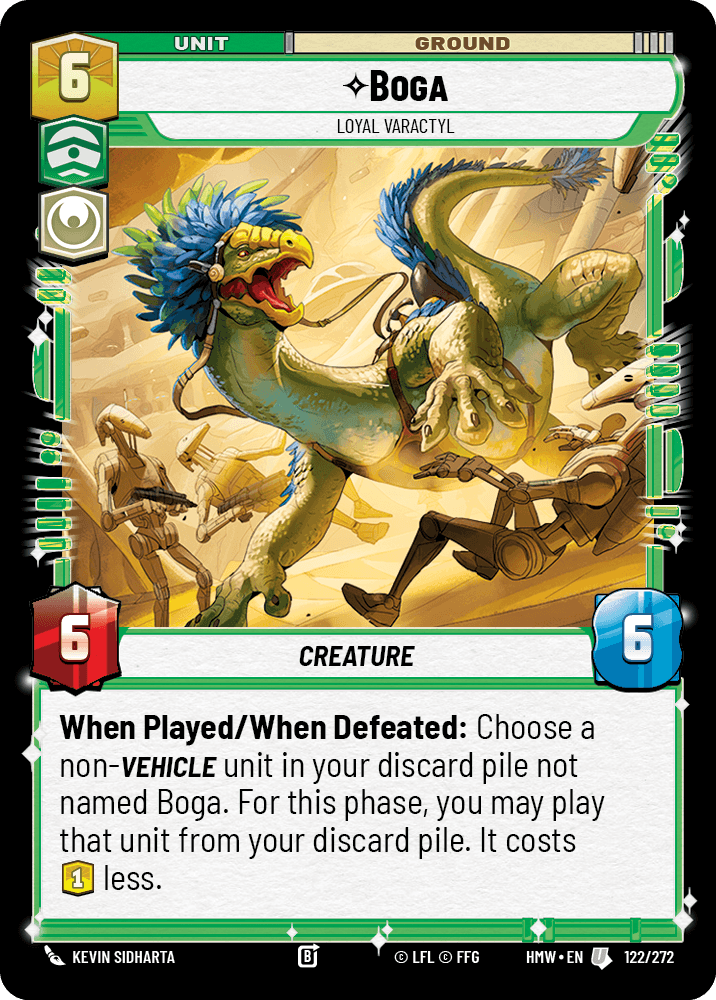
Boga, Loyal Varactyl: Reasonable on cost body and allows you to get another key unit back (at a discount) on the way in and the way out? Awesome. Sure, you’re not going to be able to play anything very large with the When Played, but the When Defeated could be very impactful.
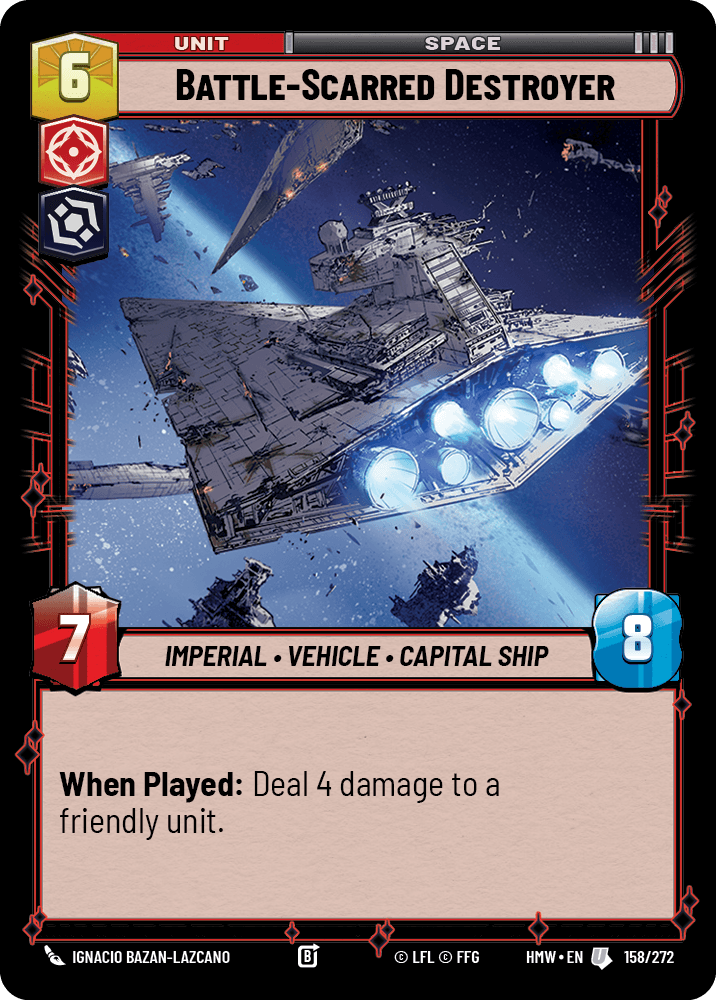
Battle-Scarred Destroyer: A hefty 7/8 body in space, and yes, dealing 4 to a friendly unit on the way in is a real cost. Pair it with something that wants damage on it, or just accept the tax for a body this big.
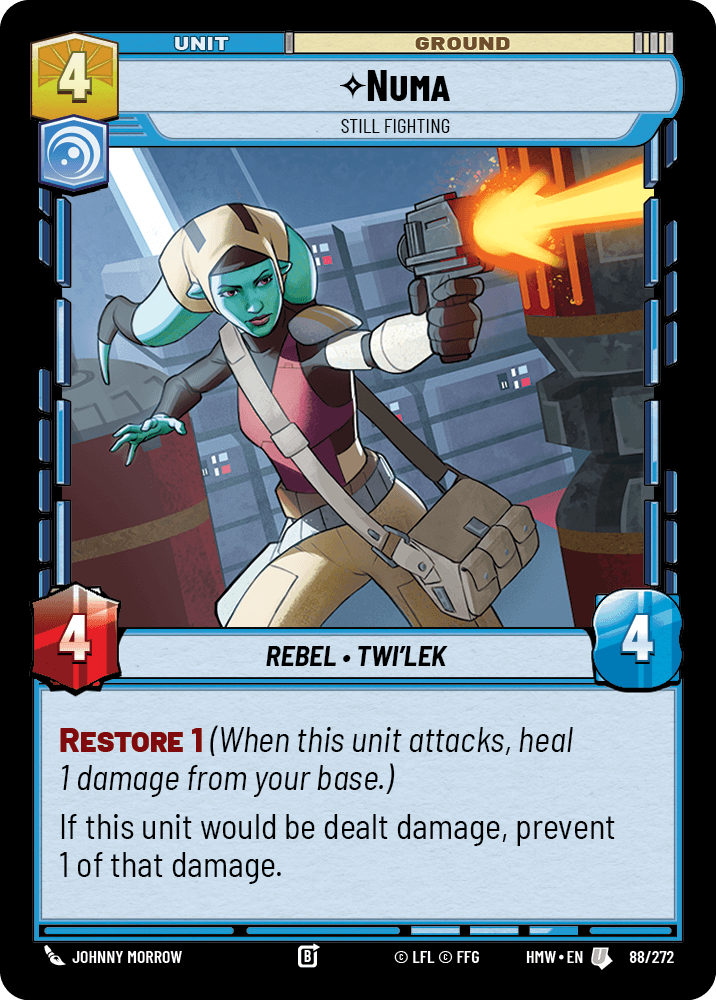
Numa: Relatively efficient if not impressive stats, but should be able to keep itself alive to be a real nuisance to your opponent. A 4/5 that prevents a point of damage every hit adds up over a long game.
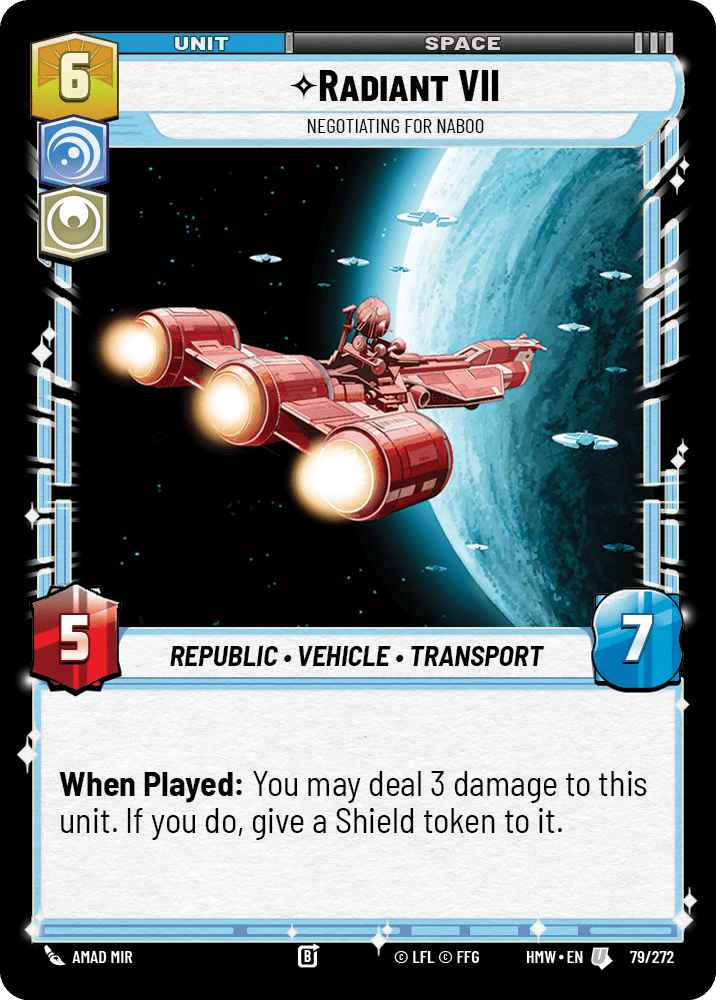
Radiant VII, Negotiating for Naboo: Flexible resilience. Take the self-damage for a Shield token or don’t, either way you’ve got a sturdy 5 attack in space.
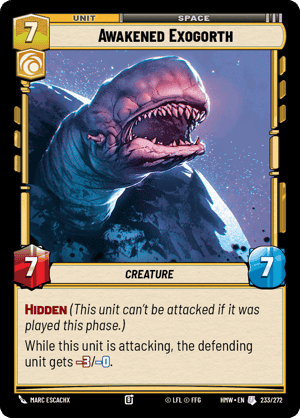
Awakened Exogorth: Hidden protects it the turn it lands, and it shrinks whatever it’s attacking by three power. A properly scary space threat. Yep, you read that right, this is in space. It’s almost certainly going to end a game with an attack straight to base.
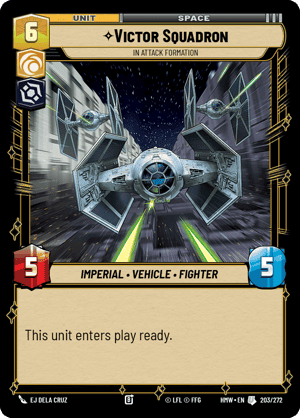
Victor Squadron: Another strong midrange beater in space in Cunning. Coming in ready in space for 5 attack could really help finish off a LOT of games before your opponent can reasonably react.
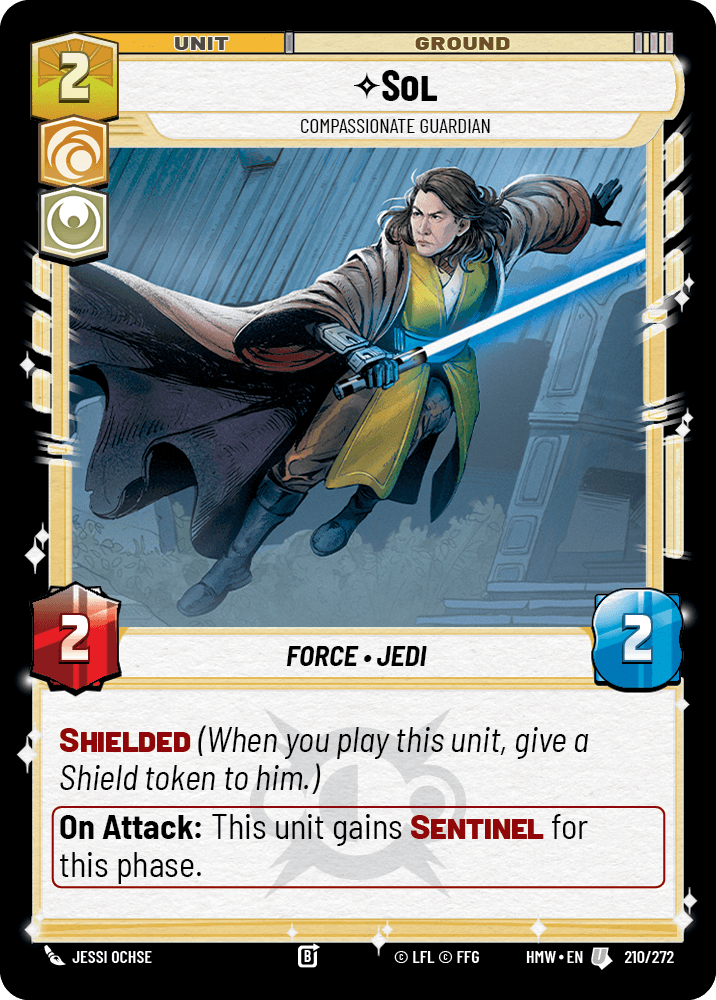
Sol: It’s a 2/2 for 2 with shielded which already tends to solid and it has additional upside over that? Great!
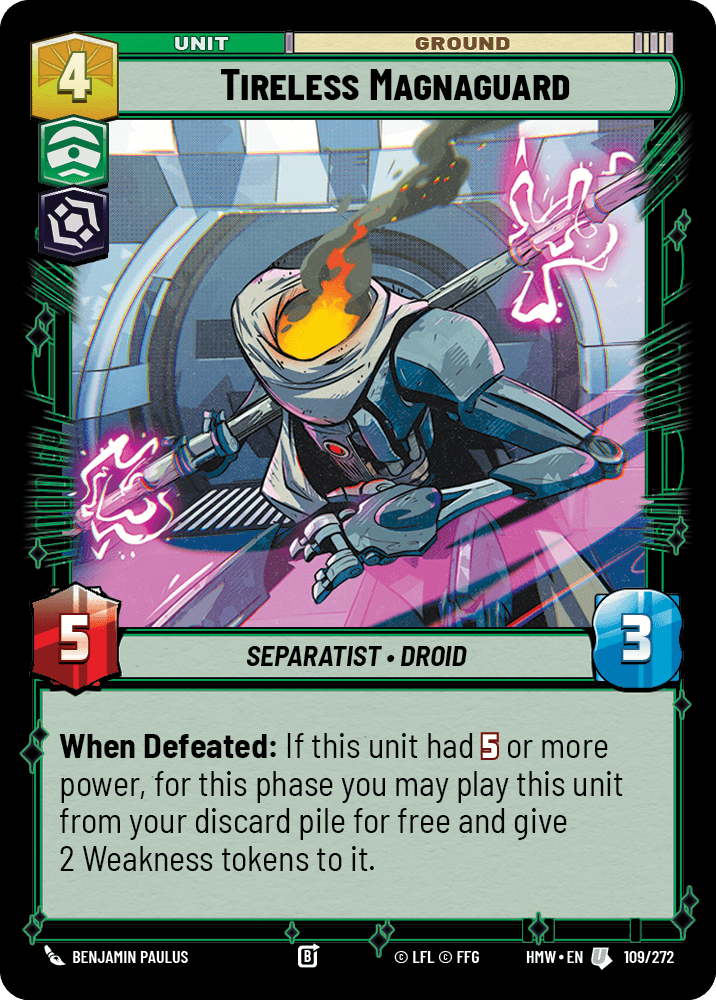
Tireless Magnaguard: I love about anything that has multiple bodies for one card and this essentially does while keeping a reasonable statline. It’s a bit fragile on the back end but has enough attack to trade very well. Coming back again is great even with the weakness tokens, and if you find a way to deal with those, you could have a real engine.
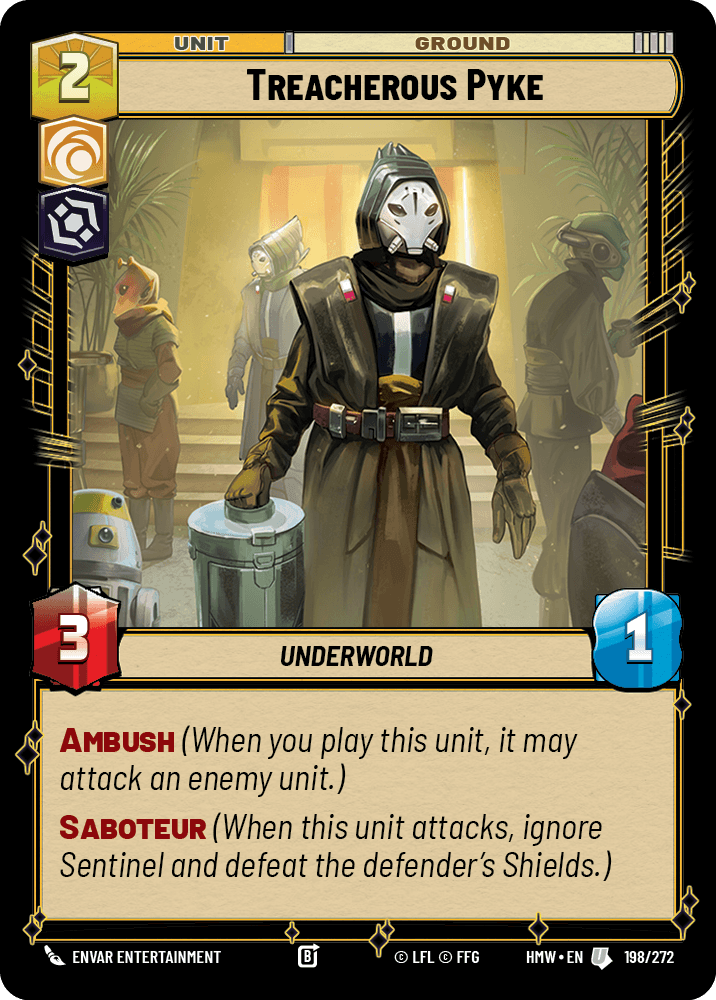
Treacherous Pyke: A 2 cost 3/1 ambush used to be a great rate to do an impression of early game removal. With the push to higher HP on early drops, the utility of units like this one has gone down. I don’t dislike this, but I’m not sure if the addition of saboteur is enough to make me rate it highly. Maybe to help control Gungan shields.
Beyond the specific standouts, any uncommon that removes a unit, provides an above-rate body, or plays into the space arena is probably making your deck.
The Commons That Will Define Your Deck
Your deck is built on commons. You’ll open the bulk of your pool into your 30, and knowing which are premium and which are filler is the difference between a strong record and a quick exit.
Removal Is the Most Precious Resource
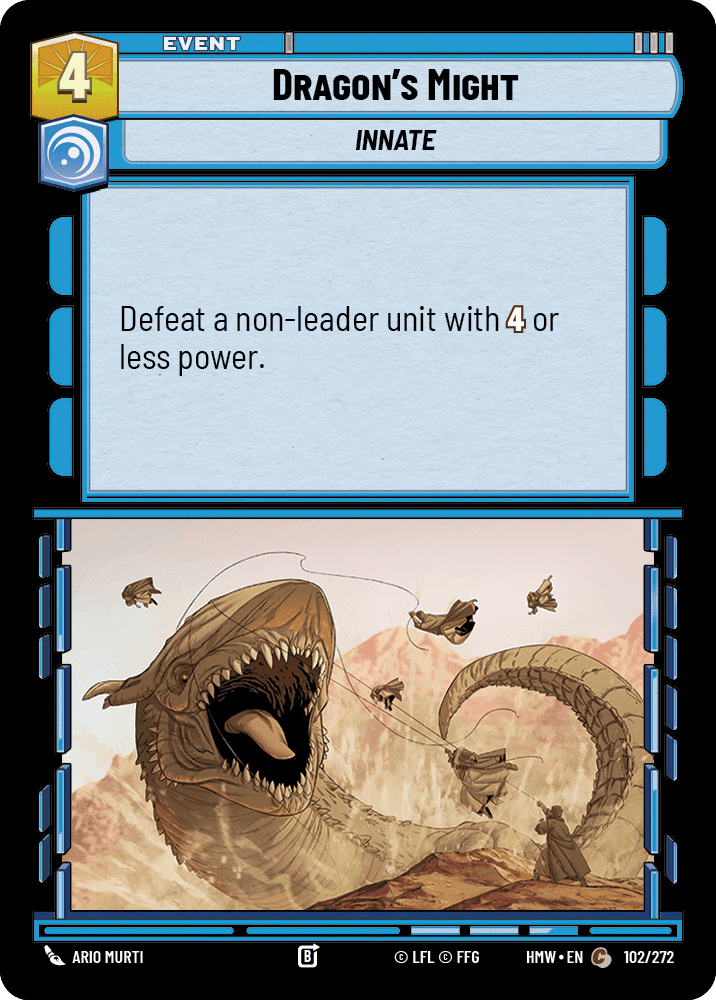
Dragon’s Might: Probably the premier/baseline hard removal card in this set. Not phenomenal in premier, but we want it in limited.
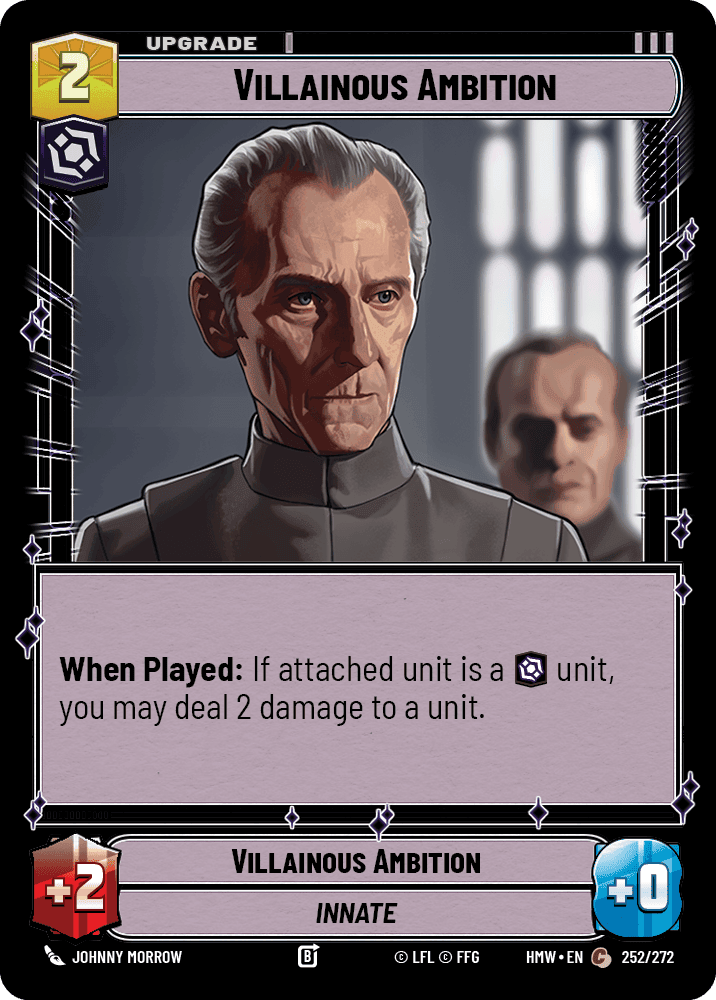
Villainous Ambition: Very solid upgrade for a limited environment. It boosts attack so that you can put that to use quickly with pressure from putting it on a ready unit, but it also does damage and doubles as removal more often than not. I’ll never be sad including this.
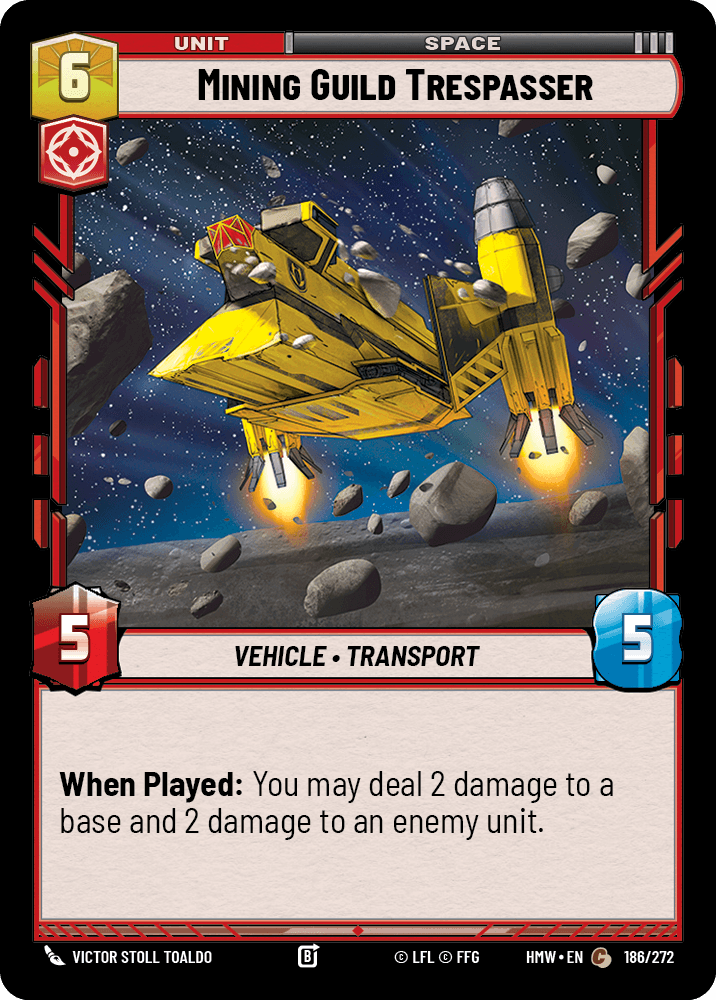
Mining Guild Trespasser: Solid space midrange body that can double as removal and reach to potentially deal the last 2 damage to your opponent’s base to finish them off? High on my list for sure.
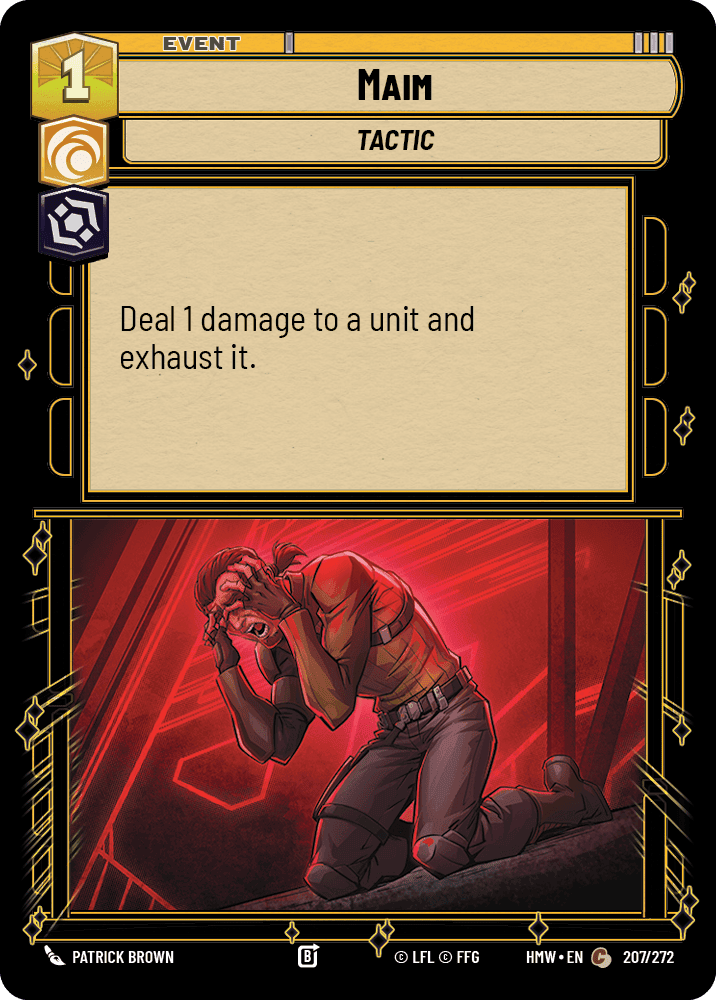
Maim: Reasonable soft control with the chance to turn into hard control? Not the best option in the set, but could be worthwhile if you’re on blue/vigilance.
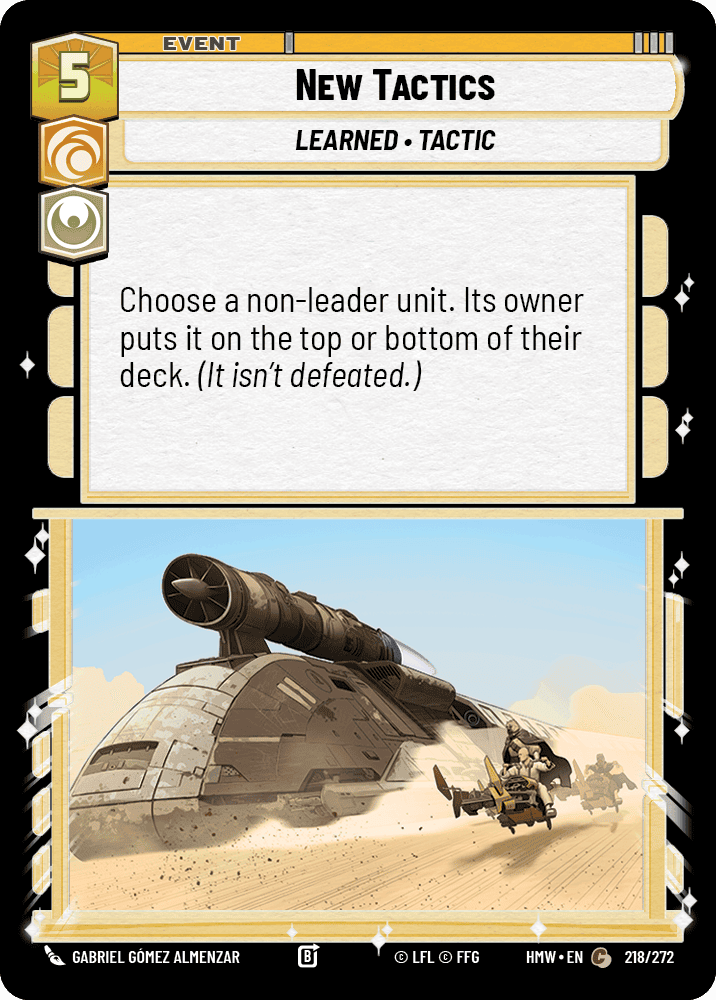
New Tactics: Expensive soft control, but with the upside of making your opponent spend resources again. This isn’t high on my list if I have hard removal options, but it could still really decide the end of a game.
The Protective and Sticky Bodies
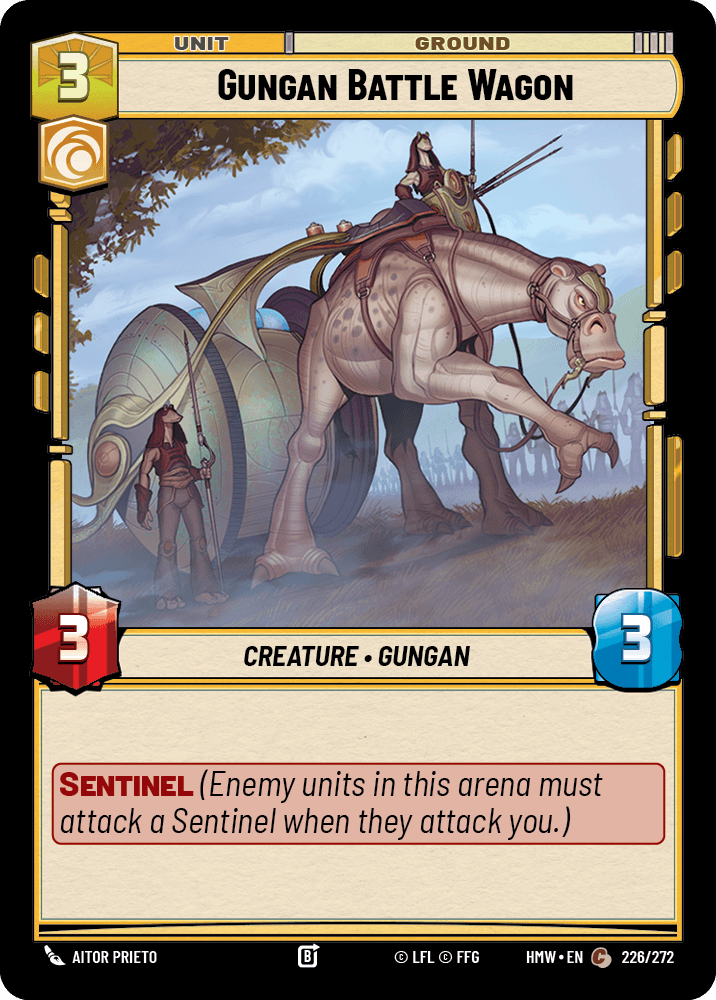
Gungan Battle Wagon: One of the most efficient sentinels in this set and particularly for a common and in a color/aspect that doesn’t usually get the efficient sentinels? Yes please.
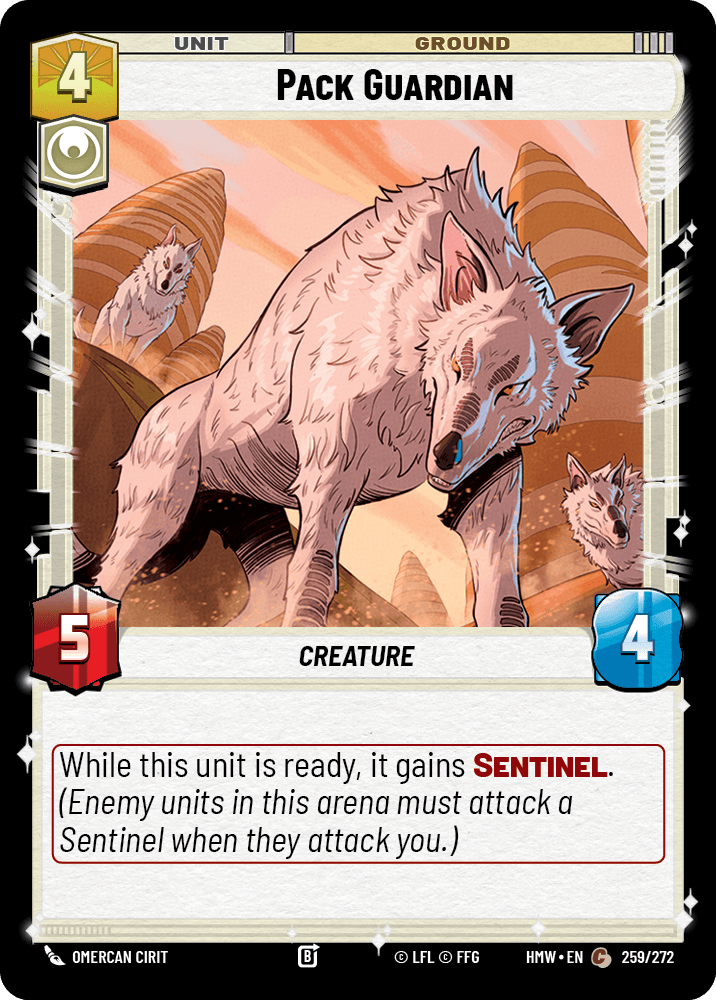
Pack Guardian: Great sentinel option.
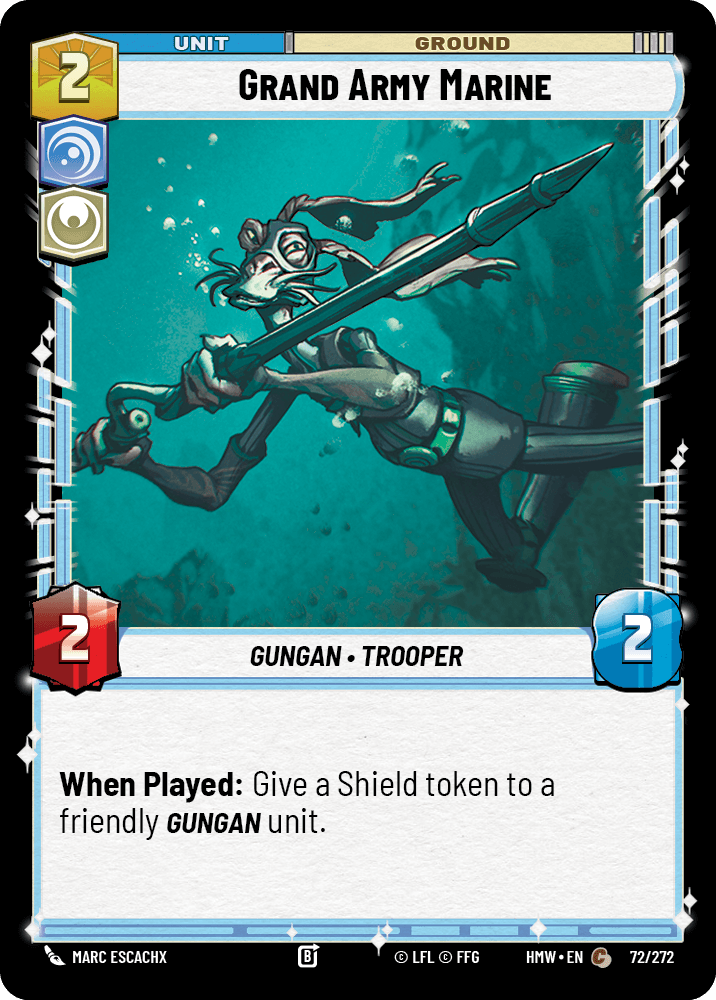
Grand Army Marine: Worst case scenario, it can give a shield to itself and shielded 2/2 for 2 units have historically been pretty solid in limited.
Space Units Worth Grabbing
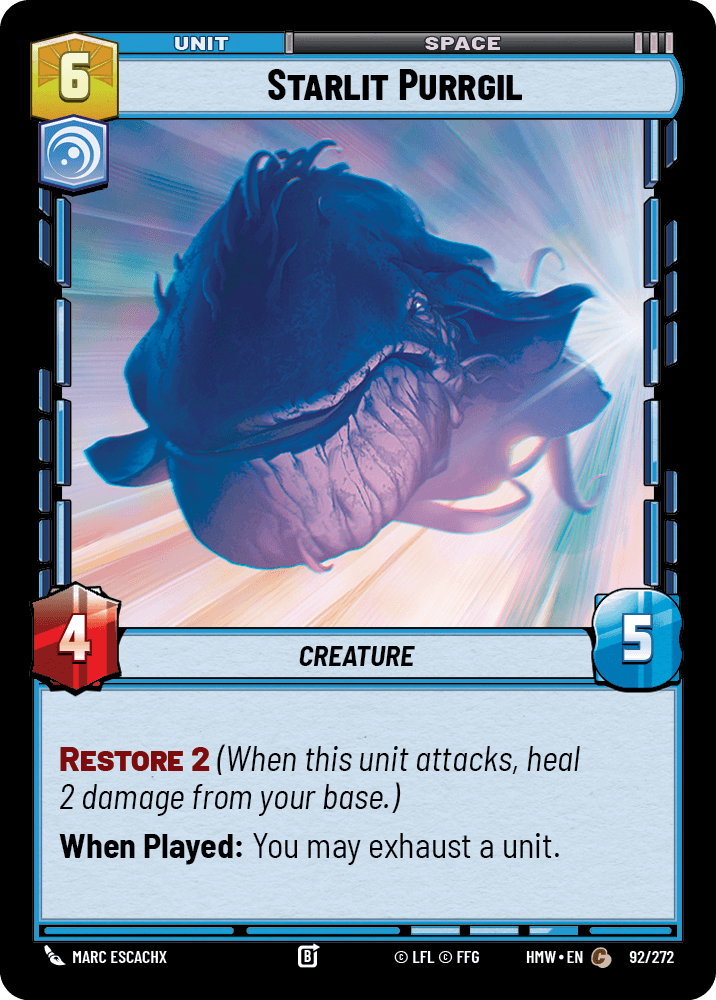
Starlit Purrgil: A real beefy midrange space body. Puts solid pressure on the off arena for limited while also providing soft control to slow your opponent and restore to slow things even more? I want this for sure.
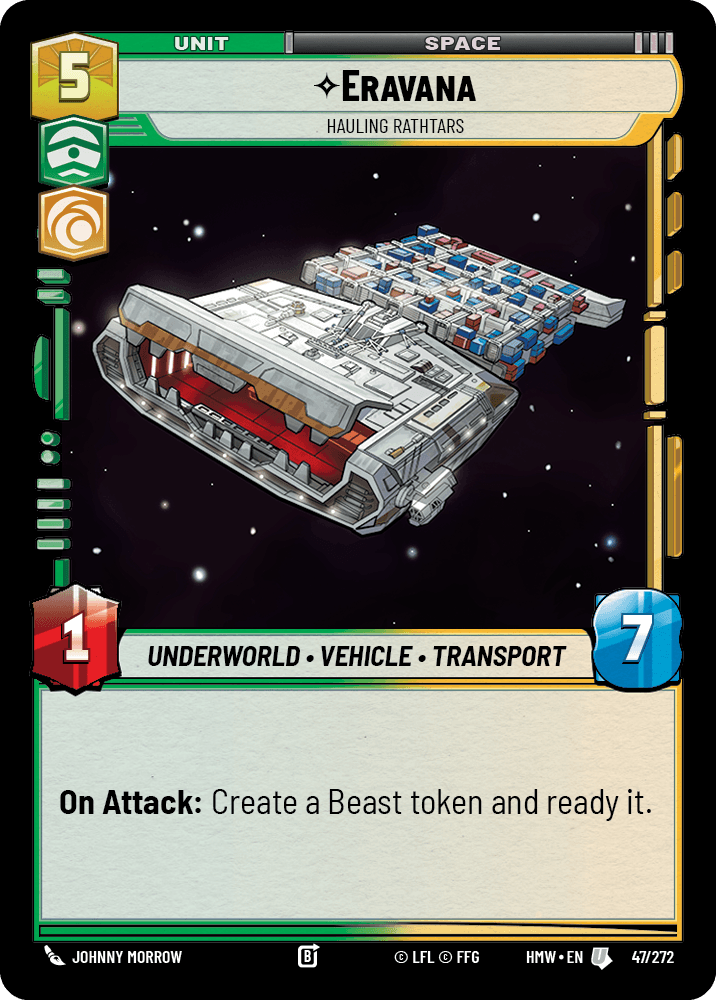
Eravana: Space units are already at a premium in limited and tend to last longer, plus this has a hefty amount of HP to survive a couple hits. It generates some real card advantage as you go, particularly since it readies the Beast token it creates.
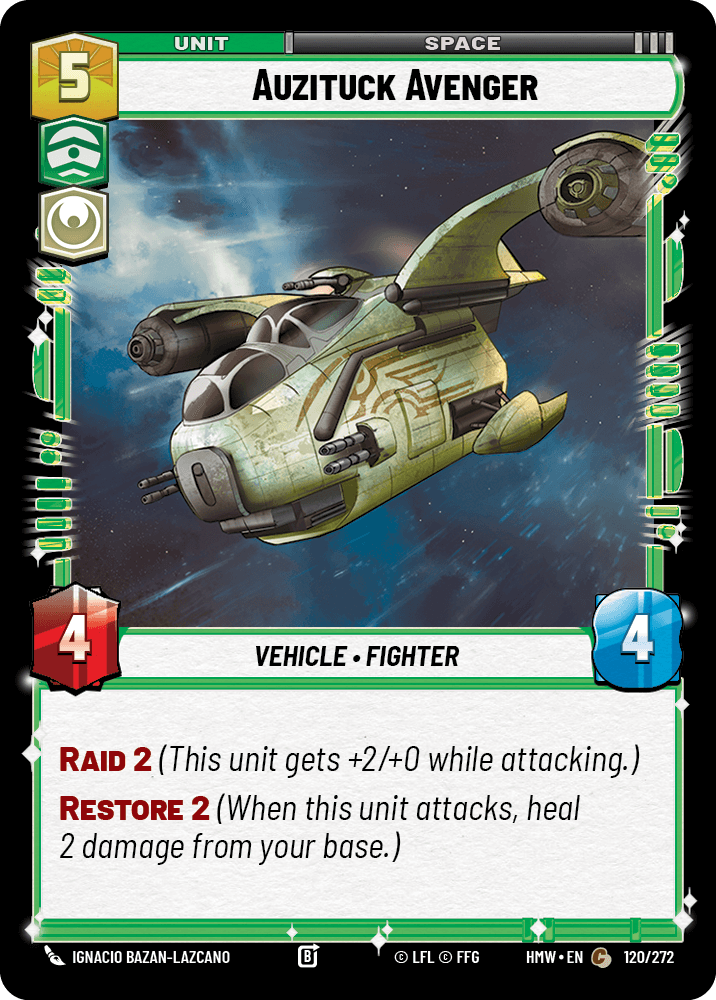
Azituck Avenger: This just puts so much pressure on in the space arena while healing your base (8 HP swing per attack for only 5 cost) that this seems like a must grab.
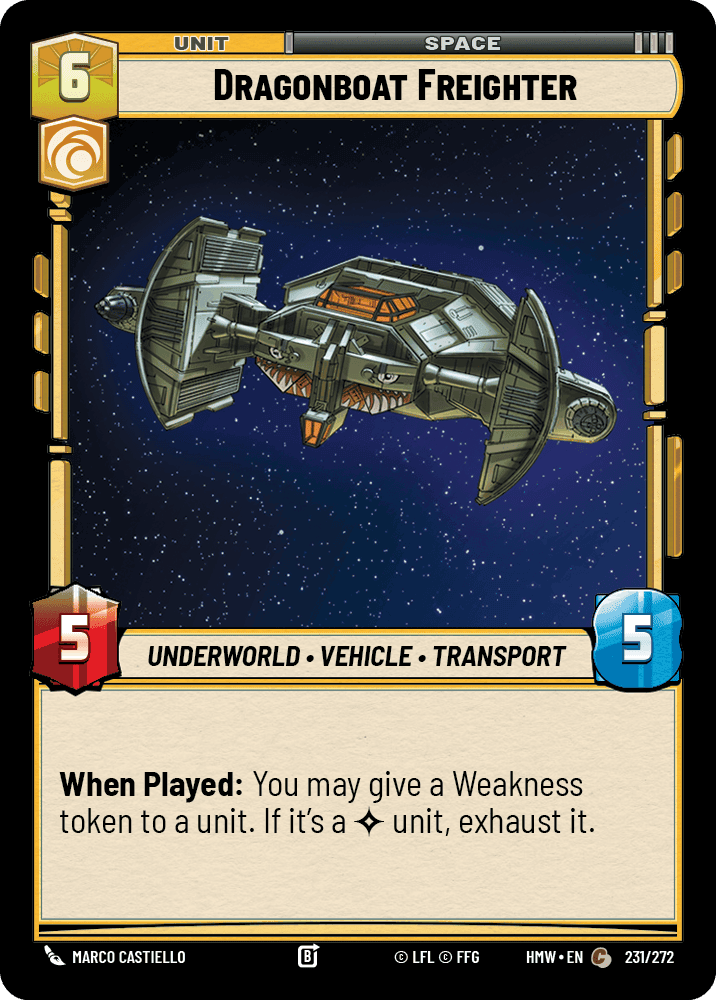
Dragonboat Freighter: Another one of these midrange space beaters that have been spread around this set. Admittedly, I’m realizing now that the wide spread of them probably dings their overall value just a tiny bit since your opponent may very well end up with one to counter you, but I think this is still a great option by coming attached to a soft control effect that makes the unit you hit permanently smaller. I really like that this comes out on 6 resources and can hit leaders, so this could be a solid counter play.
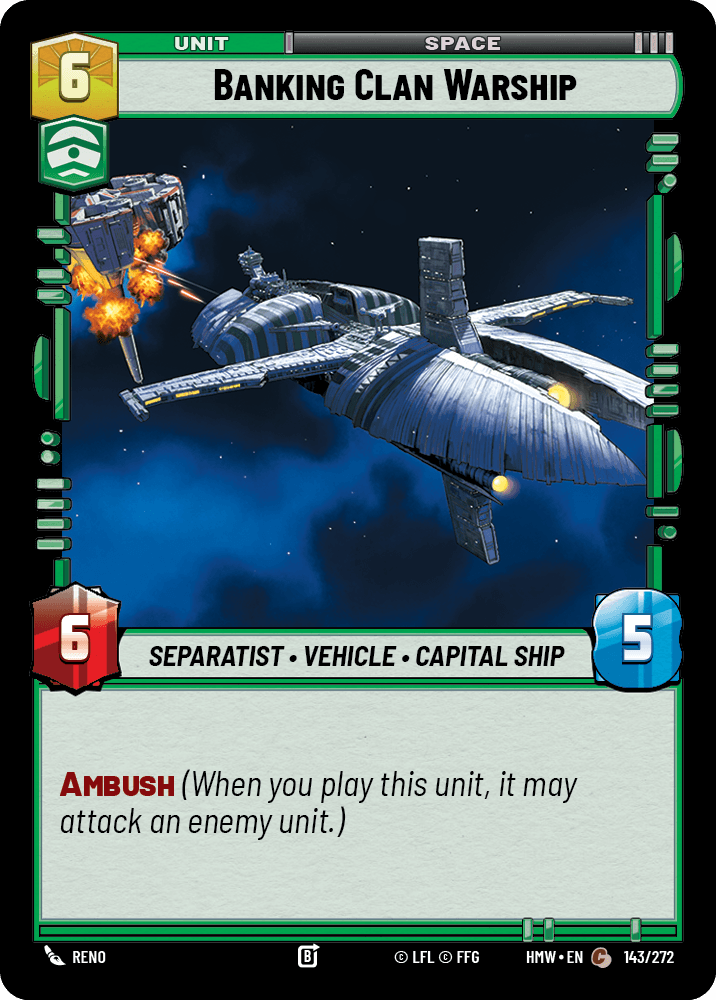
Banking Clan Warship: There are actually several midrange space beatsticks in this set and this ambush unit being able to trade and survive with many of them on the ambush could make this a very key answer, and it can still put its own pressure on.
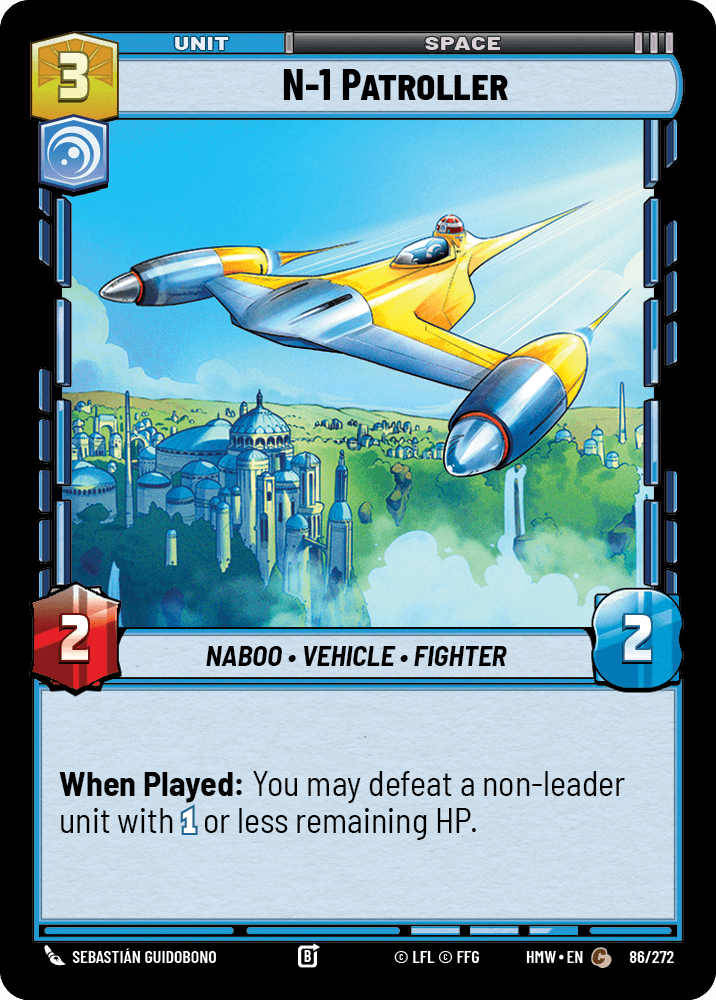
N-1 Patroller: It’s going to take some timing, but I think you can snipe a few units with this and still keep the pressure on. Space is very important, as I always say.
Aggression and the Glass Cannons
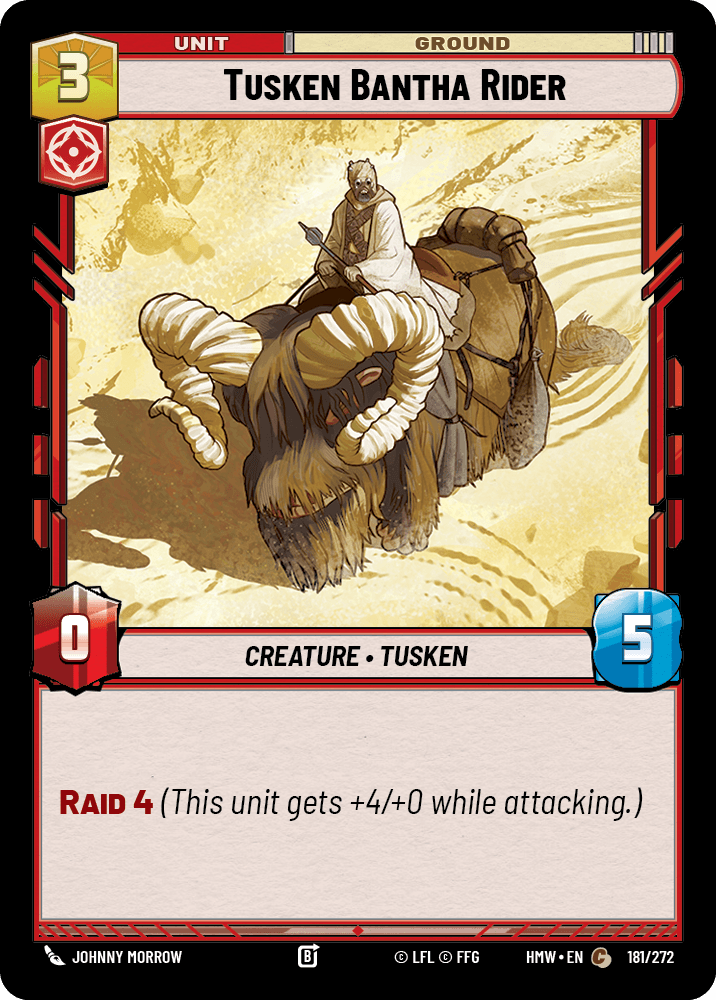
Tusken Bantha Rider: Also reasonable for an aggro strategy where it can put some good pressure on, but does have a downside of 0 attack by default, so it encourages opponents to attack into it. But even that has a fringe benefit of them not attacking your base.
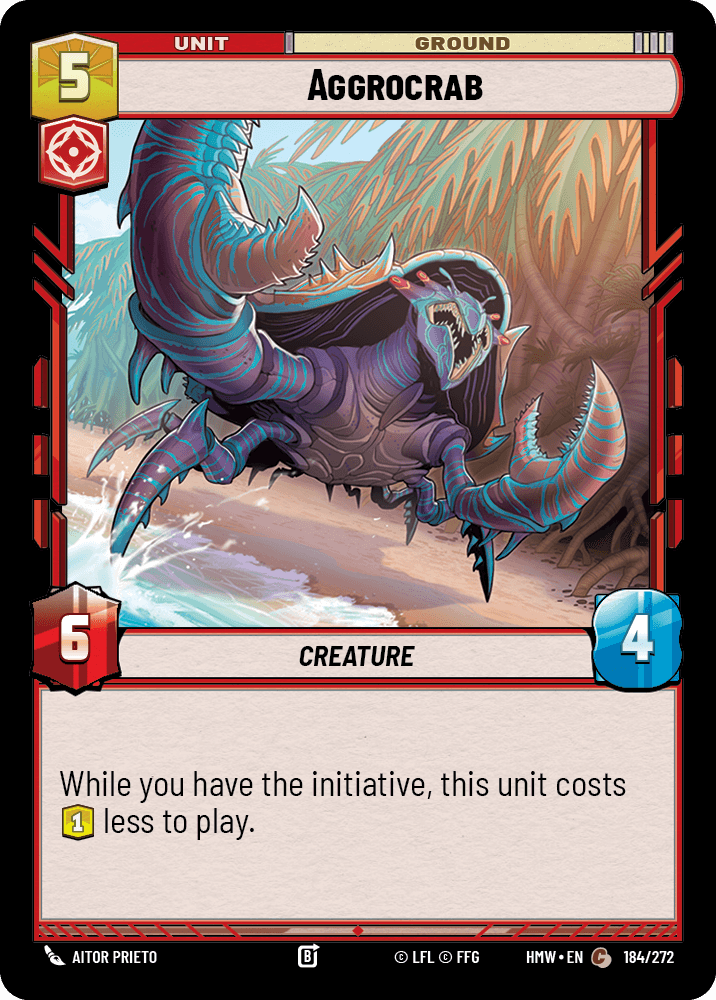
Aggrocrab: It’s right there in the name. Solid limited aggro.
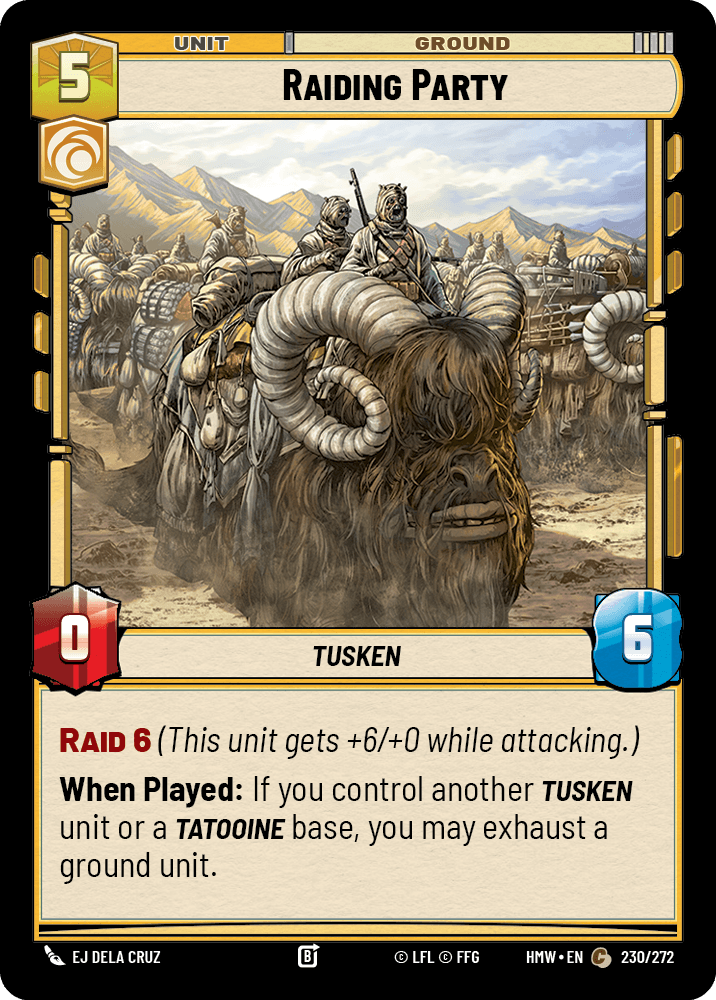
Raiding Party: This is a tough set to grade in some ways due to the focus on synergistic effects with traits and I admit this one does suffer from the 0 default attack issue. But it’s a reasonable mid range beat on attack that can also come attached to a soft control effect and all at common. It’s not the top of the line, but I think it’s worth respecting.
Utility Worth a Slot
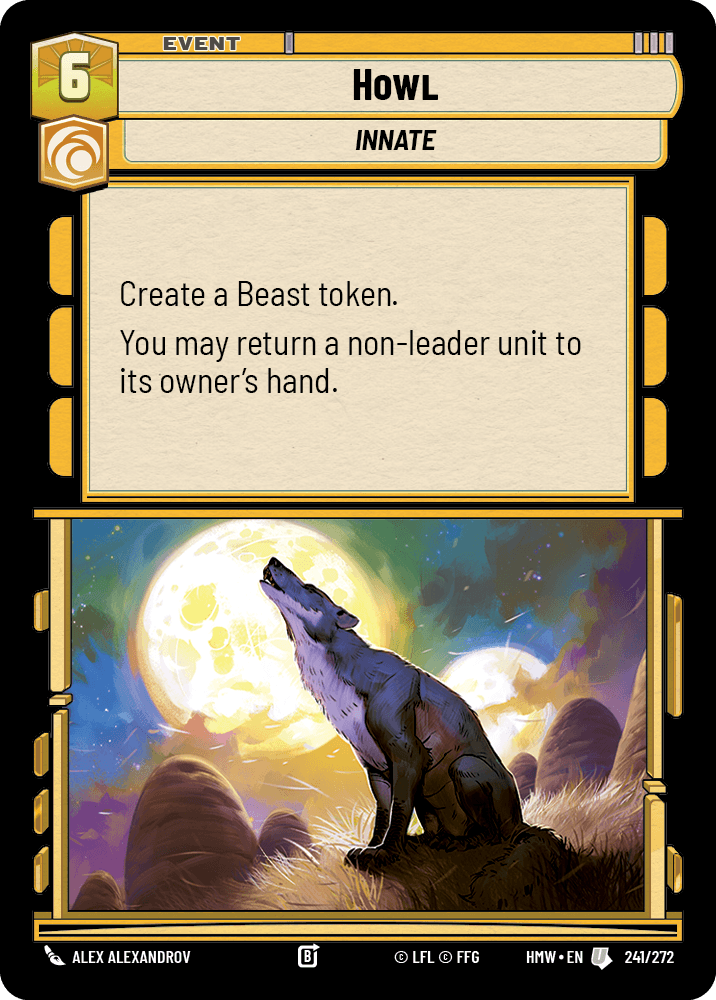
Howl: A bit pricey, but could be the tempo play you need to pull ahead in a race and end the game before your opponent can.
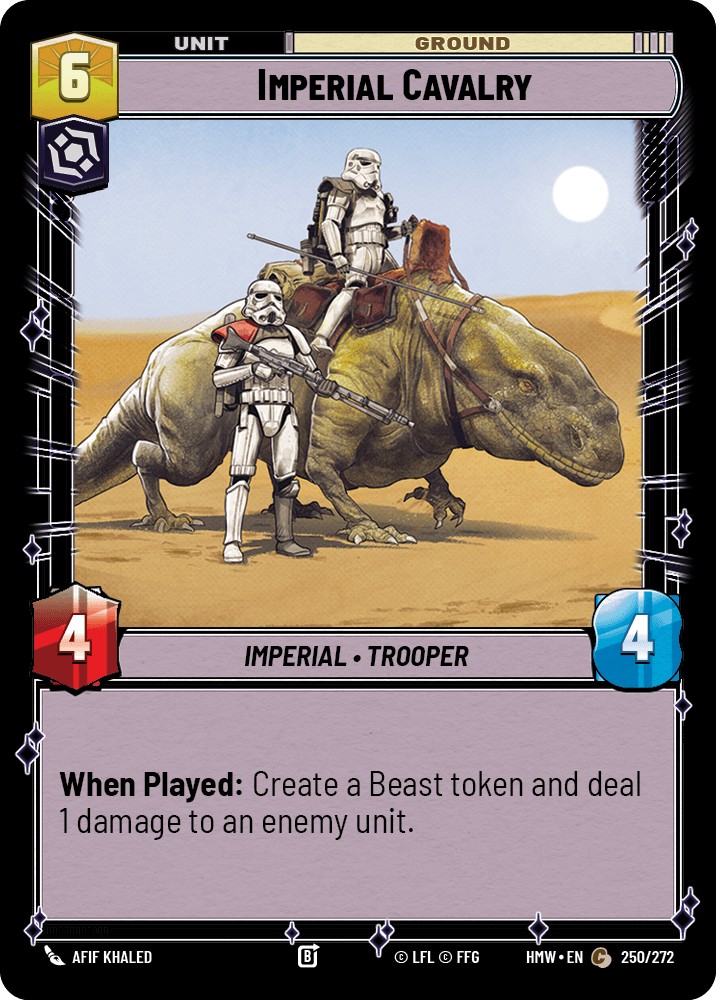
Imperial Cavalry: I like that this gives multiple bodies for one card and 7/7 total stats is on or ahead of curve for 6 resources, while also pinging for a damage that you might be able to turn into removal? This seems pretty reasonable.
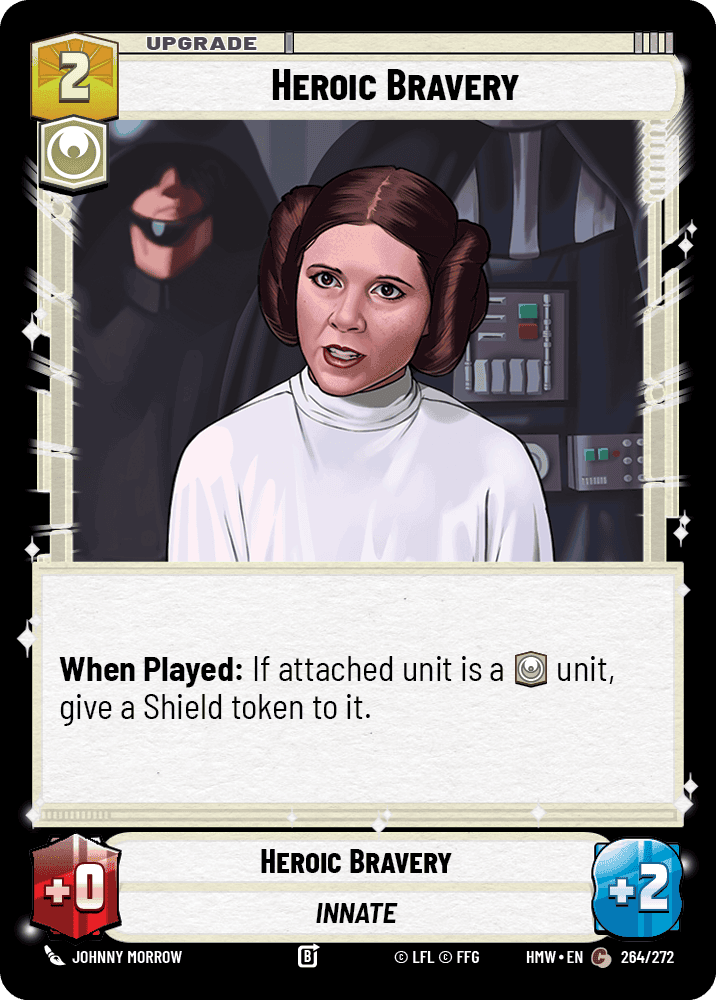
Heroic Bravery: Think I like the villainous counterpart, Villainous Ambition, better since it has two functions that push the game forward to an end point, but I have to admit that targeted shield granting is actually a pretty strong ability, especially considering how much limited revolves around making trades.
Building Your Sealed Deck
Step 1: Sort your pool into an aspect grid. Columns for the non-alignment aspects, rows for Heroism, Villainy, and Neutral. This gives you a visual read on where your pool is deepest.
Step 2: Identify your deepest stacks. Which two aspects have the most playable cards, the most removal, the most bodies? Let your pool tell you what it wants to be.
Step 3: Match a leader to your best cards. Don’t fall in love with a leader before you evaluate your pool. Let the pool guide the leader, not the other way around.
Step 4: Choose your base for aspect coverage. Since every base is vanilla, this step is refreshingly simple. Pick the base whose aspect covers the most off-leader cards you actually want to play.
Step 5: Check your numbers before you finalize. Are you at 30 cards? Do you have enough space units? Enough cheap plays so your curve isn’t top-heavy? Around 24-25 units? At least a couple pieces of removal, even if it means splashing?
There you have it. Follow those five steps and you’ll end up with a functional deck far more often than not.
Final Thoughts
Sealed rewards flexibility above all else. The player who reads their pool the most honestly and builds the best version of that deck beats the player hoping their bomb carries them.
Homeworlds is an invasion set, and it plays like one. Weakness tokens grind opponents down, Beast tokens keep your curve honest, and Fortify is a trap more often than it’s a trick. Prioritize your removal, lean on your sticky blockers, don’t skimp on space, and let the small edges pile up until they tip the game.
Open your packs, take a breath, sort your grid, and listen to what your pool is telling you.
Until next time, folks. See you at the prerelease.
