

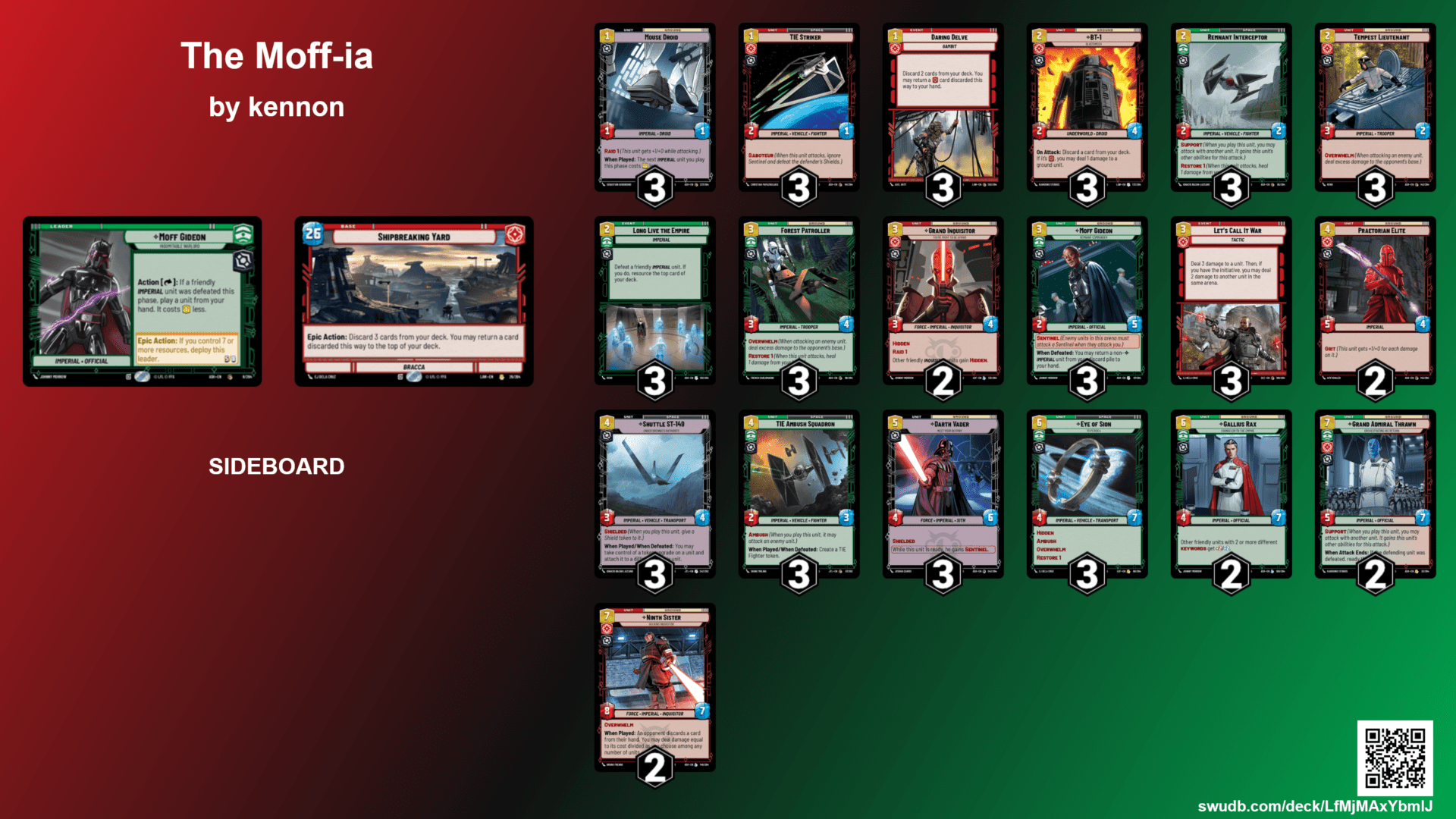
Last time out, we threw a pile of spaghetti at the wall with Fennec Shand and watched most of it slide gently to the floor. That’s experimental season for you and I’m excited to keep tinkering with as many new cards as possible. With Ashes of the Empire still fresh and the format wide open, there’s no better time to keep tinkering, and this week’s project is a leader I keep coming back to: Moff Gideon, Indomitable Warlord.
Gideon is, of course, the don of the Imperial Remnant. He commands absolute loyalty from his troops, and he repays that loyalty by getting them killed for the good of the operation. Every soldier in this deck is an asset on the books, and assets get liquidated. The deck is called The Moff-ia because that’s not an army… it’s a crime family.
Check it out on SWUDB.
Reading the Fine Print
Gideon’s design is two cards stapled together, and they want slightly different but related things.
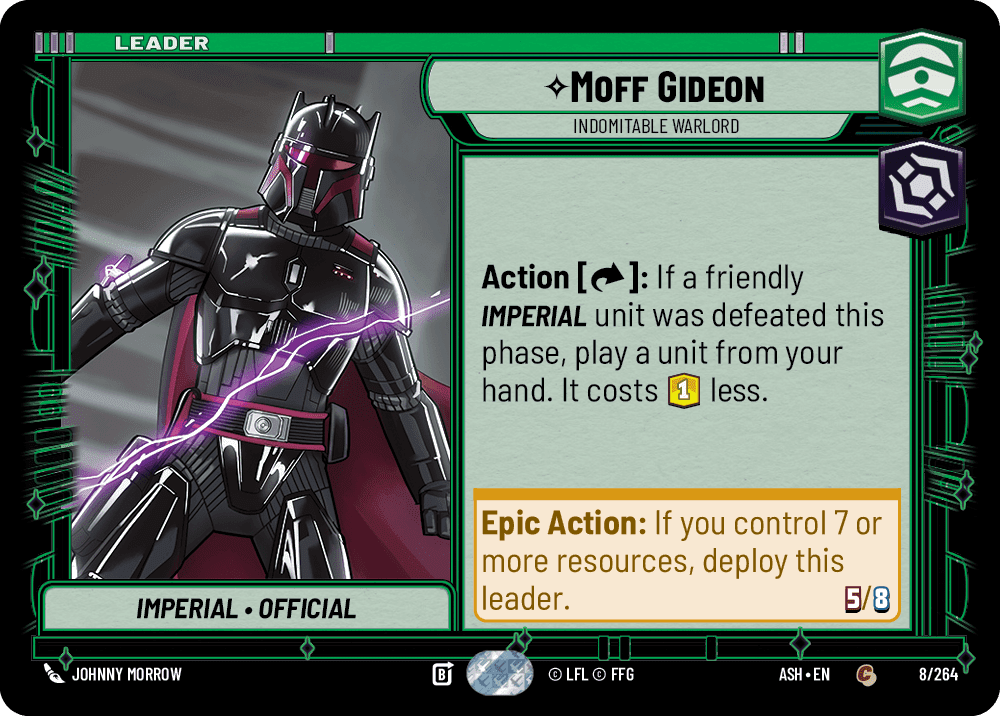
The leader side reads: “Action [Exhaust]: If a friendly Imperial unit was defeated this phase, play a unit from your hand. It costs 1 less.” That’s a repeatable discount engine, and the toll is paid in stormtroopers. Somebody dies, the family profits. Simple enough.
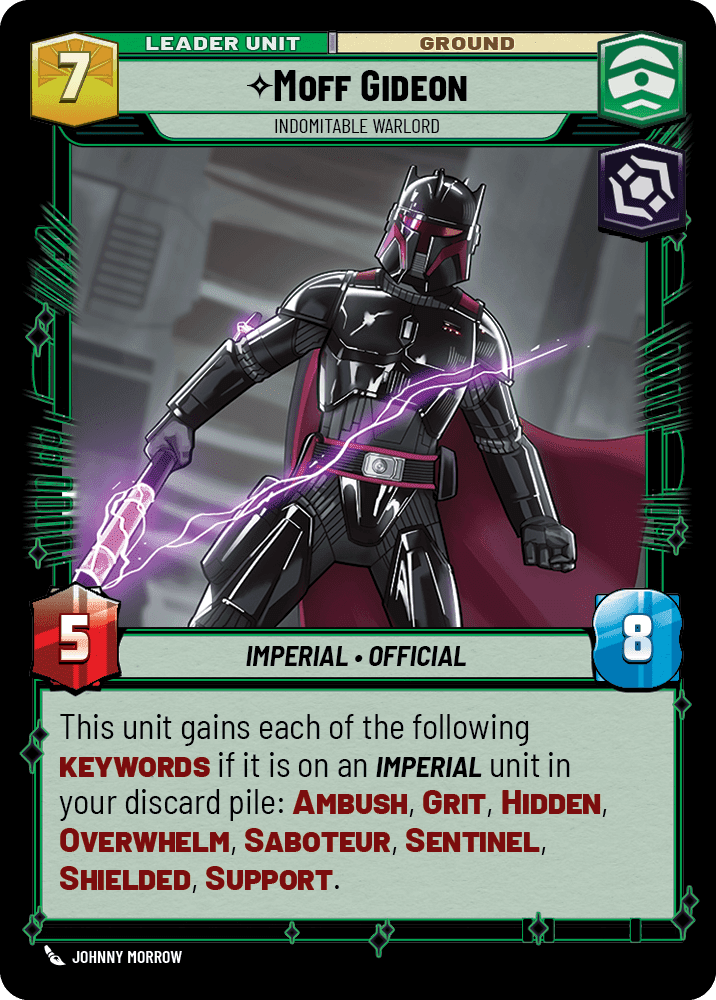
The deployed side is where it gets interesting. Once you hit 7 resources and flip him, Gideon’s unit side gains a keyword for each of the following found on an Imperial unit in your discard pile: Ambush, Grit, Hidden, Overwhelm, Saboteur, Sentinel, Shielded, and Support. All eight of them, if your graveyard is properly stocked. A 5/8 with the full suite is an Ambushing, Overwhelming, Saboteur-ing Sentinel that’s Shielded and Hidden and an absolute monster of a unit. It bears repeating: he checks the discard pile, not the battlefield.
And that last detail is the whole idea for this deck. Gideon doesn’t care how those Imperials got into the discard pile. They can die gloriously in combat, they can be liquidated for resources, or here’s the fun part, they can be milled straight off the top of your own deck without ever drawing a breath.
The Paper Shredder
To that end, this deck runs a self-mill package that would look like pure jank in any other shell (and honestly, maybe it is here too).
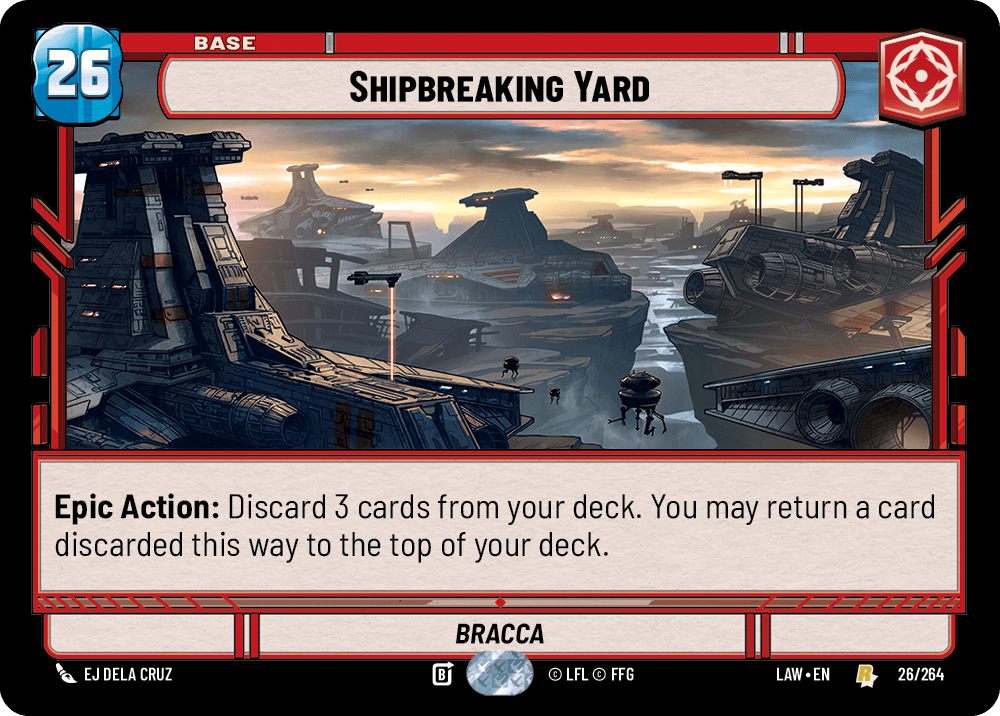
Shipbreaking Yard: The base, and it’s pretty much custom-built for this leader. Its Epic Action discards 3 cards from your deck and lets you return one of them to the top. You’re trading 4 base HP against a standard red 30 for a one-shot that can dump a TIE Striker, a Praetorian Elite, and a Tempest Lieutenant into the bin — that’s Saboteur, Grit, and Overwhelm on Gideon’s checklist without losing a single point of board presence. The return-to-top mode also doubles as card selection when you’d rather dig than dump. The catch here is that 4 HP loss. In the current environment, that’s a real detriment. This worries me out of the gate, but I’m interested to try it regardless.
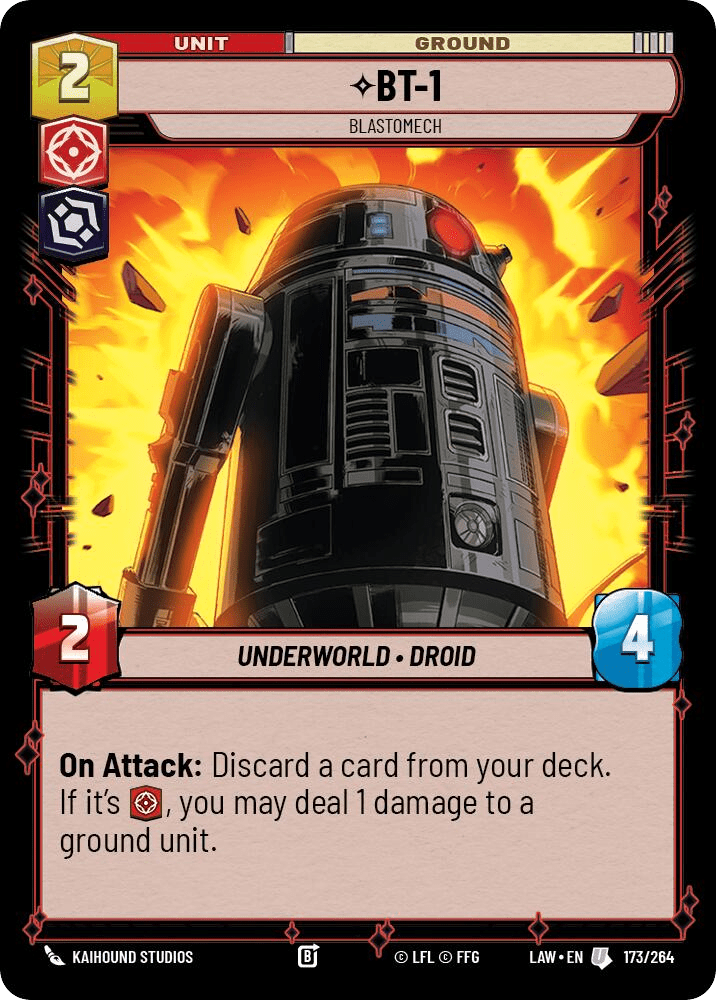
BT-1, Blastomech: The repeatable version: On Attack, discard a card from your deck, and if it’s Aggression, ping a ground unit for 1. A 2/4 for 2 that chips the board while hopefully feeding the checklist every single attack. Solid little workhorse, and the droid assassin flavor fits the family business nicely.
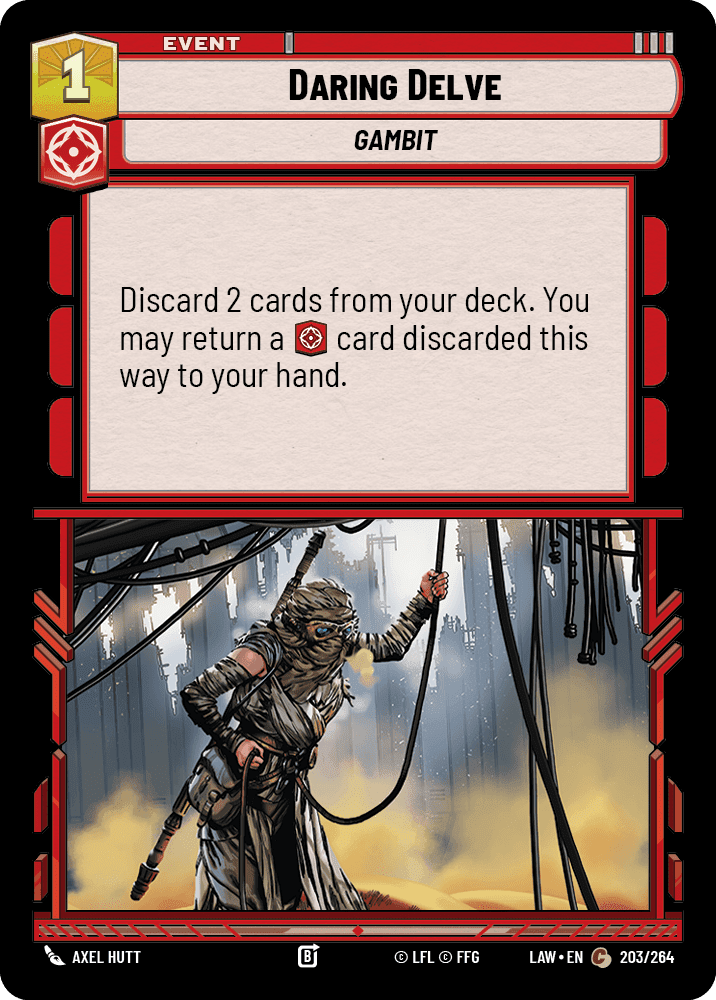
Daring Delve: Rounds out the discard package: discard 2 from your deck for 1 resource, recover an Aggression card if you hit one. Cheap, fast checklist progress, and the recovery mode means it’s card neutral if we’re reasonably lucky.
Is milling yourself a strategy with a long and proud competitive history? It is not. But Gideon converts virtually every milled Imperial into a keyword, and I’m hoping that changes the math considerably.
The Bodies
The other half of the checklist gets filled the traditional way, with Imperials who carry printed keywords and aren’t afraid to use them. Coverage audit required:
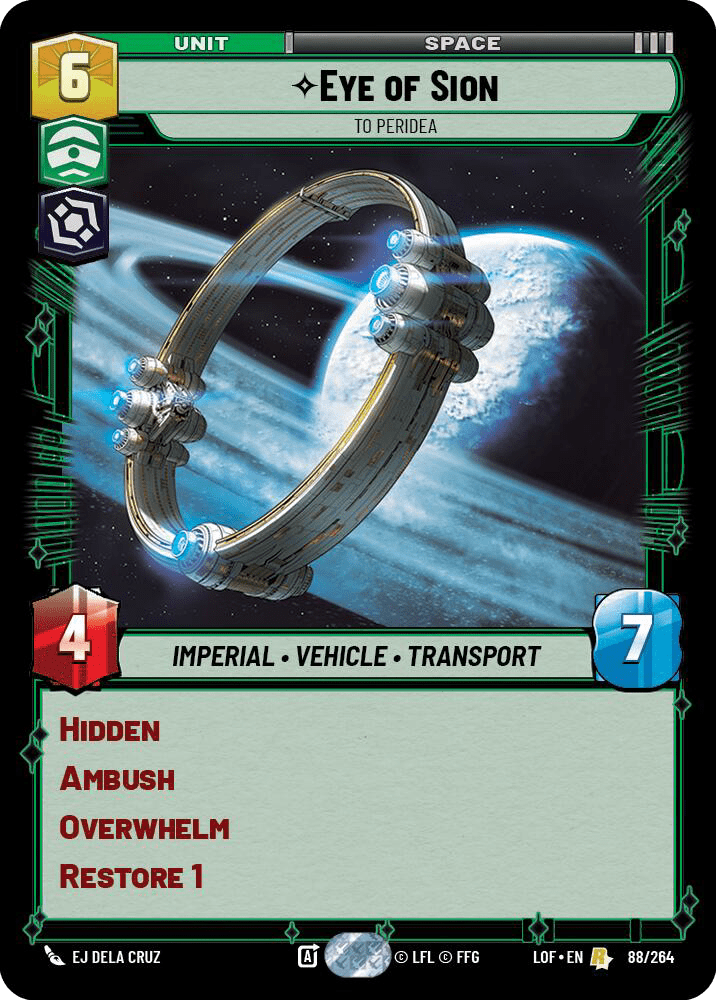
Eye of Sion, To Peridea: The crown jewel of keyword production — Ambush, Hidden, Overwhelm, and Restore on a single 4/7 body for 6. One copy in the bin checks three boxes by itself (since Gideon doesn’t gain Restore), which makes it the rare card that’s happy in your hand, on your board, or in your discard pile. The deck’s true workhorse.
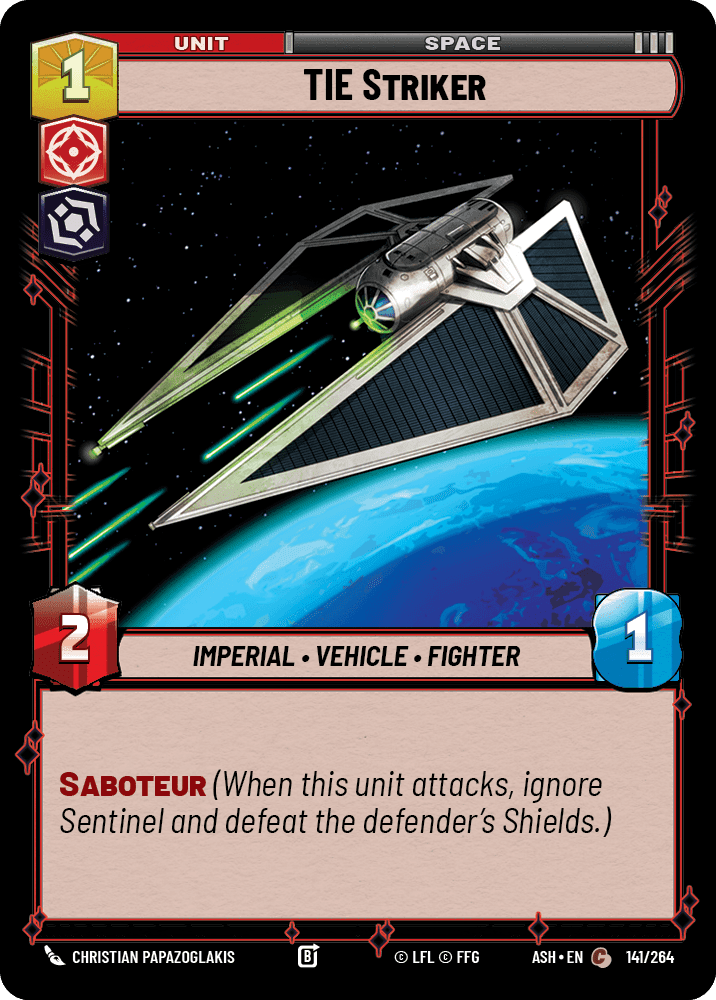
TIE Striker: Your only Saboteur source and it’s a 1-drop that wants to trade early anyway. Three copies and one of them should be dead or milled by the time Gideon flips.
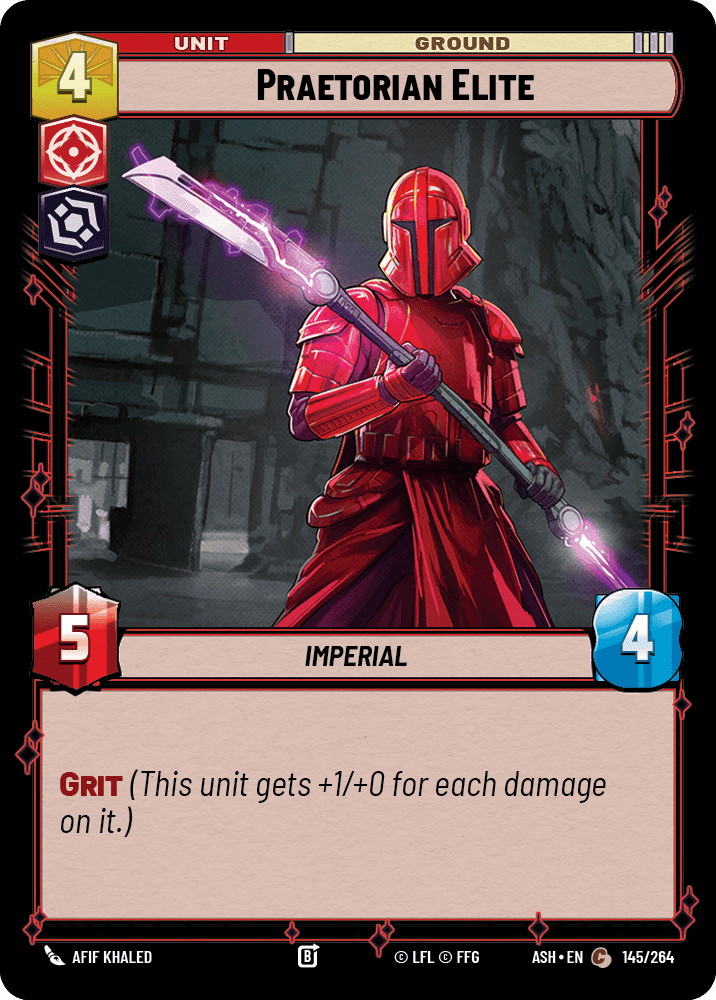
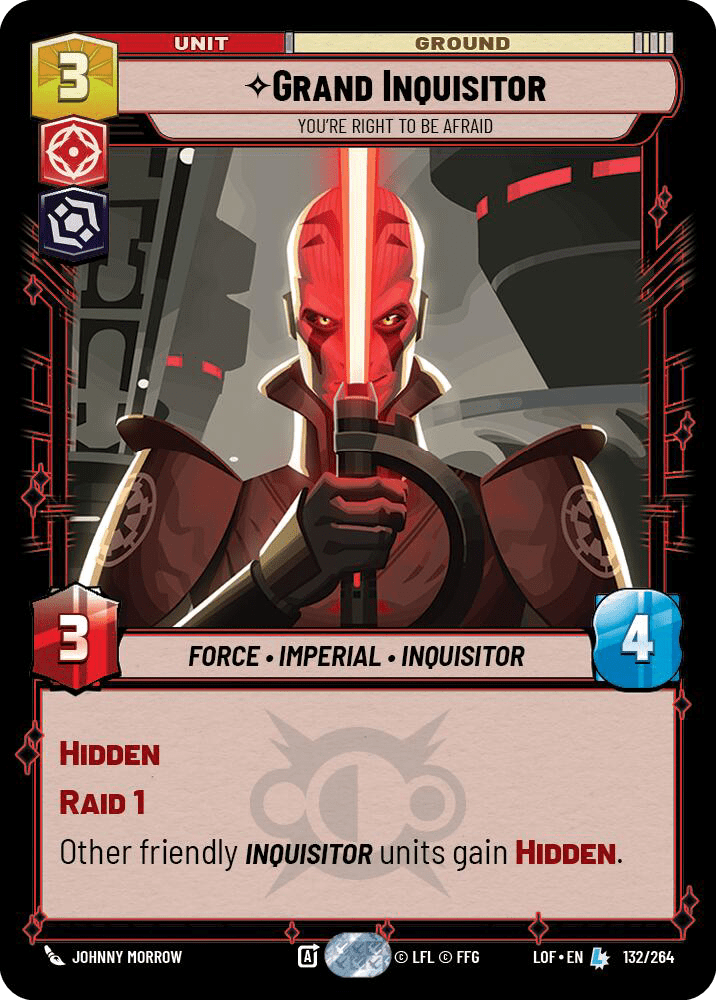
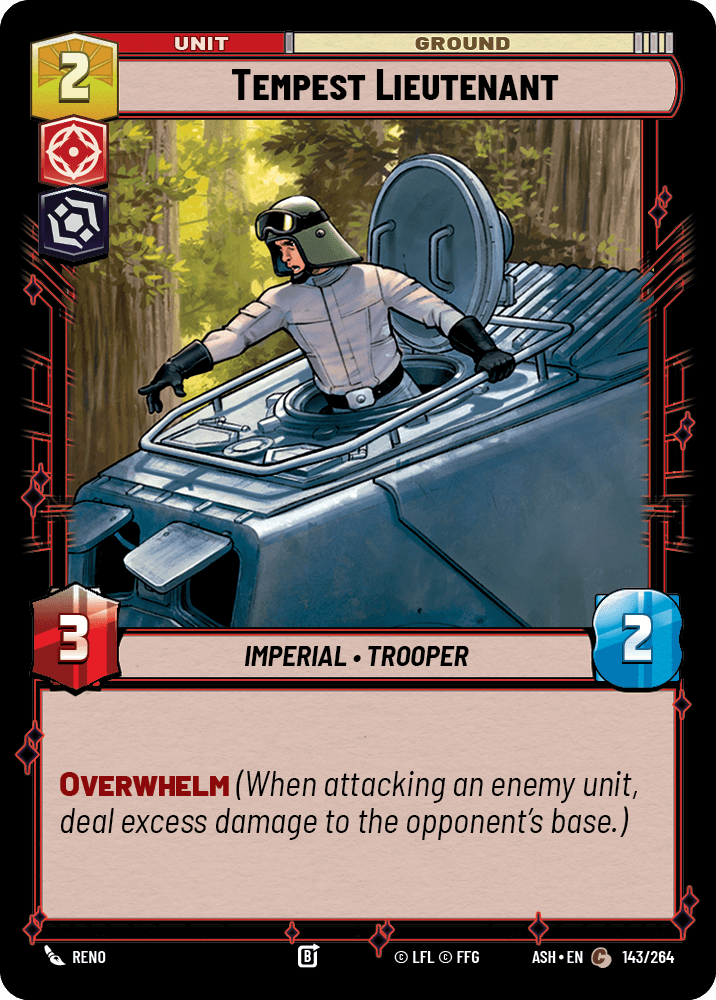
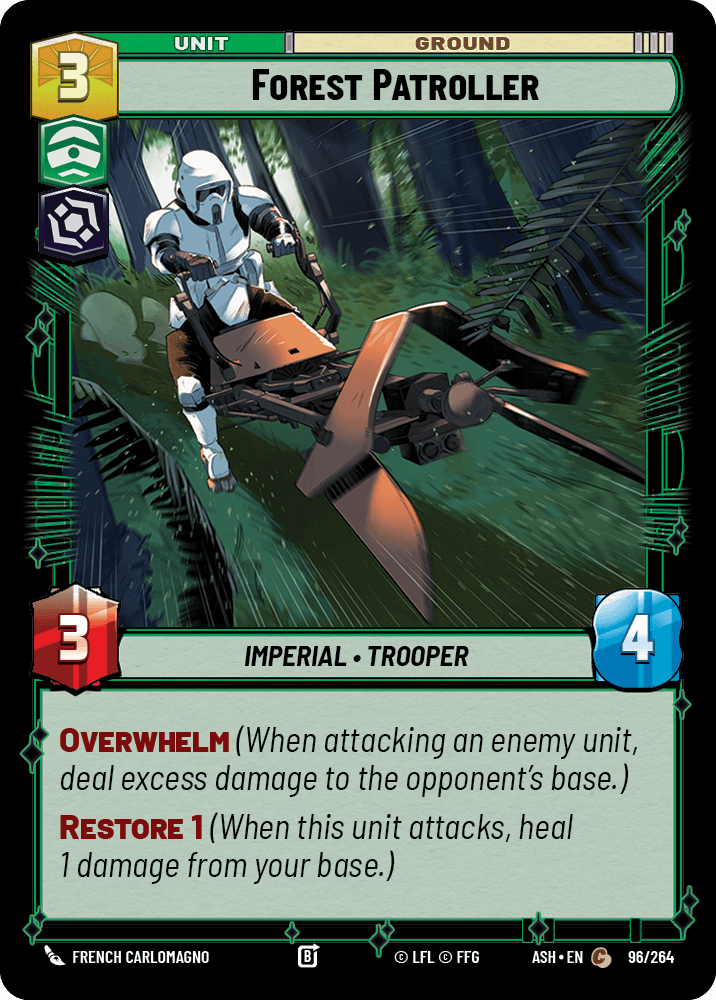
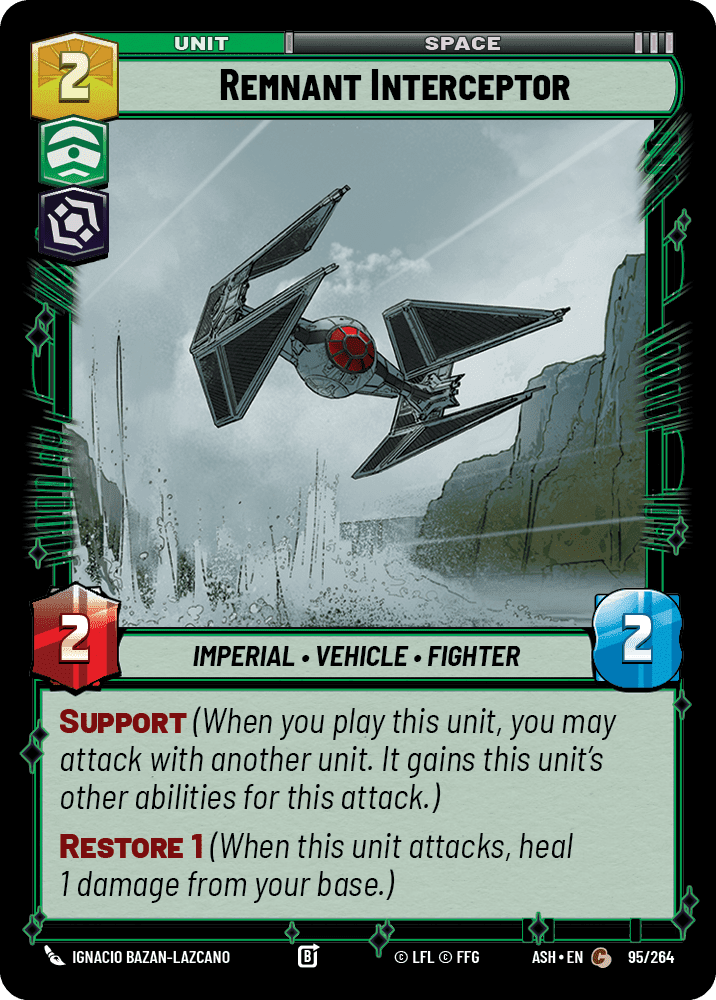
Praetorian Elite: Here’s our Grit source, and admittedly, it doesn’t have much else going for it. Grand Inquisitor brings Hidden to protect Gideon with a reasonable statline. Tempest Lieutenant and Forest Patroller stack the Overwhelm column, with Patroller adding Restore for good measure. Shuttle ST-149 and Darth Vader, Meet Your Destiny cover Shielded — and Vader’s a 4/6 brick who gains Sentinel while ready, which is miserable for aggressive opponents in its own right. Remnant Interceptor handles Support at 2 cost.
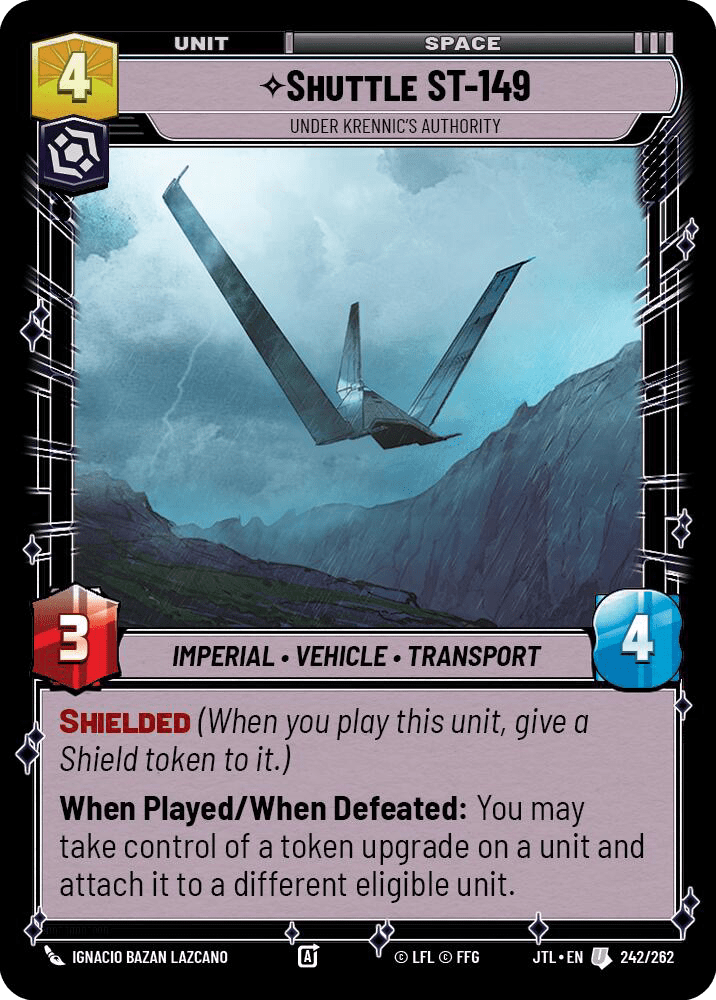
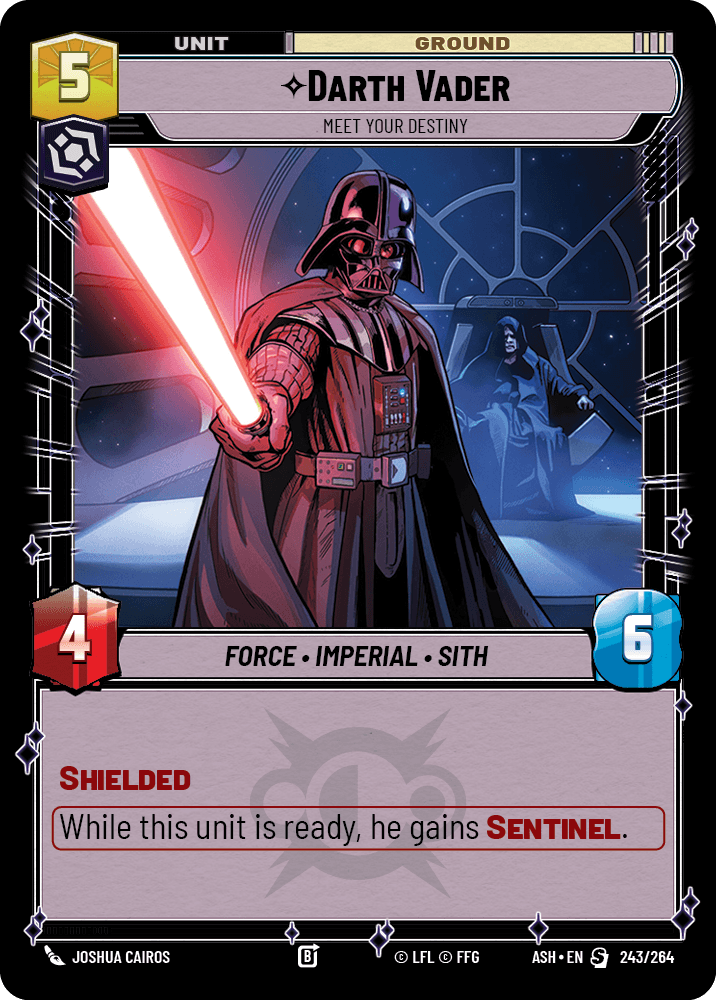
That said, one coverage note worth flagging: Vader’s Sentinel is conditional rather than printed, so from the discard pile he only reliably checks the Shielded box. The printed Sentinel on the checklist comes from a more thematically appropriate source…
The Don Himself
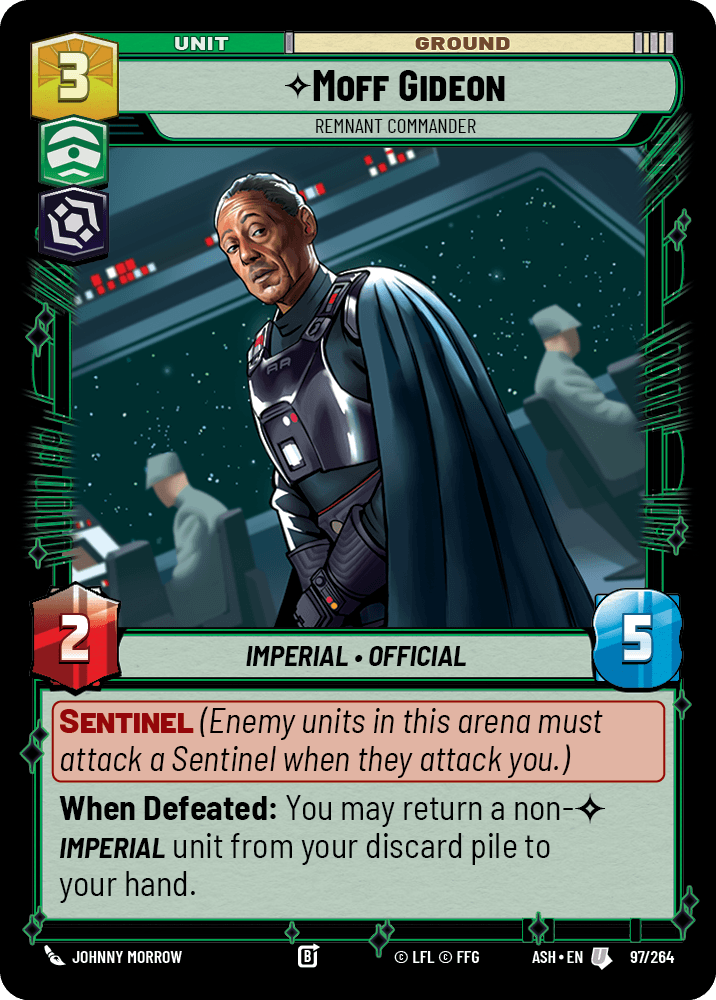
Moff Gideon, Remnant Commander: Yes, the unit version at three copies in the deck led by the leader version. A 3-cost 2/5 Sentinel whose When Defeated returns a non-unique Imperial from your discard pile to your hand. In this deck, that’s not a body, that’s a business model. He blocks, he dies, he checks the Sentinel box, and he hands you back a TIE Striker or a Forest Patroller on the way out.
There’s a wrinkle here that’s worth talking about, though: Sentinel. Some of you might have noticed that we have two somewhat conflicting keywords here – Sentinel and Hidden. Hidden is a great tool to help make sure you can keep your Gideon leader unit alive by keeping your opponent from attacking him the turn you deploy him, but Sentinel overrides that and makes it so that he can be attacked. Sure, we’re trying to keep him alive here (also with Shielded) but I don’t mind that much if he takes a hit and powers up Grit. Currently, I’m excited to try to get as many keywords as possible, but dropping one or the other in the future probably makes sense.
The Liquidation Department
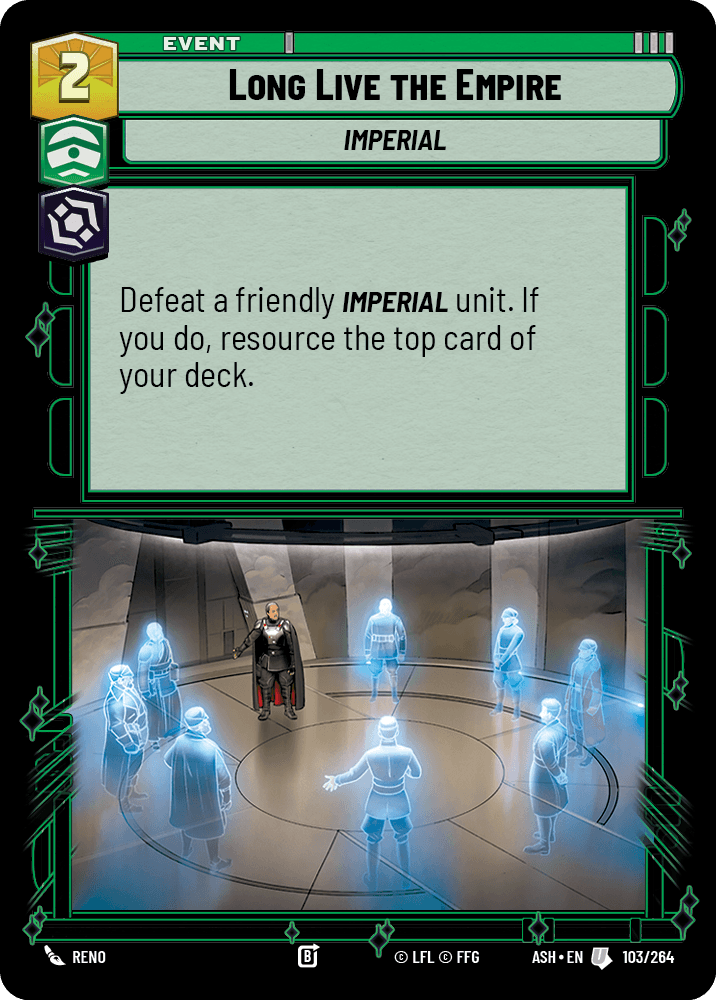
Long Live the Empire: Here is another key engine card of the whole operation to go with the self mill: defeat a friendly Imperial, resource the top card of your deck. One card that ramps you toward the 7-resource Epic Action, turns on the leader’s discount that same phase, and adds a body to the checklist. It’s the kind of three-birds-one-stone card that makes a deck like this hang together, and we’re playing the full three.
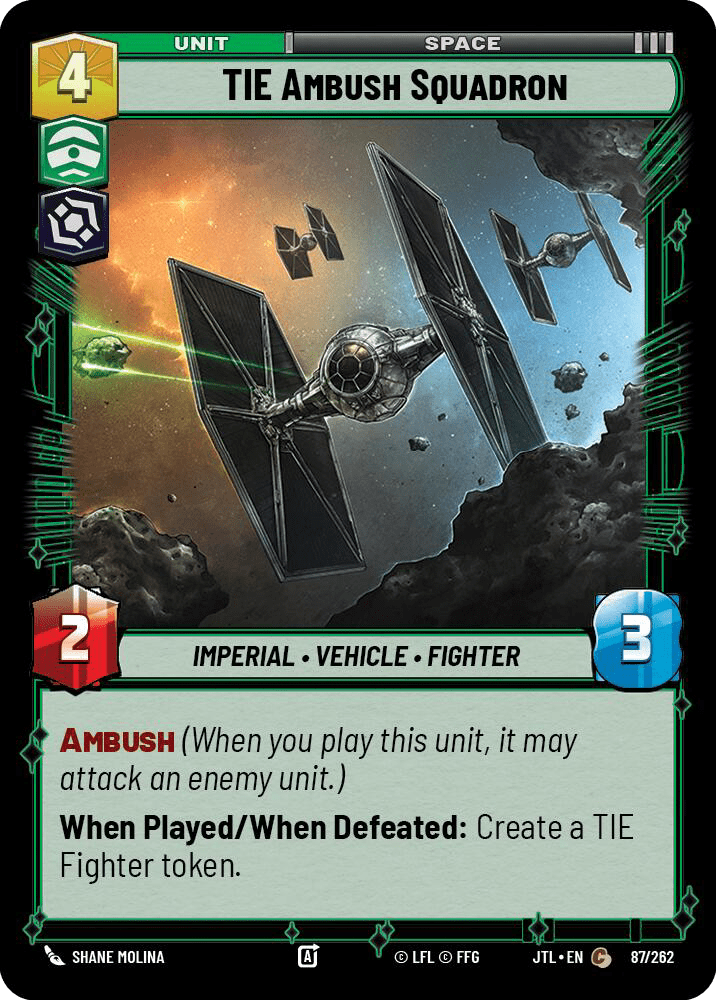
TIE Ambush Squadron: A quick sacrifice, conveniently replacing itself with a TIE Fighter token both when played and when defeated, even if it’s not great on a pure stats to cost ratio. Feed it to Long Live the Empire and you keep the board presence, bank the resource, and check the Ambush box. The accounting department approves.
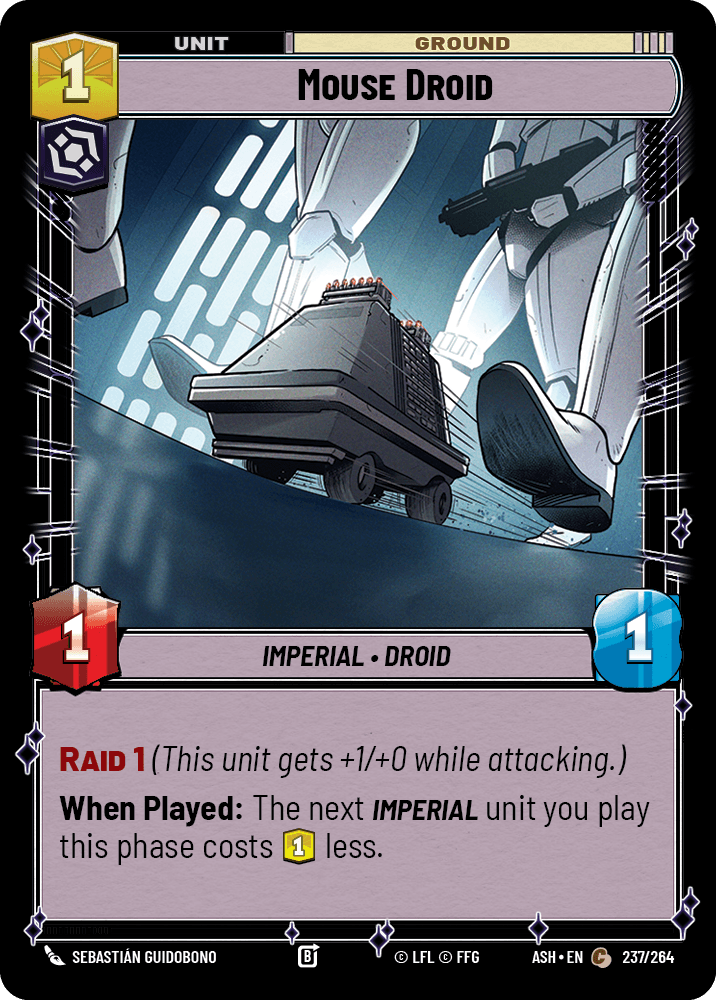
Mouse Droid: Greases the curve — the next Imperial you play that phase costs 1 less, which makes it basically free and it’s a 1-cost Imperial body, which around here means it has a job waiting in the incinerator (Long Live the Empire).
The Payoffs
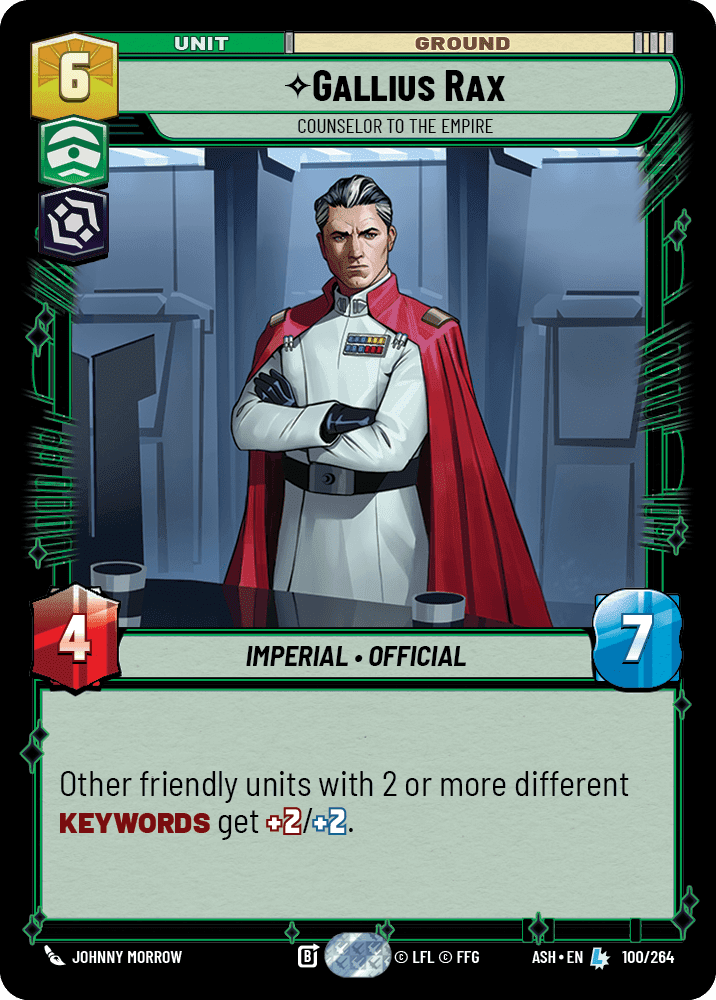
Gallius Rax, Counselor to the Empire: He gives +2/+2 to every other friendly unit with 2 or more different keywords which is frankly, a rather large buff. Between Eye of Sion, Forest Patroller, Remnant Interceptor, Grand Inquisitor, and the deployed Gideon himself, that anthem hits a meaningful chunk of the board. Rax is also exactly the kind of card a raw efficiency formula hates and a synergy deck loves, so consider this my standard disclaimer about trusting spreadsheets over reps.
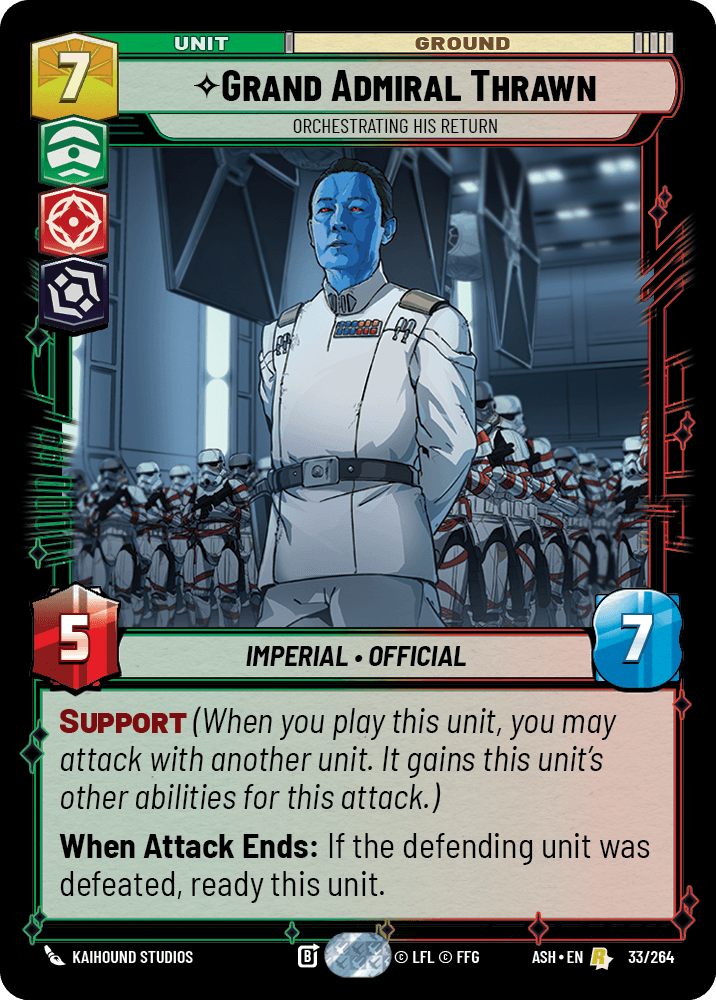
Grand Admiral Thrawn, Orchestrating His Return: A 5/7 with Support, and the return of the Grand Admiral overseeing the Remnant is about as on-theme as it gets. Landing on 7 resources places him on the same turn as Gideon’s deploy, which means you can do things like attack in to a unit, Overwhelm it, take no damage thanks to a Shield, then ready Gideon and swing again. I’m looking forward to this being a piece of some very explosive turns.
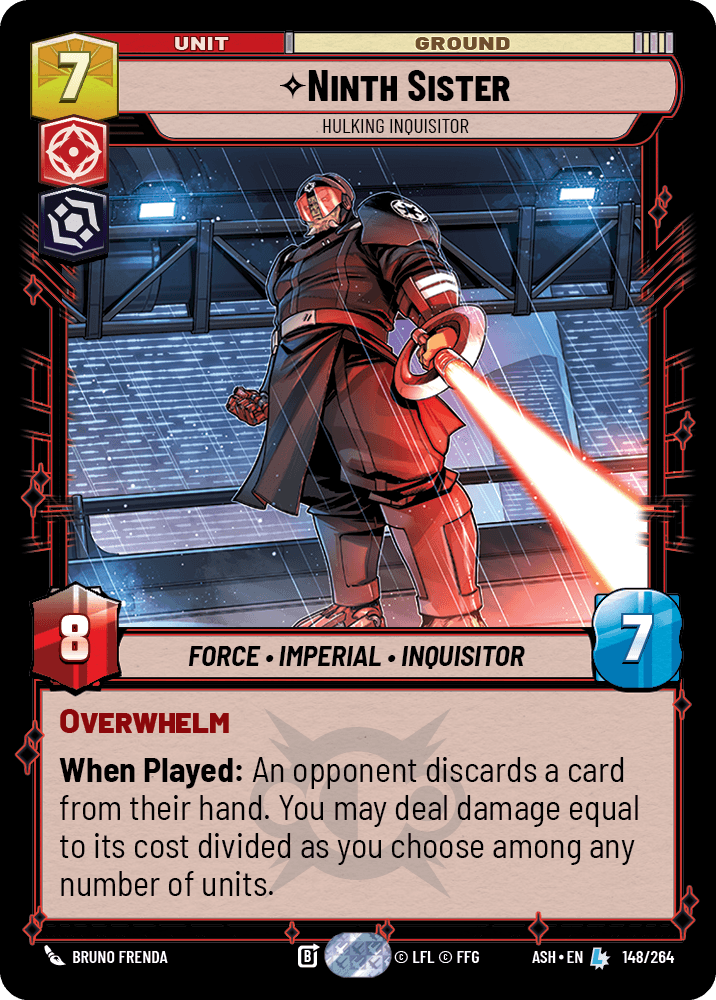
Ninth Sister tops the curve at an 8/7 with Overwhelm, forcing a discard and potentially converting it into spread damage for removal when she lands. Beefy, rude, and another Overwhelm entry for the checklist. Really, she just does a lot to break open a late game and is very respectable finisher herself.
The Honest Assessment
The removal suite is three copies of Let’s Call It War and whatever Ninth Sister and BT-1 can chip down. That’s light. Quite light. Against a deck that lands one giant threat and protects it, you’re mostly hoping to race, and racing with a deck that spends its early turns feeding its own troops into the furnace is… a choice. The mill package also has a real cost: every Eye of Sion you shred is a keyword gained and a haymaker lost, and there will be games where the Shipbreaking Yard activation flips three cards you’d much rather have drawn. It’s important to remember though, that those are also cards that could have just as likely been buried as the bottom three cards on your deck. Try not to worry about it too much.
That said, the floor here is more solid than it looks. Even when the checklist plan stumbles, you’re still an Imperial midrange deck with a reasonable curve, a ramp engine, and a leader who discounts your plays for the low price of one Imperial funeral per phase. And when it all comes together — Gideon deploying as a full-suite 5/8 while Rax pumps the board and Thrawn starts readying — it feels less like a card game and more like a RICO case.
Will it win a Planetary Qualifier? I have no idea, and anyone who tells you they know what this format looks like a few weeks into ASH is selling something (and really, we’re not even into it yet). But the deck does something no other leader in the game can do, and in experimental season, that’s reason enough to sleeve it up and make some offers people can’t refuse.
There you have it, folks! Reports from the front to follow.
(One final note: the astute reader may notice this is 52 cards. I couldn’t quick bring myself to cut everything down to 50 because there were so many things I wanted to test. That’s my usual style – get it close to the minimum, then run some games and start finding out what doesn’t work, what I’m unenthused every time I draw it, then use that info to decide on the final cuts.)
