


Hey everyone, welcome back to the SWU Report! Prerelease season is here again, and I have to say, Ashes of the Empire might be the most flavorful set we have gotten yet. Mandalorians, Inquisitors, the Imperial Remnant, a purrgil the size of a small moon… there is a lot to love in this one. And if you caught my Secrets of Power or A Lawless Time sealed guides, you already know the drill. For everyone else, welcome aboard, glad to have you. This article is going to walk you through everything you need to sit down at your ASH prerelease, crack six packs, and build something that actually wins games. Or at least something that does not embarrass you in front of the guy next to you who is already sleeving up. Faking it convincingly is half the battle, take it from me, a Championship Level Player ™.
Let’s get into it.
The Basics: What Even Is Sealed?
For the veterans in the room, feel free to skip ahead. For everyone else, here is the quick rundown.
At a prerelease event you will receive a kit with six booster packs of Ashes of the Empire, which works out to somewhere around 96 cards. From that pool you build a deck of at minimum 30 cards. That is 30, not the 50 you are used to in Constructed. You will choose one Leader and one Base from your pool, and everything else is built from whatever the booster gods have handed you. Opened four copies of the same common? Great, play all four. There is no copy limit in sealed.
The most important thing to remember is that your entire unused pool is your sideboard, with no restrictions. Between rounds you can freely swap cards, change your base, even change your leader entirely. If your first build is not working, pivot. There is no shame in it. In fact, there is tremendous strategic value in it.
One ASH-specific wrinkle worth knowing up front: the prerelease kit hands everyone the same two promo leaders, Luke Skywalker and Emperor Palpatine. That means every player in the room has both available, regardless of what they crack in their packs. It is worth understanding how each one plays even if you end up running something else, and we will dig into both down in the leaders section.
What Makes ASH Different
Every set has a personality. Spark was about fundamentals and haymakers. Shadows was trickery and the space arena. Secrets slowed things down with political intrigue. A Lawless Time was about money. And Ashes of the Empire? This set, as it turns out, is all about tempo and stacking up small edges until they bury your opponent.
Advantage Tokens
The headline mechanic here is the Advantage token, and it is everywhere. Here is exactly what one does:
Advantage (Token Upgrade, +1/+0): When attached unit’s attack or defense ends, defeat this upgrade.
So an Advantage token is a single-use +1/+0. It sits on a unit, gives it a point of power, and then burns itself off the moment that unit finishes its next attack or defense. Stack three of them and you have a unit that is +3/+0 for exactly one combat before they all vanish. That is the whole key to understanding them: Advantage tokens are not permanent growth, they are stored aggression. You bank them, then cash them in on a single swing.
What does that mean for sealed? A few things. First, these tokens reward you for attacking, so they push the aggressor’s plan. A unit sitting on a stack of tokens wants to be swinging, not sitting back. Second, because they trigger on defense too, they can blow out a combat when your opponent attacks into you, so do not forget that your opponent might be able to take them from you before you can use them – or better yet, you can attack into their units and take then before they can use them. Third, a unit carrying an Advantage token counts as upgraded, which matters for a removal event or two we will get to. This set hands these tokens out on card after card, and the deck that reliably generates them is the deck that breaks the mediocre-body stalemates sealed can sometimes become. Prioritize the repeatable generators, and pay attention to the units that leave tokens behind when they die. Which brings me to…
Support
The other keyword doing a ton of heavy lifting in ASH is Support. When you play a Support unit, you get to immediately attack with another unit, which effectively hands you a free extra action the turn it lands. That is premium tempo in a format built on board presence, and it is exactly the kind of effect that overperforms in sealed. A Support body is never just a body. It is a body and an action, and action economy, of course, wins limited games (arguably, it wins all games of SWU). I will be reaching for Support units all weekend, and you should too.
Don’t Forget the Space Arena
I am going to keep banging this drum until the day I die, because it is the mistake I see most often at prereleases: you need space units. Losing the space arena means your opponent is dealing uncontested damage to your base every single round, and that adds up fast. Unfortunately, space bodies are always underrepresented at common, and ASH is no exception. A mediocre space unit is, let’s be honest, infinitely better than no space unit. Keep that in mind for every section that follows, because I am going to keep pointing at the space cards.
A Quick Note on Bases
Thankfully, here is one less thing to agonize over: every base in Ashes of the Empire is a plain 30-health base with no game text. None of them hand you an ability, extra health, or an Epic Action. That actually simplifies a decision for you, because your base slot becomes purely about aspect coverage. You pick the one whose aspect fills the biggest gap in the cards you want to play, and you move on. We will come back to this when we build.
The Aspects That Win Sealed Games
Before we talk leaders, let’s zoom out, because in sealed your aspect pairing matters as much as any single card. You are committing to two aspects for the round, and some are just better positioned in this set than others.
Vigilance is where I would start. It has the sticky Sentinel bodies, the defensive statlines, and, most importantly, the base-restoring and healing effects that quietly win long games. Sealed games go long, and the ability to reset your opponent’s damage math is exactly the kind of thing that does not look exciting on paper but absolutely wins at the prerelease table. Between Imperial Armored Commando, Home One, and a pile of Sentinel bodies, blue is deep here.
Cunning has the trickery and a chunk of the token generation, saboteur to get around the plentiful sentinels in this set, and honestly, the best density of leaders to look at. Command deserves a mention for its solid midrange bodies and its Support density, which as we covered is premium tempo. Aggression has the cheap beaters, particularly the glass cannons I will gush about later.
If your pool gives you the choice, a Vigilance is where I want to be. But the real answer, as always, is to let your deepest, most playable stacks tell you what to run.
Your Leaders: The Foundation of Everything
In sealed, your leader is the single most important decision you will make. It sets your two aspects, it gives you a unit to deploy, and its ability shapes your whole game plan. Rather than hand you a rigid tier list (we are playing sealed, not drafting a fantasy football team), let me walk through the leaders that feel strongest to me and why. The principles matter more than the rankings. And since everyone at the table has the two promos, Luke and Palpatine, in their back pocket, I have made sure to cover both.
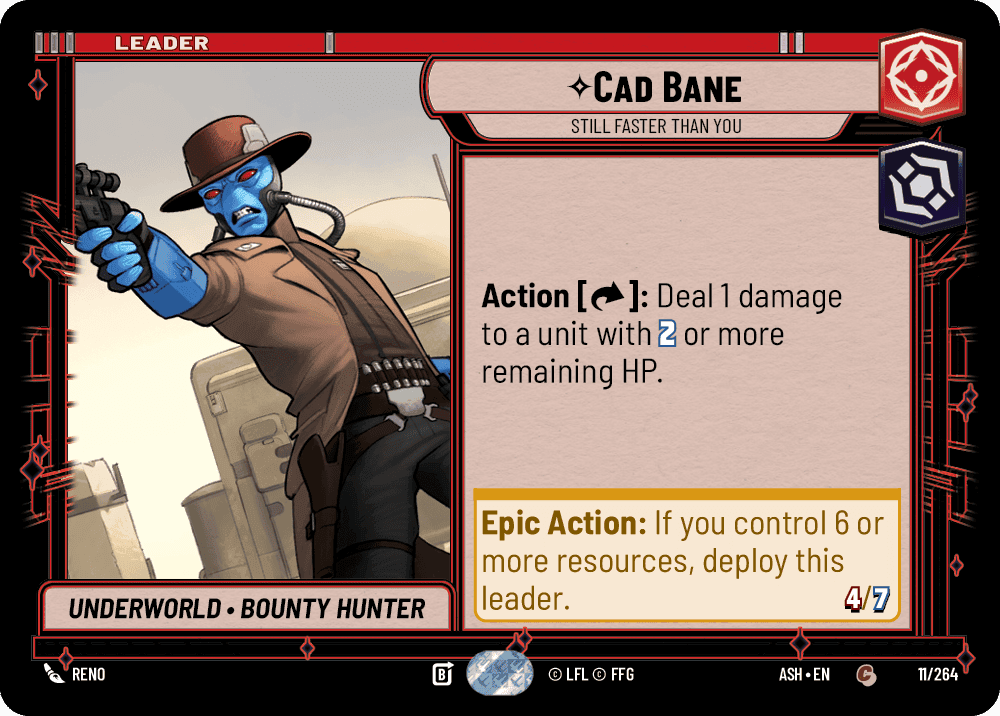
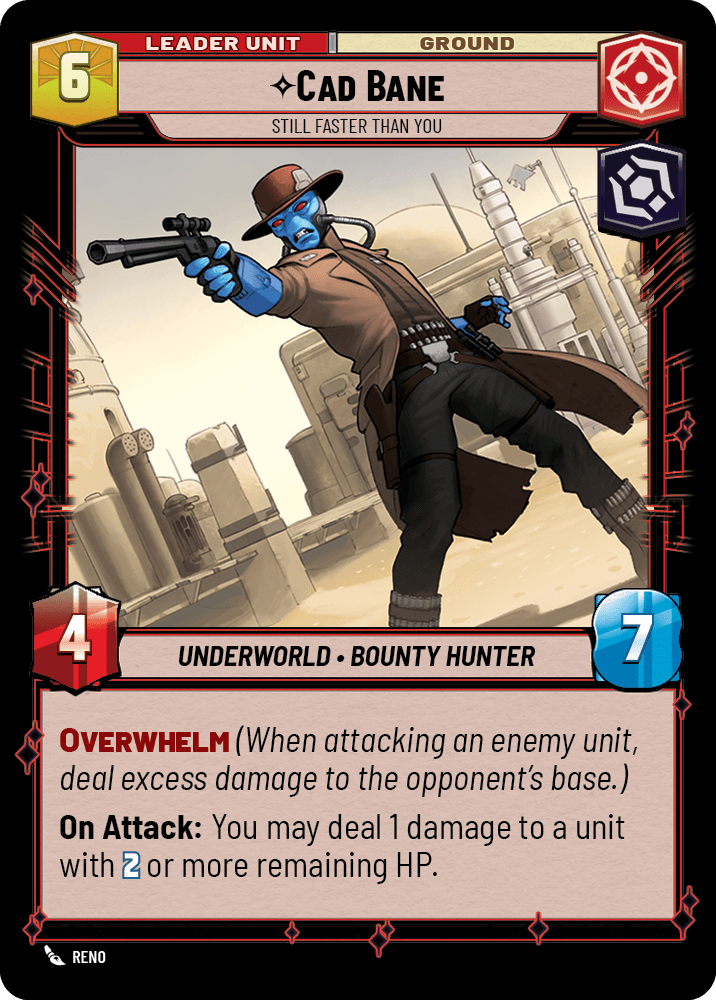
Cad Bane, Still Faster Than You (Aggression/Villainy)
If I could hand-pick one leader for this format, it would be Cad. His undeployed ability pings a unit for a point of damage every single turn, and that does not sound like much until you realize it never, ever stops. It quietly turns unfavorable trades into favorable ones and it’s worth noting that his ability does not cost any resources to trigger, allowing you to stay on curve with your units. Deploy him and the ping keeps right on coming on every attack, now with Overwhelm attached, of course. A removal engine that never runs dry is exactly what grindy sealed games reward. If you open Cad and your Aggression/Villainy pool is halfway decent, you are playing Cad.
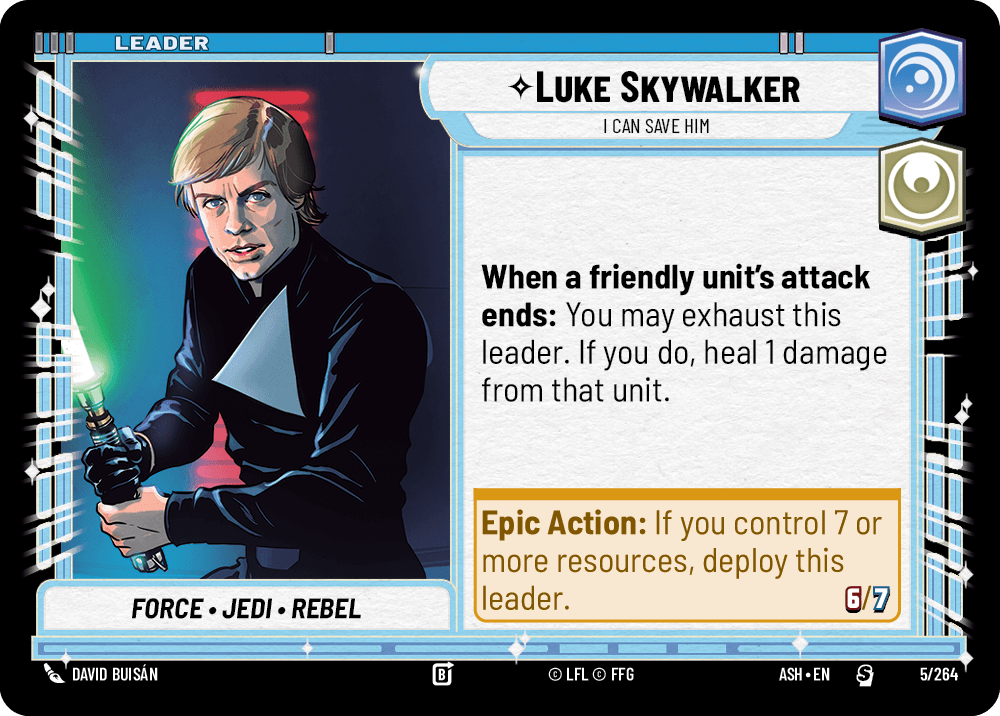
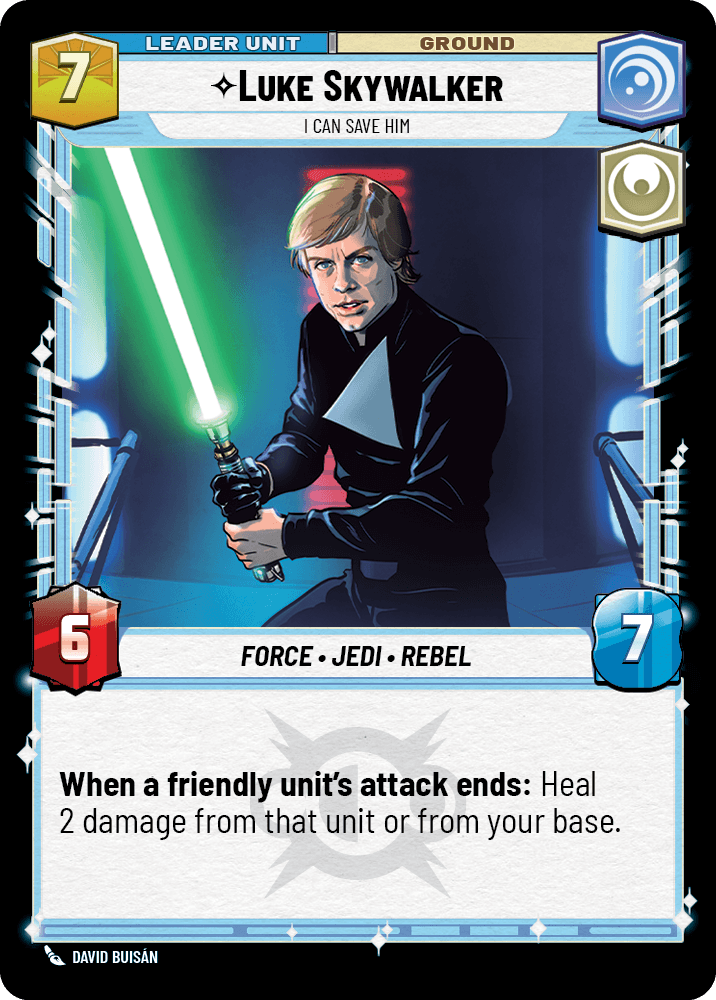
Luke Skywalker, I Can Save Him (Vigilance/Heroism)
Repeatable healing does not get the respect it deserves, but in a format that comes down to attrition, keeping your board topped off is quietly backbreaking. Undeployed, Luke sponges a point of damage off your attacker every combat. Deployed, he is a beefy 6/7 that heals two from a unit or your base every time you swing – not just when he does. That means your units win races they had no business winning, and your base outlasts the aggression. He’s big enought to close games by himself, of course, but he also makes very sure you are still standing when the dust settles on the battlefield, and the Vigilance/Heroism pairing gives you two of the deepest aspects in the set.
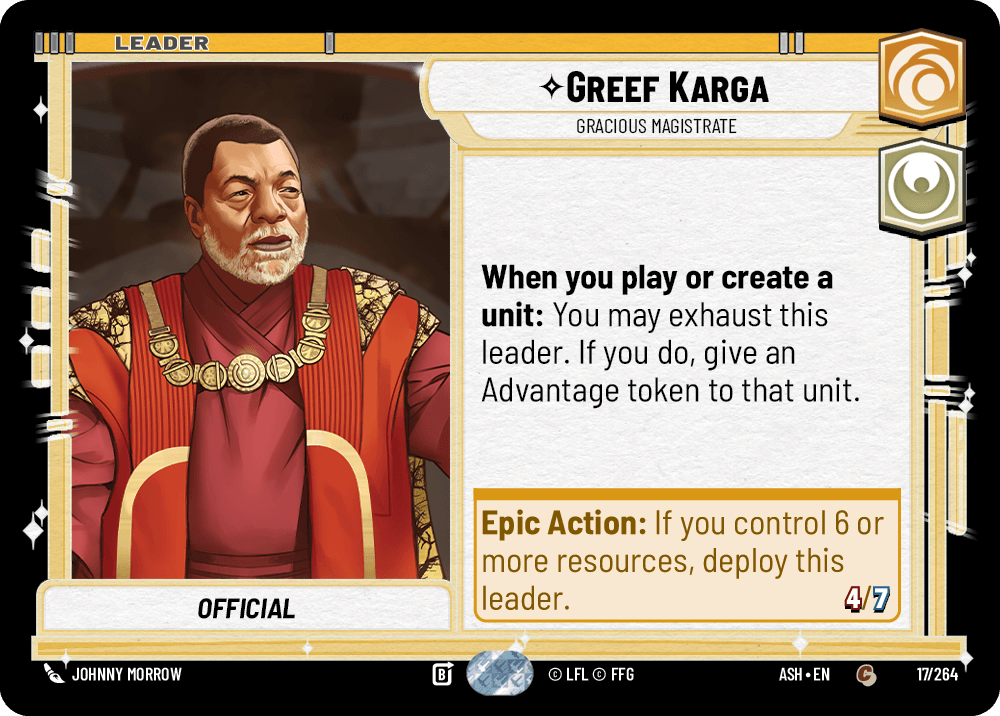
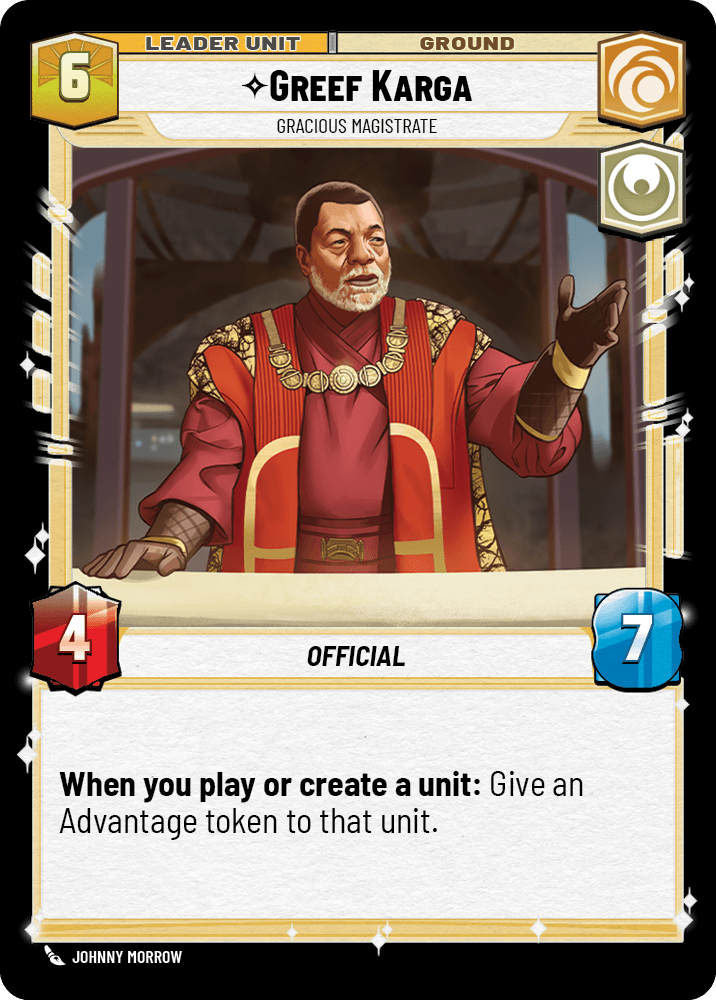
Greef Karga, Gracious Magistrate (Cunning/Heroism)
Here is a leader who asks nothing of your deck and just makes everything better. Greef hands an Advantage token to every unit you play, all game long. That is a pile of free stats spread across your whole board, and it does not require a tribe or a synergy package to work. You just play units and watch them come down a little bigger than the card says. That is the kind of incremental, self-sufficient value that adds up fast in sealed, where most of your deck is commons scraping for every edge. The effect carries over cleanly to his deployed side, too.
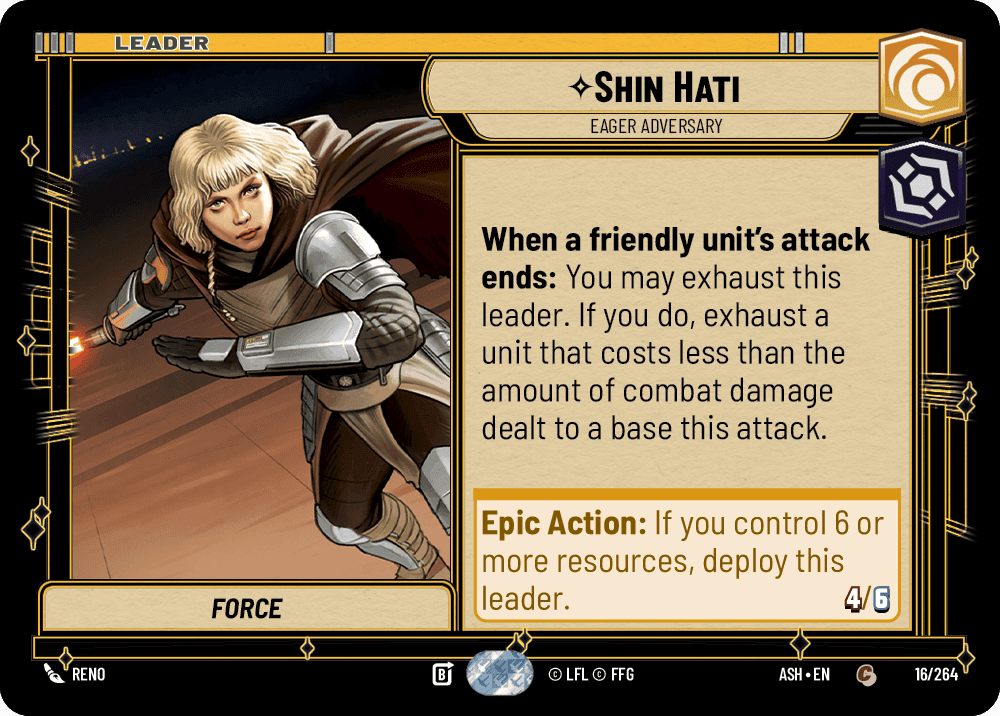
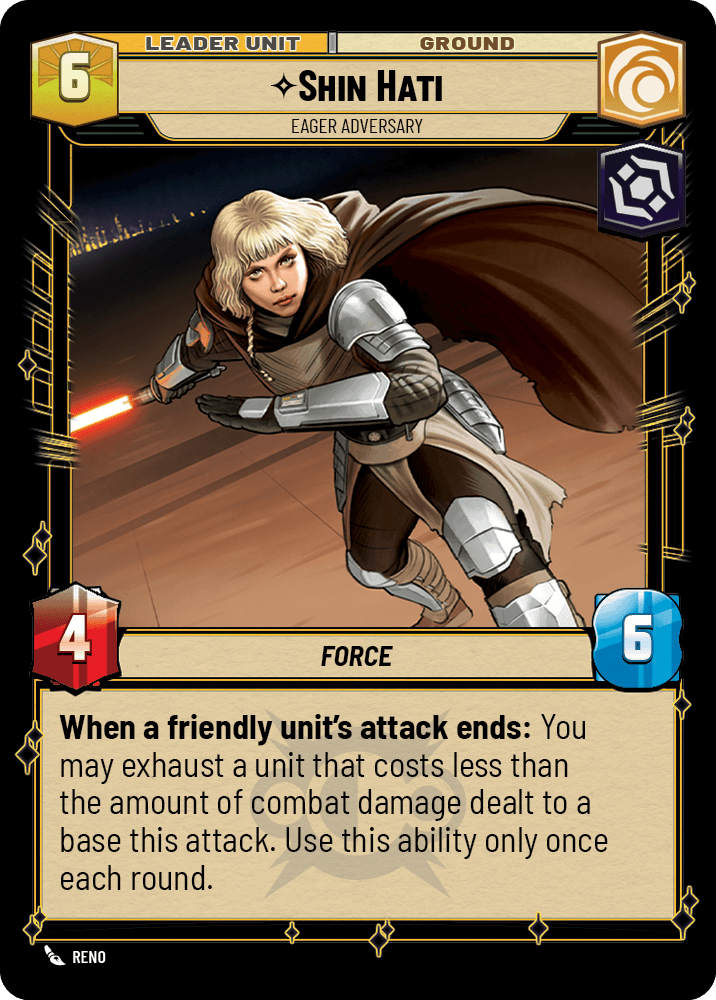
Shin Hati, Eager Adversary (Cunning/Villainy)
Tempo, tempo, tempo. When you connect with a base, Shin lets you exhaust an enemy unit, which is about as good as it sounds. You tap down their blocker or their best threat right when it matters, and then you get to do it again next turn. So many sealed games come down to who controls the board on the one crucial turn, and a repeatable exhaust effect is a genuine problem for your opponent to solve. Solid on a 4/6 body, and it works whether you are the beatdown or the one grinding it out. Just keep in mind that, as important as Initiative already is in SWU, it’s even more important with Shin. There will be games and situations where the correct answer is to claim Initiative even when there are still actions you could have taken, just so you can ensure you get her exhaust off first next turn.
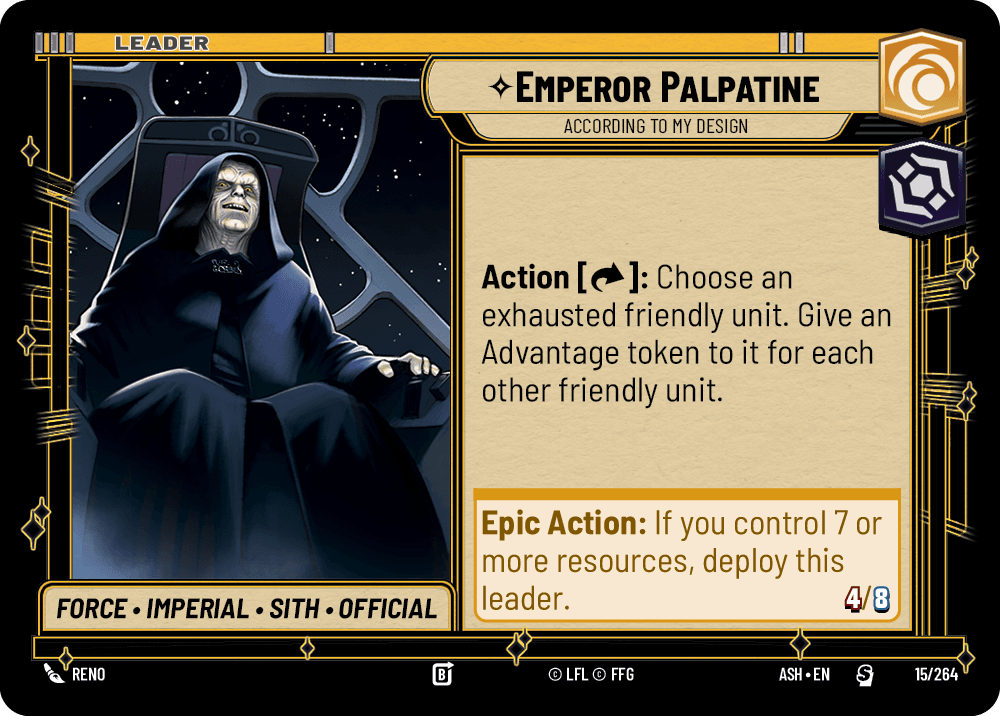
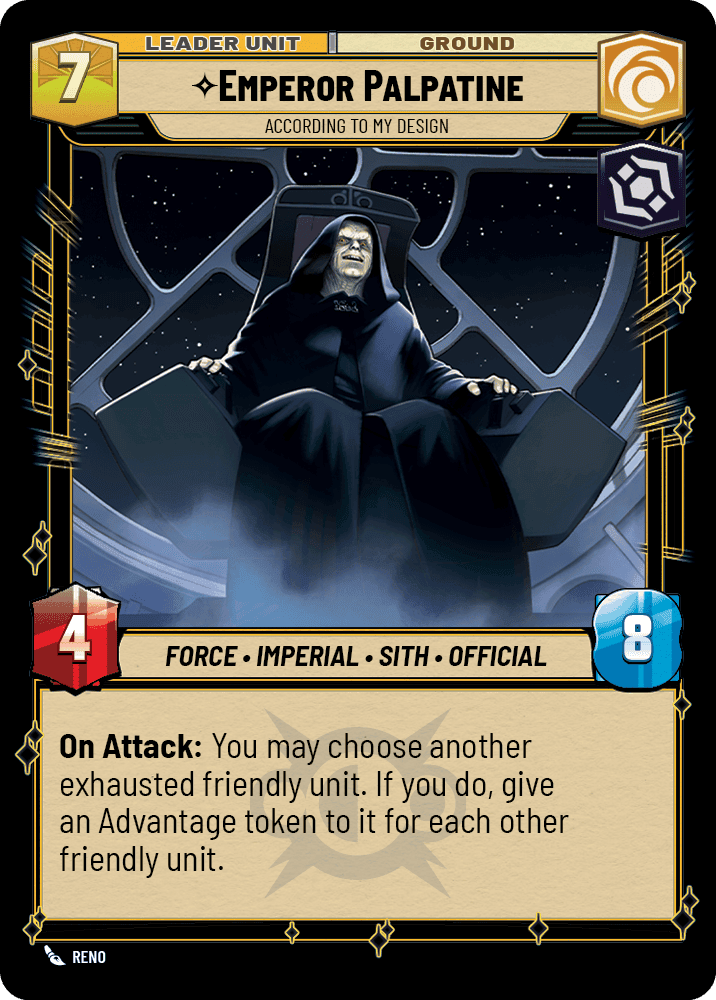
Emperor Palpatine, According to My Design (Cunning/Villainy)
Since Palpatine is one of the two promos everyone receives, you will see him across the table plenty, and he is worth a real look for your own build. His whole thing is Advantage tokens: he loads an exhausted friendly unit with a token for each other unit you control, so the wider your board, the bigger the payoff. Deployed, he is a chunky 4/8 that keeps the tokens flowing on attack. The catch is that he wants two things at once, a wide board and a seven-resource deploy, and in sealed you will not always have the go-wide draw to make him hum. He is a fine, flexible leader if your pool leans Cunning/Villainy and curves out with bodies, and being free to everyone makes him a sensible default. He is just not quite in the class of the four above, who ask nothing of your board to do their thing. Still, he is proof of my adage to make sure you don’t forget space. If you can land a space unit and keep buffing it every turn while your opponent has nothing in that arena, I think you can run away with that game.
A Few More Worth Mentioning
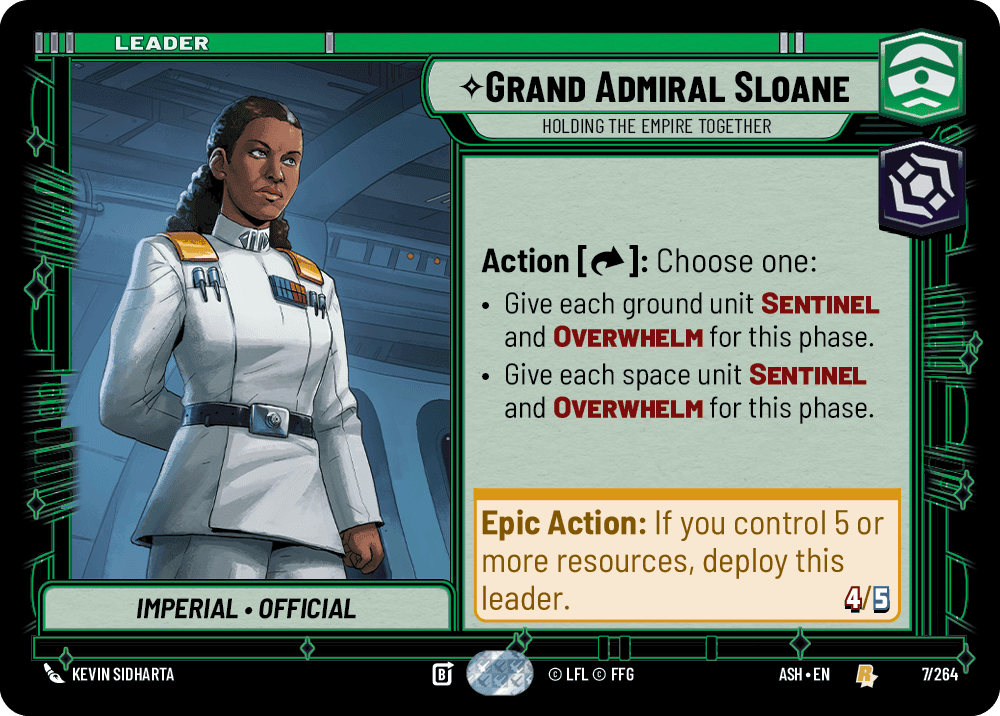
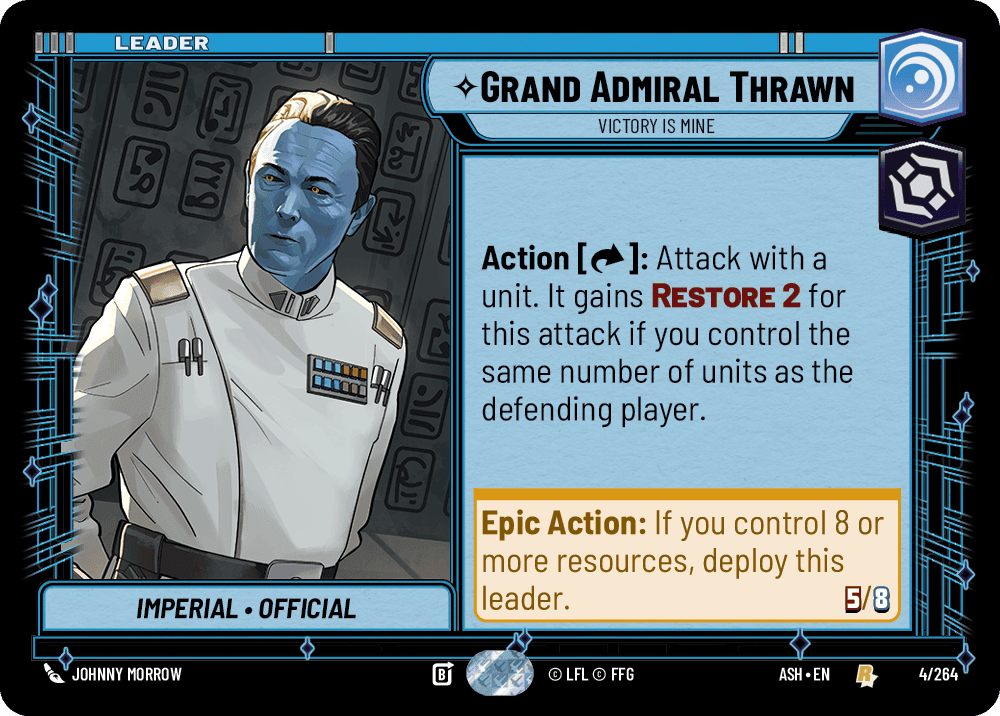
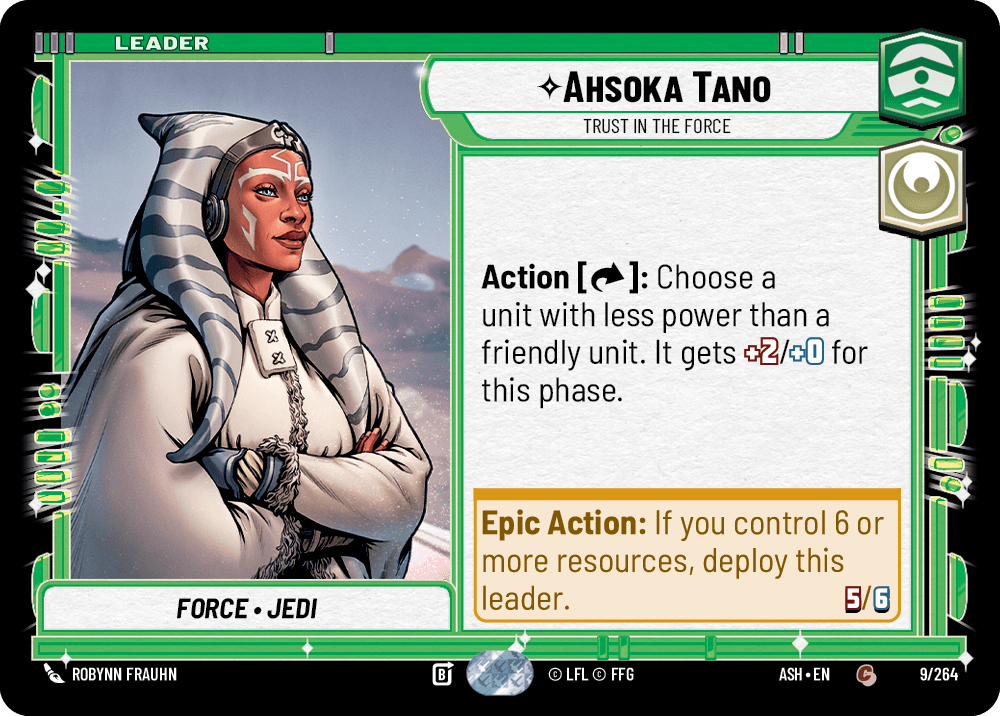
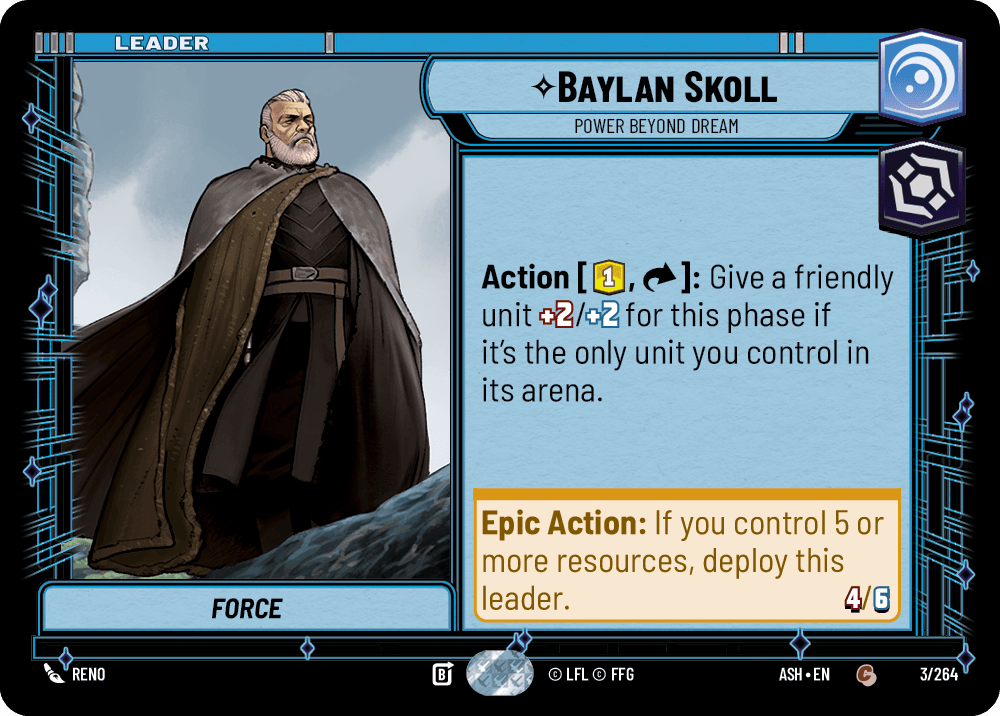
Most of the rest of the set’s leaders are perfectly playable if your pool supports them. Grand Admiral Sloane can hand your whole team Sentinel and Overwhelm, though be careful, her undeployed side gives those keywords to every unit in the arena, your opponent’s included, so it is a win-more tool more than a stabilizer. Grand Admiral Thrawn is a late game grind piece, but his payoff leans on already being ahead on board, and he asks you to reach eight resources, which is a lot to bank on in sealed, perhaps more than you will reliably hit. Ahsoka Tano and Baylan Skoll both offer flexible, self-sufficient buffs that quietly overperform.
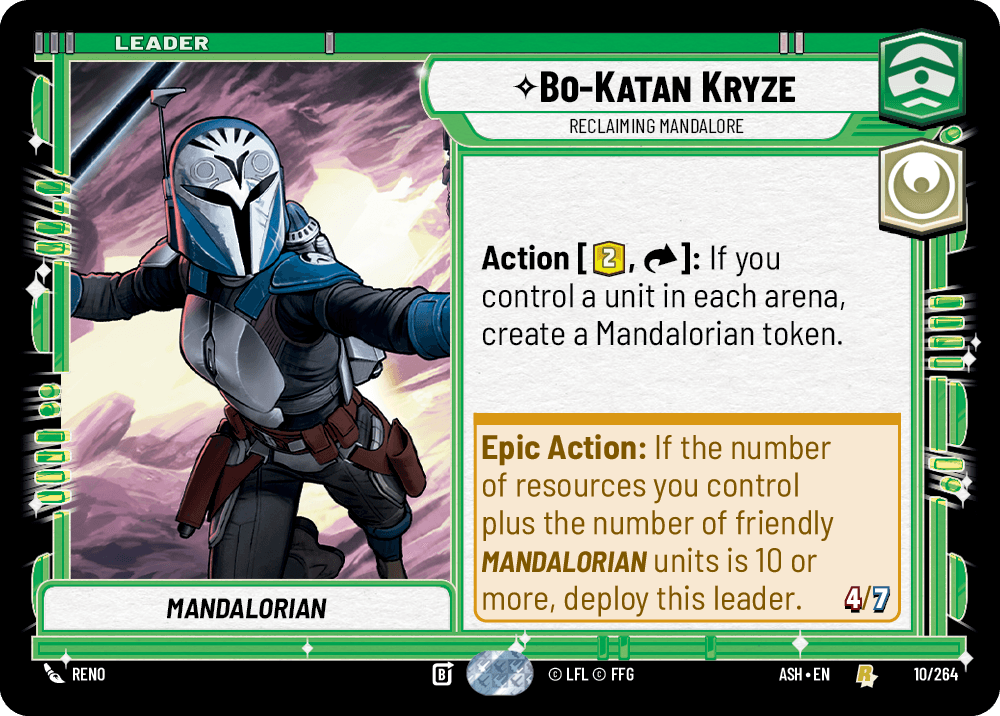
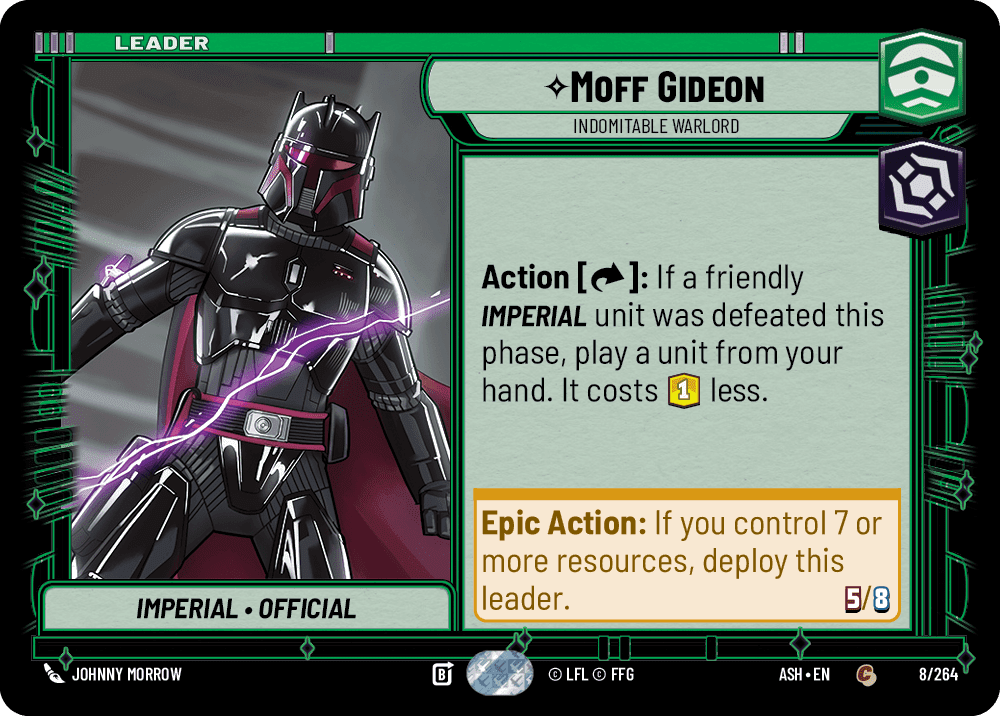
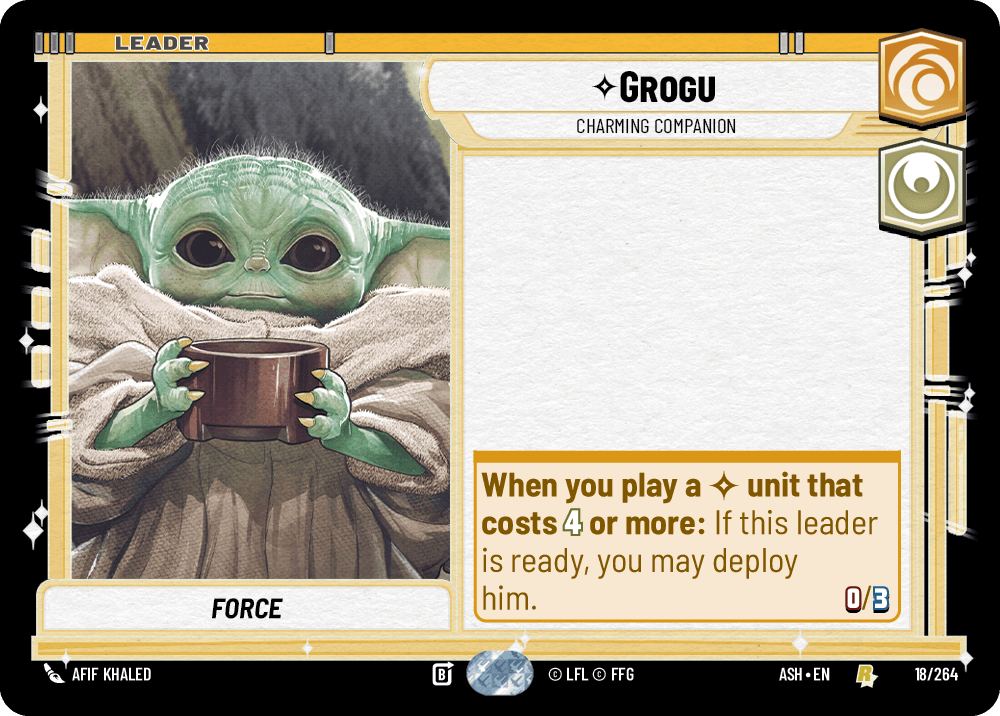
The leaders I am least excited about in sealed are the build-arounds. Bo-Katan Kryze wants a Mandalorian tribe you cannot reliably assemble from six packs, and she hides behind a brutal ten-resource deploy. Moff Gideon (the leader) wants an Imperial shell. Grogu is a fun card but does essentially nothing until you have already built a deck around him. In Constructed, several of these are excellent. In sealed, their strength is tied to deck composition you simply cannot guarantee, and I would rather have a leader whose value comes from raw stats and broadly useful abilities.
A Quick Word About Rares and Bombs
I know what some of you are thinking. “Kennon, where’s the tier list of rares and Legendaries?” And I get it, those are the exciting cards. But here is the honest truth about sealed: you cannot plan around rares.
You will open a small handful of them across your packs, out of a set that contains well over a hundred. The odds of opening any specific bomb are tiny, and the odds of it perfectly matching the aspects you already committed to? Smaller still. Building a sealed strategy around a rare you hope to open is like planning your retirement around a lottery ticket.
So my philosophy is simple. If you open a powerful rare that fits your colors, congratulations, slot it in and enjoy the ride. If you open a spicy off-color rare, do not automatically dismiss it, but do not warp your deck around it either. And if your rares are all mediocre or off-plan, do not sweat it. Sealed games are won and lost on commons and uncommons far more often than on rares. Let your commons and uncommons tell you what your deck wants to be. The rares are the cherry on top, not the foundation.
The Uncommons That Actually Win Games
Uncommons are where sealed games are really decided. You will open roughly 18 of them, and they represent a real step up in power from commons without the pure lottery of the rare slot. These are the cards to prioritize.
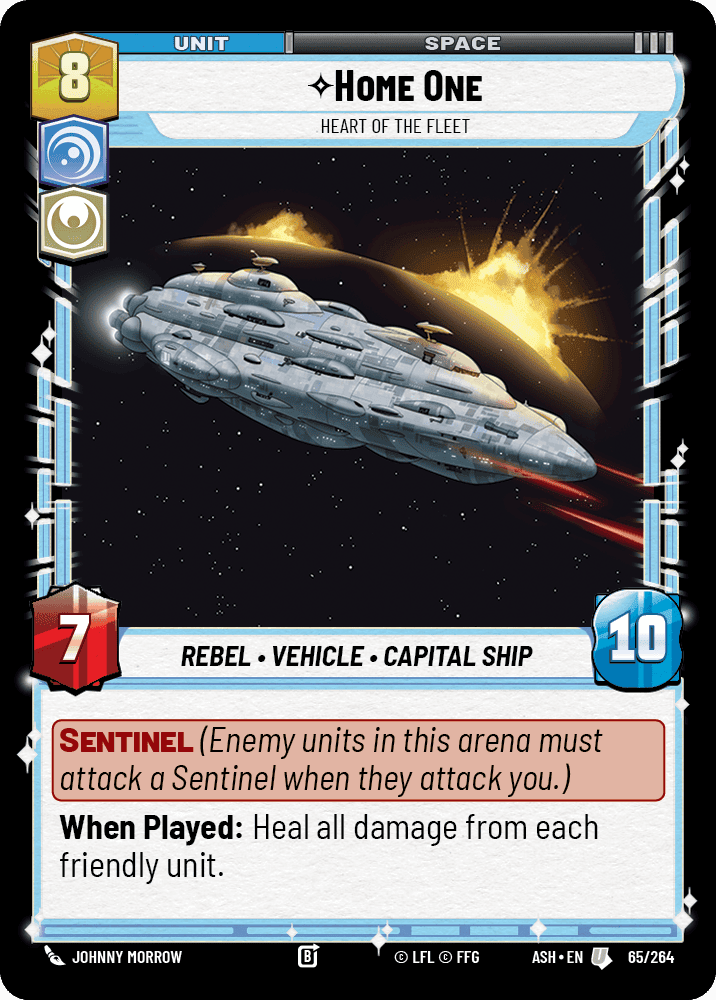
Home One, Heart of the Fleet: Let’s start with the star of the uncommon slot, the closest thing the common and uncommon pool has to a true bomb. A 7/10 Sentinel in the space arena is already a wall that soaks attacks all day and hits hard itself, but the When Played heal, which restores every friendly unit to full, is what pushes it over the top. In a format where combat piles damage onto your board, that is a swing that can flip a race on the spot. Eight cost is a real ask and you will not always live to cast it, but when you do, it tends to just win. Open one and you are seriously considering Vigilance.
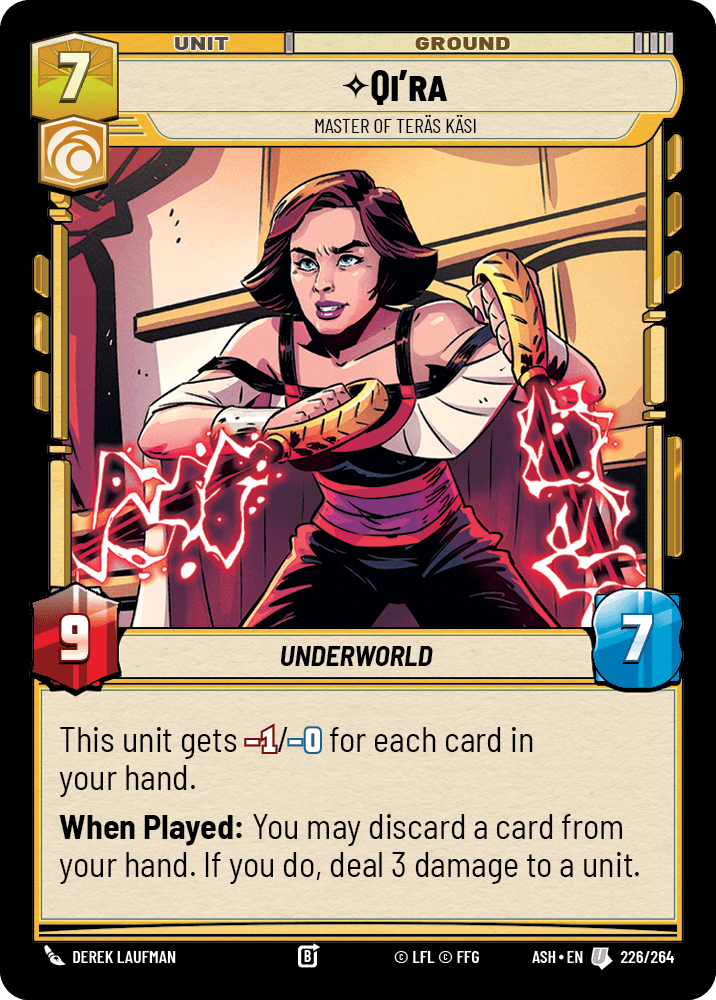
Qi’ra, Master of Teras Kasi: A 9/7 body is an absolute house at this rarity, and the When Played discard-for-3 hands you a little removal on entry. The catch is that she shrinks the more cards you are holding, so she wants to come down when your hand is thin, which conveniently is usually the late-game where you want a big threat anyway. Play her as your hand empties and she hits like a truck.
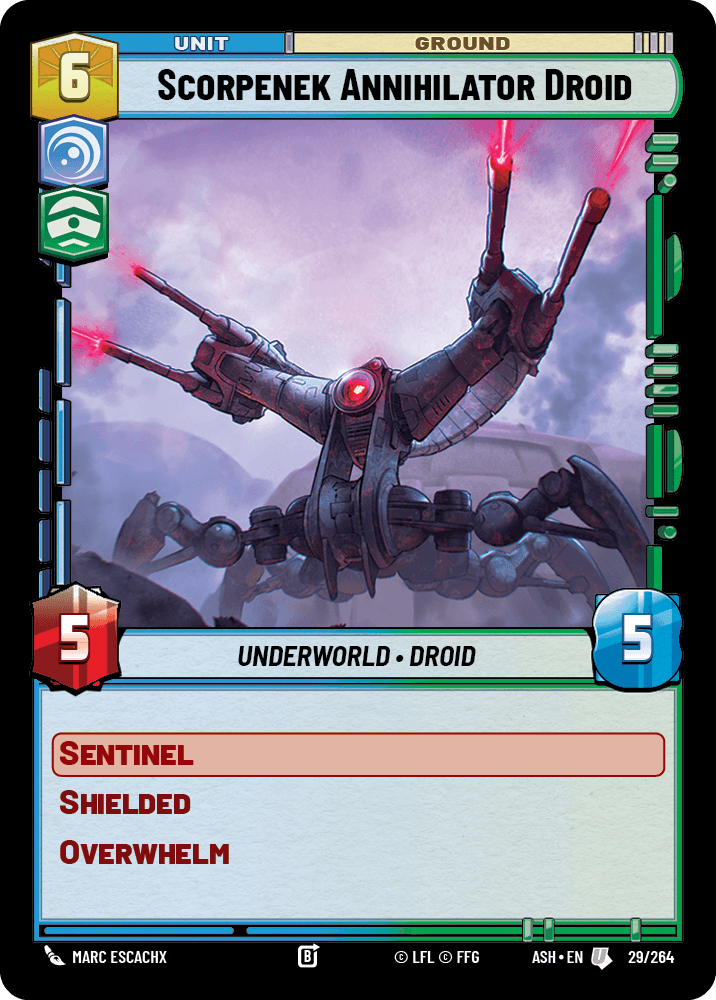
Scorpenek Annihilator Droid: Three keywords on one 6-drop. Sentinel forces the fight, Shielded survives the first hit, and Overwhelm pushes excess damage through to the base if needed. It defends and attacks well at the same time, which is exactly what you want from a midrange body. A little fragile at 5 HP once the shield is spent, but that is a nitpick.
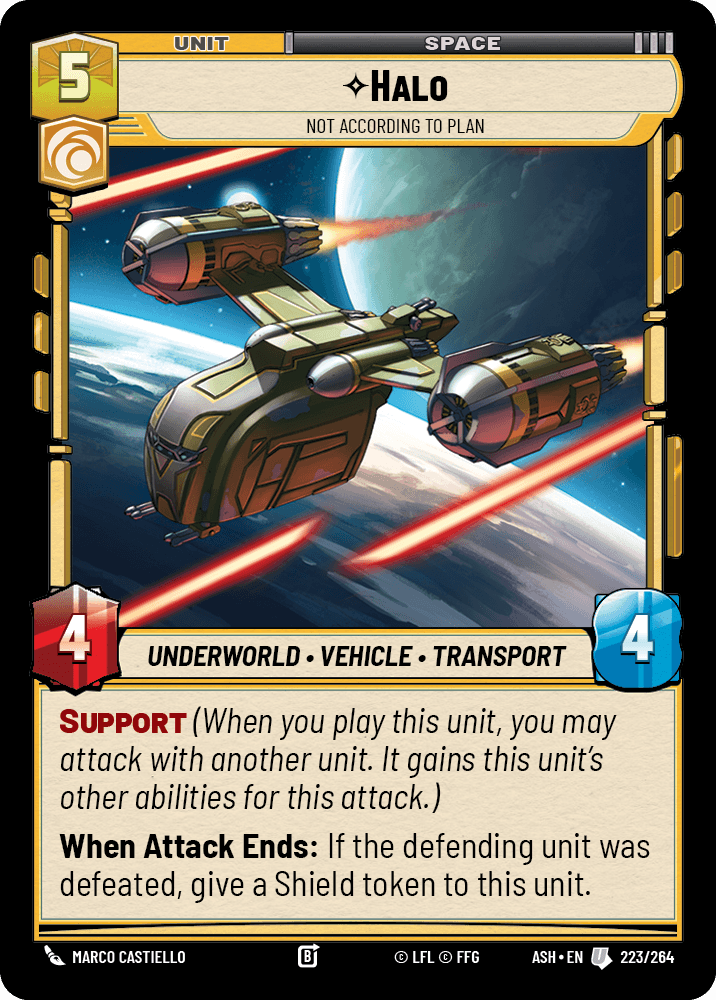
Halo, Not According to Plan: Support tempo in the space arena, with a built-in reward for getting in. Kill something and it shields up, which makes it that much harder to remove next turn. It snowballs if left alone, and the extra attack plus the self-protection pull it well above its unassuming 4/4 statline. And don’t forget that Support lets it extend that protection to something else on your board when you play it. This could be clutch.
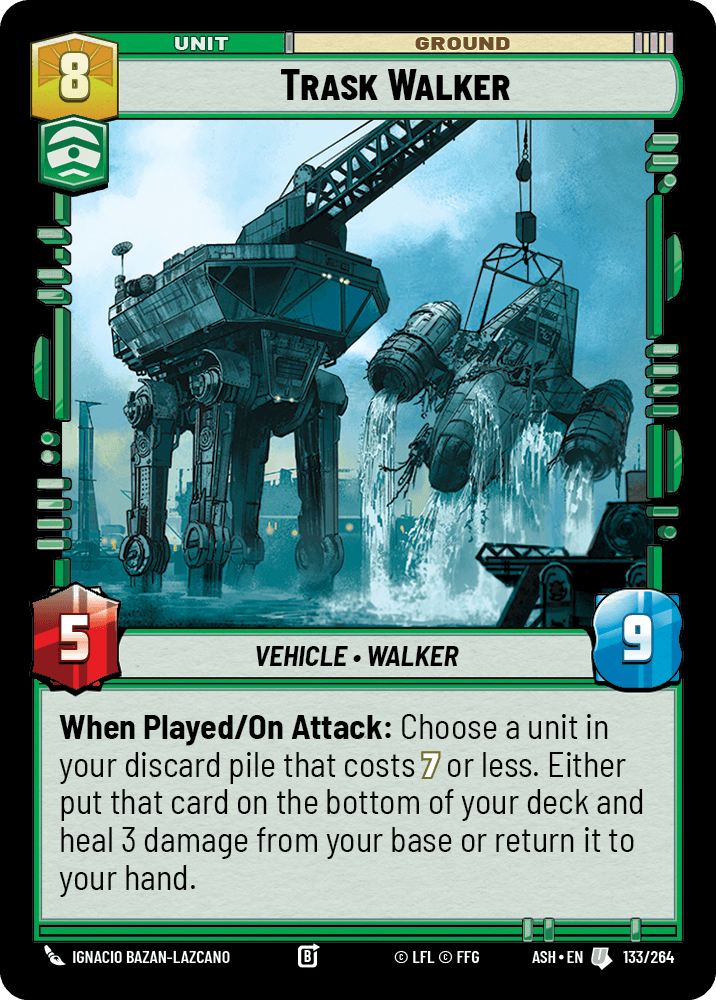
Trask Walker: Here is a card the raw stats do not love but sealed players should. A 5/9 is a brick wall, and the recursion, pulling a card back from your discard every time it attacks or healing your base instead, grinds the opponent out over a long game. In a format where card advantage is scarce, a repeatable value engine on a hard-to-kill body is quietly one of the better late picks. Not quite a bomb, but a genuine workhorse.
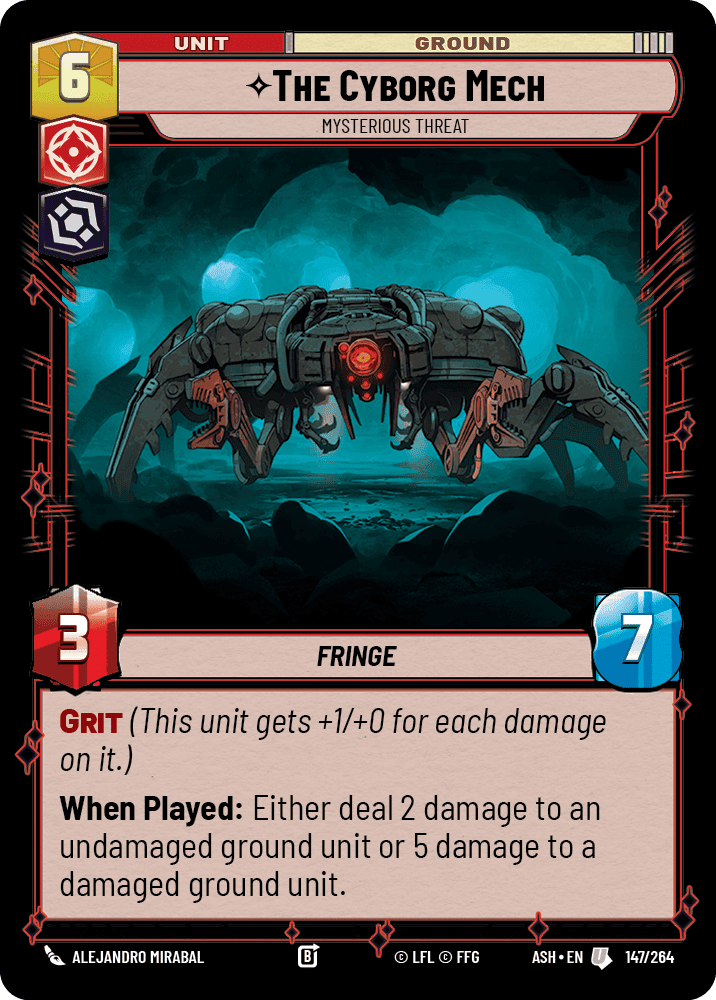
The Cyborg Mech, Mysterious Threat: One of the most flexible uncommon bombs in the set, and a card I am always happy to open. The When Played hands you a choice of removal, 2 damage to an undamaged ground unit or a full 5 to a damaged one, so it doubles as a removal spell that happens to leave a body behind. And what a body: a 3/7 with Grit that gets bigger with every point of damage it takes, which means it has excellent odds of surviving an attack and then swinging back as a genuine threat before it finally goes down. In a real pinch you can even point its damage mode at itself to fuel Grit, though I would not make a habit of it. Flexible removal bolted to a resilient, growing threat is exactly what wins sealed games.
Beyond the specific standouts, here is a general framework. Any uncommon that does one of these things is probably making your deck:
It removes an opposing unit. Unconditional removal is gold, conditional removal is silver, and both are miles ahead of no removal at all.
It provides an above-rate body. Stats that outclass what commons offer at the same cost are exactly the edge you need.
It generates Advantage tokens repeatedly. This is the set’s engine. A card that stacks tokens turn after turn is doing more than the text box suggests.
It has Support. A free attack action the turn it lands is premium tempo, full stop. And that’s before you even account for the abilities it might be granting to the attacking unit.
It is Space. I told you I would keep pointing at the flyers. A solid space body always helps you close.
The Commons That Will Define Your Deck
Here is the truth experienced limited players already know: your deck is built on commons. You will open the bulk of your 54-ish commons into your 30, and knowing which are premium and which are filler is the difference between a 3-0 and a quick exit. Let me organize these by the job they do.
The Sticky Bodies
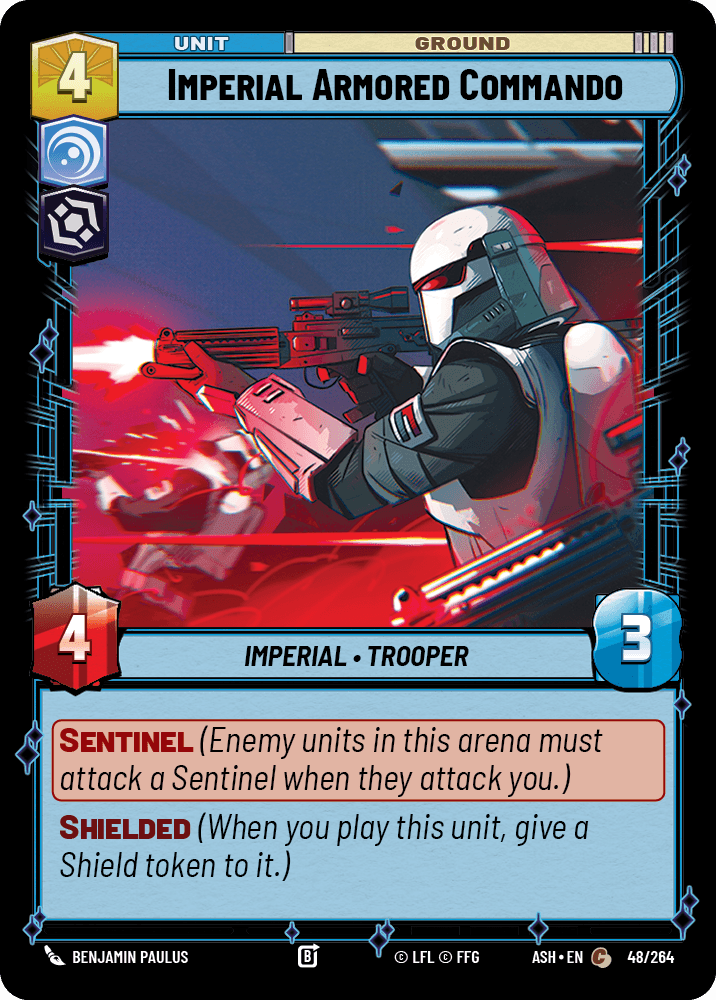
Imperial Armored Commando: This is the workhorse common of the set, and the card that convinced me commons carry ASH sealed. Sentinel plus Shielded on a 4-drop means it walks in, forces the attack, and blanks the first hit thanks to the shield. That is a favorable trade against almost anything, and because it is a common, you may pick up several copies. Not flashy. Just quietly excellent every single game. If I open a couple, I am strongly leaning toward a Vigilance build.
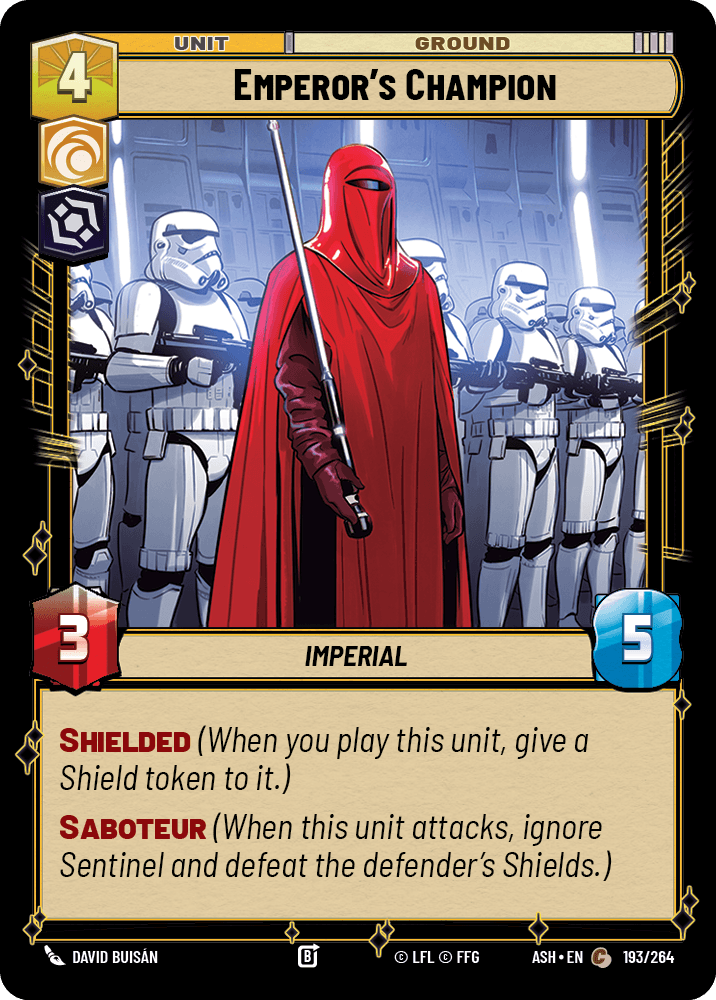
Emperor’s Champion: In a similar vein, but leaning aggressive. Shielded keeps it alive through the first trade, and Saboteur pushes its damage past blockers. A 3/5 shielded body is a pain to attack into and even if it’s not a particularly threatening attacker, I think that Saboteur keyword to slip past Sentinels like Imperial Armored Commando is going to be underappreciated by most folks.
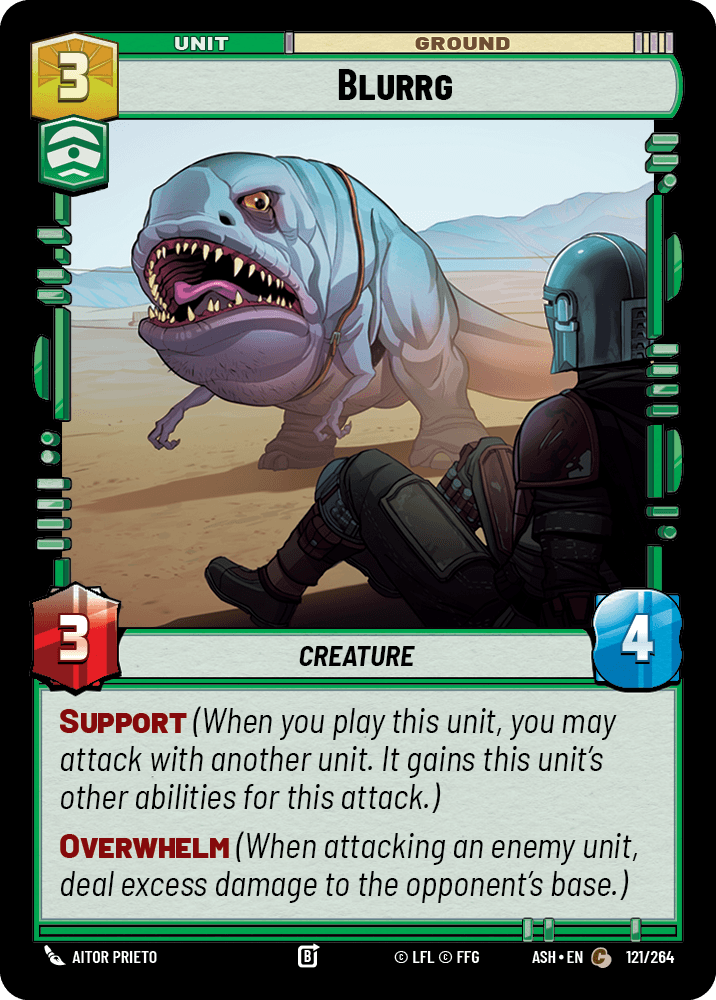
Blurrg: A 3/4 for three with Support and Overwhelm is doing a lot of quiet work. Support hands you the action efficiency, Overwhelm spills your trade damage through to the base, and the body is sturdy enough to stick around and do it again next turn. The kind of unassuming common that overperforms every time.
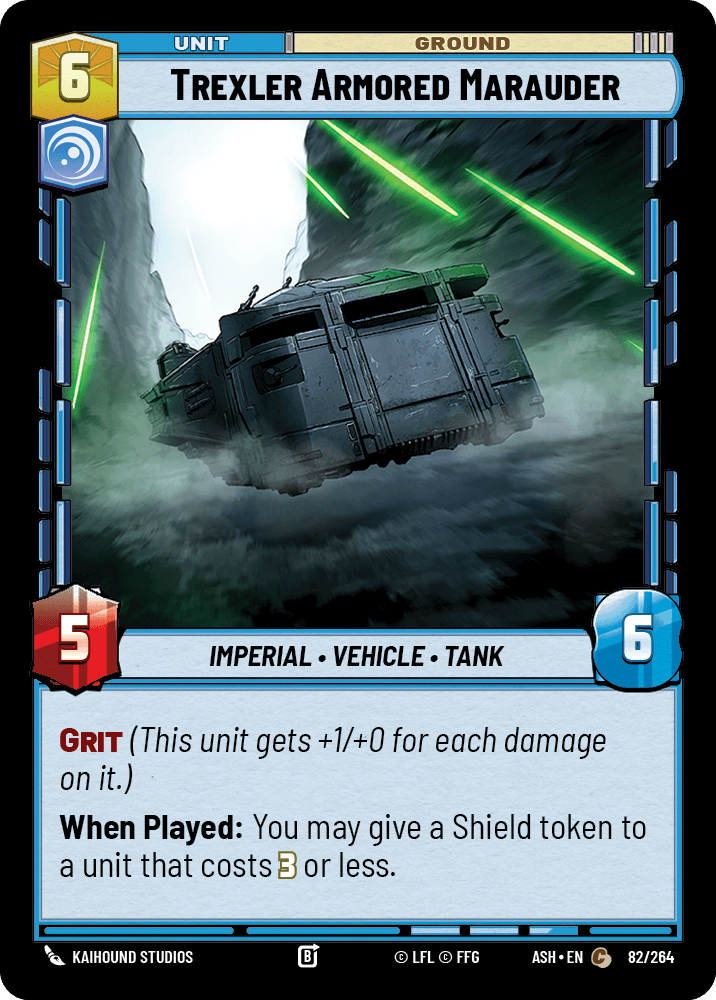
Trexler Armored Marauder: A beefy 5/6 with Grit that only gets nastier as it takes damage and protects a second unit with a shielf, which means it wins the long grindy fights sealed so often becomes. Nothing splashy, but it anchors your midrange.
Removal: The Most Precious Resource
Most of this set’s removal is stapled to units rather than events, so do not expect a deep well of clean removal spells. That said, a few events are worth knowing:
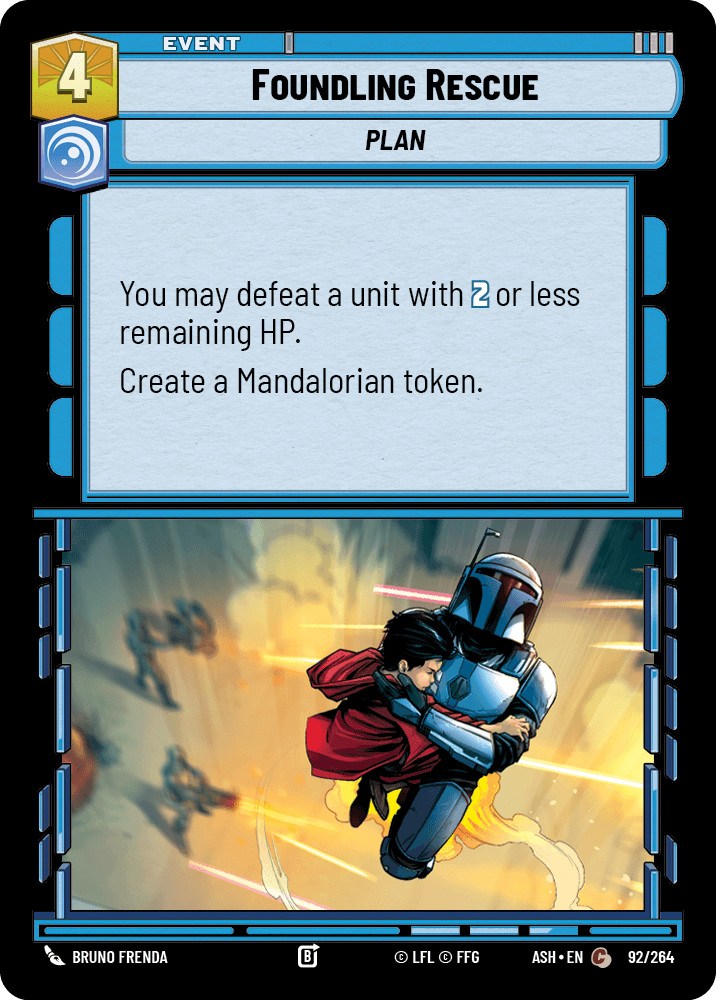
Foundling Rescue: Removal is gold in sealed, and this is removal with a chaser. Picking off a unit with two or less health clears out most of those pesky small bodies that clog up the board, and you pocket a Mandalorian token on top. It is conditional, sure, it will not answer a large threat, but a cheap, flexible way to trade up or clear a blocker plus a free body is exactly what your deck wants. One of the few events I will happily maindeck and one of the only built in two for ones available.
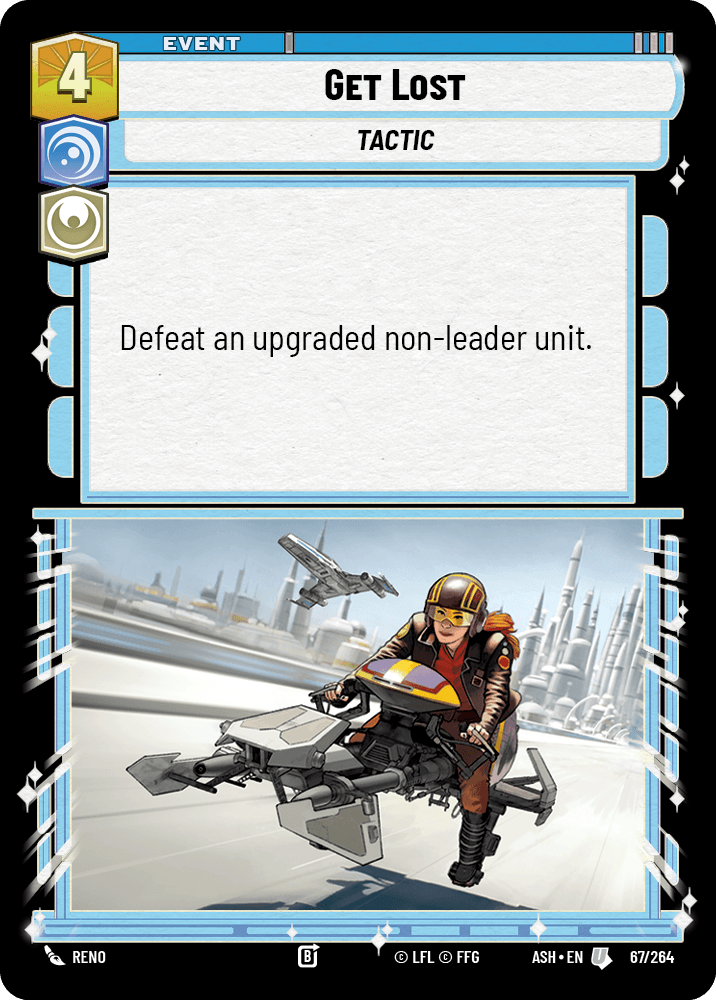
Get Lost: Defeats an upgraded non-leader unit. On its face that condition looks narrow, but remember that an Advantage token makes a unit upgraded, and this set sprays those around constantly, so the target requirement is live more often than you would think. The knock is that you are leaning on your opponent to have upgraded something, which hands them a little control over whether your removal is even playable. Still, removal is removal, and I will happily run it.
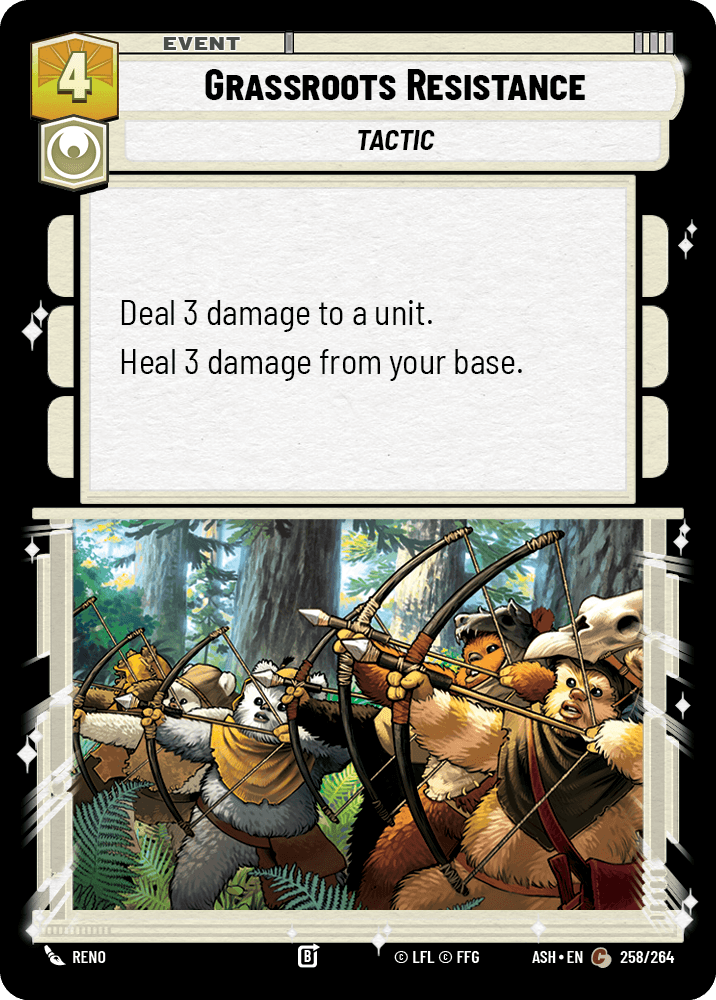
Grassroots Resistance: Deals 3 to a unit and heals 3 from your base. It has popped up in Constructed Heroic Lando shells before, but its stock genuinely rises in sealed, where killing a threat and buying yourself a turn of breathing room is exactly the kind of two-for-one a grindy format rewards.
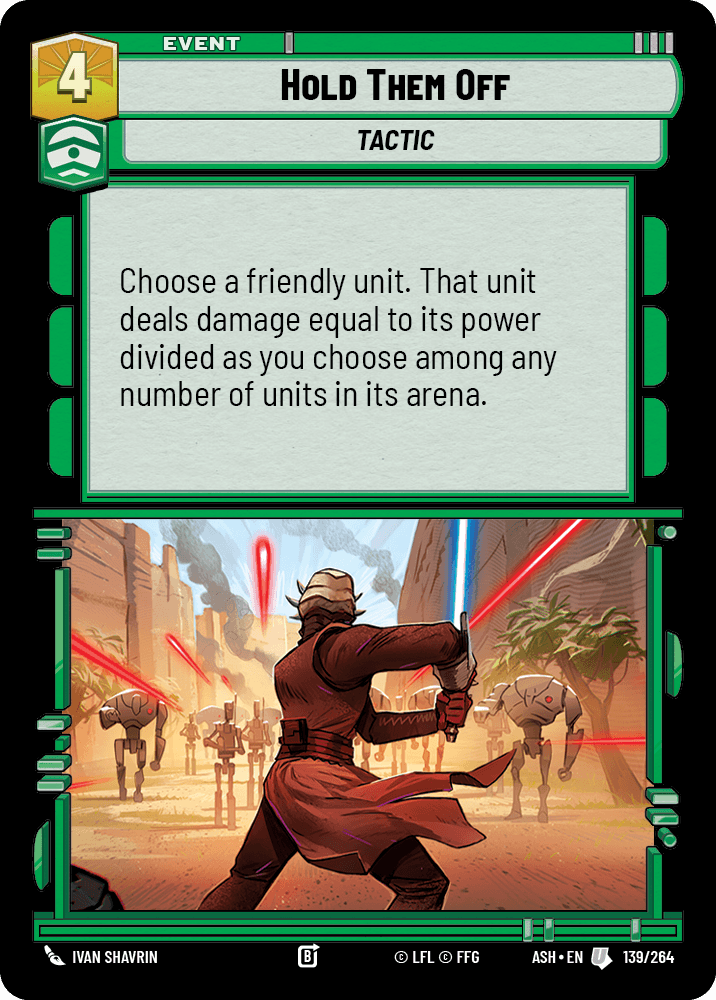
Hold Them Off: The ghost of Overwhelming Barrage. A friendly unit deals its power divided however you like among units in its arena, which can pick off multiple bodies at once. Without the stat buff Barrage also brought to the table, though, it is harder to push enough damage to actually finish several units, so treat it as situational multi-removal rather than a blowout button.
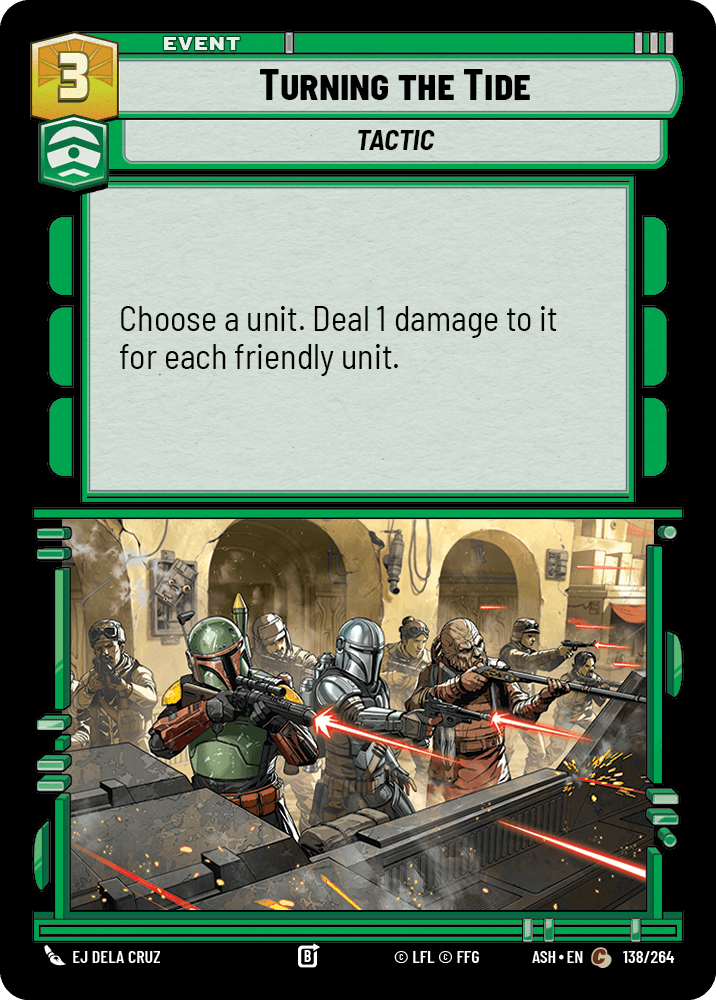
Turning the Tide: It can be solid if you have gone wide, maybe with a board of Mandalorian tokens tucked behind their shields, but honestly this one is probably better in Constructed. In sealed you will not always have the board to make it worth the card.
Space Units: Don’t Forget the Stars
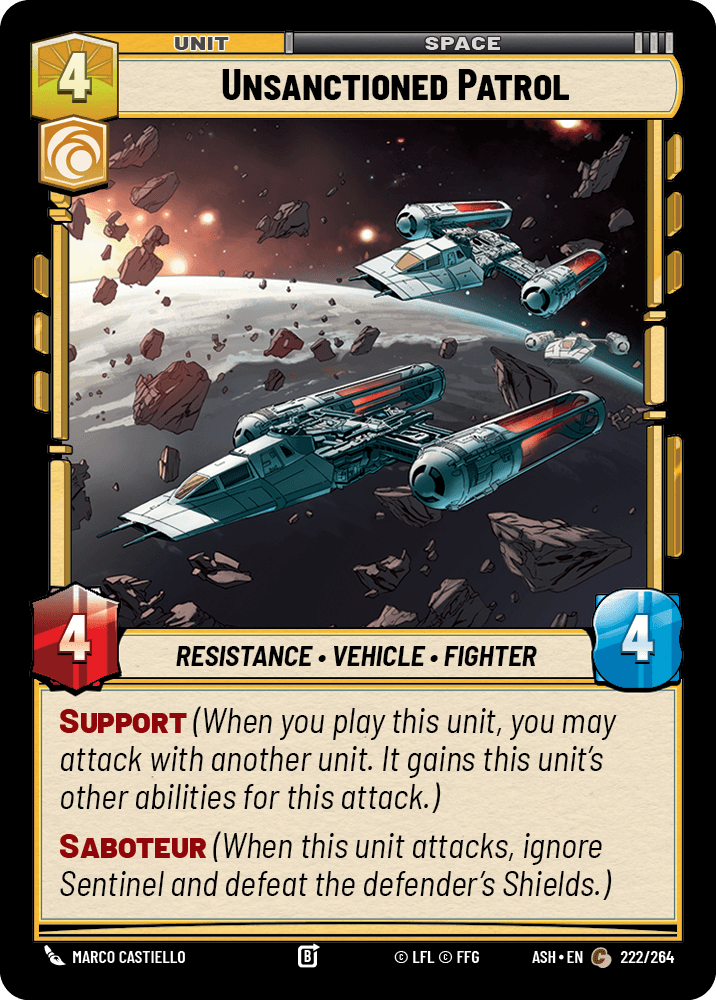
Unsanctioned Patrol: Three things a sealed deck wants stapled to one common body. Support gives you the free attack action, Saboteur slips it past Sentinels or pops shields, and it lives in the space arena where it is harder to answer. A 4/4 for 4 in space would be fine on stats alone. With this package, it is one of the best commons you can table.
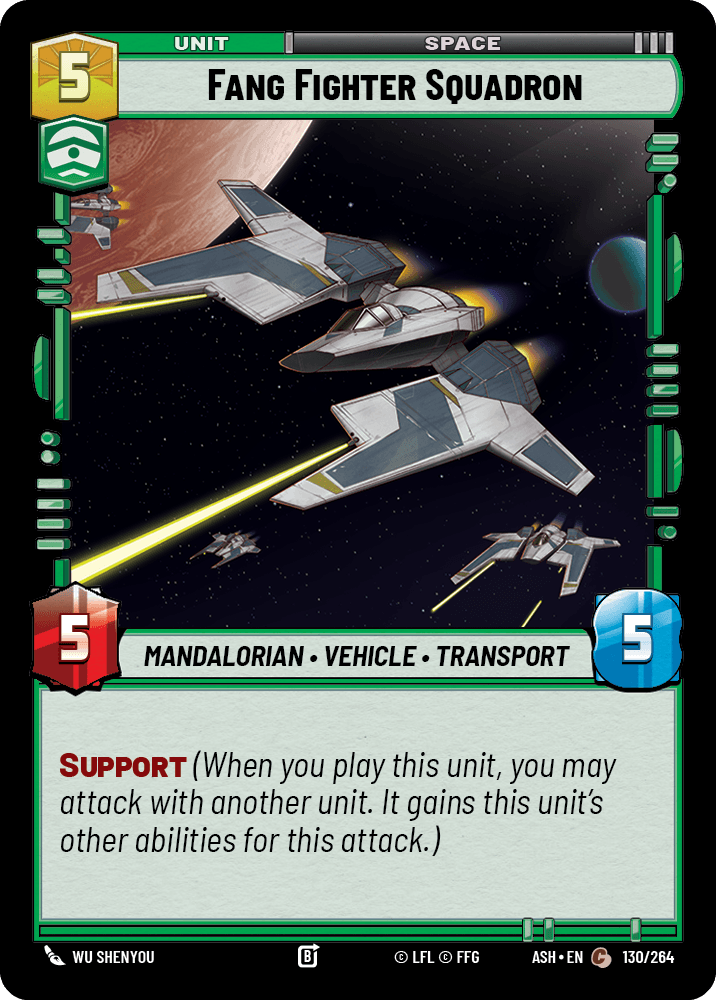
Fang Fighter Squadron: A clean 5/5 for five with Support, in space. That is it, and that is plenty. The extra attack the turn it lands is real tempo, the stats are big enough to be a real threat, and it is a common you might have in multiples.
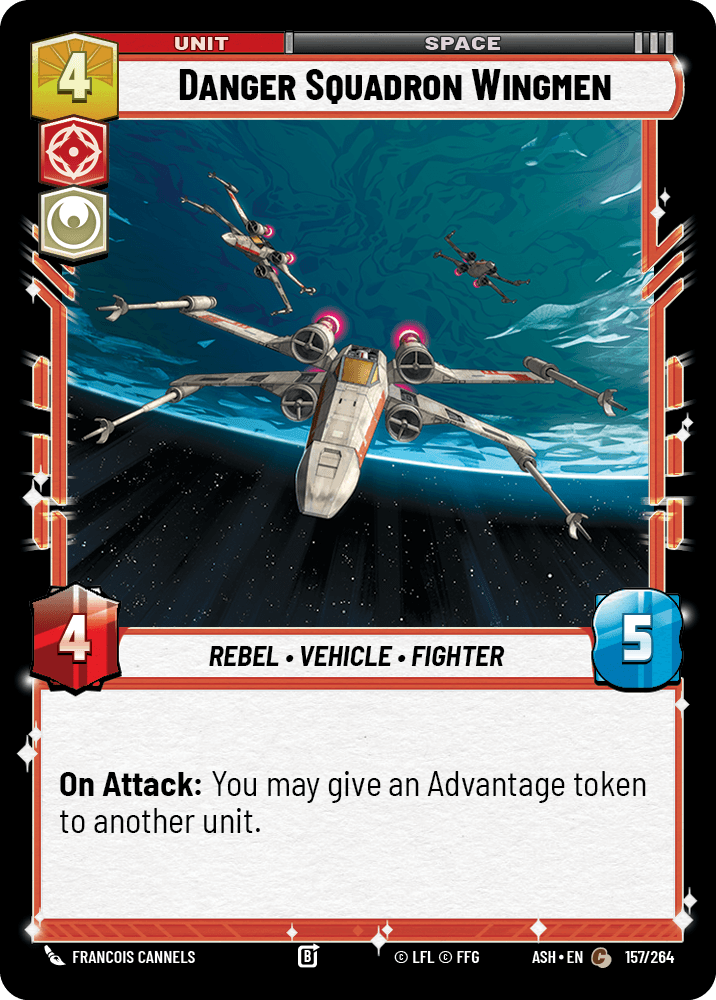
Danger Squadron Wingmen: Another almost midrange space body, the 4/5 for 4 statline is actually great for the slight stat penalty that space units generally seem to take, but as long as you have another unit on the board and squint a little, this is sort of a 5/5 body for 4 while it hands out Advantage. That’s the kind of on curve rate that lets you put on real pressure.
Cheap Aggression and the Glass Cannons
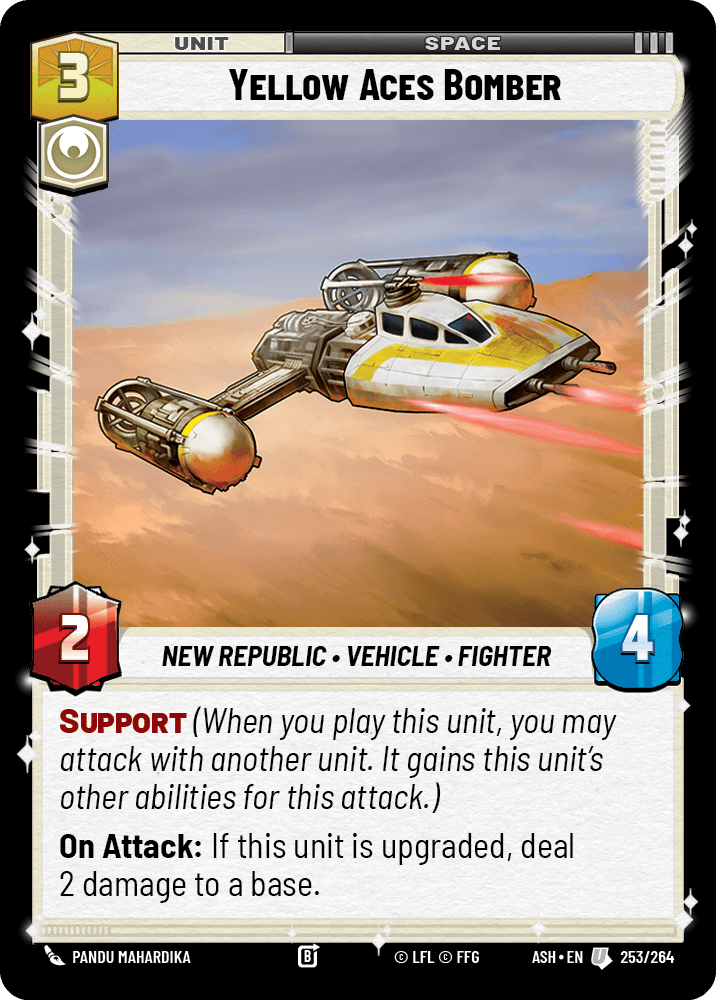
Yellow Aces Bomber: A key early space play. Support on a 3-drop means an immediate attack action as I’ve said already, and getting a body into space early stakes out territory that is tough to reclaim. The base-damage rider rewards you for slapping an upgrade on it, turning it into a repeatable clock. Cheap, aggressive, and it does real work on curve.
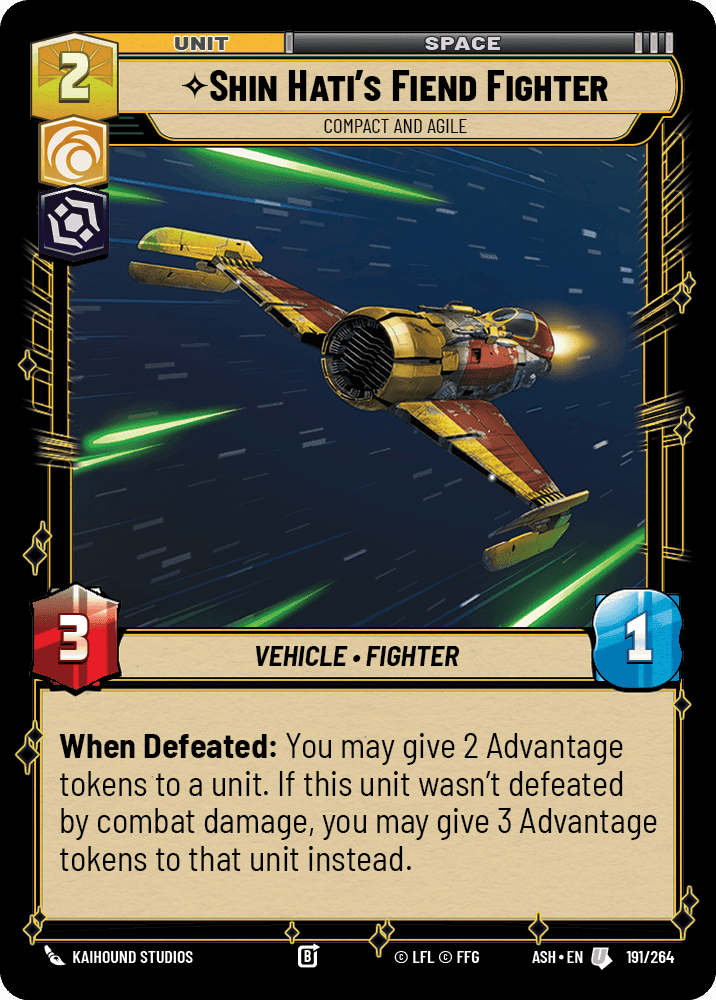
Shin Hati’s Fiend Fighter: Do not let the single point of health fool you. A 3-power body in space for two is a fast clock, and when it trades or gets picked off, it leaves behind a pair of Advantage tokens (three if it went down to something other than combat) to hand to a unit that will stick around so that you can keep pushing damage. Glass cannons like this earn their keep in sealed. They push early damage, force awkward blocks, and turn their own death into value. A real headache up in the space arena.
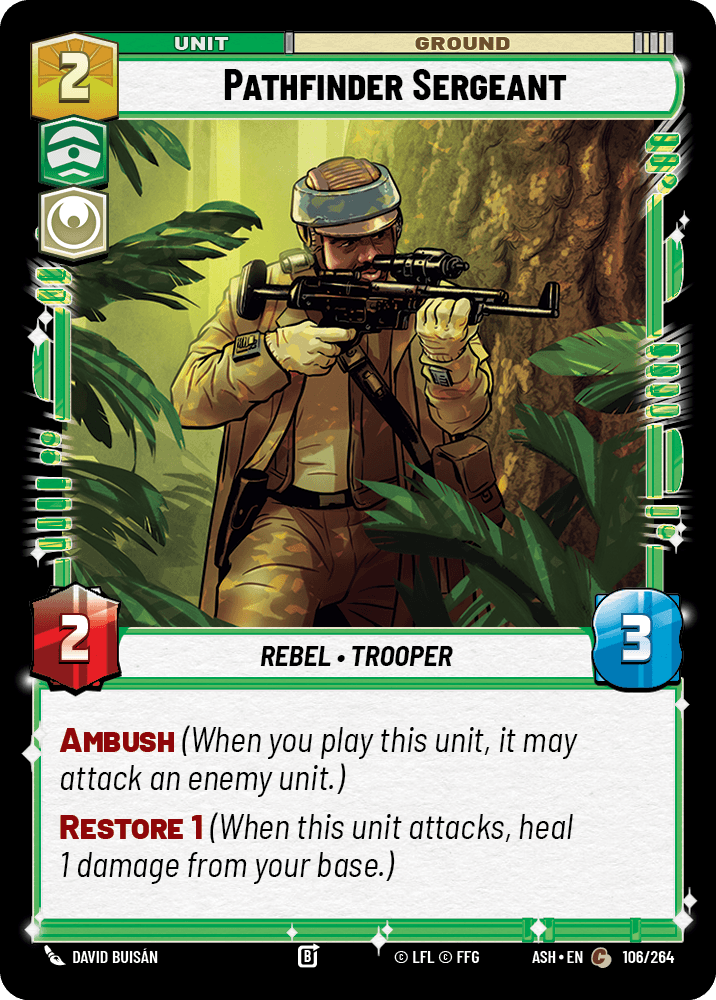
Pathfinder Sergeant: Ok, the cheap end of the spectrum feels a bit light in this set, with the realy meat and potatoes sitting in the 4, 5, and 6 cost range, but a 2-drop with Ambush and Restore is a tidy little package. Ambush means it comes down swinging for an immediate favorable trade, and the Restore chips your opponent’s clock. Exactly the kind of efficient early play that keeps your curve honest.
Building Your Sealed Deck: The Practical Playbook
Alright, you have opened your packs and sorted your cards. Now what? Here is the step-by-step I have used across more sets and more card games than I am comfortable admitting.
Step 1: Sort your pool into an aspect grid. Columns for the non-alignment aspects (Vigilance, Command, Aggression, Cunning, Neutral) and rows for Heroism, Villainy, and Neutral. This gives you a visual read on where your pool is deepest.
Step 2: Identify your deepest stacks. Which two aspects have the most playable cards, the most removal, the most bodies? If your Vigilance/Villainy pile is stacked and your Cunning/Heroism pile is thin, that is your deck telling you what it wants to be. Listen to it.
Step 3: Match a leader to your best cards. Do not fall in love with a leader before you evaluate your pool. Open Cad and a pile of efficient Aggression/Villainy bodies? That is your deck. Open a stack of sticky Vigilance blockers and Home One? Lean blue. Let the pool guide the leader, not the other way around.
Step 4: Choose your base for aspect coverage. Since every ASH base is a vanilla 30-health base with no text, this step is refreshingly simple. Your leader gives you two aspects and your base gives you a third, so just pick the base whose aspect covers the most off-leader cards you actually want to play. No abilities to weigh, no Epic Actions to plan around. Aspect coverage, and that is it.
Step 5: Check your numbers before you finalize:
- Are you at 30 cards? You can push to 31 or 32, but consistency suffers fast past that.
- Do you have enough space units? Do not leave that arena uncontested. Aim high.
- Do you have enough cheap plays at 2-3 cost so your curve is not top-heavy?
- Is your unit count around 24-25? Events and upgrades are nice, but units win games.
- Do you have at least a couple pieces of removal? If you have zero, do not be afraid to splash off-aspect for it. Removal is worth the aspect penalty.
And there you have it, folks. Follow those steps and you will end up with a focused, functional deck far more often than not.
Final Thoughts
Here is what I want you to take away, and it is something I have believed for over two decades of competitive card gaming: sealed rewards flexibility above all else. So what separates the players who go 4-0 from the ones who go 1-3? It is not who cracked the best bomb. No, it is the player who reads their pool the most honestly, figures out what it wants to do, and builds the best version of that deck. Not the deck they wish they had opened.
Ashes of the Empire is a tempo set. Advantage tokens reward you for building a board and attacking. Support hands you free actions. And the space arena, as always, is where a shocking number of these games are going to be decided. Prioritize your removal, lean on your sticky blockers and your Support bodies, do not skimp on flyers, and let the small edges pile up until they tip the game.
So open your packs, take a breath, sort your grid, and listen to what your pool is telling you. Don’t force it. Let the cards guide you.
Until next time, folks. May your tokens be plentiful and your top-decks be timely. See you at the prerelease.
