

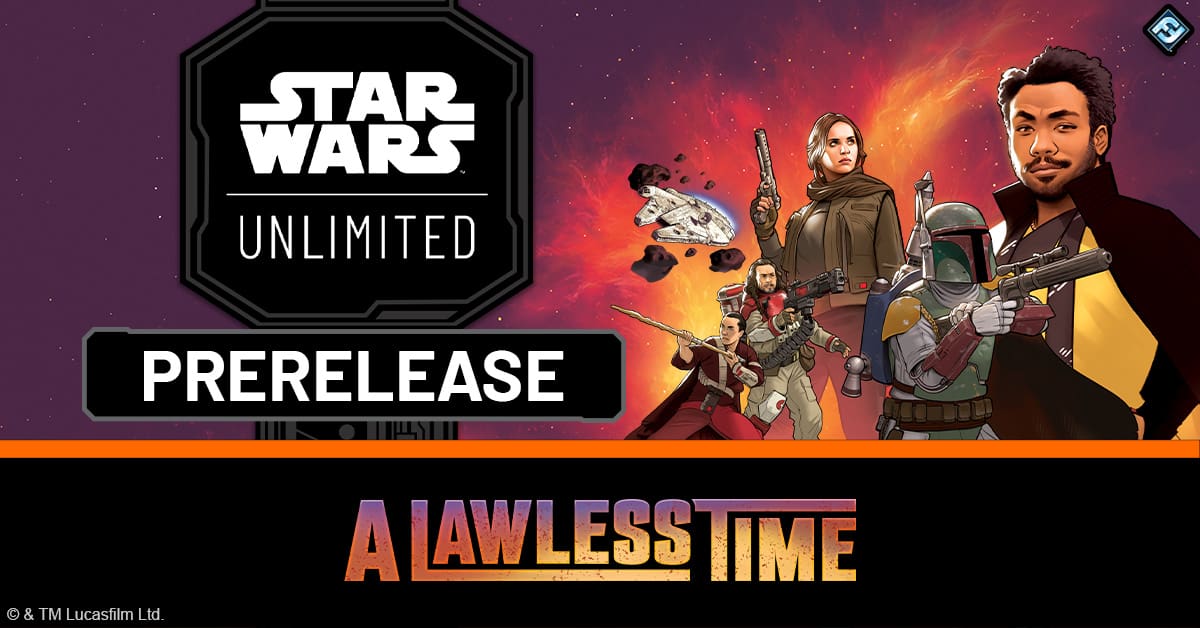
Hey everyone, welcome back to the SWU Report! It’s prerelease season again, arguably the best weekend on the Star Wars: Unlimited calendar, and I am fired up. There’s nothing quite like cracking six fresh packs, staring at a pile of cards you’ve never played with before, and trying to assemble something resembling a functional deck in thirty minutes while the guy next to you is already sleeving up. Good times.
For those of you who caught my Secrets of Power sealed guide a few months back, you know the drill. For those of you who didn’t (first of all, welcome aboard, glad to have you), this article is going to walk you through everything you need to know to sit down at your A Lawless Time prerelease event and feel like you actually know what you’re doing. Or at least fake it convincingly. That’s basically the same thin, take it from me, a Championship Level Player ™.
Now, A Lawless Time is a big deal for Star Wars: Unlimited. This is Set 7, and it brings with it the game’s first-ever rotation. Spark of Rebellion, Shadows of the Galaxy, and Twilight of the Republic are all heading to the great discard pile in the sky for Premier format. But here’s the thing: in sealed, rotation doesn’t matter one bit. You’re building exclusively from what you open. So take a deep breath. You don’t need to have memorized the entire Standard card pool. You just need to understand this set, and I’m going to help you do exactly that.
Let’s get into it.
The Basics: What Even Is Sealed?
For the veterans in the room, feel free to skip ahead. For everyone else, let me give you the quick rundown so we’re all on the same page.
At a prerelease event, you’ll receive a prerelease kit containing six booster packs of A Lawless Time as well as two promo Leaders. From your six packs (roughly 96 cards total) you’ll build a deck of at minimum 30 cards. That’s 30, not the 50 you’re used to in Constructed. You’ll choose one Leader and one Base from your pool, and the rest of your deck is built from whatever the booster pack gods have blessed you with. If you opened five copies of the same common? Congratulations, play all five. There is no copy limit in sealed.
Oh, and one more critical detail: your prerelease kit also comes with two promo leaders, Jabba the Hutt and Leia Organa. These are available for everyone to use, which means every single player at the event has access to two of the most interesting leaders in the set. Keep that in the back of your mind.
Between rounds, you can freely swap cards, change your leader, change your base. Your entire remaining card pool functions as a sideboard with no restrictions. If your first build isn’t working, pivot. There’s no shame in it. In fact, there’s tremendous strategic value in it.
What Makes LAW Different: The Bantha in the Cantina
Ok, so every set has its personality. Spark of Rebellion was about fundamentals and big haymakers. Shadows was about trickery and the space arena. Secrets of Power slowed things down with political intrigue. A Lawless Time? This set is about money.
The two headline mechanics in LAW are Credit Tokens and Multi-Aspect Cards, and both of them are going to fundamentally shape how you approach your sealed pool. Let me break them down.
Credit Tokens: Cold, Hard Cash
Credit tokens are a new token type that you accumulate over the course of the game. At any point, you can defeat (spend) a credit token to reduce the cost of a card you’re playing by 1. They don’t count as resources you control, so they won’t help you hit leader deploy thresholds, but they do provide a burst of temporary acceleration that can let you slam a big unit a turn or two earlier than your opponent expects.
Think of credits as the spiritual successor to Superlaser Technician and Resupply, both of which are rotating out. Except instead of permanent ramp that snowballs, credits are a one-shot burst. You save them up, you cash them in at the perfect moment, and suddenly your 7-drop is landing on turn 5 while your opponent is still playing out their curve. In sealed, where the average card quality is lower and games tend to go longer, that kind of acceleration can be absolutely backbreaking.
Several cards generate credits at common and uncommon, the most basic being Unmarked Credits, a 1-cost Cunning event that simply creates a credit token. It’s cheap and straightforward, but even in this set, I’m not sure that effect is worth a card all by itself.
Multi-Aspect Cards: High Risk, High Reward
For the first time in SWU history, we have cards with two primary aspects beyond just Heroism and Villainy. I’m talking Vigilance/Command cards, Cunning/Aggression cards, even a few triple-aspect monsters like Zeb Orrelios, who rocks Vigilance, Aggression, and Heroism. The tradeoff is simple: these cards are more powerful than their single-aspect equivalents, but they’re harder to play without eating aspect penalties.
In constructed, you can build your deck to accommodate these requirements. In sealed, you’re at the mercy of your pulls. A triple-aspect card sitting in your pool looks amazing on paper, but if your leader only matches one of those aspects and your base covers a second, you’re still paying 2 extra resources for that third unmatched aspect. That’s a steep tax.
But here’s where it gets interesting, and this is the part I think is going to catch a lot of people off guard.
Common Bases With Aspect-Ignoring Epic Actions
Every single Common base in A Lawless Time has the same Epic Action: ignore one aspect penalty when playing a card, once per game. Read that again. Once per game, you get a free pass on an aspect penalty. That means even if your leader and base only cover two of a multi-aspect card’s three aspects, you can fire off the Epic Action and play it at full cost.
This is a massive deal for sealed. It means that one splashy multi-aspect bomb sitting in your pool, the one you thought was unplayable because you couldn’t match all its aspects, might actually be worth building around. As long as you’re only asking your base to bail you out once. One free pass. Use it wisely.
The Aspects That Win Sealed Games
Before we talk leaders, I want to zoom out and talk about the aspects themselves, because in sealed your leader’s aspect pairing matters just as much as their statline or ability. You’re committing to two aspects for the entire event (well, per round at least), and some aspects are just better positioned in this set than others.
Vigilance might be the strongest sealed aspect in LAW, and I don’t think it’s particularly close. It has access to solid removal options, Sentinel units that can protect your key pieces and force your opponent into unfavorable attacks, and perhaps most importantly, base-restoring effects. In a format where games go long and both players are chipping away at each other’s bases, the ability to heal your base can completely swing the math of a game. Your opponent thinks they’ve set up a two-turn clock, they’ve done all the mental arithmetic, and then you restore 3 or 4 HP and suddenly their whole plan falls apart. These are the kind of effects that don’t look exciting on paper but absolutely win games at the prerelease table. Vigilance also tends to have solid defensive statlines on its units, which means your board is stickier and harder to push through.
Aggression deserves strong consideration as the other top-tier sealed aspect. Where Vigilance grinds and stabilizes, Aggression closes games. It has its own strong removal options, and critically, it has efficient aggressive units at common rarity that can pressure your opponent before the late-game beat sticks ever come online. In sealed, there will be players across from you who are banking on surviving to turn 7 or 8 and slamming some massive unit that takes over. Aggression’s game plan is to make sure they never get there. There’s real value in being the player who sets the pace of the game rather than reacting to it.
The other aspects all have their strengths. Cunning has credit generation and trickery. Command has solid midrange bodies and value generation. But in terms of raw sealed power, I think Vigilance and Aggression are where you want to be if your pool gives you the choice.
Your Leaders: The Foundation of Everything
In sealed, your leader choice is the single most important decision you’ll make. It determines your two primary aspects, it gives you a unit to deploy at some point in the game, and its ability shapes your entire game plan. Let’s talk about the leaders you’re most likely to be choosing between.
Remember: everyone gets Jabba and Leia as promos. Beyond that, you’ll open six random leaders from your packs. Rather than give you a rigid tier list (we’re playing sealed, not drafting a fantasy football team), I want to talk about the leaders that feel strongest to me in this format and why they feel that way. The principles matter more than the rankings.
The Leaders I’m Most Excited About
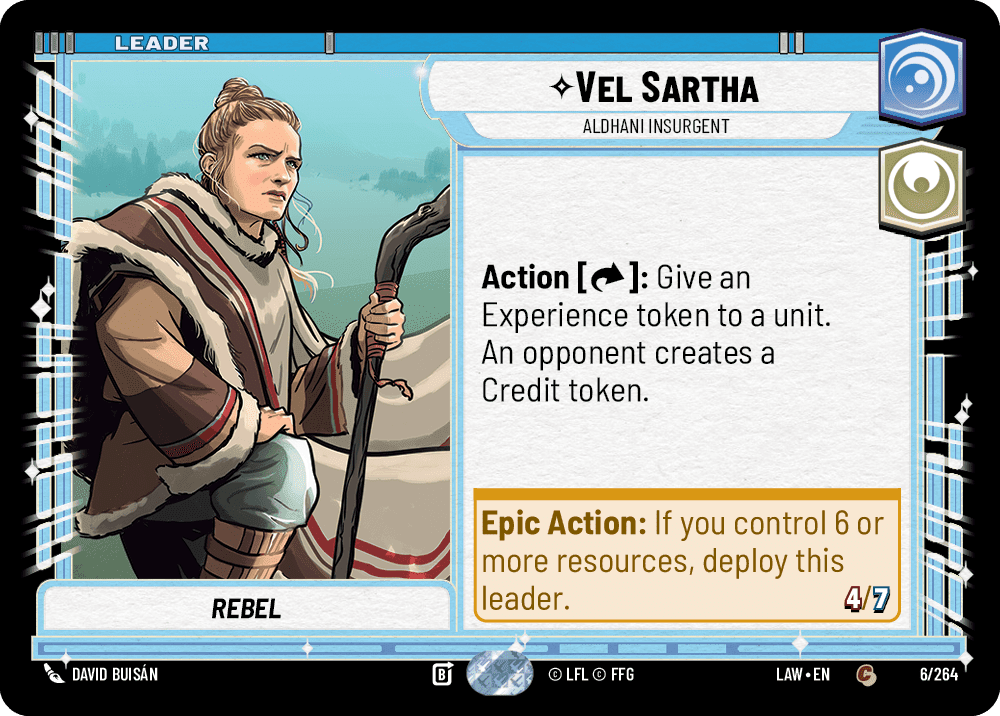
Vel Sartha, Aldhani Insurgent (Vigilance/Heroism): I think Vel might be the quiet best leader in LAW sealed, and I suspect a lot of people are sleeping on her. Her Experience token synergy does something that’s genuinely hard to find in this format: she makes your average cards better. In sealed, most of your deck is commons. You’re scraping for every edge, trying to squeeze value out of cards that were designed to be role players. A leader who’s actively upgrading the quality of your board turns those role players into legitimate threats. The 4/7 statline at 6-cost deploy is solid enough (that 7 HP is tough to push through), and the Vigilance/Heroism pairing gives you access to what I believe are the two best sealed aspects in the set. Vigilance covers removal, Sentinel, and those game-swinging base restoration effects. Heroism gives you a deep pool of playable commons. And the Experience token mechanic doesn’t require specific build-around pieces the way some other synergy leaders do. It just makes everything you’re already doing a little better. In sealed, that kind of incremental value adds up fast. Leia wound up over performing in SEC sealed and I expect similar things from Vel. Remember that the experience boost makes even the mediocre commons you’re playing punch above their weight and you have those for sure – you might worry about your opponent being able to play ahead of curve with those credits, but in sealed there’s no guarantee they even have the options in hand.
Chewbacca, Hero of Kessel (Aggression/Heroism): Ok, let me just come right out and say it: Chewie is a monster. A 5/6 body for a deploy cost of 4 is very efficient by any standard. In a format where most leaders deploy at 5 or 6 resources and come down as 3/6s or 4/7s, Chewie is hitting the board a full turn earlier with a statline that trades favorably with almost everything at that stage of the game. Now yes, unlike some 4-cost leaders, you actually have to pay those 4 resources to get Chewie on the board. But I think it’s absolutely worth it. A 5/6 with the protection of being a leader unit (can’t be targeted by a lot of removal) at that point in the game is just an enormous amount of pressure. Your opponent has to either commit multiple units to deal with him or just accept that Chewie is going to keep swinging. Aggression and Heroism are both excellent sealed aspects, giving you efficient removal, aggressive units, and a deep pool of playable commons. If you open Chewie, you’re probably playing Chewie. It’s that straightforward.
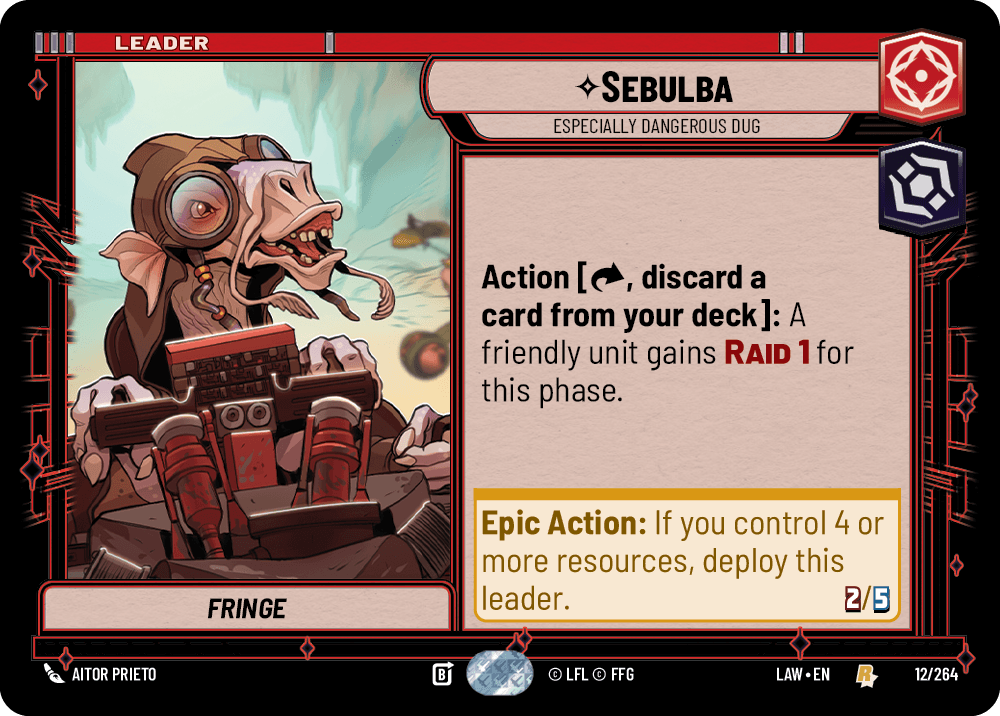
Sebulba, Especially Dangerous Dug (Aggression/Villainy): Sebulba and Chewie share something important: they both deploy on 4 resources, which puts them a full turn ahead of the pack. Sebulba’s 2/5 statline isn’t as jaw-dropping as Chewie’s 5/6, but getting any leader on board that early is enormously valuable in sealed and his Raid 1 means he’s a 3/5 while attacking. It lets you start attacking immediately, it gives you a body for combat, and it means you’re generating leader value while your opponent is still building toward their deploy turn. The Aggression/Villainy aspect pairing is arguably the most aggressive combination in the set, covering efficient units and the best removal options. The game plan with Sebulba is simple: deploy early, pressure relentlessly, and close the game before your opponent’s expensive cards come online. In a format where plenty of people will be trying to durdle their way to 7 or 8 resources for their big finishers, Sebulba says “No, we’re not doing that today.” Sometimes being fast and cheap is all you need.
Boba Fett, Krayt’s Claw Commander (Command/Villainy): Boba’s free triggered ability is excellent value in a format where every resource matters. His deployed side as a multi-trigger unit means he can generate advantage across multiple interactions per round. Command/Villainy gives you access to strong midrange units and removal, and Boba’s 3/6 at 5-cost deploy is perfectly serviceable when you count that Raid 1. He’s the kind of leader who doesn’t look flashy but consistently overperforms because he’s generating small edges every single turn. Keep in mind, however, that you’re also going to want some card advantage to go with him Not only does he generate credits that you’re going to want to spend, but he does so at the expense of you probably losing the Bounty Hunters that you’re attacking with. Sure, you’re removing your opponent’s units too, but getting some draw to keep that engine running is probably going to be the make or break here.
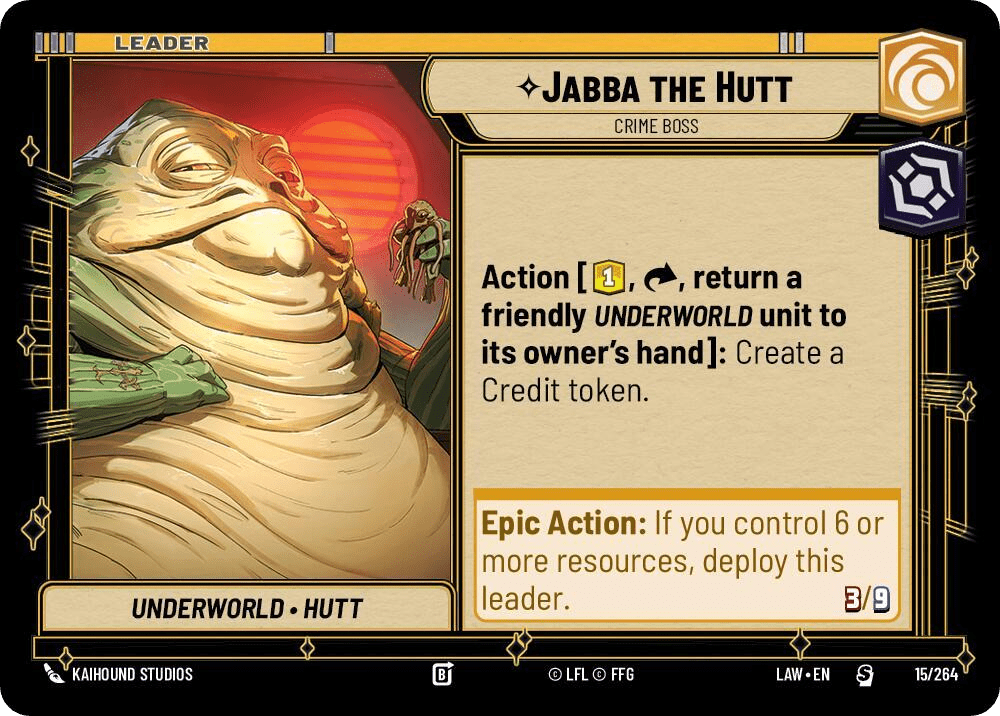
Jabba the Hutt, Crime Boss (Cunning/Villainy): Everyone gets this one, and it would be irresponsible not to talk about him. Jabba is the poster child for everything LAW is trying to do. His leader ability generates credit tokens, and his deployed side grants Ambush to your Underworld units. Ambush is arguably the best keyword in limited play (turning a unit in your hand into removal that leaves behind a body is premium), and Underworld is the most common trait in the entire set with a staggering 87 cards carrying it. The 3/9 statline on deploy means Jabba sticks around, and the real kicker is that he rewards you for doing something the set already wants you to do: play Underworld units and generate credits. That’s about as close to a freeroll as you can get in limited. You can also use that ability to reset some card’s damage to keep them alive or retrigger a few “When played” abilities, so there’s some real utility here as well. The danger, of course, is that everyone has access to Jabba, which means the mirror match will be extremely common. Keep that in mind when evaluating your pool. If your Cunning/Villainy cards are strong, Jabba is an excellent choice. If they’re mediocre, don’t default to Jabba just because he’s available.
Darth Vader, Unstoppable (Aggression/Villainy): Look, I’ll be honest: Vader’s ability reads like a constructed card to me. It wants to be built around, it wants specific pieces, and a 7-cost deploy is asking a lot in sealed. But… 6/8. Six power and eight HP on a leader. That’s a statline that can just end games regardless of what his text box says. If you’re in Aggression/Villainy and your pool has enough early plays and removal to survive to 7 resources, there’s a real chance Vader is just good enough on raw stats alone. I’m not fully sold, but I’m not dismissing him either. Sometimes the math is the math.
A Few More Worth Mentioning
Most of the remaining leaders in the set are perfectly fine in sealed. I don’t want to give you the impression that you’re doomed if you don’t open one of the names above. A leader with a solid statline and an aspect pairing that matches your deepest card pool will always be competitive. Director Krennic has a 4/9 body that’s extraordinarily hard to remove if you can make it to 7 resources. Agent Kallus is a safe, flexible pick in Vigilance/Villainy that can help you play some out of aspect bombs. Jyn Erso has an appealing card draw ability that can grind out value in longer games, and Vigilance/Heroism is a great aspect pairing for sealed, even if there are only 48 Rebels. These are all perfectly good leaders that will serve you well if your pool supports them.
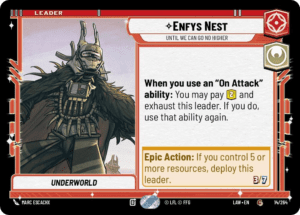
I do want to flag a couple of leaders that I find very intriguing for constructed but am less excited about in sealed. Lando Calrissian and Enfys Nest both have abilities that seem like they could do really powerful things in a focused, purpose-built deck. But that’s exactly the problem for sealed. Their upside is tied to specific deck composition and synergy pieces that you simply cannot guarantee in a random six-pack pool. I wouldn’t be shocked if one of them overperforms and proves me wrong, but going in, I’d rather have a leader whose strength comes from raw stats and broadly useful abilities than one that needs the stars to align.
A Quick Word About Rares, Legendaries, and Bombs
I know what some of you are thinking. “Kennon, where’s the section ranking all the rares? Where’s the tier list for Legendaries?” And I get it. Rares and Legendaries are exciting. They’re the cards you grab out of the pack first, the ones that make your eyes go wide.
But here’s the honest truth about sealed: you can’t plan around rares.
You’ll open exactly six rares or Legendaries across your packs, and the full set contains well over a hundred of them. The odds of opening any specific rare are vanishingly small, and the odds of opening a rare that perfectly slots into the aspects you’ve already committed to based on your commons and uncommons? Even smaller. Building a sealed strategy around the assumption that you’ll open a particular bomb rare is like planning your retirement around a winning lottery ticket. I mean, if it happens, great! But it’s not a strategy.
So here’s my philosophy on rares in LAW sealed, and it’s pretty simple:
If you open a powerful rare that matches the aspects you’ve already built around from your commons and uncommons, congratulations. Slot it in and enjoy the ride. A strong rare that fits your colors is a gift from the booster pack gods, and you should accept it graciously.
If you open a particularly spicy rare that’s off-color, don’t automatically dismiss it. This is where LAW’s Common bases really shine. Remember, every Common base gives you a once-per-game aspect ignore on its Epic Action. If you’ve got a jaw-dropping off-aspect rare sitting in your pool, tossing it into your 30 as a “just in case” play is more reasonable in this set than it’s ever been. You might never draw it. But if you do, and you fire off that Epic Action to slam it at full cost at the perfect moment? That’s the kind of story you tell people about at the next prerelease.
If your rares are all mediocre or don’t fit your pool at all, don’t sweat it. Sealed games are won and lost on commons and uncommons far more often than on rares. A well-built deck with a smooth curve, adequate removal, and enough space units will beat a clunky pile built around a flashy rare almost every time.
Bottom line: let your commons and uncommons tell you what your deck wants to be. Rares and Legendaries are the cherry on top, not the foundation.
The Uncommons That Actually Win Games
While rares are a crapshoot, uncommons are a different story. You’ll open roughly 18 uncommons across your six packs, and they tend to represent a significant step up in power from commons without the unpredictability of the rare slot. These are the cards that will most reliably swing games in your favor, and knowing which ones to prioritize is essential.
Now, I have to acknowledge upfront that this section is trickier than usual for LAW. Some of the most bomb-looking uncommons in the set, cards like Bossk and Shadow Cloaking, are tri-color. And while they’re powerful on paper, the three-aspect requirement makes assessing their sealed playability genuinely difficult. Yes, the Common bases help by giving you that one free aspect ignore per game. But one free pass doesn’t solve the fundamental problem of building around a card that narrows your deckbuilding options so dramatically. If your pool doesn’t otherwise have much going for it in that color combination, forcing a tri-color uncommon is a recipe for a clunky, inconsistent deck. They’re worth keeping in mind if your pool happens to support them naturally, but I’m not going to spend a lot of time evaluating cards that most players won’t be able to play reliably.
Instead, let me focus on the uncommons I’m actually looking for. These are cards with no more than two aspects, meaning you can realistically play them without contorting your entire deck.
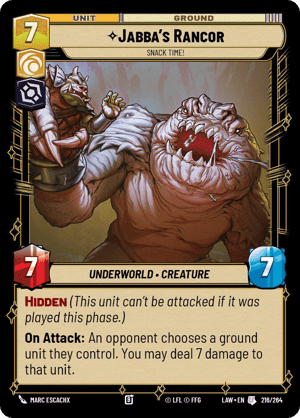
Jabba’s Rancor: Ok, let’s start with the one that made me audibly react when I first saw it. This is an uncommon that ends games. Full stop. The stats and impact are just enormous for an uncommon slot, and in sealed where the average threat level is lower, something this powerful can absolutely dominate a board. I would be very tempted to include this even if I had to pay an aspect penalty for it. That’s not something I say lightly. Usually my advice is to stay on-color and play your curve, but some cards are just worth bending the rules for. This is one of them.
0-0-0: I think this might actually be slightly better than BT-1 in sealed, which is saying something because BT-1 is already very good. The base stats on 0-0-0 are just so solid and efficient that it’s doing good work for you even if your deck composition doesn’t trigger the ability particularly often. And when the ability does trigger? That’s just gravy. In sealed, I always want my cards to have a strong floor, and 0-0-0 has one of the strongest floors among the uncommons in the set.
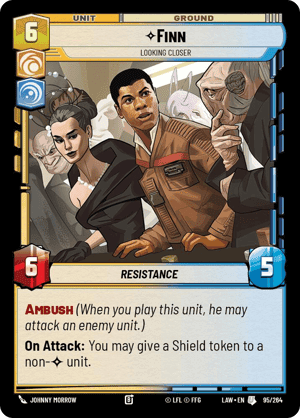
Finn: Finally, a Finn card that actually looks good. Ambush is already great (I know, I know, I keep saying it, but it keeps being true), and handing out shields on top of that gives Finn real utility in situations where a lot of sealed games get stuck. You know those board states where both players have a bunch of units staring at each other and neither side wants to attack because the math doesn’t work out? Finn helps you crack that kind of parity. The Ambush gets you a favorable trade, the shields shore up your remaining units, and suddenly you’re the one with the better board. That’s a lot of value out of a single card.
Taramyn Barcona: Here’s a card I think a lot of people are going to overlook, and I think that’s a mistake. Nuking an opponent’s credit token at a clutch moment could be absolutely backbreaking in a set where so many decks are banking on credits to accelerate out a big play. You blow up their credit right when they thought they were about to cheat something into play a turn early, and suddenly their whole turn falls apart. And then you get an Experience token as a bonus on top of the disruption? That’s a really nice package. Credit destruction is an effect that gets better the more prevalent credits are in the metagame, and with everyone getting Jabba as a promo, credits are going to be everywhere.
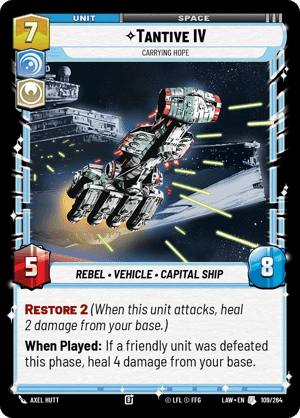
Tantive IV: This is probably going to be a common top-end finisher in any deck that can play it. It’s a space unit (always good, as I’ll keep reminding you) and it brings a significant amount of potential base healing along with it. We already talked about how base restoration effects can completely reset your opponent’s damage clock. Getting that effect stapled to a rather large body in the space arena, where you need units anyway, is exactly the kind of efficient two-for-one that sealed decks are looking for.
Arvel Skeen: Similar logic to Taramyn Barcona. I think destroying your opponent’s credits is going to matter in this format more than people expect going in. The first time someone blows up your carefully saved credit token right before you were about to slam your big finisher, you’ll understand. Arvel isn’t flashy, but in a metagame built around credit accumulation, he’s doing relevant work.
URRR’K: I’ll be honest, Raid is always a bit of a tough sell for me. You lose so much impact if your opponent gets to attack into the Raid unit first, because suddenly your big offensive payoff is just doesn’t do that much on defense. But man, that is a lot of offensive power if you can get off a couple of clean attacks. In sealed, where your opponent may not always have the right unit positioned to attack into your Raid threat, the upside case is real. I’d play it, but I’d go in with realistic expectations about how often the Raid actually fires optimally.
Beyond these specific standouts, here’s a general framework for evaluating uncommons in your pool. Any uncommon that does one of these things is probably making your deck:
Removes an opposing unit. Unconditional removal at uncommon is gold. Conditional removal is silver. Both are miles ahead of no removal at all.
Provides an above-rate body. An uncommon with stats that outclass what commons can offer at the same cost is exactly the kind of edge you need.
Generates card advantage. Anything that draws cards, searches your deck, or creates two-for-one scenarios is premium. Card advantage is the rarest commodity in sealed. Keep in mind that I’m saying two for one, though – an event that just searches up one card to replace itself ain’t it.
Has Ambush. I’m going to keep saying this until everyone believes me. Ambush in limited is removal stapled to a unit. It’s fantastic.
Is Space. Another one that I’m going to keep hammering. Some solid space bodies always help you close out games.
The Commons That Will Define Your Deck
Here’s the truth that experienced limited players already know: your deck is built on commons. You’ll open roughly 54 commons across your six packs, and the majority of your 30-card deck will come from that pool. Knowing which commons are premium and which are filler is the difference between a 3-0 performance and a quick exit.
Let me walk you through the commons I think you should be most excited to see.
The Dual-Aspect Cycle: Pay Attention to These
I want to start with what I think might be the most important common cycle in the set: the six two-color non-Heroism/Villainy units. Each one covers a different two-aspect pairing and comes with two keywords, one from each aspect. All six look quite efficient for what they are, and they’re going to do a lot of heavy lifting in sealed decks across the board.
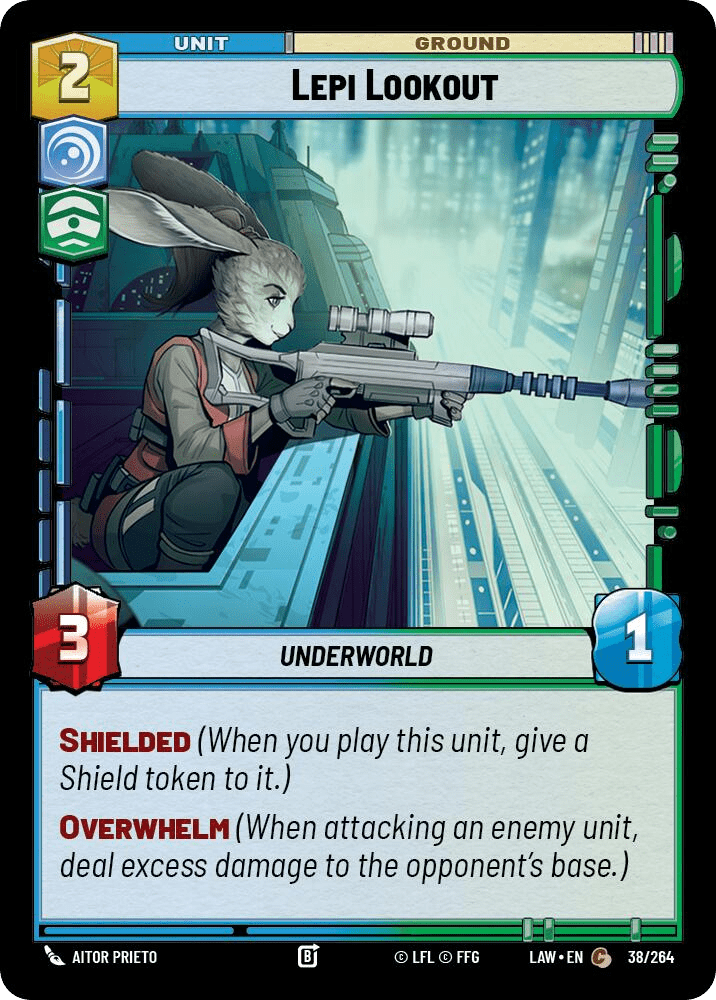
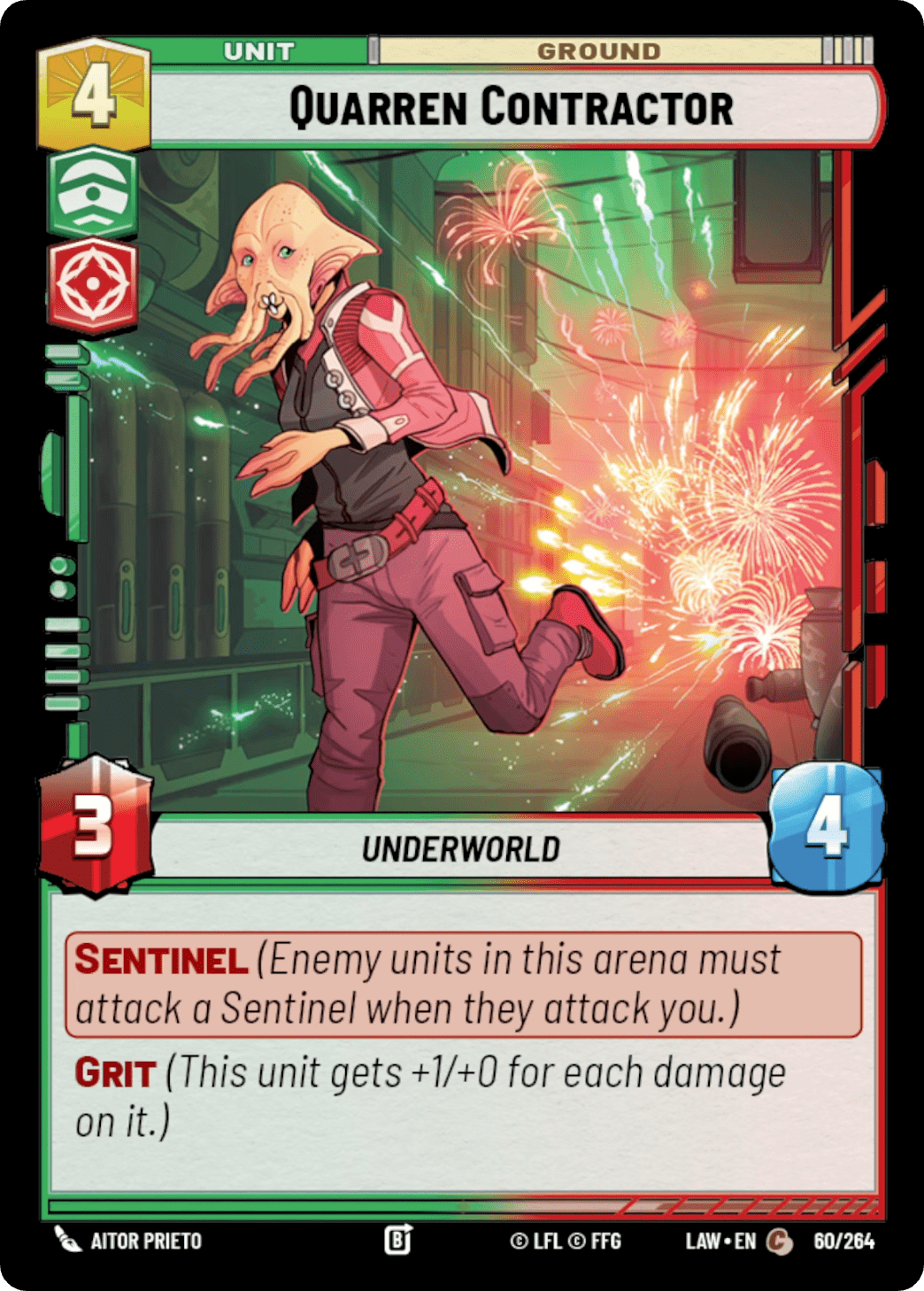
Of the six, I think Lepi Lookout and Quarren Contractor are most likely to pull above their weight class. Both have the kind of stats that let them trade up, and if you’re lucky, they’ll take out two opposing cards before they go down thanks to Shielded and solid health with Grit respectively. That’s efficient value at common rarity.
But here’s the thing I really want you to internalize about this cycle: because they’re commons, you may see multiples. If you crack open two or three copies of any single one of these six cards, that should probably skew you pretty hard toward trying to make that color pair work. Three copies of an efficient dual-aspect common with two keywords is a lot of consistent power at the core of your deck. Don’t overlook that signal. Your pool is trying to tell you something.
Removal: The Most Precious Resource
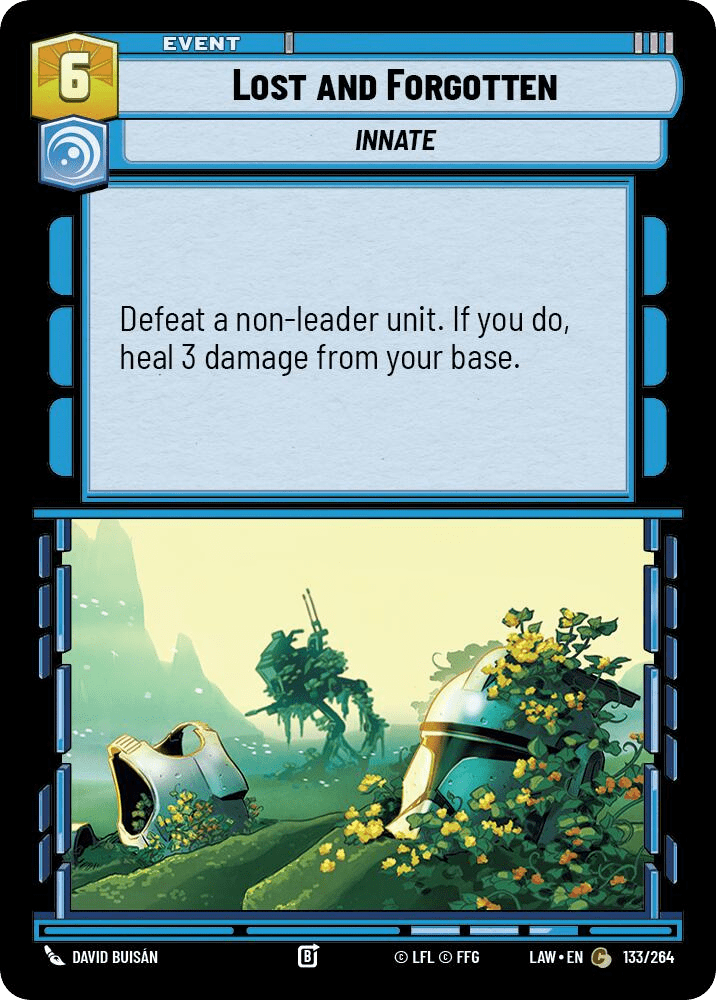
Lost and Forgotten: This is clearly the premiere removal card in the set, and it’s not particularly close. The removal effect itself would be enough to make it an auto-include, but the fact that it also tacks on some base healing makes it genuinely special. In a deck that’s trying to go a bit longer, stabilize, and grind out an advantage (which is a lot of sealed decks, frankly), that combination of answering a threat and buying yourself extra time on your base HP is exactly what you want to be doing. If you’re in the right aspects for this card, you play it. Every time. No questions.
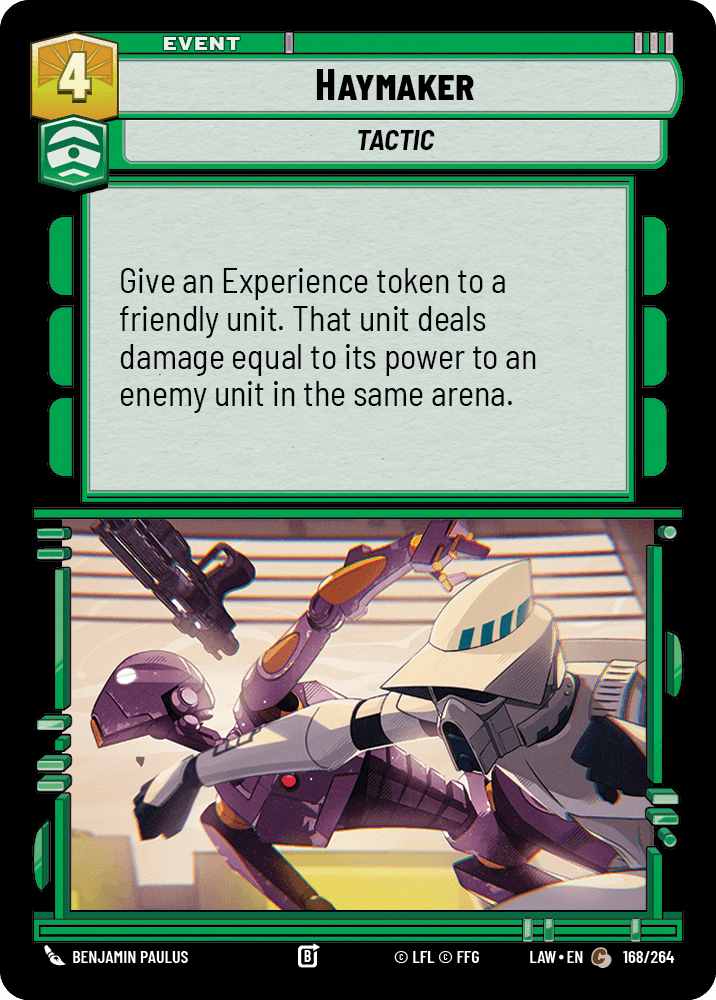
Haymaker: Probably my pick for second favorite removal card in the set. Now, it’s not unconditional. You’re constrained by needing a board presence and the size of the unit you’re working with matters. But the cost looks solid for what you’re getting, and here’s the part that pushes it over the top: leaving behind a permanent boost in Experience provides a ton of utility and a real chance for a two-for-one after the initial effect resolves. You use Haymaker to take out an opposing threat, and your unit comes out of the exchange stronger than it went in. That’s the kind of card that feels fair when you read it and deeply unfair when it happens to you.
Units That Do Real Work
Milodon Rider: Very solid stats with the always-phenomenal Ambush keyword. But the part that really sells me on this card is the “when played” bounce being a may ability. That’s huge. It means you can get great value out of it by returning a damaged unit to your hand to save it, or bouncing something with a “when played” trigger that you want to fire again. But you’ll never be in a spot where you’re forced to use it when it would hurt you. That kind of flexibility is rare at common, and it makes Milodon Rider a card that’s good in almost every game state. Cards that are never bad are always worth playing.
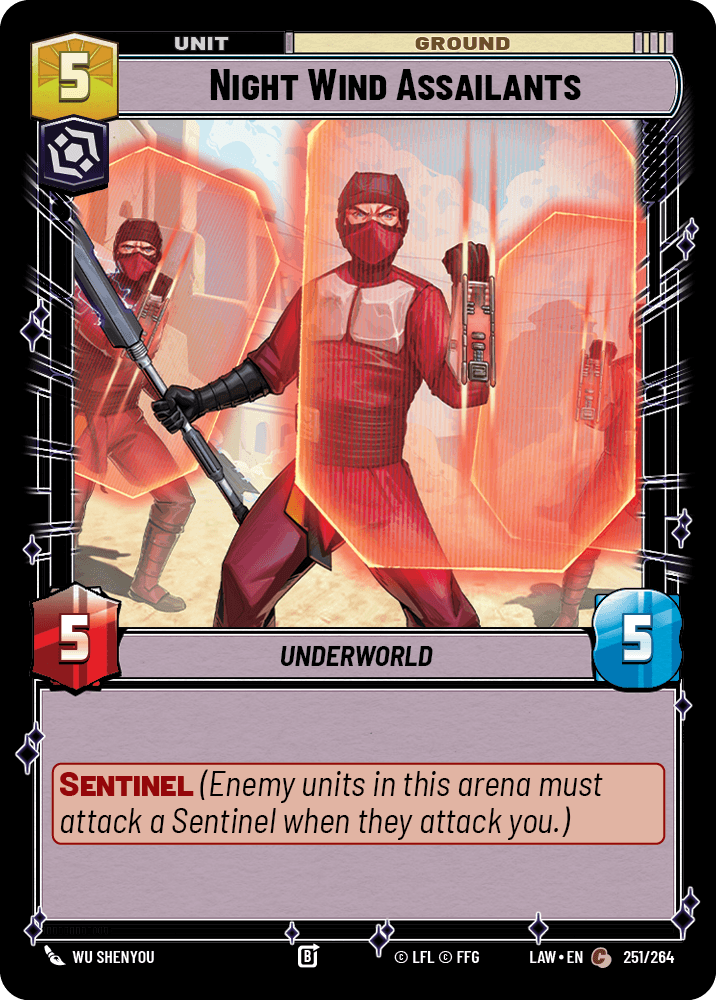
Night Wind Assailants: I love everything about this card for sealed. It’s only a single color, which means it slots into practically any deck that shares that Villainy aspect. A flat 5/5 statline at 5-cost with Sentinel means it’s doing double duty: it’s swinging for hefty attacks on your turn, and it’s decimating most things that are forced to attack into it on your opponent’s turn. That’s the dream for a sealed common. Low deckbuilding cost, high impact.
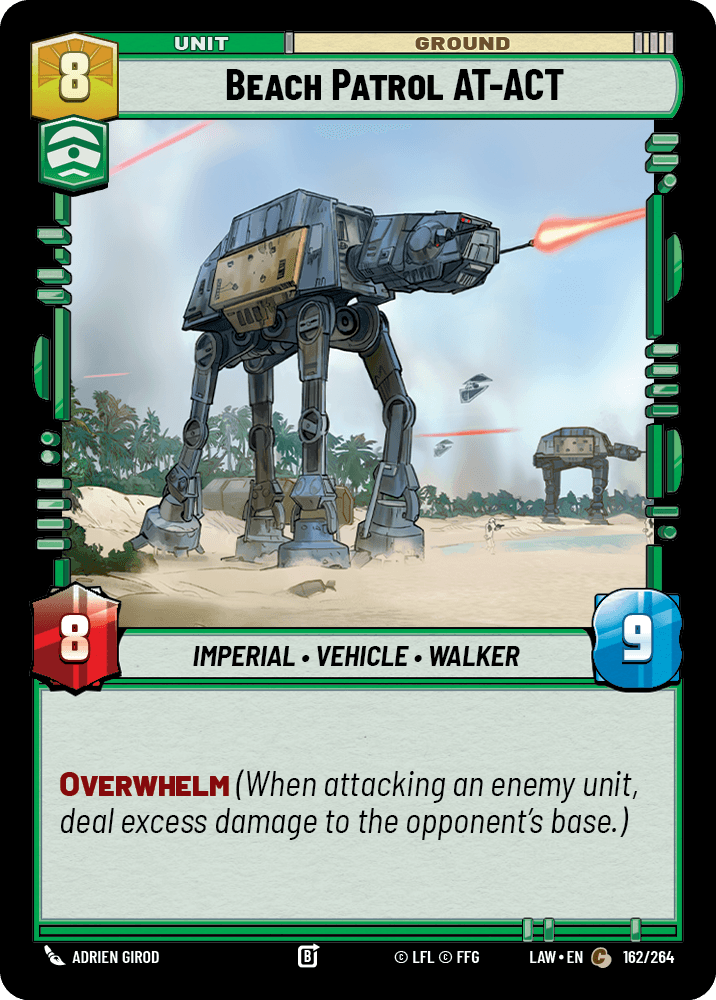
Beach Patrol AT-ACT: Ok, it’s a big dumb ground body. I’m not going to pretend there’s anything subtle going on here. But that Overwhelm means it stands a strong chance of just ending the game for you. Your opponent throws a small blocker in front of it, and the excess damage is still plowing through to their base. In sealed, sometimes you just need a way to close, and this closes.
Son-Tuul Berserkers: Similar philosophy to the Beach Patrol. That Overwhelm is doing a lot of work. The Berserkers might not stick around as long as the AT-ACT, but if you’ve got an aggressive build, you can really make the most of them. Picture this: they plow through a Sentinel unit, clear the way, and still do massive damage to base. Against a defensive player who’s been hiding behind Sentinels all game, that kind of breakthrough is exactly what you need. In an aggressive Sebulba deck cards like this are your closers.
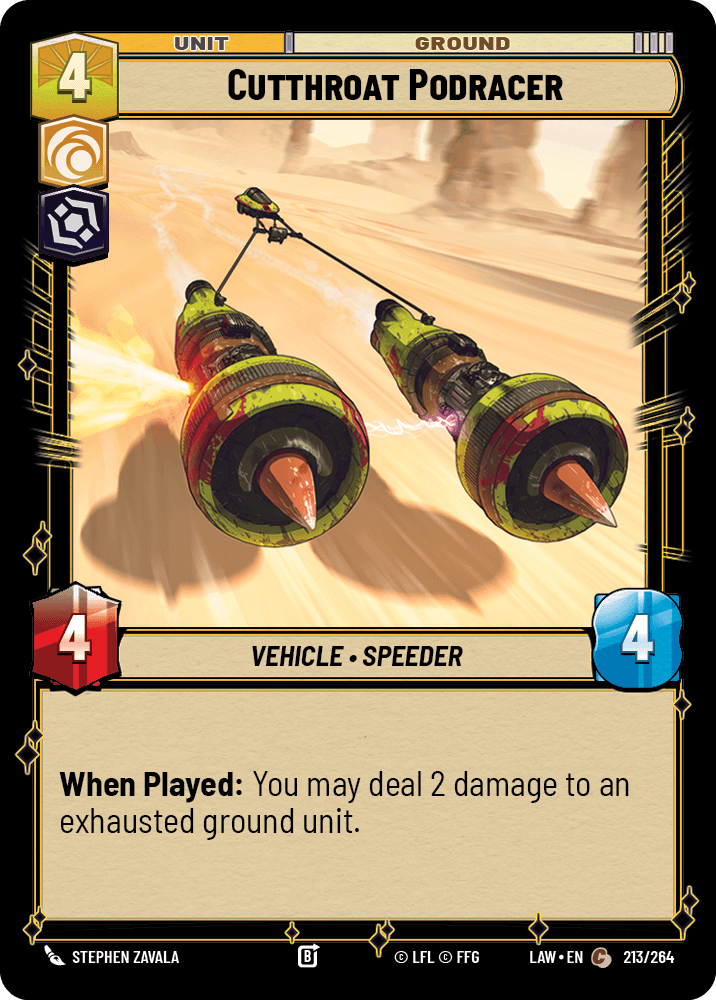
Cutthroat Podracer: Solid stats on their own, and the ability to clear out something small or previously damaged is great value at common. Think about the typical sealed board state a few turns in: your opponent has a mix of healthy units and stuff that’s taken a hit or two. The Podracer comes down, picks off something wounded, and presents a body that needs to be dealt with. Clean, efficient, and useful in the vast majority of game states.
Target Tagger: There are a lot of Bounty Hunters in this set. Like, a lot. Bounty Hunter is one of the most prevalent traits in LAW, which means Target Tagger’s synergy is going to be live far more often than you might expect from a tribal-adjacent card in sealed. In an aggressive deck that’s trying to push damage early and often, Target Tagger can do real work. The ceiling is high when your deck naturally has Bounty Hunters (and many will), and even the floor is reasonable.
Defiant Scrapper: I keep coming back to credit destruction as an underrated effect in this set, and here it is at common. Same logic as Taramyn Barcona and Arvel Skeen at uncommon: in a metagame where Jabba is a promo and credits are going to be everywhere, blowing up your opponent’s resources at a key moment can completely derail their turn. It’s not glamorous, but it’s effective.
Space Units: Don’t Forget the Stars
I’m going to keep banging this drum because it’s the mistake I see most often at prereleases – you need space units. Losing the space arena means your opponent is dealing uncontested damage to your base every single round, and that adds up fast. The problem is that space units are always underrepresented at common rarity, and LAW is no exception.
Rebel Blockade Runner: Not the most exciting card you’ll ever read, but this is a very efficient statline for a space unit and Saboteur means your opponent can’t just hold it off with a Sentinel. You’re getting through for damage. Probably multiple times. In a format where space presence is critical and efficient space units are scarce, the Blockade Runner is exactly the kind of reliable, unglamorous card that quietly wins you games.
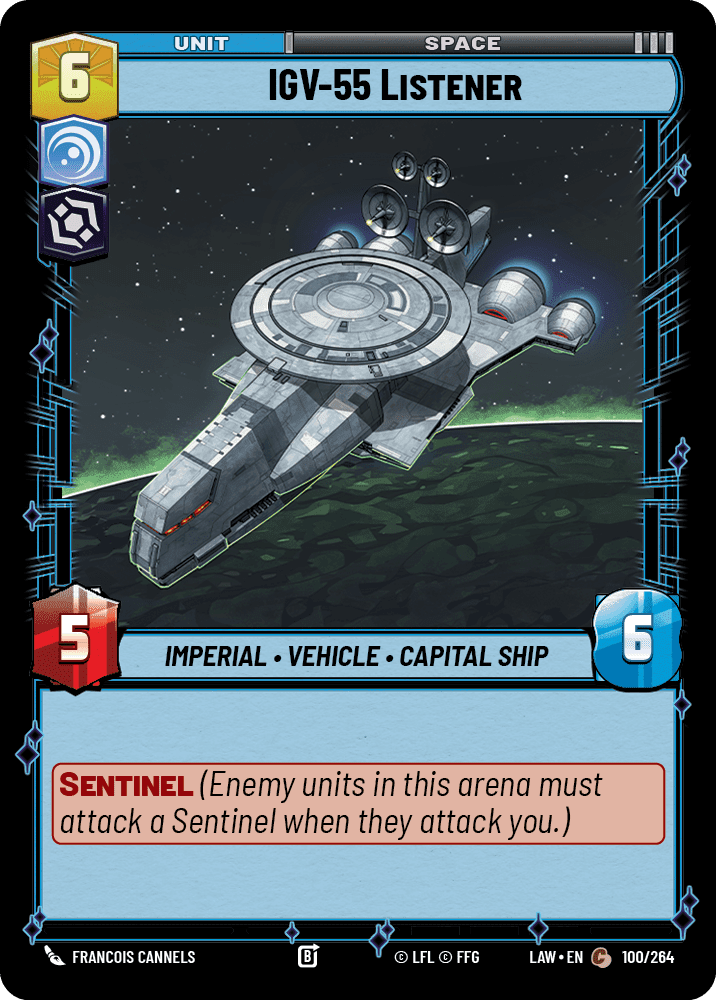
IGV-55 Listener: If you need a Villainy-aligned space top end, this is a great option. It’s a substantial body in an arena where you need one, and Sentinel in space means it’s also protecting your base by forcing your opponent to deal with it before swinging at you directly. Functional and effective.
Beyond those two, Defiant Hammerhead, Phoenix Squadron Fighters, Pirate Snub Fighter, Getaway Freighter, Smuggler’s YT-2400, and Rickety Quadjumper are your other common space options. You may not love all of them. Some will have awkward statlines or abilities that don’t quite fit your game plan. But you need to play some anyway. A mediocre space unit is infinitely better than no space unit. I would rather play a slightly off-aspect space unit and eat a 2-resource penalty than leave the space arena completely uncontested. That’s how important this is.
Building Your Deck: The Practical Playbook
Alright, you’ve opened your packs, you’ve sorted your cards, you’ve identified your potential leaders. Now what? Here’s my step-by-step process for building a sealed deck in LAW. I’ve been doing this across multiple sets and multiple card games for… well, let’s just say more years than I’m comfortable admitting. This process has served me well.
Step 1: Sort your cards into a grid. Five columns for the non-alignment aspects (Vigilance, Command, Aggression, Cunning, and Neutral) and three rows for Heroism, Villainy, and Neutral. Multi-aspect cards might be tricky to add now. I’m tempted to fan them above the other piles that match their colors. This gives you a visual picture of where your pool is deepest.
Step 2: Identify your deepest stacks. Which columns have the most playable cards? Which rows? You’re looking for a concentration of quality cards in two aspects that your available leaders and bases can support. If your Aggression/Villainy pile is stacked with efficient units and removal but your Cunning/Heroism pile is thin and underwhelming, that’s your deck telling you what it wants to be.
Step 3: Match a leader to your best cards. Don’t fall in love with a leader before you’ve evaluated your pool. The best leader in a vacuum might not be the right leader for your cards. If you opened Jabba and a pile of Underworld units plus credit generators, that’s a clear signal. If you opened Chewie and your Aggression/Heroism commons include solid early plays, removal, and a couple of space units, that’s your deck. Let the pool guide you.
Step 4: Choose your base for maximum aspect coverage. Your leader gives you two aspects. Your base gives you a third. Pick the Common base whose aspect covers the most off-leader cards you want to play. And remember that every Common base has that Epic Action to ignore one aspect penalty per game. Choose the base that passively covers the most cards, and save the Epic Action for that one multi-aspect bomb or spicy off-color rare you couldn’t otherwise play.
Step 5: Check your numbers. Before you finalize, verify:
Are you at exactly 30 cards? (Maybe you can push to 31, but remember that consistency is tough in this format and going beyond 30 really hurts your chances of seeing important cards.)
Do you have at least 7 space units? (If not, add some even if they’re not exciting.)
Do you have at least 7 early plays at 1-2 cost? (If not, your curve is too top-heavy.)
Is your unit count around 24-25? (Events and upgrades are nice, but units win games.)
Do you have at least a couple pieces of removal? (If you have zero removal, consider splashing off-aspect for it.)
LAW Sealed: The Meta Snapshot
Based on everything we’ve covered, here’s my read on how the LAW sealed metagame is likely to shake out.
Vigilance pairings are where I think the smart money is. Vel in Vigilance/Heroism is my pick for the quiet best leader in the format, and the aspect itself brings removal, Sentinel, and those base-restoring effects that can completely reset your opponent’s clock. Sealed games go long. Vigilance is built for long games. The math checks out.
Aggression pairings are the other side of the coin. Where Vigilance grinds, Aggression closes. Chewie and Sebulba both deploying on 4 resources means you can be pressuring your opponent before they’ve even figured out their game plan. Aggression/Villainy through Sebulba gives you the fastest possible start alongside the set’s best removal, and Aggression/Heroism through Chewie gives you an absurd statline backed by a deep pool of playable commons. If you want to be the player dictating the pace of the game, this is where you want to be.
Cunning/Villainy via Jabba is going to be the most popular archetype because everyone gets the promo, and it’s genuinely powerful. The Underworld density in the set means Jabba’s ability is almost always relevant, and credit generation gives you a dimension that other leader pairings lack. The danger is that because everyone has Jabba, the mirror match is going to be extremely common, and in mirrors the player who opens better uncommons usually wins.
Command/Villainy through Boba or Krennic offers an excellent midrange approach. Strong bodies, solid value generation, and access to Villainy’s removal suite. This is the “play good cards on curve and grind your opponent out” archetype, and in sealed, that strategy is always competitive.
Final Thoughts: And the Part Where I Get a Little Philosophical
Here’s what I want you to take away from all of this, and it’s something I’ve believed for over two decades of competitive card gaming: sealed rewards flexibility above all else. The best sealed players aren’t the ones who force the same strategy every time. They’re the ones who read their pool honestly, identify what it’s trying to do, and build the best version of that deck. Not the deck they wished they’d opened.
A Lawless Time gives you more tools for flexibility than any previous SWU sealed format. Credit tokens smooth out your resource development. Multi-aspect cards offer powerful options if you can cast them. Common bases with aspect-ignoring Epic Actions provide a safety valve for that one big splash.
So open your packs, take a breath, sort your grid, and listen to what your pool is telling you. Don’t force it. Let the cards guide you.
And if all else fails, just play Jabba and slam every Underworld unit you have. Honestly, that’s probably a fine plan.
Until next time, folks. May the credits be plentiful and the aspect penalties be few.
See you at the prerelease.
